GE
RFQ Ready
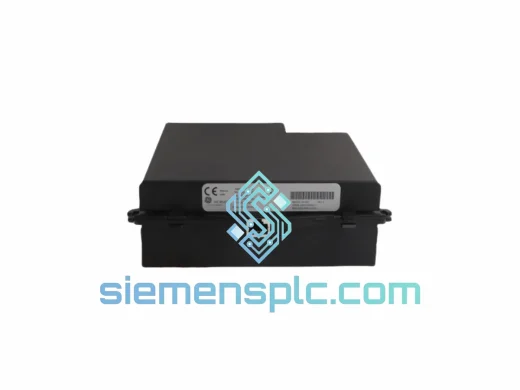
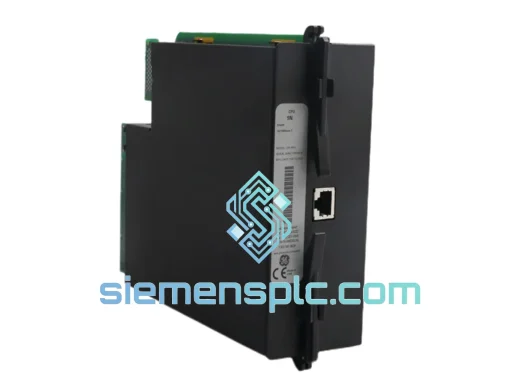
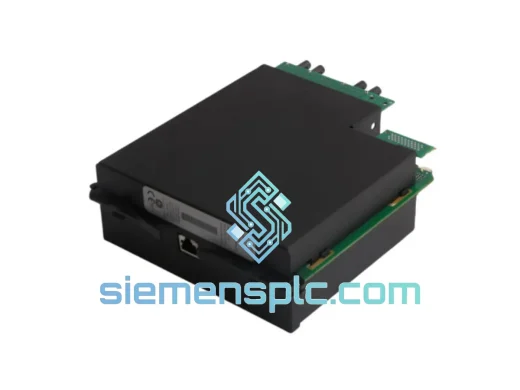
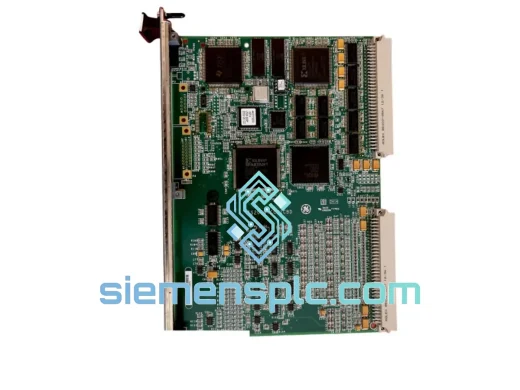
GE IS200VTCCH1CBD Thermocouple Processor Board – Mark VI IS200 Series
Mark VI
Origin US
Thermocouple Processor Board
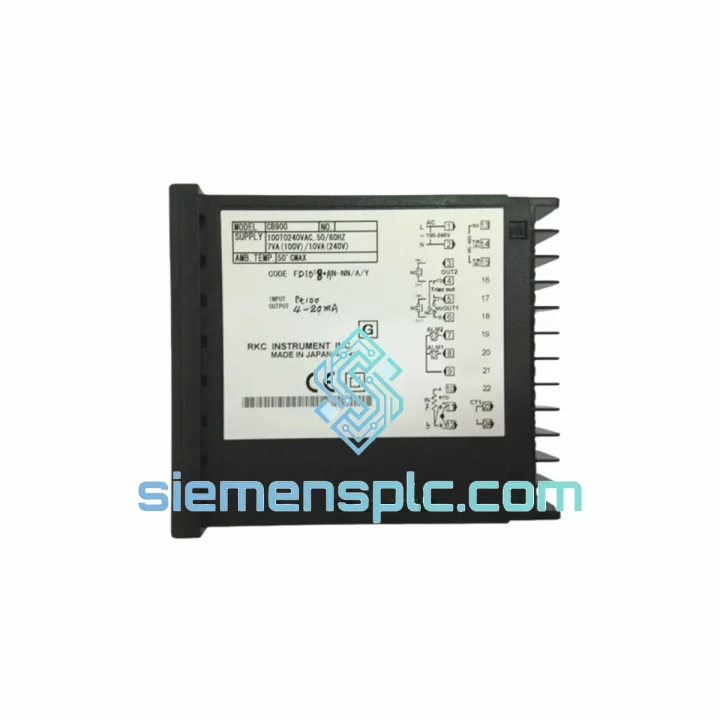
Request verified availability, condition, replacement risk review, packing options and courier lead time for FD10-8.
Click Request Quote and the part number is inserted into the inquiry form automatically.
Core fields for model confirmation and RFQ routing. Detailed product narrative remains below.
The RKC CB900 FD10-8*GB-NN/A/Y is a compact, panel-mount PID temperature controller engineered for continuous-duty industrial process environments. Belonging to RKC Instrument’s established CB900 Series, this unit integrates a self-tuning PID algorithm, universal sensor input circuitry, and configurable output stages into a 48 × 48 mm DIN-standard housing. Its role within a closed-loop thermal control architecture is to receive a real-time process variable (PV) from a field sensor, compute the deviation against a programmed setpoint (SV), and issue a corrective output signal — relay, SSR drive, or analog — with a cycle resolution that sustains process stability across load disturbances and ambient fluctuations.
The suffix string FD10-8*GB-NN/A/Y encodes the hardware configuration: front-panel display type (F), input category (D — universal thermocouple/RTD), output stage (10 — relay contact), alarm count and type (8*), communication option (GB — RS-485 Modbus), and power supply range (A — 100–240 VAC; Y — CE/RoHS compliance mark). This deterministic suffix logic allows engineers to specify exact hardware without ambiguity, eliminating field substitution errors during commissioning.
Real-time Stock & RFQ: [email protected] | WhatsApp: +86 18359268345
| Parameter | Specification |
|---|---|
| Model Number | CB900 FD10-8*GB-NN/A/Y |
| Manufacturer | RKC Instrument Inc. (Japan) |
| Series | CB900 |
| Housing Dimensions | 48 × 48 × 100 mm (W × H × D) |
| Panel Cutout | 45 × 45 mm (DIN 43700) |
| Control Algorithm | PID / ON-OFF / Manual (P, PI, PD selectable) |
| Input Types | Thermocouple: K, J, T, E, R, S, B, N; RTD: Pt100, JPt100; DC Voltage/Current |
| Measurement Accuracy | ±0.3% F.S. ±1 digit (thermocouple); ±0.2% F.S. ±1 digit (RTD) |
| Sampling Period | 500 ms |
| Control Output (OUT1) | Relay contact: 250 VAC / 3 A (resistive load) |
| Alarm Outputs | Up to 3 alarm relays; deviation, absolute, band, and process alarm modes |
| Communication | RS-485, Modbus RTU; baud rate 2400–19200 bps |
| Power Supply | 100–240 VAC ±10%, 50/60 Hz; power consumption ≤ 8 VA |
| Operating Temperature | 0 to +50 °C |
| Storage Temperature | −25 to +65 °C |
| Relative Humidity | 45–85% RH (non-condensing) |
| Display | Dual 4-digit red LED; PV upper / SV lower simultaneous readout |
| Protection Rating | IP66 (front panel) |
| Approvals | CE (EMC 2014/30/EU, LVD 2014/35/EU), RoHS 2011/65/EU |
| Weight | Approx. 230 g (unit only) |
| Warranty | 12 months from date of shipment |
The CB900’s input stage employs a 16-bit A/D converter with cold-junction compensation (CJC) circuitry integrated directly on the measurement board. The CJC reference junction is thermally coupled to the terminal block via a precision NTC thermistor, compensating for ambient temperature drift at the connection point without requiring an external reference junction. This architecture eliminates the ±1–2 °C offset error commonly introduced by passive CJC methods in lower-cost controllers.
The PID computation engine executes on a fixed 500 ms sampling cycle. The derivative term is applied to the process variable rather than the error signal — a standard implementation choice that suppresses the derivative kick caused by step changes in the setpoint. Proportional band (P), integral time (I), and derivative time (D) parameters are stored in non-volatile EEPROM with a write endurance rated at 100,000 cycles, ensuring parameter retention across power interruptions without battery backup.
The auto-tuning (AT) function uses a limit-cycle oscillation method: the controller temporarily switches to ON-OFF control, measures the natural oscillation period and amplitude of the process, and back-calculates PID parameters using the Ziegler-Nichols reaction curve method with RKC’s proprietary damping correction factor. This produces a set of initial PID parameters that typically require no further manual adjustment for thermal mass loads with time constants between 30 seconds and 30 minutes.
EMC performance is addressed at the hardware level through a multi-stage filter network on the power supply input: a common-mode choke rated at 10 mH combined with X2/Y2 class capacitors attenuates conducted emissions in the 150 kHz–30 MHz band. The relay output contacts are protected by RC snubber networks (typically 0.1 µF / 100 Ω) to suppress inductive switching transients that would otherwise couple back into the measurement circuitry. The PCB layout routes the analog input traces on a dedicated inner layer, physically separated from the relay switching traces by a grounded copper pour, achieving measured crosstalk attenuation of greater than 60 dB at 10 kHz.
The RS-485 communication port uses a half-duplex transceiver with ±15 kV ESD protection on the bus lines, allowing the controller to operate on multi-drop networks of up to 31 nodes at cable lengths up to 1,200 m without repeaters. The Modbus RTU implementation supports function codes 03 (read holding registers), 06 (write single register), and 16 (write multiple registers), providing full read/write access to all process parameters, alarm thresholds, and PID constants from a SCADA host.
Every RKC CB900 FD10-8*GB-NN/A/Y unit supplied by siemensplc.com is sourced as genuine RKC Instrument factory stock. Units are stored in a climate-controlled warehouse in Xiamen, China — a major port city with direct access to international air freight hubs (Xiamen Gaoqi International Airport) and sea freight lanes (Xiamen Port, ranked among China’s top-five container ports by throughput).
Pre-shipment inspection covers three checkpoints: (1) label and serial number verification against the manufacturer’s batch documentation; (2) power-on functional test confirming display initialization, input reading, and relay output actuation; (3) packaging integrity check using anti-static foam inserts and double-wall corrugated cartons rated for 80 kg/m² stacking load. Units that do not pass all three checkpoints are quarantined and not dispatched.
Shipping options from Xiamen:
A 12-month warranty covers manufacturing defects under normal operating conditions. Warranty claims are processed within 5 business days of receipt of the defective unit, with replacement dispatch or credit note issued accordingly.
Email: [email protected]
WhatsApp: +86 18359268345
Web: siemensplc.com
Location: Xiamen, China
© 2026 siemensplc.com. All rights reserved.
We check the full part number, brand, series and visible nameplate information before quotation.
Sales confirms stock path, condition option, quantity and realistic lead time for export dispatch.
DHL, FedEx, UPS or buyer courier arrangements can be reviewed with packing requirements.
Similar brand or category products for fast comparison and multi-item RFQ lists.