GE
RFQ Ready
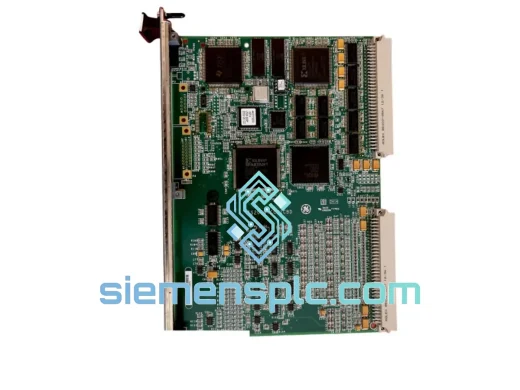
GE IS200VTCCH1CBD Thermocouple Processor Board – Mark VI IS200 Series
Mark VI
Origin US
Thermocouple Processor Board
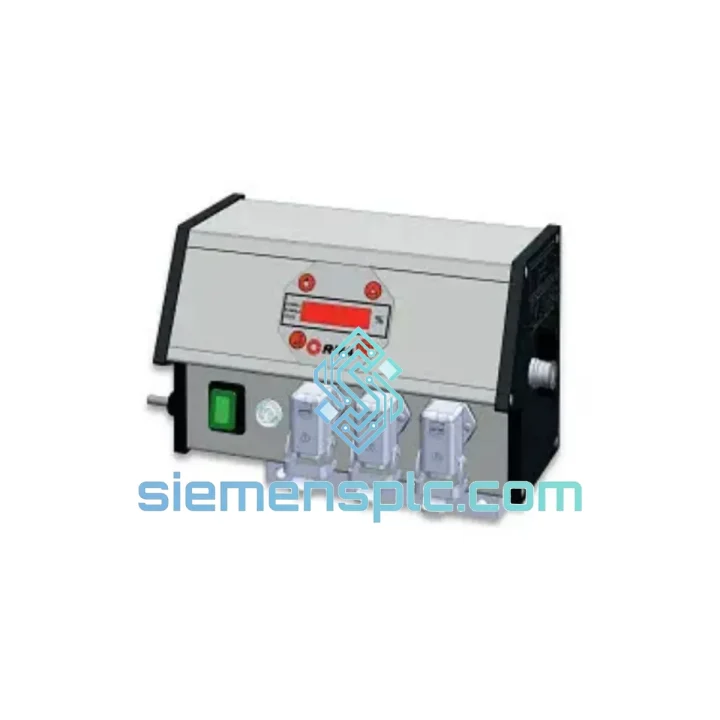
Request verified availability, condition, replacement risk review, packing options and courier lead time for ESK-2001.
Click Request Quote and the part number is inserted into the inquiry form automatically.
Core fields for model confirmation and RFQ routing. Detailed product narrative remains below.
The RNA ESK-2001 is a fixed-architecture programmable logic controller module belonging to the ESK Series, designed for deterministic scan-cycle execution in process automation, discrete manufacturing, and machine-level control applications. Unlike general-purpose computing platforms, the ESK-2001 operates on a dedicated real-time kernel that enforces strict task prioritization, ensuring that time-critical I/O polling and ladder-logic execution are never preempted by background diagnostic or communication tasks.
At the hardware level, the ESK-2001 integrates a 32-bit RISC processor clocked at a fixed frequency optimized for instruction throughput rather than raw compute performance. The internal backplane bus architecture supports synchronous data exchange between the CPU core and attached I/O modules at deterministic latency, a fundamental requirement for closed-loop PID control where scan-cycle jitter directly translates to process variability. The module’s memory subsystem separates program storage (flash-based, non-volatile) from working data memory (SRAM), preventing firmware corruption during unexpected power loss events without requiring an external UPS in most standard configurations.
The ESK-2001 supports multi-tasking execution environments where cyclic tasks, event-driven interrupt routines, and free-running background tasks coexist under a priority-based scheduler. This architecture allows engineers to assign the highest execution priority to safety-critical interlocks while relegating HMI data refresh and historian logging to lower-priority task slots — a design pattern consistent with IEC 61131-3 structured programming methodology.
From a signal conditioning perspective, the module’s onboard analog input channels (where applicable per variant) employ 12-bit successive approximation ADC topology with hardware anti-aliasing filters, providing stable readings in electrically noisy industrial environments without requiring external signal conditioning hardware. Digital I/O channels are optically isolated using high-speed phototransistor couplers rated for 2,500 Vrms isolation voltage, effectively decoupling the controller’s logic ground from field-side wiring faults and transient surges.
The ESK-2001’s communication stack supports standard industrial fieldbus protocols, enabling integration into both legacy and contemporary automation architectures. The module’s protocol handling is offloaded to a dedicated communication co-processor, ensuring that network traffic — regardless of volume — does not consume CPU cycles allocated to the real-time control task. This hardware-level separation is a critical design advantage in high-throughput applications where communication latency spikes would otherwise degrade control loop performance.
Real-time Stock & RFQ: [email protected] | WhatsApp: +86 18359268345
| Parameter | Specification |
|---|---|
| Part Number / SKU | ESK-2001 |
| Brand | RNA |
| Series | ESK Series |
| Product Category | Programmable Logic Controller Module |
| Processor Architecture | 32-bit RISC, fixed-frequency real-time core |
| Program Memory | Non-volatile Flash (battery-independent retention) |
| Working Memory | SRAM, task-partitioned |
| Digital I/O Isolation | Optical isolation, 2,500 Vrms rated |
| Analog Input Resolution | 12-bit SAR ADC (variant-dependent) |
| Communication Interface | Dedicated co-processor, fieldbus protocol support |
| Operating Temperature | 0°C to +55°C (storage: -25°C to +70°C) |
| Relative Humidity | 5% to 95%, non-condensing |
| Supply Voltage | 24 V DC nominal (18–30 V DC operating range) |
| Power Consumption | ≤ 8 W typical at rated load |
| Protection Rating | IP20 (panel-mount installation) |
| Mounting | DIN rail (EN 60715 TS35) |
| Weight | 220 g |
| Compliance | CE, RoHS |
| Country of Origin | China (CN) |
| Warranty | 12 months from date of dispatch |
Optical Isolation Architecture: Each digital input channel on the ESK-2001 routes field-side signals through a dedicated phototransistor optocoupler before the signal reaches the logic-level input latch. This galvanic isolation barrier prevents ground loop currents — common in large industrial installations where multiple earthing points exist at different potentials — from corrupting digital state readings. The isolation barrier also absorbs fast transient surges (per IEC 61000-4-4 burst immunity testing) that would otherwise latch or damage CMOS input stages.
EMC Design Discipline: The PCB layout follows a strict ground plane segmentation strategy: the analog signal ground, digital logic ground, and chassis ground are connected at a single star point, minimizing high-frequency return current coupling between domains. Decoupling capacitors are placed at each IC power pin using a hierarchical capacitance strategy (bulk electrolytic + ceramic X7R) to suppress both low-frequency ripple and high-frequency switching noise from the internal DC-DC converter.
Backplane Bus Determinism: The ESK Series backplane uses a synchronous parallel bus with fixed arbitration timing. Unlike asynchronous bus architectures where access latency varies with bus contention, the ESK-2001’s backplane grants each slot a fixed time window per scan cycle. This eliminates worst-case latency uncertainty in multi-module configurations, a property that is non-negotiable in motion control and high-speed packaging applications.
Non-Volatile Program Retention: Program storage in flash memory eliminates the battery-dependency risk associated with older EEPROM or SRAM-backed architectures. In the event of a complete power loss, the ESK-2001 retains its full application program and last-known retentive data values without any maintenance intervention, reducing unplanned downtime risk in remote or unmanned installations.
Watchdog Timer Implementation: A hardware watchdog timer, independent of the main CPU, monitors scan-cycle completion. If the CPU fails to service the watchdog within the configured timeout window — due to software hang, stack overflow, or hardware fault — the watchdog asserts a system reset and drives all outputs to their configured safe state. This fail-safe mechanism operates entirely in hardware and cannot be disabled by application software.
Every RNA ESK-2001 unit supplied by siemensplc.com is sourced as genuine OEM hardware through verified supply channels. Each unit undergoes a structured pre-dispatch inspection covering physical label integrity, connector condition, housing markings, and where applicable, a bench-level power-on verification. Batch traceability records and certificates of conformity are retained on file and available upon written request for quality-critical procurement processes.
Logistics operations are managed from Xiamen, China — a major export hub with direct access to international express carriers and sea freight consolidators. Standard dispatch lead time for in-stock units is 1–3 business days. Shipping options include DHL Express, FedEx International Priority, and UPS Worldwide Expedited for time-sensitive requirements, as well as LCL and FCL sea freight for bulk project orders where cost efficiency takes precedence over transit speed. Full export documentation — commercial invoice, packing list, certificate of origin, and HS code declaration — is prepared for every shipment to facilitate smooth customs clearance in the destination country.
All units are dispatched with a 12-month warranty covering manufacturing defects and hardware failures attributable to the unit itself under normal operating conditions. Warranty claims are processed with a target response time of 48 hours from receipt of the defective unit.
📧 Email: [email protected]
💬 WhatsApp: +86 18359268345
🌐 Web: siemensplc.com
📍 Location: Xiamen, China
© 2026 siemensplc.com. All rights reserved.
We check the full part number, brand, series and visible nameplate information before quotation.
Sales confirms stock path, condition option, quantity and realistic lead time for export dispatch.
DHL, FedEx, UPS or buyer courier arrangements can be reviewed with packing requirements.
Similar brand or category products for fast comparison and multi-item RFQ lists.