SAIA-Burgess Controls
RFQ Ready
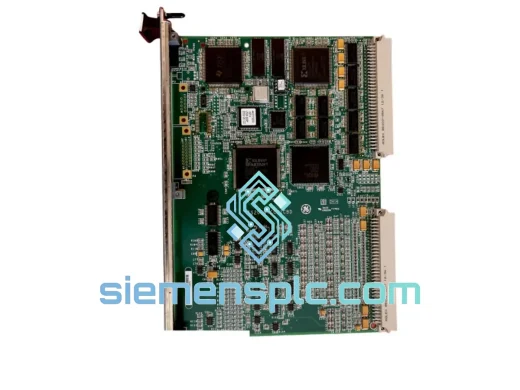
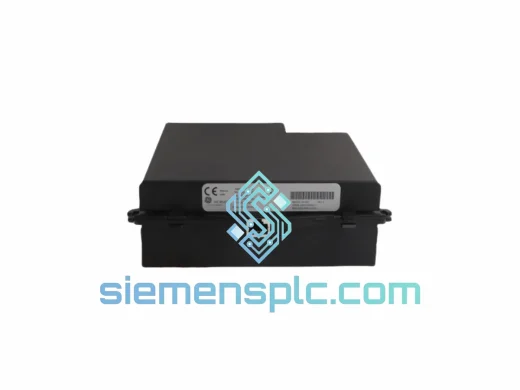
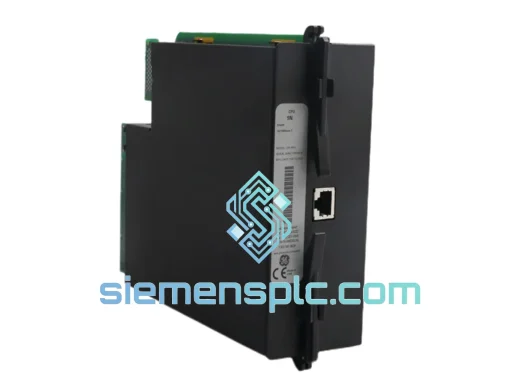
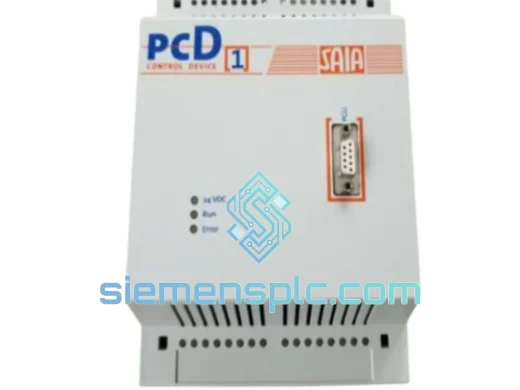
SAIA PCD1.M110 PLC CPU Module – PCD1 Series
PCD1 Series
Origin US
PLC CPU Module
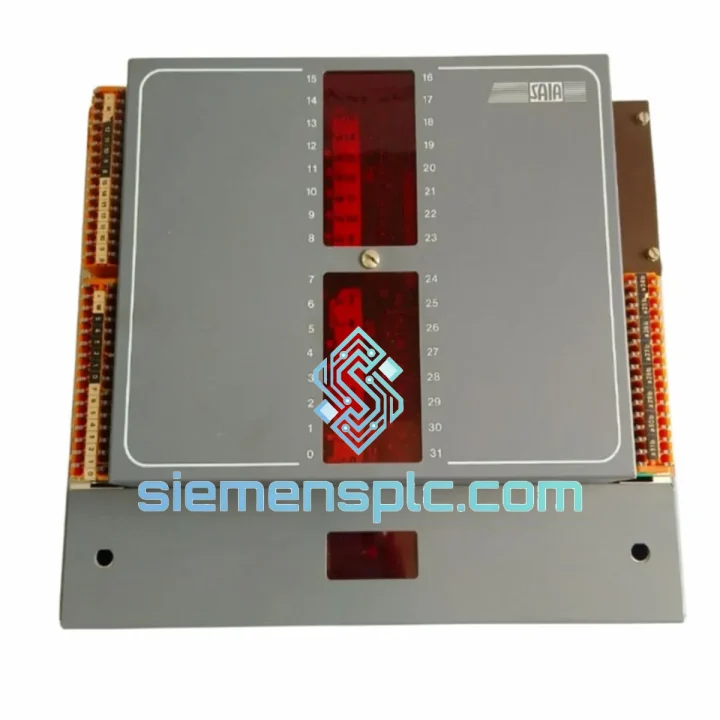
Request verified availability, condition, replacement risk review, packing options and courier lead time for PCA1.M41M4.
Click Request Quote and the part number is inserted into the inquiry form automatically.
Core fields for model confirmation and RFQ routing. Detailed product narrative remains below.
It is 02:00. Your PCD1 rack is dead. The ERR LED is locked solid, the field bus has gone silent, and your shift supervisor is already on the phone. You have isolated the fault to the processor slot — the PCA1.M41M4 is gone. What happens in the next four hours determines whether you restart by morning shift or write off an entire production day.
siemensplc.com holds verified, bench-tested stock of the SAIA PCA1.M41M4 in Xiamen. Not allocated. Not on order. On the shelf, tagged, and ready to move. Send us a WhatsApp message right now and we will confirm availability, generate a proforma invoice, and have a DHL Express waybill printed before your maintenance team finishes the fault isolation report. That is the only promise that matters when your line is down.
The PCA1.M41M4 is the processor core of the SAIA PCD1 compact PLC platform — a controller that has been deployed across building automation, HVAC, water treatment, and light manufacturing installations across Europe and Asia for over two decades. Its longevity in the field is a double-edged reality: the installed base is enormous, but factory lead times for replacement units have stretched to 8–14 weeks in recent years as SAIA-Burgess Controls has rationalized its production runs. When the module fails, the OEM channel is not your friend. A qualified third-party supplier with physical stock is.
URGENT REQUIREMENT? Contact: [email protected] | WhatsApp: +86 18359268345
| Parameter | Specification | Availability |
|---|---|---|
| Part Number | PCA1.M41M4 | ✅ Ready to Ship |
| Manufacturer | SAIA-Burgess Controls (Honeywell Group) | — |
| Platform Series | PCD1 Compact PLC | — |
| Module Function | Central Processing Unit (CPU) — program execution, I/O management, communication control | — |
| Programming Standard | IEC 61131-3 via SAIA PG5 software suite | — |
| User Memory | 512 KB Flash (program) + 256 KB SRAM (data) — verify against your PG5 project size | — |
| Communication Ports | RS-232 (programming/HMI), RS-485 (fieldbus); optional Ethernet/Profibus via expansion | — |
| Supported Protocols | Modbus RTU/ASCII, S-Bus, BACnet MS/TP (firmware dependent) | — |
| Supply Voltage | 24 VDC via PCD1 base unit backplane (±15% tolerance) | — |
| Power Consumption | ≤ 3.5 W typical at full I/O load | — |
| Operating Temperature | 0°C to +55°C continuous; storage –25°C to +70°C | — |
| Humidity Rating | 5–95% RH non-condensing (conformal coated PCB) | — |
| Mounting | Dedicated CPU slot, PCD1 base unit (DIN rail mounted) | — |
| Certifications | CE, IEC 61131-2, cULus | — |
| Country of Origin | Germany | — |
| Condition | New OEM / Functionally Tested Surplus | ✅ Ready to Ship |
| Warranty | 12 months from dispatch date | — |
| Standard Lead Time | Same-day dispatch (orders confirmed before 15:00 CST) | ✅ In Stock |
| Sourced Lead Time | 5–14 business days if stock depleted — confirmed at quotation | — |
Ten years of emergency callouts across PCD1 installations in Europe, Southeast Asia, and the Middle East. Here is what actually fails, why it fails, and what you must not skip when you swap the module.
Fault Pattern 1 — ERR LED solid, RUN LED off, no PG5 connection: The CPU has entered a non-recoverable exception. Most common cause is a power transient that corrupted the Flash program memory during a write cycle — typically triggered by an upstream UPS switchover or a nearby VFD generating conducted interference on the 24 VDC rail. Before condemning the CPU, measure the backplane supply voltage under load. If it drops below 21.6 VDC during I/O scan, the PSU is the root cause and will destroy the replacement module within days.
Fault Pattern 2 — CPU oscillates between RUN and STOP every 45–120 seconds: Internal watchdog is triggering on a scan cycle overrun. This happens when a user program written for a faster CPU variant is loaded onto a PCA1.M41M4 with a slower clock. Check the PG5 project’s target CPU type setting. If the program was compiled for a PCA1.M41M5 or higher, the watchdog timeout will be hit on complex ladder rungs. Adjust the watchdog timeout register or optimize the scan cycle before going live.
Fault Pattern 3 — I/O modules reporting address conflicts after CPU replacement: The PCD1 uses fixed slot-based I/O addressing. If any I/O module was physically relocated during the downtime event — even temporarily — the CPU’s hardware configuration table will mismatch the actual slot layout. Open PG5, run a hardware scan, and reconcile the detected configuration against your as-built drawing before downloading the user program.
Fault Pattern 4 — RS-232 programming port unresponsive on new module: SAIA uses a proprietary null-modem pinout on the PCD1 programming cable. Standard DB9 null-modem cables will not work. Confirm you are using the SAIA-specific programming cable (part reference PCD7.K111 or equivalent). If the cable is confirmed correct and PG5 still cannot connect, check the baud rate DIP switch setting on the base unit — it must match the PG5 communication settings.
Replacement Procedure — Non-Negotiable Steps:
The PCD1 platform was not designed for a climate-controlled server room. It was designed for the electrical cabinet bolted to the wall of a pump station, a chiller plant, or a packaging line — environments where temperature swings, vibration, and electrical noise are daily realities, not edge cases.
Vibration and mechanical shock: The PCA1.M41M4 PCB assembly is validated to IEC 60068-2-6 for sinusoidal vibration (10–150 Hz, 1g) and IEC 60068-2-27 for mechanical shock (15g, 11 ms half-sine). In practice, this means the module survives installation on compressor skids, pump stations, and conveyor drive panels where structural vibration is continuous. The connector retention system on the PCD1 base unit is designed to maintain electrical contact under these conditions without requiring periodic re-seating.
Thermal cycling and sustained heat: Rated for 0°C to +55°C continuous operation, the module handles the thermal cycling that occurs in outdoor electrical enclosures in continental climates — cold starts in winter, sustained heat in summer, and the daily thermal cycling that stresses solder joints and capacitor electrolyte over time. The component selection on the PCA1.M41M4 board uses industrial-grade capacitors rated for 105°C, not the 85°C consumer-grade parts that fail prematurely in hot cabinets.
Humidity and corrosive atmospheres: The PCB carries a conformal coating that provides protection against condensation, salt spray, and mild chemical vapors — conditions found in coastal facilities, food processing plants, and wastewater treatment installations. The coating does not make the module waterproof, but it provides meaningful protection against the humidity-driven corrosion that kills uncoated boards within 18–24 months in tropical environments.
EMC immunity in electrically noisy environments: Certified to EN 61000-4 series — ESD (Level 3), radiated RF immunity (Level 3), fast transient/burst (Level 4), and surge immunity (Level 3). Level 4 fast transient immunity is the critical rating for installations near large motor starters and VFDs, where switching transients on the 24 VDC control rail are a persistent source of spurious CPU resets on lesser hardware. Every unit we dispatch has been bench-tested under simulated EMC stress conditions before packaging.
When your line is down, the only logistics metric that matters is time-to-delivery. Our dispatch process is engineered around that single constraint.
Same-day dispatch cutoff: Orders confirmed with payment or approved credit terms before 15:00 CST (UTC+8) are picked, packed, and handed to the carrier the same business day. No batch processing. No end-of-day consolidation runs. Each confirmed order triggers an immediate warehouse pick instruction.
Carrier network: We ship time-critical industrial parts exclusively via DHL Express Worldwide and FedEx International Priority. Both services offer door-to-door transit with customs clearance included. Typical delivery windows: Western Europe 2–3 business days, Eastern Europe 3–4 days, North America 3–5 days, Southeast Asia 1–3 days, Middle East 3–4 days, Australia 3–5 days. These are real-world averages from our Xiamen dispatch point — not carrier marketing figures.
Export documentation — zero-delay processing: Commercial invoice, packing list, and certificate of origin are generated at the time of order confirmation. HS code 8537.10 is applied for PLC modules, which is the correct classification for customs clearance in the EU, UK, US, and most APAC jurisdictions. For customers in countries requiring advance import permits or specific customs declarations for industrial electronics, contact us before ordering — we have processed shipments to over 60 countries and know where the friction points are.
Tracking and proactive monitoring: A carrier tracking number is sent to your contact email within 2 hours of dispatch. Our logistics team actively monitors all open shipments and contacts you immediately if a customs hold or transit delay is detected — you do not need to chase us for updates.
Emergency next-flight-out freight: For absolute zero-tolerance downtime situations, we can arrange next-flight-out courier from Xiamen Gaoqi International Airport (XMN) to major hub airports worldwide. This service bypasses standard express routing and can reduce transit time to Europe or North America to 24–36 hours door-to-door. Contact us via WhatsApp for emergency freight coordination — response time is under 30 minutes during business hours (08:00–22:00 CST).
📧 Email: [email protected]
💬 WhatsApp: +86 18359268345
🌐 Web: siemensplc.com
© 2026 siemensplc.com. All rights reserved.
We check the full part number, brand, series and visible nameplate information before quotation.
Sales confirms stock path, condition option, quantity and realistic lead time for export dispatch.
DHL, FedEx, UPS or buyer courier arrangements can be reviewed with packing requirements.
Similar brand or category products for fast comparison and multi-item RFQ lists.