SAIA
In Stock OK
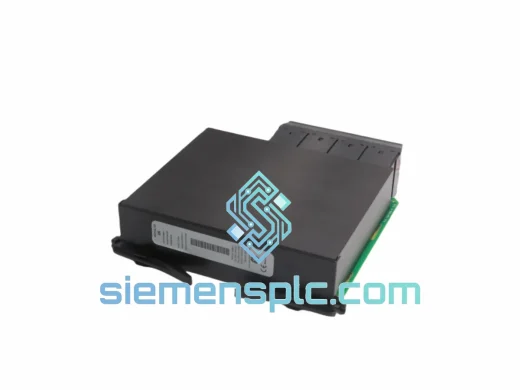
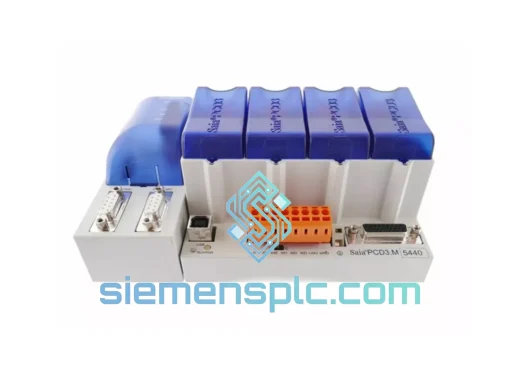
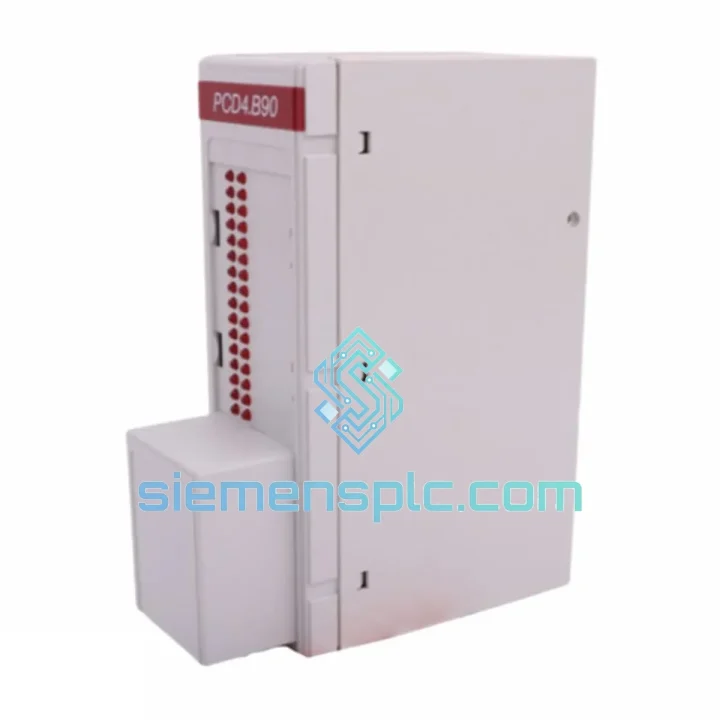
SAIA PCD4.B900 Digital I/O Module – PCD4 Series
Request verified availability, condition, replacement risk review, packing options and courier lead time for PCD4.B900.
BrandSAIA
Part NumberPCD4.B900
ConditionAvailability Check
Lead TimeRFQ Confirmation
DocumentsDatasheet / photos by RFQ
ShippingExport packing available
Auto-filled RFQ
PCD4.B900
Click Request Quote and the part number is inserted into the inquiry form automatically.
- Reply by email: [email protected]
- WhatsApp / Tel: +86 18359268345
- Mon-Sat 9:00-18:00 GMT+8
Procurement Data
Key Product Information
Core fields for model confirmation and RFQ routing. Detailed product narrative remains below.
- Brand
- SAIA
- Primary Part Number
- PCD4.B900
- Product Type
- PLC I/O Module
- Series / Family
- PCD4 Series
- Manufacturer
- Saia-Burgess Controls (SAIA)
- Country of Origin
- CH
- Catalog Category
- I/O Modules
- Operating Temp.
- 0 °C to +55 °C
- Warranty
- 12 months from date of dispatch
Model confirmed for inquiry
PCD4.B900
Send quantity, destination and urgency. The RFQ form keeps this part number attached.
Request Quote
Product Overview
SAIA PCD4.B900 – Discrete I/O Expansion Module for PCD4 Programmable Controller Systems
The SAIA PCD4.B900 is a dedicated digital I/O expansion module engineered for integration within the PCD4 modular programmable controller platform developed by Saia-Burgess Controls. Within a distributed control architecture, this module occupies a defined slot on the PCD4 backplane bus and extends the controller’s discrete signal handling capacity without introducing additional CPU processing overhead. Its role is deterministic: it maps physical field-level binary signals — from sensors, actuators, relay contacts, and proximity switches — into the controller’s process image table at each scan cycle, maintaining synchronous data exchange with the CPU module through the internal parallel bus structure.
Unlike general-purpose I/O cards, the PCD4.B900 is designed to operate within the strict timing constraints of the PCD4 bus arbitration protocol. The backplane communication cycle is governed by the CPU’s scan scheduler, ensuring that all I/O data is refreshed within a bounded latency window. This determinism is critical in applications where control loop response time directly affects process stability — such as sequential machine control, interlocking logic in safety-adjacent systems, and high-frequency discrete event processing in manufacturing lines.
The module’s physical architecture incorporates optocoupler-based galvanic isolation on each input channel. This isolation barrier — typically rated at 500 V DC or higher between field wiring and the backplane logic — prevents ground loop currents and transient voltage spikes originating from inductive field devices from propagating into the controller’s internal bus. In environments with variable-frequency drives, solenoid valves, or contactor banks operating in close proximity, this isolation layer is not optional engineering overhead; it is the primary mechanism that preserves signal integrity and prevents latent hardware damage.
Output channels on the PCD4.B900 are driven through solid-state switching elements, eliminating the mechanical wear associated with relay-based output modules. This design choice extends the module’s operational service life in applications with high switching frequency — such as conveyor indexing, pneumatic valve cycling, or indicator lamp control — where relay contacts would degrade within months under continuous duty. The solid-state outputs also provide faster switching response times, which is measurable in applications where output actuation latency affects cycle time.
From a system integration perspective, the PCD4.B900 is configured and addressed through the SAIA PG5 programming environment. The module’s I/O channels are mapped to fixed memory addresses within the PCD4 address space, and the PG5 hardware configurator validates slot assignments, channel types, and electrical parameters at compile time — reducing the risk of configuration errors that would only surface during commissioning. This compile-time validation is a structural advantage over systems that rely on runtime discovery of I/O modules.
The module is available from siemensplc.com, stocked in Xiamen, China, and dispatched globally via DHL Express, FedEx International, and EMS. All units are genuine SAIA OEM parts, sourced through verified supply channels, and covered by a 12-month quality warranty. For real-time stock confirmation and pricing, contact [email protected] or reach the technical team via WhatsApp at +86 18359268345.
📩 Real-time Stock & RFQ: [email protected] | WhatsApp: +86 18359268345
Technical Parameters
| Parameter | Specification |
|---|---|
| Part Number | PCD4.B900 |
| Manufacturer | Saia-Burgess Controls (SAIA) |
| Series | PCD4 |
| Module Function | Digital I/O Expansion |
| Bus Interface | PCD4 internal parallel backplane bus |
| Input Isolation | Optocoupler galvanic isolation per channel |
| Isolation Voltage | ≥ 500 V DC (field-to-bus) |
| Output Type | Solid-state (transistor) switching |
| Input Signal Level | 24 V DC nominal (IEC 61131-2 Type 1/3 compatible) |
| Operating Temperature | 0 °C to +55 °C |
| Storage Temperature | -25 °C to +70 °C |
| Relative Humidity | 5 % to 95 % RH, non-condensing |
| EMC Compliance | EN 61000-4 series (ESD, EFT/Burst, Surge, Conducted RF) |
| Standards | IEC 61131-2, CE, RoHS |
| Mounting | PCD4 backplane slot (DIN rail mounted chassis) |
| Weight | Approx. 300 g |
| Warranty | 12 months from date of dispatch |
Hardware Logical Analysis
The PCD4.B900’s hardware design reflects the engineering discipline characteristic of Saia-Burgess’s industrial controller lineage. Several architectural decisions merit detailed examination:
Optocoupler Isolation Architecture: Each discrete input channel is terminated through a dedicated optocoupler. The LED side of the coupler is driven by the field wiring circuit, while the phototransistor side interfaces with the backplane logic at 3.3 V or 5 V CMOS levels. This two-domain architecture means that a wiring fault — including a short to 230 V AC on a field terminal — cannot forward-bias the backplane logic supply rail. The isolation barrier also attenuates common-mode noise, which is particularly relevant in installations where signal cables run parallel to power conductors in shared cable trays.
EMC Filter Network on Input Terminals: Input channels incorporate RC filter networks ahead of the optocoupler stage. These filters suppress high-frequency transients (typically > 1 MHz) generated by switching power supplies, VFD PWM carriers, and arc discharge from contactor operation. The filter time constant is selected to balance noise rejection against input response time — a tradeoff that SAIA documents in the PCD4 hardware manual as a function of the application’s minimum pulse width requirement.
Backplane Bus Arbitration: The PCD4 backplane uses a synchronous parallel bus with slot-addressed arbitration. The CPU module acts as bus master, polling each occupied slot in a fixed sequence during the I/O update phase of the scan cycle. The PCD4.B900 responds to its assigned slot address by placing its input register contents on the data bus and latching the output register data driven by the CPU. This deterministic polling eliminates the bus contention and variable latency associated with asynchronous fieldbus protocols — a meaningful advantage in tight control loops where I/O update jitter must remain below 1 ms.
Output Driver Protection: Solid-state output channels incorporate overcurrent protection and thermal shutdown circuitry. If an output channel is short-circuited or overloaded beyond its rated current, the driver enters a protected state and sets a diagnostic flag in the module’s status register. The CPU can read this flag via the PG5 diagnostic interface, enabling the application program to respond to output faults without requiring external current monitoring hardware.
Mechanical Keying and Slot Validation: The PCD4 backplane connector system uses mechanical keying to prevent incorrect module insertion. The PCD4.B900 can only be physically seated in slots designated for I/O modules, preventing accidental installation in CPU or power supply positions. This hardware-level constraint reduces commissioning errors in multi-module rack configurations.
System Integration Benefits
- Deterministic I/O refresh cycle: The PCD4 backplane bus guarantees that all I/O data is updated within a fixed window per scan cycle, eliminating the variable latency inherent in fieldbus-based remote I/O architectures. Control loops operating at 10 ms scan rates can rely on I/O data age being bounded to a single cycle.
- Transparent channel-level diagnostics: Each output channel reports its switching state and fault status to the CPU’s process image. Engineers can monitor individual channel health from the PG5 online diagnostic view without interrupting the running program — reducing mean time to diagnose field wiring faults.
- Galvanic isolation eliminates ground loop interference: In installations with multiple earthing points across large machine frames or building sections, ground potential differences of several volts are common. The PCD4.B900’s per-channel isolation prevents these potentials from corrupting input signal levels or damaging output drivers.
- Solid-state outputs extend maintenance intervals: Relay output modules in high-cycle applications typically require contact replacement or module swap-out within 12–18 months. Solid-state outputs on the PCD4.B900 have no mechanical wear mechanism, extending the expected service interval to the module’s rated MTBF — typically exceeding 10 years at rated load and temperature.
- PG5 compile-time hardware validation: The SAIA PG5 configurator validates the hardware configuration — including slot assignments, module types, and I/O address ranges — before generating the application binary. Configuration errors are caught at build time rather than during live commissioning, reducing the risk of unexpected behavior during first power-on.
- Modular scalability without CPU replacement: Additional PCD4.B900 modules can be added to the rack to expand I/O capacity as the application grows, without requiring a CPU upgrade or changes to the existing program structure. The PCD4 addressing scheme accommodates multiple I/O modules in a single rack with automatic address assignment.
- IEC 61131-2 signal compatibility: Input channels accept standard 24 V DC signals conforming to IEC 61131-2 Type 1 and Type 3 specifications, ensuring compatibility with the full range of industrial sensors, proximity switches, and pushbutton stations from any manufacturer without signal conditioning adapters.
- Reduced panel wiring complexity: Centralizing discrete I/O on a backplane-mounted module eliminates the terminal block marshalling and inter-panel cabling required for remote I/O solutions. This reduces panel assembly time, lowers the probability of wiring errors, and simplifies cable routing in compact control cabinets.
Quality Assurance & Global Logistics
Every SAIA PCD4.B900 unit dispatched by siemensplc.com is a genuine OEM component sourced through verified industrial distribution channels. Units are not refurbished, relabeled, or substituted with compatible alternatives. Physical inspection covers label integrity, housing condition, connector pin geometry, and manufacturer date codes prior to packaging.
Stock is held at our warehouse in Xiamen, China — a logistics hub with direct access to international express freight services. Standard dispatch lead time for in-stock units is 1–3 business days. Shipping options include DHL Express (2–5 days to most destinations), FedEx International Priority, EMS, and sea freight for bulk orders. Full export documentation — commercial invoice, packing list, and certificate of origin — is provided with every shipment. HS code classification assistance is available for customs clearance in destination countries.
All units are covered by a 12-month quality warranty from the date of dispatch. Dead-on-arrival units are replaced or credited within 7 days of confirmed receipt. For volume procurement, blanket purchase orders, and scheduled delivery programs, contact the sales team directly to discuss terms and lead time commitments.
Contact Information
📧 Email: [email protected]
📱 WhatsApp: +86 18359268345
🌐 Web: siemensplc.com
📍 Location: Xiamen, China
© 2026 siemensplc.com. All rights reserved.
Ready to quote
[email protected]
Send This Part Number to Sales
RFQ workflow
Quality workflow ->
Confirmation Process
01Model confirmation
We check the full part number, brand, series and visible nameplate information before quotation.
02Availability reply
Sales confirms stock path, condition option, quantity and realistic lead time for export dispatch.
03Packing & courier
DHL, FedEx, UPS or buyer courier arrangements can be reviewed with packing requirements.
Continue sourcing
Browse full catalog ->
Related Automation Parts
Similar brand or category products for fast comparison and multi-item RFQ lists.
SAIA
RFQ Ready
SAIA KOP128J7CAVPN14 PLC Control Module – PCD Series
PCD Series
Origin Germany
PLC Control Module
ABB
RFQ Ready
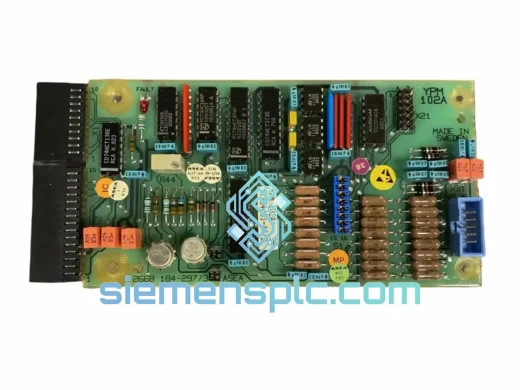
ABB YPM102A YT204001-AA Analog Output Module – AC 800M S800 I/O
S800
Origin SE
Analog Output Module