Schneider Electric
RFQ Ready
Schneider Electric ZCM3000 Counter Module
Origin FR
Programmable Counter Module
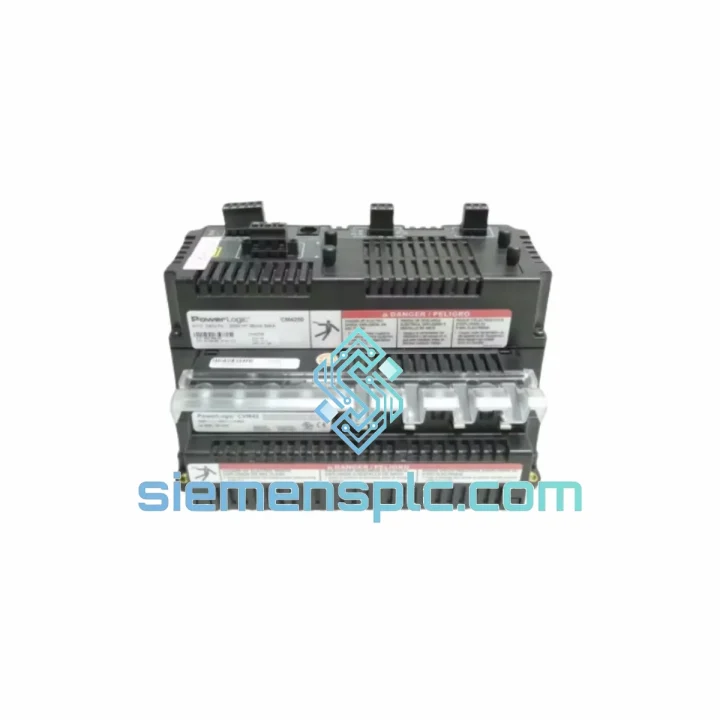
Request verified availability, condition, replacement risk review, packing options and courier lead time for CM4250 CVM42.
Click Request Quote and the part number is inserted into the inquiry form automatically.
Core fields for model confirmation and RFQ routing. Detailed product narrative remains below.
The Schneider Electric CM4250, catalogued internationally as the CVM42 under the Square D PowerLogic platform, is a panel-mount power and energy monitor designed for continuous, multi-parameter electrical measurement in medium-to-large industrial and commercial power distribution systems. Its primary function within a control loop is to serve as the measurement layer between the physical electrical infrastructure and the supervisory control or energy management system (EMS/SCADA). By delivering Class 0.5S accuracy across active energy, reactive energy, and apparent energy channels simultaneously, the CM4250 eliminates the need for separate revenue-grade sub-meters at feeder level, reducing both panel real estate and commissioning complexity.
In a typical motor control center (MCC) or main distribution board (MDB) architecture, the CM4250 sits downstream of the main circuit breaker and upstream of individual feeder protection devices. Its RS-485 Modbus RTU port connects to a SCADA master or building management system (BMS) gateway, transmitting over 100 measured and calculated parameters at configurable polling intervals. The device’s onboard demand calculation engine computes sliding-window and block-interval demand values independently of the host system, ensuring demand data integrity even during communication outages. This architecture makes the CM4250 a self-contained metering node rather than a passive transducer, which is a critical distinction in distributed energy monitoring topologies.
📩 Real-time Stock & RFQ: [email protected] | WhatsApp: +86 18359268345
| Parameter | Specification |
|---|---|
| Model / Part Number | CM4250 (CVM42) |
| Series | Square D PowerLogic |
| Manufacturer | Schneider Electric |
| Energy Accuracy Class | Class 0.5S per IEC 62053-22 |
| Voltage Input Range | Up to 690 V L-L direct; higher via PT |
| Current Input | 1 A or 5 A CT secondary |
| Frequency | 50 Hz / 60 Hz |
| Measured Parameters | V (L-N, L-L), A, kW, kVAR, kVA, PF, Hz, kWh, kVARh, kVAh, THD (V & I), demand |
| Harmonic Analysis | THD on all voltage and current channels |
| Display | Backlit multi-line LCD |
| Communication Port | RS-485 Modbus RTU (standard); optional Ethernet / BACnet expansion |
| Digital Inputs | Configurable (alarm, tariff switching, pulse input) |
| Relay Outputs | Configurable (alarm, demand response, kWh pulse) |
| Auxiliary Power Supply | 85–265 V AC / 100–300 V DC (wide-range) |
| Operating Temperature | -10 °C to +55 °C |
| Storage Temperature | -25 °C to +70 °C |
| Relative Humidity | 5% to 95% non-condensing |
| Mounting | Panel-mount (flush cutout or DIN rail adapter) |
| Protection Rating | IP52 (front panel) |
| Certifications | CE, UL, cUL, IEC 61557-12, IEC 62053-22 |
| Weight (packaged) | ~4.8 kg |
| Warranty | 12 months from date of shipment |
The CM4250’s measurement front-end employs a dedicated sigma-delta analog-to-digital conversion (ADC) architecture with independent sampling channels for each voltage and current input. Unlike multiplexed ADC designs that introduce phase-angle errors between channels, the CM4250’s simultaneous sampling topology ensures that power factor and reactive power calculations are derived from phase-coherent data — a requirement for Class 0.5S compliance under IEC 62053-22. The ADC sampling rate is sufficient to resolve harmonic components up to the 31st order on all channels concurrently, enabling THD computation without degrading the fundamental measurement accuracy.
The device’s EMC design follows IEC 61000-4 series test criteria. The input signal conditioning stage incorporates transient voltage suppression (TVS) diodes and common-mode chokes on both voltage and current input terminals, providing protection against fast transients (IEC 61000-4-4, 4 kV) and surge voltages (IEC 61000-4-5, 2 kV). The RS-485 communication interface is galvanically isolated from the measurement circuitry via an optocoupler barrier rated at 2.5 kV, preventing ground-loop currents from corrupting serial data or introducing common-mode noise into the measurement chain.
The onboard microprocessor executes the demand calculation algorithm in firmware, maintaining a rolling register of interval energy accumulations independent of host polling cycles. This means demand data is preserved across communication interruptions — a design choice that eliminates the data gaps that occur in host-computed demand systems when SCADA polling is disrupted. The non-volatile memory (NVRAM) retains energy registers and configuration parameters through power loss events without requiring a battery backup, reducing long-term maintenance overhead in installations where panel access is infrequent.
The relay output stage uses electromechanical relays with gold-plated contacts rated for low-current dry-circuit switching, making them suitable for both high-impedance alarm annunciator inputs and pulse-counting inputs on third-party energy management systems. The configurable pulse output (kWh, kVARh, or kVAh) supports standard pulse constants (e.g., 1 pulse/kWh, 10 pulses/kWh) compatible with IEC 62056-21 data exchange requirements.
Every CM4250 unit supplied by siemensplc.com is sourced through verified industrial distribution channels and undergoes a structured pre-shipment inspection protocol before leaving our Xiamen, China facility. The inspection sequence includes visual verification of manufacturer labels, holographic seals, and housing integrity; firmware revision documentation; functional power-on verification where test bench access permits; and anti-static packaging with humidity indicator cards. A certificate of conformance (CoC) is available upon request for each shipment lot.
Xiamen’s geographic position — adjacent to the Port of Xiamen, one of China’s top-ten container ports by throughput — enables competitive transit times to major industrial hubs globally. Air freight to Southeast Asia, the Middle East, and Europe typically achieves 3–7 business day door-to-door delivery. Sea freight consolidation (LCL/FCL) is available for bulk orders. We support DDP, DAP, and EXW Incoterms and can prepare export documentation including commercial invoice, packing list, certificate of origin, and HS Code 9028.30 classification for customs clearance. All shipments are insured against transit damage and loss.
For B2B procurement teams requiring vendor qualification documentation, we provide company registration certificates, business license copies, and quality management system documentation upon request. Lead time for in-stock units is 1–3 business days from order confirmation. For ex-stock or allocation-required quantities, availability is confirmed within 24 hours of RFQ submission.
Email: [email protected]
WhatsApp: +86 18359268345
Web: siemensplc.com
Location: Xiamen, China
© 2026 siemensplc.com. All rights reserved.
We check the full part number, brand, series and visible nameplate information before quotation.
Sales confirms stock path, condition option, quantity and realistic lead time for export dispatch.
DHL, FedEx, UPS or buyer courier arrangements can be reviewed with packing requirements.
Similar brand or category products for fast comparison and multi-item RFQ lists.