Schneider Electric
RFQ Ready
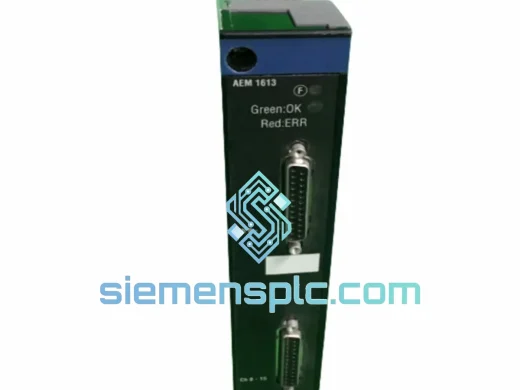
Schneider Electric TSXAEM1613 Analog Input Module
Origin FR
Analog Input Module
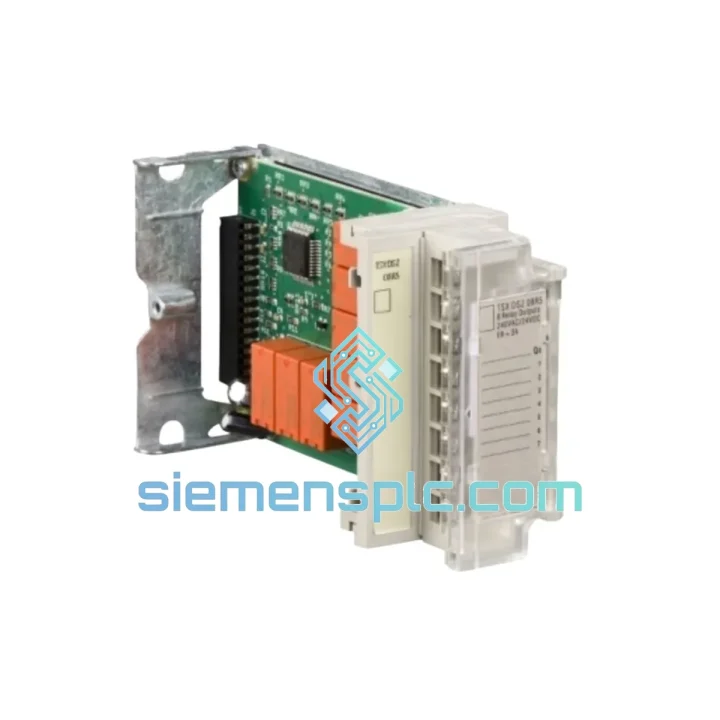
Request verified availability, condition, replacement risk review, packing options and courier lead time for TSXDSZ32R5.
Click Request Quote and the part number is inserted into the inquiry form automatically.
Core fields for model confirmation and RFQ routing. Detailed product narrative remains below.
The TSXDSZ32R5 occupies a well-defined position in the TSX Premium control architecture: it serves as the final command interface between the CPU’s deterministic scan cycle and the physical field layer. Each of its 32 relay output channels operates as an electrically isolated dry contact, capable of switching both AC and DC loads without imposing voltage constraints on the field wiring design. In a typical process cell — whether a motor starter panel, a valve manifold, or a conveyor drive interlock chain — this module translates the binary state written by the application program into a hard contact closure that energizes or de-energizes the connected actuator. The module’s role is not passive; its relay switching latency and contact bounce characteristics directly influence the determinism of the control loop’s output phase.
Within the TSX Premium rack, the TSXDSZ32R5 communicates over the proprietary X-Bus backplane at a fixed arbitration cycle synchronized to the CPU’s task period. The module does not buffer output states independently; it mirrors the image table written by the processor at the end of each scan, which means output update latency is bounded by the configured task period rather than by any module-internal queue. This architecture eliminates the risk of stale output states persisting across scan boundaries — a critical property in safety-adjacent interlocking applications where a relay that fails to open on command can cause equipment damage or personnel hazard.
Real-time Stock & RFQ: [email protected] | WhatsApp: +86 18359268345
| Parameter | Value |
|---|---|
| Part Number | TSXDSZ32R5 |
| Brand | Schneider Electric (Modicon) |
| Series | TSX Premium |
| Module Category | Relay Discrete Output Module |
| Number of Output Channels | 32 |
| Output Contact Type | Dry contact (NO), relay |
| Rated Switching Voltage (DC) | 24 VDC |
| Rated Switching Voltage (AC) | 48–240 VAC, 50/60 Hz |
| Max Switching Current per Channel | 2 A (resistive load) |
| Max Inrush Current | 10 A for ≤ 20 ms |
| Minimum Switching Load | 10 mA at 5 VDC |
| Electrical Isolation | Galvanic isolation, channel groups to backplane |
| Isolation Voltage (channel to backplane) | 1500 VAC, 1 min |
| Backplane Interface | TSX Premium X-Bus |
| Output Update Mode | Synchronized to CPU scan cycle (image table) |
| Operating Temperature | 0°C to +60°C |
| Storage Temperature | -25°C to +70°C |
| Relative Humidity | 5% to 95%, non-condensing |
| Degree of Protection | IP20 (module body) |
| Module Weight | 641 g |
| Standards Compliance | IEC 61131-2, EN 61000-6-2, EN 61000-6-4, CE |
| Programming Environment | Unity Pro, PL7 Pro |
| Warranty | 12 months from date of shipment |
The TSXDSZ32R5 organizes its 32 relay outputs into groups of 8, each group sharing a common terminal but maintaining galvanic isolation from adjacent groups and from the X-Bus backplane. This grouping strategy is deliberate: it allows the field engineer to wire different voltage domains — for example, 24 VDC motor contactors on channels 0–7 and 120 VAC solenoid valves on channels 8–15 — within a single module without cross-contamination of reference potentials. The isolation barrier between each group and the backplane is rated at 1500 VAC for one minute, which satisfies the dielectric withstand requirements of IEC 61131-2 for Class II equipment.
The relay coil drive circuitry is powered from the X-Bus 5 VDC rail, while the contact switching circuit is entirely field-powered. This separation means that a field-side short circuit or voltage transient cannot propagate back through the coil driver into the backplane logic supply. The coil driver incorporates a flyback suppression diode across the relay coil to clamp the inductive kick generated at de-energization, limiting the transient to approximately 1.5× the supply voltage and protecting the driver transistor from avalanche breakdown.
From an EMC perspective, the module’s PCB layout routes the relay coil drive lines away from the X-Bus data lines using a ground plane separation technique. The relay contacts themselves are physically positioned at the module’s front connector, maximizing the distance between the high-current switching zone and the backplane edge connector. This layout discipline reduces capacitive coupling between the switching transients on the contact side and the differential signal pairs on the X-Bus, which operate at TTL logic levels. The result is a module that maintains clean bus communication even when switching inductive loads at the rated 2 A current.
Contact bounce on relay closure is a known characteristic of electromechanical relays. The TSXDSZ32R5’s relay specification defines a maximum bounce duration of 5 ms on make and 3 ms on break. For applications where contact bounce would cause false counts or spurious interrupts in downstream logic, the application program must implement a software debounce filter in the input processing of the receiving device — the module itself does not incorporate hardware debounce on the output side, as this would introduce unnecessary latency in the switching path.
Every TSXDSZ32R5 unit supplied by siemensplc.com is sourced from verified channels with full traceability to authorized Schneider Electric distribution. Prior to dispatch, each module undergoes a structured inspection protocol: physical examination of housing integrity, label and date-code verification against known production batch formats, and where stock condition permits, functional verification of relay switching across all 32 channels using a calibrated test fixture. Units that do not pass inspection are quarantined and not offered for sale.
Packaging follows ESD-safe handling standards. Modules are placed in anti-static bags, cushioned with foam inserts rated for the module’s weight class, and boxed in double-wall corrugated cartons. Each shipment includes a packing list, commercial invoice, and a sourcing declaration. Certificate of origin is available upon request for customs clearance purposes.
Logistics operations are based in Xiamen, China. In-stock units ship within 1–3 business days of order confirmation. Available carriers include DHL Express, FedEx International Priority, and UPS Worldwide Expedited for time-sensitive requirements. Sea freight consolidation is available for bulk orders of 10 units or more. Export documentation is prepared in compliance with Chinese customs regulations and the import requirements of the destination country. Served markets include Southeast Asia, the Middle East, Europe, the Americas, and Africa. A 12-month warranty against manufacturing defects and functional failure under normal operating conditions is provided with every unit.
Email: [email protected]
WhatsApp: +86 18359268345
Web: siemensplc.com
Location: Xiamen, China
© 2026 siemensplc.com. All rights reserved.
We check the full part number, brand, series and visible nameplate information before quotation.
Sales confirms stock path, condition option, quantity and realistic lead time for export dispatch.
DHL, FedEx, UPS or buyer courier arrangements can be reviewed with packing requirements.
Similar brand or category products for fast comparison and multi-item RFQ lists.