Siemens
RFQ Ready
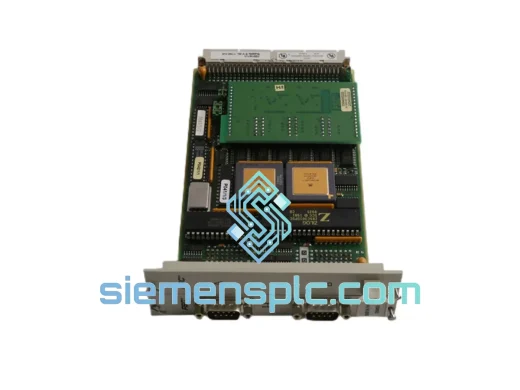
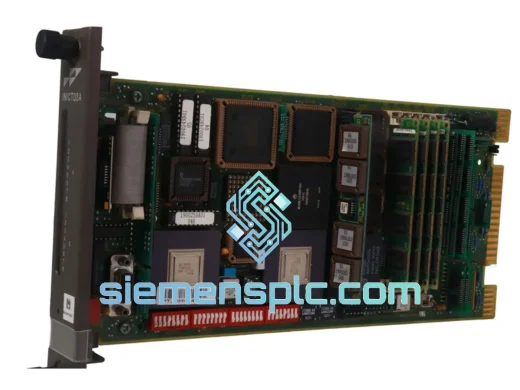
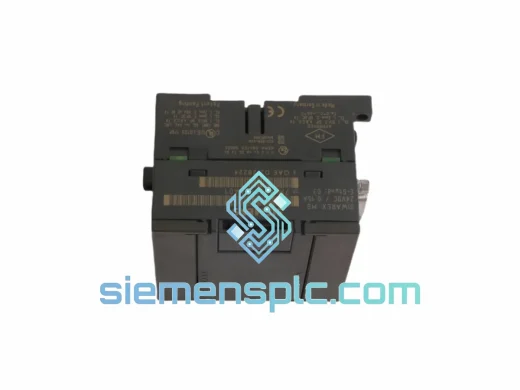
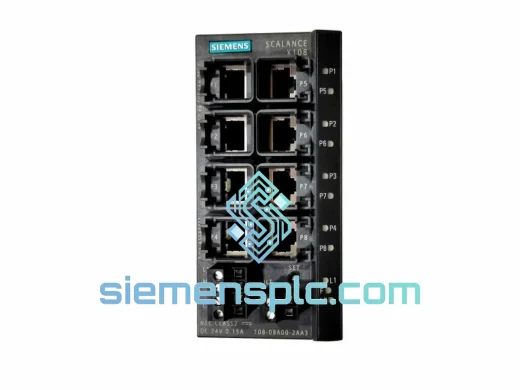
SIEMENS 6GK5108-0BA00-2AA3 Industrial Ethernet Switch
SIMATIC
Origin DE
Industrial Ethernet Switch
Request verified availability, condition, replacement risk review, packing options and courier lead time for 00-161-116.
Click Request Quote and the part number is inserted into the inquiry form automatically.
Core fields for model confirmation and RFQ routing. Detailed product narrative remains below.
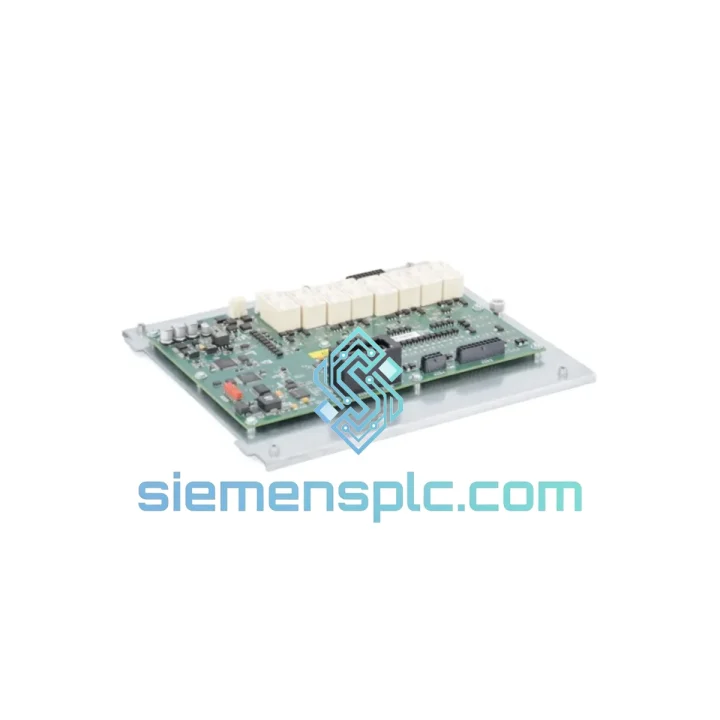
The Siemens 00-161-116 is a dedicated safety interface module engineered for integration within Siemens S7-series programmable controller environments. Its primary function is to serve as the certified hardware boundary between the standard automation bus and the functional safety layer — processing dual-channel safety-rated I/O signals, arbitrating emergency stop logic, and maintaining continuous diagnostic communication with the host CPU across the backplane. In process industries, discrete manufacturing, and machine safety applications where IEC 62061 SIL 2 or ISO 13849 PLd compliance is mandatory, this module provides the deterministic signal handling that software-only solutions cannot guarantee.
Within a typical S7 control cabinet, the 00-161-116 occupies a slot on the central rack or expansion rack and communicates with the CPU via the internal S7 backplane bus at cycle times consistent with the controller’s OB35 interrupt-driven safety scan. The module’s onboard microcontroller independently validates both input channels before forwarding a consolidated safe state signal to the CPU — a cross-comparison architecture that eliminates single-point failure modes in the safety chain. This design approach aligns with the hardware fault tolerance (HFT = 1) requirements defined in IEC 61508 Part 2 for SIL 2 subsystems.
The 00-161-116 is particularly relevant in applications where the safety PLC and the standard automation controller share a common rack infrastructure. Rather than deploying a fully separate F-CPU, engineers can leverage this module to extend safety-rated I/O capacity within an existing S7 rack, reducing cabinet footprint and simplifying wiring topology without sacrificing the architectural independence required by functional safety standards.
Real-time stock availability and RFQ: [email protected] | WhatsApp: +86 18359268345
| Parameter | Specification |
|---|---|
| Part Number | 00-161-116 |
| Manufacturer | Siemens AG |
| Product Series | S7 Safety Interface Series |
| Module Function | Dual-channel safety I/O interface and cross-comparison arbitration |
| Safety Integrity Level | SIL 2 per IEC 62061 / IEC 61508 |
| Performance Level | PLd per ISO 13849-1 |
| Hardware Fault Tolerance | HFT = 1 (dual-channel architecture) |
| Supply Voltage | 24 V DC (SELV/PELV compliant) |
| Power Consumption | ≤ 4.5 W typical at rated load |
| Input Signal Type | Dual-channel digital safety inputs, 24 V DC, IEC 61131-2 Type 1/3 |
| Response Time (Safety) | ≤ 10 ms from input de-energization to safe state output |
| Backplane Interface | S7 internal bus, slot-mount, rack-compatible |
| Diagnostic Coverage (DC) | ≥ 90% (high DC category per IEC 61508) |
| Operating Temperature | 0 °C to +60 °C |
| Storage Temperature | −40 °C to +70 °C |
| Relative Humidity | 5% to 95%, non-condensing |
| Protection Class | IP20 (panel-mount installation) |
| EMC Compliance | EN 61000-4-2 (ESD), EN 61000-4-4 (EFT/Burst), EN 61000-4-5 (Surge) |
| Vibration Resistance | 10–57 Hz, 0.075 mm amplitude; 57–150 Hz, 1 g (IEC 60068-2-6) |
| Shock Resistance | 15 g, 11 ms half-sine (IEC 60068-2-27) |
| Dimensions (W × H × D) | 40 mm × 125 mm × 117 mm (standard S7 module form factor) |
| Weight | Approx. 320 g |
| Certifications | CE, UL, cUL, TÜV SÜD functional safety assessment |
| Warranty | 12 months from date of shipment |
Dual-Channel Cross-Comparison Architecture: The 00-161-116 implements a two-processor cross-comparison topology. Each input channel is independently sampled by a dedicated microcontroller. The two processors exchange their sampled values over an internal comparison bus at a fixed arbitration interval. If the two values diverge beyond the permissible discrepancy window — typically 300 ms for asynchronous dual-channel inputs — the module autonomously drives its output to the de-energized (safe) state and sets a diagnostic fault bit readable by the host CPU via the backplane. This architecture eliminates common-cause failures that would otherwise propagate through a single-processor design.
EMC Shielding and Signal Conditioning: The module’s PCB layout employs a multi-layer stackup with dedicated ground planes separating the digital logic layer from the I/O interface layer. Transient voltage suppressors (TVS diodes) rated at ±1.5 kV are placed at each input terminal to clamp surge events per EN 61000-4-5 Level 3. Optocouplers with a minimum creepage distance of 8 mm provide galvanic isolation between field wiring and the backplane logic, achieving a working voltage isolation of 500 V AC. This isolation architecture is critical in environments with variable-frequency drives (VFDs) or large inductive loads that generate conducted interference on the 24 V DC supply rail.
Watchdog and Self-Test Mechanism: An independent hardware watchdog timer monitors the cross-comparison processor pair. If either processor fails to complete its comparison cycle within the defined window, the watchdog asserts a hardware reset and simultaneously drives the safe output to the de-energized state. This self-test runs continuously in the background without interrupting normal I/O processing, achieving a diagnostic test interval (T_I) of less than 1 second — a requirement for maintaining the claimed diagnostic coverage of ≥ 90%.
Backplane Bus Communication: The module communicates with the S7 CPU via the internal backplane bus using a deterministic token-passing protocol. Safety-relevant status bytes — including channel discrepancy flags, watchdog status, and supply voltage monitoring results — are mapped to a fixed address range in the CPU’s process image of inputs (PII). The CPU’s F-runtime group reads these status bytes within every safety program cycle, enabling the application program to implement application-level responses to module-level faults without relying on hardware interlocks alone.
Every unit of the Siemens 00-161-116 supplied by siemensplc.com is sourced as genuine Siemens OEM stock. Each module undergoes a structured incoming inspection protocol before entering our inventory: visual inspection of PCB, connectors, and labeling for authenticity markers; verification of firmware version against Siemens release documentation; and functional power-on test confirming backplane communication and diagnostic output integrity.
Our warehouse is located in Xiamen, China — a major logistics hub with direct access to international express carriers including DHL Express, FedEx International Priority, and UPS Worldwide Expedited. Standard export documentation — commercial invoice, packing list, and certificate of origin — is prepared for every shipment. For customers in the EU, Middle East, Southeast Asia, and the Americas, typical transit times via express freight are 3–7 business days from order confirmation.
All modules are packed in anti-static ESD bags, placed in foam-lined cartons, and sealed with tamper-evident tape. Fragile and electrostatic-sensitive labeling is applied to all outer cartons. For bulk orders, palletized sea freight options are available with full container load (FCL) and less-than-container load (LCL) arrangements coordinated through our freight forwarding partners.
The 12-month warranty covers manufacturing defects and functional failures under normal operating conditions. Warranty claims are processed within 5 business days of receipt of the returned unit, with replacement shipment dispatched upon fault confirmation.
Email: [email protected]
WhatsApp: +86 18359268345
Web: siemensplc.com
Location: Xiamen, China
© 2026 siemensplc.com. All rights reserved.
We check the full part number, brand, series and visible nameplate information before quotation.
Sales confirms stock path, condition option, quantity and realistic lead time for export dispatch.
DHL, FedEx, UPS or buyer courier arrangements can be reviewed with packing requirements.
Similar brand or category products for fast comparison and multi-item RFQ lists.