Siemens
RFQ Ready
SIEMENS 6DP1310-8AA DCS Safety Module – FUM310 Series
TELEPERM XP
Origin DE
DCS Safety I/O Module
Request verified availability, condition, replacement risk review, packing options and courier lead time for 16207-61/11.
Click Request Quote and the part number is inserted into the inquiry form automatically.
Core fields for model confirmation and RFQ routing. Detailed product narrative remains below.
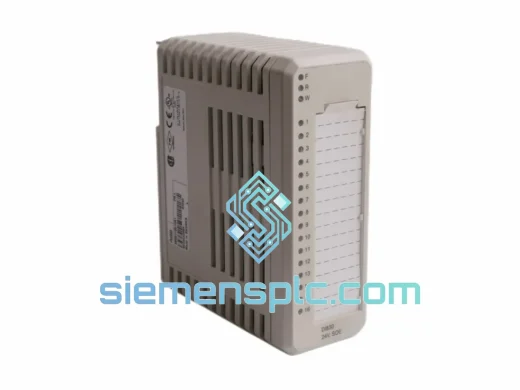
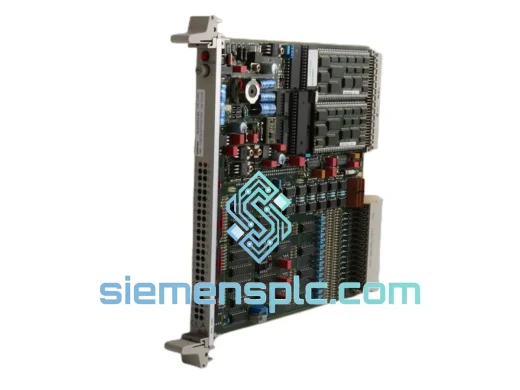
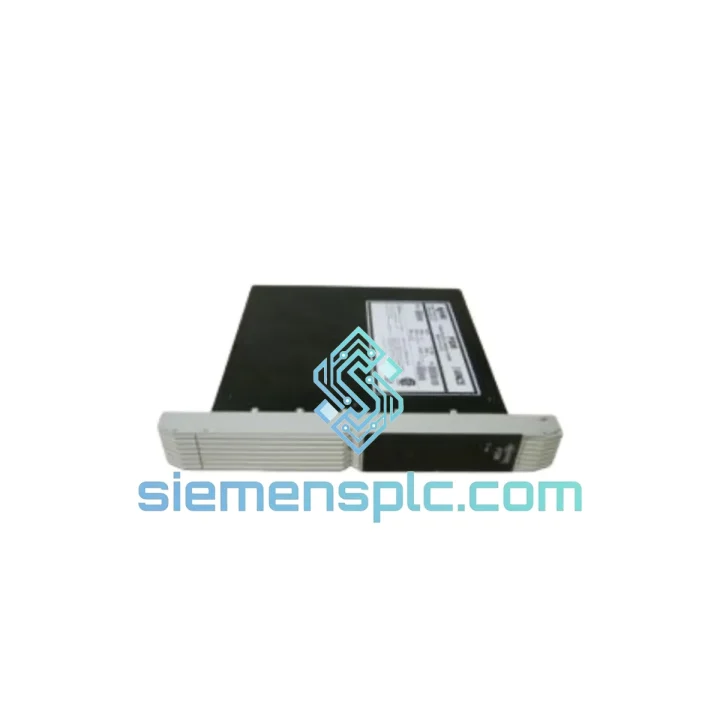
The SIEMENS 39RTMCAN (order number 16207-61/11) is a dedicated resistance temperature measurement module engineered for integration within the TELEPERM XP distributed control system platform. Its primary function is the acquisition, conditioning, and digital conversion of signals from Pt100 and Ni100 resistance temperature detectors (RTDs), delivering calibrated temperature data to the TELEPERM XP central processing unit via an internal CAN bus. In thermal-critical processes — power generation, hydrocarbon refining, chemical synthesis — this module occupies a non-negotiable position in the measurement chain. Loss of a single RTM channel can degrade loop control fidelity, trigger spurious alarms, or force manual override of automated sequences. Maintaining a verified spare of the 39RTMCAN is therefore a standard practice in any TELEPERM XP-based plant with a mature spare parts strategy.
TELEPERM XP was developed by SIEMENS for high-availability process automation in power plants and large-scale industrial facilities. The architecture separates field signal acquisition from processing logic through a modular I/O subsystem, where each module type handles a specific signal class. The 39RTMCAN occupies the resistance temperature acquisition role: it accepts low-resistance RTD signals (typically 0–400 Ω for Pt100 at operating range), performs linearization against the IEC 60751 characteristic curve for Pt100 or the DIN 43760 curve for Ni100, and transmits the resulting engineering-unit value over the CAN bus to the AS 620 automation server. This architecture eliminates the need for external signal conditioners or transmitters on RTD loops, reducing both installed hardware count and potential failure nodes in the measurement path.
Real-time Stock & RFQ: [email protected] | WhatsApp: +86 18359268345
| Parameter | Specification |
|---|---|
| Part Number / SKU | 39RTMCAN | 16207-61/11 |
| Manufacturer | SIEMENS AG |
| Product Family | TELEPERM XP DCS |
| Module Function | Resistance Temperature Measurement (RTM) |
| Supported Sensor Types | Pt100 (IEC 60751), Ni100 (DIN 43760) |
| Wiring Configuration | 2-wire, 3-wire, 4-wire RTD connection |
| Measurement Range (Pt100) | −200 °C to +850 °C |
| Measurement Range (Ni100) | −60 °C to +250 °C |
| Resolution | ≤ 0.1 °C (typical, dependent on wiring configuration) |
| System Bus Interface | CAN bus (Controller Area Network, ISO 11898) |
| Isolation | Galvanic isolation, field side vs. system bus |
| Mounting | TELEPERM XP rack-mount chassis (standard I/O slot) |
| Operating Temperature | 0 °C to +60 °C (ambient, rack-mounted) |
| Storage Temperature | −25 °C to +70 °C |
| Relative Humidity | 5 % to 95 %, non-condensing |
| Power Supply | Supplied via TELEPERM XP backplane (24 V DC bus) |
| Weight (module only) | approx. 350 g |
| Compliance | CE, EMC Directive 2014/30/EU |
| Warranty | 12 months from date of dispatch |
The 39RTMCAN’s internal signal path begins at the field terminal block, where the RTD element is excited by a precision constant-current source. This excitation current — typically in the range of 1–2 mA — is low enough to prevent self-heating errors in the sensor element while generating a measurable voltage drop proportional to the RTD resistance. For 3-wire and 4-wire configurations, the module’s measurement circuit employs a Kelvin sensing topology: the excitation and sense conductors are separated, allowing the module’s analog front-end to cancel lead resistance errors mathematically before digitization. This is critical in long cable runs common in power plant environments, where a 100-meter cable at 0.5 Ω/m per conductor would otherwise introduce a 50 Ω error — equivalent to approximately 130 °C offset on a Pt100 curve.
The analog-to-digital conversion stage uses a sigma-delta (ΣΔ) architecture, which provides high resolution and inherent rejection of power-frequency interference (50/60 Hz). The oversampling ratio of the ΣΔ converter effectively acts as a digital low-pass filter, attenuating noise from adjacent power cables and variable-frequency drives — a persistent EMC challenge in industrial panel environments. The digitized resistance value is then linearized in firmware against the IEC 60751 or DIN 43760 polynomial, producing a calibrated temperature in engineering units before transmission.
The CAN bus interface on the 39RTMCAN implements the ISO 11898 physical layer with differential signaling at up to 1 Mbit/s. Differential transmission provides common-mode noise rejection exceeding 30 dB, making the bus robust against ground potential differences between rack locations — a real-world condition in large switchgear rooms where ground loops between panels can reach several volts. The module’s CAN controller handles message arbitration autonomously, ensuring that a high-priority alarm message from this module is not blocked by lower-priority traffic from adjacent I/O modules. The galvanic isolation barrier between the field terminals and the CAN bus side is implemented using optocouplers and isolated DC/DC converters, providing a minimum isolation voltage of 500 V AC — sufficient to protect the system bus from field-side transients generated by motor switching or lightning-induced surges on sensor cables.
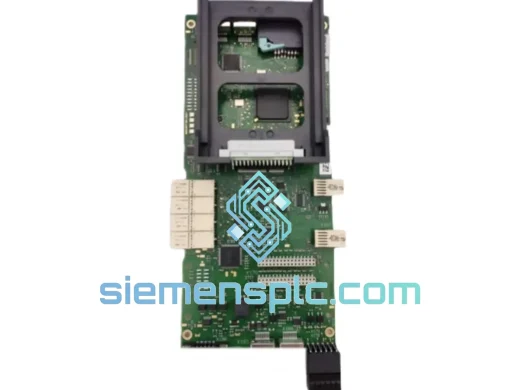
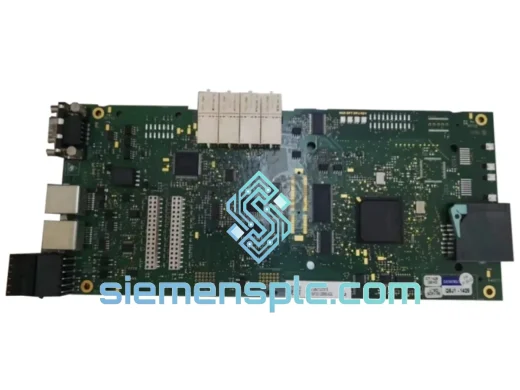
Every SIEMENS 39RTMCAN 16207-61/11 unit dispatched from our Xiamen facility undergoes a structured verification process before packaging. Visual inspection covers connector integrity, PCB surface condition, component seating, and label legibility. Functional verification is performed using TELEPERM XP-compatible test equipment to confirm CAN bus enumeration, RTD channel response across the measurement range, and isolation integrity. Units that do not pass all verification steps are quarantined and not offered for sale.
Packaging uses anti-static shielding bags, moisture-barrier outer packaging with desiccant, and closed-cell foam inserts sized to the module’s mechanical envelope. This packaging specification is designed to survive the mechanical shock and humidity variation of international air freight — DHL Express, FedEx International Priority, and UPS Worldwide Express are our primary carriers for time-sensitive orders. Transit time from Xiamen, China to major industrial hubs is typically 3–5 business days to Europe, 4–6 business days to North America, and 2–4 business days to Southeast Asia and the Middle East.
Export documentation — commercial invoice, packing list, certificate of conformity, and HS code declaration (HS 8537.10) — is prepared for every shipment. For customers in regions requiring import permits or end-user declarations for industrial control equipment, our logistics team provides pre-shipment document review to prevent customs delays. All units carry a 12-month warranty from the date of dispatch, covering functional failure under normal operating conditions.
Email: [email protected]
WhatsApp: +86 18359268345
Web: siemensplc.com
Location: Xiamen, China
© 2026 siemensplc.com. All rights reserved.
We check the full part number, brand, series and visible nameplate information before quotation.
Sales confirms stock path, condition option, quantity and realistic lead time for export dispatch.
DHL, FedEx, UPS or buyer courier arrangements can be reviewed with packing requirements.
Similar brand or category products for fast comparison and multi-item RFQ lists.