Siemens
In Stock OK
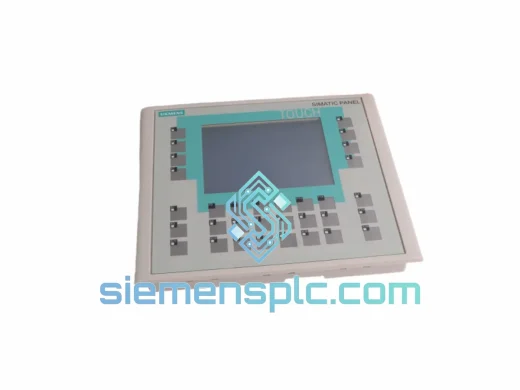
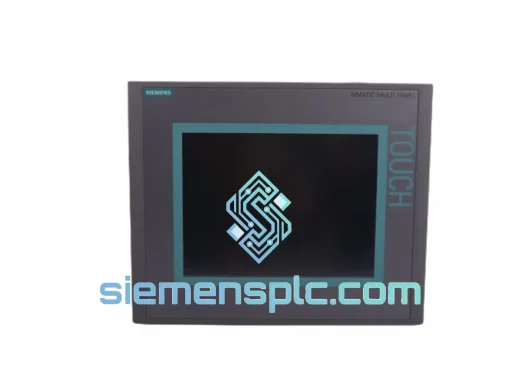
Siemens 6AV6643-0BA01-1AX0 HMI Operator Panel – SIMATIC TP 177B
Request verified availability, condition, replacement risk review, packing options and courier lead time for 6AV6643-0BA01-1AX0.
BrandSiemens
Part Number6AV6643-0BA01-1AX0
ConditionAvailability Check
Lead TimeRFQ Confirmation
DocumentsDatasheet / photos by RFQ
ShippingExport packing available
Auto-filled RFQ
6AV6643-0BA01-1AX0
Click Request Quote and the part number is inserted into the inquiry form automatically.
- Reply by email: [email protected]
- WhatsApp / Tel: +86 18359268345
- Mon-Sat 9:00-18:00 GMT+8
Procurement Data
Key Product Information
Core fields for model confirmation and RFQ routing. Detailed product narrative remains below.
- Brand
- Siemens
- Primary Part Number
- 6AV6643-0BA01-1AX0
- Product Type
- HMI Operator Panel
- Series / Family
- WinCC
- Country of Origin
- DE
- Catalog Category
- HMI Panels
- Operating Temp.
- 0 °C to +50 °C (horizontal mounting)
- Warranty
- 12 months from dispatch date
Model confirmed for inquiry
6AV6643-0BA01-1AX0
Send quantity, destination and urgency. The RFQ form keeps this part number attached.
Request Quote
Product Overview
Siemens 6AV6643-0BA01-1AX0 — Operator Interface Node in PROFIBUS-Based Distributed Control Systems
The 6AV6643-0BA01-1AX0 is a 5.7-inch resistive-touch HMI panel from Siemens’ SIMATIC TP 177B series, designed to serve as the operator interface layer in distributed control architectures built around SIMATIC S7-200, S7-300, and S7-400 PLCs. Its role is precisely defined: it occupies the boundary between the deterministic PLC execution domain and the human decision-making domain, exchanging process variables, alarm states, and recipe parameters bidirectionally over PROFIBUS DP or MPI at up to 12 Mbit/s. The panel does not introduce latency into the PLC scan cycle — it participates as a passive bus node, polled by the PLC master at a configurable interval, so HMI communication faults cannot propagate into the controller’s execution thread.
The display assembly uses a 5.7-inch TFT matrix at 320 × 240 px (QVGA) with a 256-color palette. Luminance is sufficient for reading process values under fluorescent workshop lighting without anti-glare film. The resistive touch overlay operates on a four-wire voltage-divider principle: operator pressure deflects the top polyester layer onto the ITO-coated glass substrate, generating an analog voltage pair that the touch controller samples and median-filters to reject single-point noise. The activation force threshold of approximately 0.5–1.0 N is higher than capacitive alternatives, which prevents false activations from liquid droplets, condensation, or gloved-hand proximity — a measurable advantage in food processing, pharmaceutical, and chemical handling environments.
The panel runs a hardened Windows CE 5.0 kernel hosting a fixed-function WinCC flexible runtime. This architecture eliminates the non-deterministic scheduling overhead of general-purpose operating systems. The CE kernel’s hardware interrupt latency — sub-millisecond under normal load — allows the PROFIBUS communication stack to service bus cycles without frame loss at standard update rates. No user-installable background services compete for CPU time; the runtime and kernel are the only active processes, which means screen refresh latency is bounded and predictable across the panel’s operating temperature range of 0 °C to +50 °C.
Power input is 24 V DC nominal, with an operating range of 20.4–28.8 V DC, directly compatible with SITOP PSU100S and PSU200M series DIN-rail supplies without auxiliary regulation. Steady-state consumption is approximately 7 W. Cold-start inrush current peaks at ≤ 3.5 A for the duration of the capacitor charge cycle, which must be accounted for when sizing the supply’s current-limiting characteristics. The front bezel achieves IP65 per IEC 60529, sealing the display assembly against dust and low-pressure water jets. The rear housing is IP20, requiring installation inside a closed control cabinet when the process environment exceeds IP20 conditions.
Real-time Stock & RFQ: [email protected] | WhatsApp: +86 18359268345
Technical Parameters
| Parameter | Specification |
|---|---|
| Part Number | 6AV6643-0BA01-1AX0 |
| Product Series | SIMATIC TP 177B |
| Display Size | 5.7 inch TFT Color |
| Touch Technology | Resistive, 4-wire |
| Resolution | 320 × 240 px (QVGA) |
| Color Depth | 256 colors |
| Processor | 32-bit RISC |
| Project Flash Memory | 512 KB |
| Recipe Flash Memory | 512 KB (separate partition) |
| Primary Communication | PROFIBUS DP / MPI via RS-485, up to 12 Mbit/s |
| Secondary Communication | RS-422 / RS-485 (PPI, free-port) |
| USB Interface | Type-A Host — firmware update, project transfer |
| Operating System | Windows CE 5.0 (fixed-function) |
| Engineering Tool | WinCC flexible 2008 SP3 or later |
| Supply Voltage | 24 V DC nominal (20.4–28.8 V DC) |
| Power Consumption | ≈ 7 W steady state |
| Inrush Current | ≤ 3.5 A at 24 V DC (cold start) |
| Front Protection | IP65 per IEC 60529 |
| Rear Protection | IP20 per IEC 60529 |
| Operating Temperature | 0 °C to +50 °C (horizontal mounting) |
| Storage Temperature | −20 °C to +60 °C |
| Relative Humidity | 10–90% RH, non-condensing |
| Vibration (IEC 60068-2-6) | 10–58 Hz: 0.075 mm amplitude; 58–150 Hz: 1 g |
| Shock (IEC 60068-2-27) | 15 g / 11 ms half-sine |
| Panel Cutout (W × H) | 192 mm × 138 mm |
| Overall Dimensions (W × H × D) | 214 mm × 158 mm × 46 mm |
| Weight | ≈ 1.28 kg |
| EMC Immunity | EN 61000-6-2 |
| EMC Emission | EN 61000-6-4 |
| Safety Certification | UL 508 (Industrial Control Equipment) |
| RoHS | Compliant — Directive 2011/65/EU |
| Country of Origin | Germany |
| Warranty | 12 months from dispatch date |
Hardware Logical Analysis
PROFIBUS DP / MPI Bus Node Architecture
The RS-485 transceiver integrated into the 6AV6643-0BA01-1AX0 supports automatic baud rate detection across the full PROFIBUS speed range (9.6 kbit/s to 12 Mbit/s), eliminating manual DIP-switch configuration during commissioning. On an MPI segment, the panel registers as a passive node with a fixed station address (configurable via WinCC flexible project settings). It does not generate token frames or act as a bus master. The PLC retains sole token authority, polling the HMI at the configured update rate. This topology guarantees that a panel power loss or communication fault cannot corrupt the MPI token ring or stall the PLC’s scan cycle — a structural safety property that distinguishes PROFIBUS-connected HMIs from Ethernet-based panels where TCP retransmission timeouts can introduce variable latency into the communication path.
EMC Design — Conducted and Radiated Interference Suppression
The 24 V DC power input stage incorporates an LC filter network that attenuates conducted interference in the 150 kHz–30 MHz band, covering the primary emission spectrum of variable-frequency drives, switched-mode power supplies, and inductive load switching transients common in motor control centers. The filter’s insertion loss is sufficient to meet EN 61000-6-2 Class A immunity limits without external line filters in standard industrial cabinet installations. The resistive touch overlay is bonded to the panel frame ground through a low-impedance path, providing a defined discharge route for electrostatic events up to the levels specified in IEC 61000-4-2 (contact discharge: 4 kV, air discharge: 8 kV). This grounding arrangement prevents charge accumulation on the display surface that would otherwise cause phantom touch registrations in high-static environments such as plastic film extrusion lines or powder coating booths.
Flash Memory Partitioning and Data Integrity
Project data and recipe data occupy separate Flash memory partitions. This partitioning is architecturally significant: a recipe write operation — triggered by an operator executing a product changeover — cannot corrupt the project execution partition because the two address spaces are physically isolated at the Flash controller level. The CE 5.0 file system manages each partition independently, and the WinCC flexible runtime performs a CRC check on the project partition at startup. If the CRC fails (indicating Flash corruption from a power interruption during a project download), the runtime enters a safe state and displays a diagnostic message rather than executing a corrupted project — a behavior that prevents undefined HMI output states from reaching the operator interface.
Backlight and Thermal Management
The CCFL backlight assembly operates within a defined luminance-versus-temperature curve. Below 0 °C, CCFL strike voltage increases significantly, which is why the panel’s lower operating limit is specified at 0 °C for horizontal mounting. At the upper limit of +50 °C ambient, the panel’s thermal design maintains the display controller junction temperature within its rated range without forced-air cooling, provided the cabinet’s natural convection path is unobstructed. The runtime’s backlight hour counter enables predictive maintenance scheduling: operators can configure an alarm threshold (e.g., 20,000 hours) to trigger a maintenance notification before luminance degradation reaches the point where process values become difficult to read under ambient lighting conditions.
System Integration Benefits
- Direct PROFIBUS DP / MPI connection without gateway hardware: The panel connects natively to S7-300/400 DP masters and S7-200/300/400 MPI networks via a single Sub-D9 connector, eliminating CP communication processors, Ethernet-to-PROFIBUS gateways, and the associated configuration, licensing, and failure-mode complexity those devices introduce.
- Bounded HMI update latency: The WinCC flexible runtime’s tag update cycle — configurable from 100 ms to 10 s per tag group — is deterministic within the PROFIBUS polling interval. Engineers can specify worst-case screen refresh times in their HMI design documentation, a requirement in safety-reviewed machine designs where operator response time assumptions must be justified.
- Non-volatile alarm buffer with RTC time-stamping: Up to 512 alarm events are stored with real-time clock time-stamps in non-volatile memory. This buffer survives panel power cycles, enabling post-incident analysis of alarm sequences without a separate data historian or SCADA system for low-complexity machines.
- On-panel recipe management for multi-product production: The 512 KB recipe Flash partition supports hundreds of recipe records (record count depends on the number of parameters per recipe). Operators execute product changeovers directly from the panel without inserting USB media, reducing contamination risk in hygienic production environments and eliminating the procedural step of locating and connecting a laptop.
- WinCC flexible project migration path to Comfort Panels: Projects developed for the TP 177B can be migrated to SIMATIC Comfort Panels (e.g., TP 700, TP 900) using the WinCC flexible migration wizard. Tag mappings, alarm definitions, and screen layouts are preserved, protecting the engineering investment when production capacity expansions require a larger display or additional communication interfaces.
- IP65 front seal for wash-down and coolant splash environments: The perimeter gasket maintains IP65 compliance over the panel’s service life under normal mounting conditions. The mounting clamp system distributes clamping force uniformly around the perimeter, maintaining gasket deflection within the 0.5–1.0 mm range required for IP65 integrity without periodic re-torquing — a maintenance advantage over older panel designs that used screw-type clamps requiring annual inspection.
- 24 V DC compatibility with standard SITOP supply infrastructure: The 20.4–28.8 V DC operating range accommodates the output voltage tolerance and load-regulation droop of SITOP PSU100S and PSU200M series supplies under full load, without requiring a dedicated regulated supply or voltage stabilizer for the HMI circuit.
- USB host port for field commissioning and firmware maintenance: The USB Type-A host port accepts standard USB flash drives for WinCC flexible runtime updates and project transfers. This eliminates the requirement for a laptop at the panel during commissioning or firmware maintenance cycles — a practical advantage in installations where panel access requires scaffolding or confined-space entry procedures.
- Standardized 192 × 138 mm cutout for retrofit applications: The cutout dimensions conform to DIN 43700, making the TP 177B a dimensional replacement for legacy operator terminals in retrofit projects. Existing enclosure cutouts typically require no modification, reducing retrofit labor cost and enclosure downtime.
- Passive bus node topology protects PLC scan cycle integrity: Because the panel never acts as a bus master, a panel fault cannot stall the PROFIBUS token ring or delay PLC I/O updates. The PLC continues executing its scan cycle at the programmed rate regardless of HMI communication state — a structural property that simplifies the safety analysis of the overall control system.
Quality Assurance & Global Logistics
Each 6AV6643-0BA01-1AX0 unit dispatched from our Xiamen, China facility is a genuine Siemens-manufactured component sourced through verified supply channels. Pre-shipment inspection covers: visual verification of the Siemens holographic authenticity label and serial number traceability, physical inspection of the Sub-D9 connector pin geometry and USB port mechanical integrity, power-on functional test confirming TFT illumination, touch response across the active area, and PROFIBUS connector continuity. Units that do not pass all inspection criteria are quarantined and not dispatched.
Packaging follows a three-layer protocol: the panel is placed in an anti-static polyethylene bag, seated in custom-cut EPE foam inserts sized to the panel’s 214 × 158 × 46 mm envelope, and enclosed in a double-wall corrugated carton rated for the 1.28 kg panel weight with a minimum 3:1 safety margin on the carton’s edge crush test rating. This packaging configuration is validated to protect the panel against the shock and vibration levels encountered in standard air freight handling.
International shipments are dispatched via DHL Express, FedEx International Priority, or UPS Worldwide Express, with transit times of 3–7 business days to most destinations in Europe, North America, Southeast Asia, and the Middle East. All shipments include a commercial invoice, packing list, and certificate of origin. HS Code 853710 is declared on all export documentation. CE Declaration of Conformity and UL test report copies are provided upon request for destinations requiring import compliance documentation.
A 12-month warranty from the dispatch date covers manufacturing defects and functional failures under normal operating conditions as defined in the Siemens product specification. Warranty claims are processed with a target initial response time of 2 business days. Replacement units are dispatched from Xiamen stock upon claim approval. Units showing evidence of overvoltage, reverse polarity connection, physical impact damage, or unauthorized disassembly are excluded from warranty coverage.
Contact Information
Email: [email protected]
WhatsApp: +86 18359268345
Web: siemensplc.com
Location: Xiamen, China
© 2026 siemensplc.com. All rights reserved.
Ready to quote
[email protected]
Send This Part Number to Sales
RFQ workflow
Quality workflow ->
Confirmation Process
01Model confirmation
We check the full part number, brand, series and visible nameplate information before quotation.
02Availability reply
Sales confirms stock path, condition option, quantity and realistic lead time for export dispatch.
03Packing & courier
DHL, FedEx, UPS or buyer courier arrangements can be reviewed with packing requirements.
Continue sourcing
Browse full catalog ->
Related Automation Parts
Similar brand or category products for fast comparison and multi-item RFQ lists.
Siemens
RFQ Ready
Siemens 6AV6643-0CD01-1AX1 HMI Operator Panel – SIMATIC OP 177B
WinCC
Origin DE
HMI Operator Panel