Siemens
In Stock OK
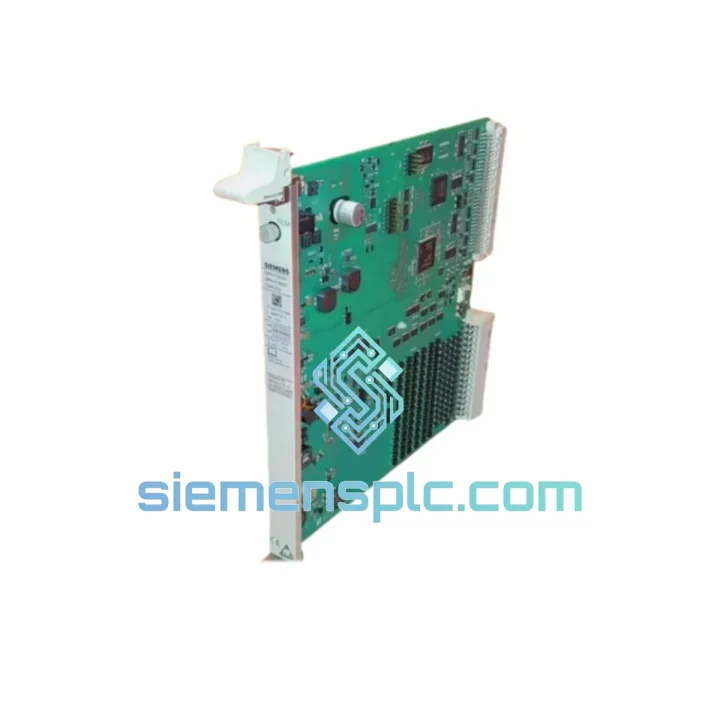
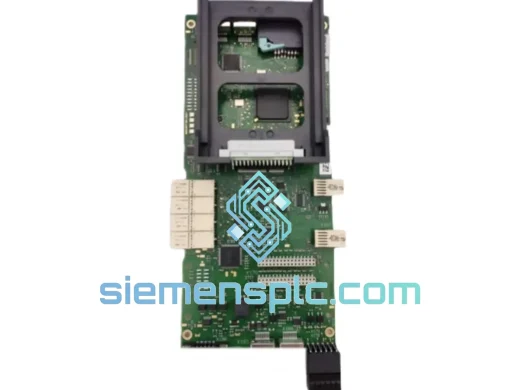
Siemens 6DP1211-7AA DCS Field Unit Module – TELEPERM M
Request verified availability, condition, replacement risk review, packing options and courier lead time for 6DP1211-7AA.
BrandSiemens
Part Number6DP1211-7AA
ConditionAvailability Check
Lead TimeRFQ Confirmation
DocumentsDatasheet / photos by RFQ
ShippingExport packing available
Auto-filled RFQ
6DP1211-7AA
Click Request Quote and the part number is inserted into the inquiry form automatically.
- Reply by email: [email protected]
- WhatsApp / Tel: +86 18359268345
- Mon-Sat 9:00-18:00 GMT+8
Procurement Data
Key Product Information
Core fields for model confirmation and RFQ routing. Detailed product narrative remains below.
- Brand
- Siemens
- Primary Part Number
- 6DP1211-7AA
- Product Type
- DCS Field Unit Module
- Product Family
- Other series
- Manufacturer
- Siemens AG
- Country of Origin
- DE
- Catalog Category
- I/O Modules
- Operating Temp.
- 0 °C to +60 °C
- Warranty
- 12 months from date of shipment
- Compliance
- CE; IEC 61131-2 environmental class
Model confirmed for inquiry
6DP1211-7AA
Send quantity, destination and urgency. The RFQ form keeps this part number attached.
Request Quote
Product Overview
Siemens 6DP1211-7AA (FUM211): Field Unit Module for TELEPERM M Distributed Control Systems
The Siemens 6DP1211-7AA, designated internally as the FUM211 (Field Unit Module), occupies a structurally critical position within the TELEPERM M distributed control architecture. Its primary function is to serve as the physical and logical boundary between field instrumentation — transmitters, actuators, limit switches — and the TELEPERM M process bus. Rather than acting as a passive signal conduit, the FUM211 performs local signal conditioning, galvanic isolation, and protocol-level framing before forwarding process data upstream to the automation station (AS230, AS235, or AS488). This distributed intelligence model reduces bus loading and ensures that transient field faults do not propagate into the control loop.
In a typical TELEPERM M installation, the FUM211 occupies a dedicated slot within the 6DP1xxx-series subrack. Each subrack can host multiple FUM modules, each independently addressable via the SINEC L1 process bus. The module’s onboard microcontroller handles cyclic polling from the automation station, returning structured data frames that include both process values and diagnostic status bits. This architecture allows the AS to distinguish between a genuine process deviation and a field wiring fault — a distinction that is essential for alarm management in continuous process industries.
Real-time Stock & RFQ: [email protected] | WhatsApp: +86 18359268345
Technical Parameters
| Parameter | Value |
|---|---|
| Manufacturer | Siemens AG |
| Part Number (SKU) | 6DP1211-7AA |
| Module Designation | FUM211 – Field Unit Module |
| Product Series | TELEPERM M DCS |
| Module Function | Remote I/O field interface with local signal conditioning |
| Communication Bus | SINEC L1 / TELEPERM M process bus |
| Supported Signal Types | 4–20 mA analog inputs/outputs; 24 V DC digital inputs/outputs |
| Supply Voltage | 24 V DC (nominal), ±15% tolerance |
| Power Consumption | ≤ 8 W (typical operating load) |
| Galvanic Isolation | Channel-to-bus and channel-to-channel optical isolation |
| Operating Temperature | 0 °C to +60 °C |
| Storage Temperature | −25 °C to +70 °C |
| Relative Humidity | 5% to 95%, non-condensing |
| Mounting | TELEPERM M standard subrack (6DP1xxx series) |
| Dimensions (W × H × D) | Eurocard format, single-width slot |
| Weight | Approx. 500 g |
| Country of Origin | Germany |
| Compliance | CE; IEC 61131-2 environmental class |
| Compatible Automation Stations | AS230, AS235, AS488 |
| Warranty | 12 months from date of shipment |
Hardware Logical Analysis
The FUM211’s hardware design reflects the engineering priorities of continuous-process DCS deployments, where signal fidelity, fault isolation, and deterministic response time are non-negotiable.
Optical Isolation Architecture: Each analog input channel is isolated from the SINEC L1 bus backplane via a dedicated optocoupler stage. This two-barrier isolation topology — field side to module logic, module logic to bus — ensures that ground potential differences of up to several hundred volts between field instruments and the control room do not induce common-mode noise into the data path. In petrochemical environments where ground loops are endemic, this design prevents the subtle measurement drift that plagues non-isolated I/O architectures.
EMC Shielding and Filtering: The PCB layout incorporates a ground plane partition between the analog front-end and the digital processing section. Ferrite bead filters on the 24 V DC supply rail attenuate high-frequency switching transients generated by adjacent variable-frequency drives or solenoid valve coils. The module’s metal front panel provides additional Faraday shielding, reducing susceptibility to radiated electromagnetic interference in environments with dense cable trays.
Onboard Signal Conditioning: Analog inputs pass through a precision instrumentation amplifier stage before reaching the ADC. This stage provides a common-mode rejection ratio (CMRR) sufficient to suppress 50/60 Hz interference induced on long field cable runs. The ADC resolution supports the 4–20 mA range with sufficient granularity for PID control loops requiring sub-0.1% accuracy.
Bus Protocol Framing: The FUM211’s microcontroller implements the SINEC L1 slave protocol, responding to cyclic poll frames from the automation station within a deterministic time window. The module buffers the most recent process values in local RAM, ensuring that a momentary bus contention event does not result in stale data being reported — the AS always receives the last valid measurement with an associated timestamp flag.
Diagnostic Register Architecture: Beyond process data, the FUM211 maintains a set of internal diagnostic registers that encode wire-break detection, over-range conditions, and internal supply rail status. These registers are accessible to the AS via the standard TELEPERM M diagnostic read cycle, enabling the engineering station to display field-level fault information without requiring a physical site visit.
System Integration Benefits
- Deterministic cycle time: The FUM211 responds to SINEC L1 poll frames within a fixed latency window, allowing the automation station to construct a consistent process image for each PLC scan cycle — a prerequisite for stable PID loop execution.
- Distributed fault isolation: Because each FUM211 handles its own channel diagnostics locally, a wiring fault on one module does not degrade the data quality of adjacent modules on the same subrack.
- Reduced bus loading: Local signal conditioning and buffering mean the FUM211 transmits pre-processed, structured data frames rather than raw ADC counts, reducing the volume of data that must traverse the SINEC L1 bus per cycle.
- Transparent diagnostics: Wire-break, over-range, and supply fault conditions are encoded in the module’s status word and surfaced directly in the TELEPERM M operator station alarm list — no additional diagnostic software layer is required.
- Hot-swap compatibility: The subrack backplane design allows the FUM211 to be extracted and reinserted without powering down the subrack, minimizing process interruption during maintenance windows.
- Scalable I/O expansion: Multiple FUM211 modules can be populated within a single subrack, and multiple subracks can be daisy-chained on the SINEC L1 bus, providing a linear path to I/O expansion without architectural redesign.
- Legacy system longevity: For plants operating TELEPERM M installations beyond their original design life, the FUM211 provides a like-for-like replacement that preserves the existing engineering configuration, avoiding the cost and risk of a full DCS migration.
- Standardized wiring interface: The module’s front connector accepts standard 0.5–1.5 mm² field wiring, compatible with existing cable schedules and termination practices in TELEPERM M installations.
Quality Assurance & Global Logistics
Every Siemens 6DP1211-7AA unit dispatched from our Xiamen, China facility undergoes a structured pre-shipment verification process. Visual inspection confirms the integrity of the PCB, front connector, and module housing. Functional testing validates analog channel accuracy across the 4–20 mA range and verifies digital I/O switching thresholds against Siemens factory tolerances. Units are packaged in anti-static ESD bags, placed within foam-lined cartons, and sealed with tamper-evident tape. A certificate of conformity and test record accompany each shipment.
Logistics from Xiamen are handled via DHL Express, FedEx International Priority, and UPS Worldwide Expedited, with typical transit times of 3–7 business days to Europe, North America, Southeast Asia, and the Middle East. For time-critical plant shutdowns, same-day dispatch is available for in-stock units when orders are confirmed before 14:00 CST. Export documentation — including commercial invoice, packing list, and HS code declaration — is prepared in compliance with Chinese customs regulations and the import requirements of the destination country.
All units carry a 12-month warranty against manufacturing defects and functional failure under normal operating conditions. Warranty claims are processed within 5 business days of receipt of the returned unit, with replacement dispatch or credit note issued accordingly.
Contact Information
📧 Email: [email protected]
📱 WhatsApp: +86 18359268345
🌐 Web: siemensplc.com
📍 Location: Xiamen, China
© 2026 siemensplc.com. All rights reserved.
Ready to quote
[email protected]
Send This Part Number to Sales
RFQ workflow
Quality workflow ->
Confirmation Process
01Model confirmation
We check the full part number, brand, series and visible nameplate information before quotation.
02Availability reply
Sales confirms stock path, condition option, quantity and realistic lead time for export dispatch.
03Packing & courier
DHL, FedEx, UPS or buyer courier arrangements can be reviewed with packing requirements.
Continue sourcing
Browse full catalog ->
Related Automation Parts
Similar brand or category products for fast comparison and multi-item RFQ lists.
Siemens
RFQ Ready
Siemens 6RY1803-0AA05-0AA1 Digital Output Module
SIMOREG
Origin DE
Digital Output Module