Siemens
RFQ Ready
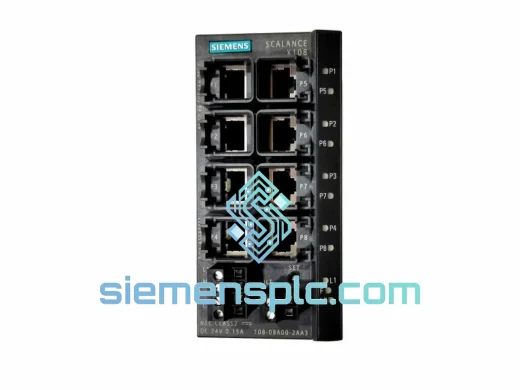
SIEMENS 6GK5108-0BA00-2AA3 Industrial Ethernet Switch
SIMATIC
Origin DE
Industrial Ethernet Switch
Request verified availability, condition, replacement risk review, packing options and courier lead time for 6DP1631-8AA.
Click Request Quote and the part number is inserted into the inquiry form automatically.
Core fields for model confirmation and RFQ routing. Detailed product narrative remains below.
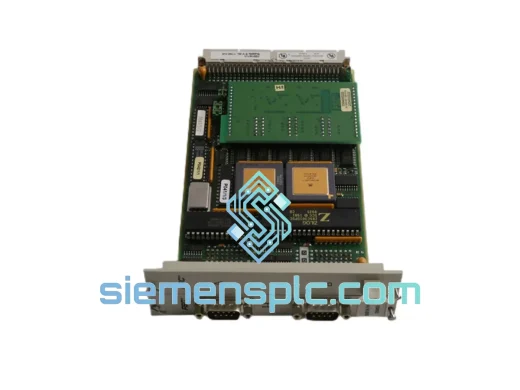
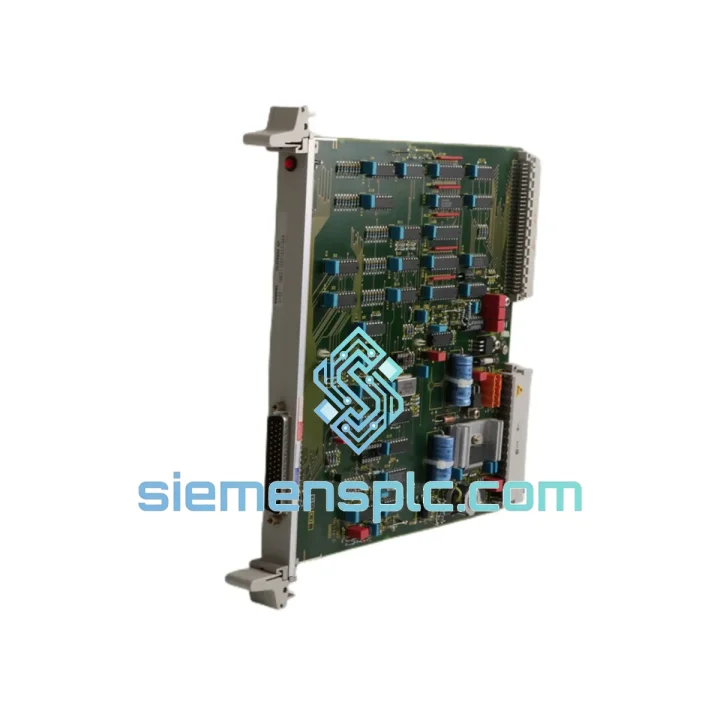
The Siemens 6DP1631-8AA is a dedicated interface module engineered for the TELEPERM M distributed control system platform. Its primary function is to manage structured data exchange between the process I/O subracks and the central processing units within the SINEC-based backplane architecture. Unlike generic communication bridges, the 6DP1631-8AA operates as a deterministic relay node: it arbitrates slot-addressed data frames on the SINEC H1 bus, enforces message sequencing, and delivers time-stamped process values to the CPU with sub-cycle latency. In a typical TELEPERM M installation — such as a refinery column control loop or a power plant turbine governor — this module sits between field-side analog input cards and the AS 235 or AS 488 automation stations, ensuring that every scan cycle receives a complete, validated data set. Without a correctly functioning interface module at this position, the control loop degrades from closed-loop regulation to open-loop fallback, a condition that most process safety systems classify as a partial trip. The 6DP1631-8AA therefore occupies a structurally critical position in the signal chain, not a peripheral one.
Real-time Stock & RFQ: [email protected] | WhatsApp: +86 18359268345
| Parameter | Value / Specification |
|---|---|
| Part Number | 6DP1631-8AA |
| Manufacturer | Siemens AG |
| Module Category | Interface Module (IM) |
| Product Family | TELEPERM M / SINEC Series |
| Bus Protocol | SINEC H1 (IEEE 802.3 physical layer, proprietary application layer) |
| Supply Voltage | 24 V DC via backplane (IEC 61131-2 compliant) |
| Power Consumption | ≤ 5 W (typical operating load) |
| Operating Temperature | 0 °C to +60 °C |
| Storage Temperature | −25 °C to +70 °C |
| Relative Humidity | 5 % to 95 % RH, non-condensing |
| Degree of Protection | IP20 (module in subrack) |
| Module Weight | 420 g |
| Mounting | TELEPERM M standard subrack, DIN rail compatible chassis |
| EMC Compliance | EN 61000-4-2 / -4-4 / -4-5; CE marked |
| Certifications | CE, UL (industrial control equipment) |
| Warranty | 12 months from date of dispatch |
The 6DP1631-8AA implements a dual-port memory architecture at its core. One port interfaces directly with the SINEC H1 bus controller ASIC, which handles frame collision detection, CRC validation, and address decoding at the hardware level — removing these tasks from the host CPU’s interrupt service routine. The second port connects to the subrack backplane via a parallel data bus operating at the TELEPERM M internal clock rate. This separation means that bus contention events on the SINEC network do not propagate as latency spikes into the backplane data path; the module absorbs timing jitter in its dual-port buffer and presents a clean, cycle-synchronous data set to the automation station.
From an EMC standpoint, the module’s signal lines crossing the board boundary between the bus-side and backplane-side circuits are routed through optocoupler isolation stages. This galvanic barrier provides a minimum 500 V isolation rating between the two domains, which is significant in installations where the SINEC cable runs through cable trays shared with high-voltage motor drives. The isolation also prevents ground loop currents — a common failure mode in large industrial plants where earth potential differences between control room and field junction boxes can reach several volts — from corrupting the digital signal integrity on the backplane.
The module’s watchdog circuit monitors both the SINEC bus heartbeat and the backplane clock signal independently. If either signal drops below its defined threshold for more than two consecutive scan cycles, the watchdog asserts a hardware fault flag on the backplane bus, which the automation station reads as a module-level diagnostic event rather than a process alarm. This distinction is architecturally important: it allows the control system to differentiate between a failed interface module and a genuine process deviation, enabling maintenance personnel to isolate the fault source without triggering unnecessary process shutdowns.
Every 6DP1631-8AA unit supplied by siemensplc.com is sourced as genuine Siemens original hardware. Each module undergoes a pre-dispatch inspection protocol that includes visual examination for physical damage, connector pin integrity check, and a functional power-on test to verify that the module’s status LEDs and self-diagnostic routines complete without fault codes. Units that do not pass this protocol are not dispatched.
Documentation supplied with each unit includes a packing list with the Siemens part number and serial number, a certificate of conformance, and — where available — the original Siemens factory test record. Anti-counterfeit measures include verification of the Siemens holographic label and cross-referencing the module’s internal firmware version string against the known authentic firmware table for the 6DP1631-8AA revision.
Logistics operations are based in Xiamen, China, a major port city with direct air freight connections to Frankfurt, Amsterdam, Dubai, Singapore, Los Angeles, and Chicago. Standard international shipments are dispatched within 1–3 business days of order confirmation. Express air freight options (DHL Express, FedEx International Priority, UPS Worldwide Express) are available for time-critical maintenance situations, with transit times of 2–5 business days to most destinations in Europe, North America, Southeast Asia, and the Middle East. Full export documentation — including commercial invoice, packing list, and certificate of origin — is prepared for every international shipment to support customs clearance at the destination port.
All units are packed in ESD-protective anti-static bags, placed in foam-lined rigid cartons, and sealed with tamper-evident tape. This packaging specification meets the IEC 61340-5-1 standard for electrostatic discharge protection during transport and storage.
Email: [email protected]
WhatsApp: +86 18359268345
Web: siemensplc.com
Location: Xiamen, China
© 2026 siemensplc.com. All rights reserved.
We check the full part number, brand, series and visible nameplate information before quotation.
Sales confirms stock path, condition option, quantity and realistic lead time for export dispatch.
DHL, FedEx, UPS or buyer courier arrangements can be reviewed with packing requirements.
Similar brand or category products for fast comparison and multi-item RFQ lists.