Siemens
RFQ Ready
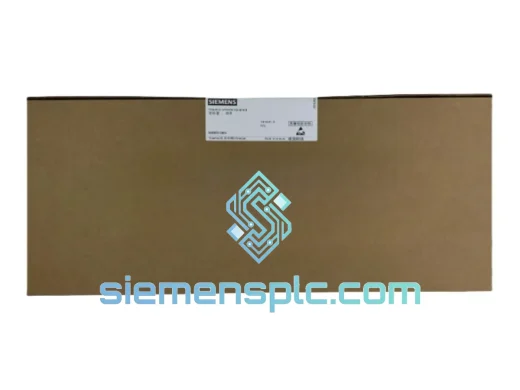
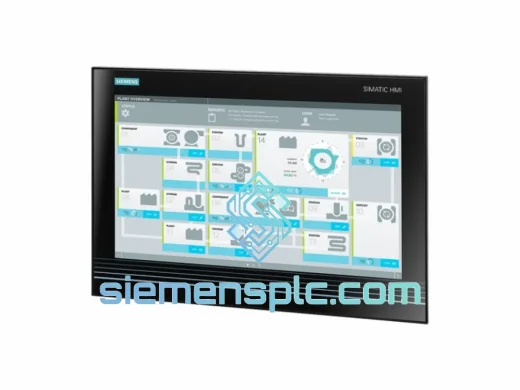
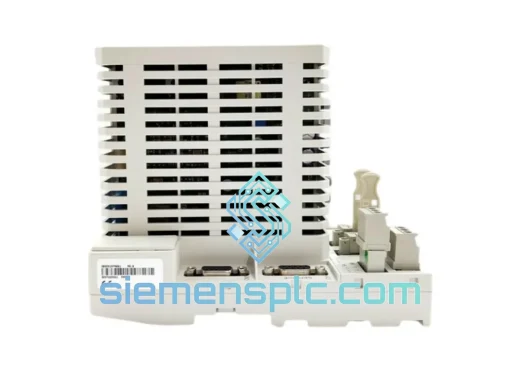
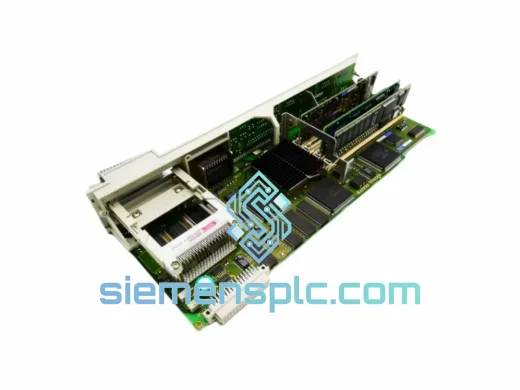
Siemens 6FC5357-0BY21-1AE1 NCU572.2 CNC Control Unit
SINUMERIK 840D
Origin DE
CNC Numerical Control Unit
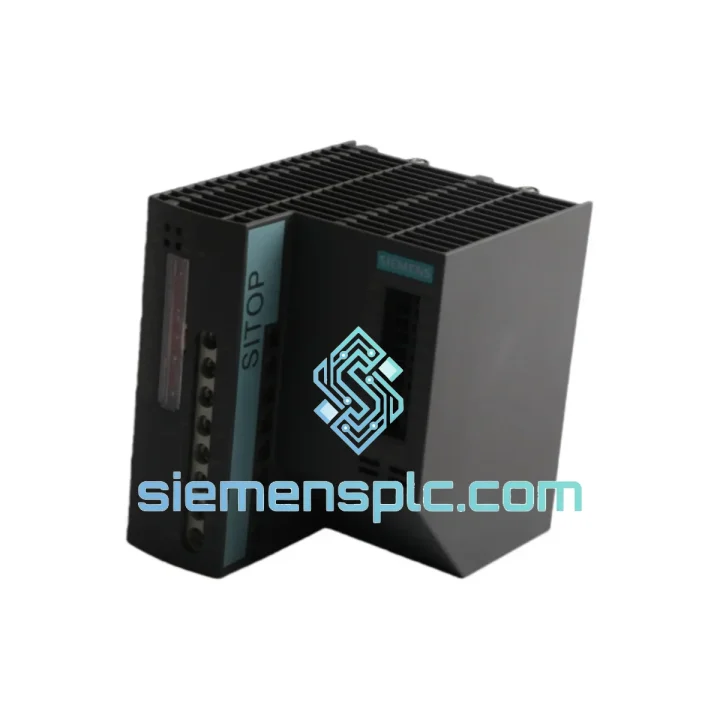
Request verified availability, condition, replacement risk review, packing options and courier lead time for 6EP1931-2FC21.
Click Request Quote and the part number is inserted into the inquiry form automatically.
Core fields for model confirmation and RFQ routing. Detailed product narrative remains below.
The Siemens 6EP1931-2FC21 is a DIN-rail-mounted uninterruptible power supply buffer module belonging to the SITOP UPS500S product family. Its primary function within a 24 VDC control loop is to detect a mains-side power interruption within milliseconds and seamlessly transfer the downstream load — PLCs, HMIs, distributed I/O nodes, and safety relays — to an external VRLA battery module without any detectable voltage dip at the load terminals. The transition is governed by an internal MOSFET-based transfer switch that achieves a changeover time well below 20 ms, a figure that falls inside the hold-up tolerance of virtually all Siemens SIMATIC CPU families and most third-party controllers operating at 24 VDC.
Unlike integrated UPS power supplies that combine rectification and buffering in a single housing, the 6EP1931-2FC21 operates as a dedicated buffer stage inserted between an existing SITOP PSU100S or PSU200M primary supply and the load bus. This modular topology allows engineers to retrofit buffer capability into existing panel designs without replacing the primary supply, and it permits independent sizing of the battery capacity by selecting from the SITOP battery module range (e.g., 6EP1935-6ME21 at 3.2 Ah, or higher-capacity packs) to match the required bridging duration — from a 30-second safe-shutdown window up to several minutes of full-load operation.
The module communicates UPS status — mains OK, battery operation active, battery low, and fault — via a floating relay output rated at 30 VDC / 1 A, which can be wired directly to a digital input on any SIMATIC CPU or safety controller for programmatic response. A USB Type-B port on the front face enables parameterization and real-time monitoring through the SITOP UPS Manager PC software, allowing maintenance engineers to read battery state-of-charge, set the battery-low threshold voltage, configure the relay output polarity, and log historical power-event data without interrupting the running process.
Real-time Stock & RFQ: [email protected] | WhatsApp: +86 18359268345
| Parameter | Value |
|---|---|
| Order Number (MLFB) | 6EP1931-2FC21 |
| Product Family | SITOP UPS500S |
| Input Voltage Range | 18 – 30 VDC (nominal 24 VDC) |
| Output Voltage | 24 VDC (battery-backed, unregulated during discharge) |
| Rated Output Current | 5 A continuous |
| Peak Output Current | 10 A (≤ 5 s) |
| Changeover Time (Mains → Battery) | < 20 ms |
| Battery Interface | External VRLA module (Siemens SITOP battery range) |
| Battery Charging Current | Max. 0.9 A (temperature-compensated float charge) |
| Communication Interface | USB Type-B (SITOP UPS Manager software) |
| Signaling Output | Floating relay, 30 VDC / 1 A (mains fail / battery low) |
| Mounting | 35 mm DIN rail (EN 60715) |
| Protection Degree | IP20 (IEC 60529) |
| Operating Temperature | 0 °C to +60 °C |
| Storage Temperature | −40 °C to +85 °C |
| Relative Humidity | 5 – 95 % (non-condensing) |
| Dimensions W × H × D | 70 × 125 × 130 mm |
| Weight (without battery) | approx. 1,020 g |
| Certifications | CE, UL 508, cULus, ATEX Zone 2 (with restrictions) |
| Vibration Resistance | IEC 60068-2-6: 5 – 150 Hz, 1 g |
| Shock Resistance | IEC 60068-2-27: 15 g / 11 ms |
| EMC Emission | EN 55011 Class A |
| EMC Immunity | EN 61000-4-2 / -3 / -4 / -5 / -6 |
| Warranty | 12 months from date of shipment |
MOSFET Transfer Switch Architecture. The 6EP1931-2FC21 employs a synchronous MOSFET bridge as its core transfer element rather than a mechanical relay or diode-OR circuit. This design eliminates the contact bounce and arcing associated with relay-based changeover, and it avoids the forward-voltage drop (typically 0.4 – 0.7 V) inherent in diode-OR topologies. The result is a near-zero-loss transfer path during battery operation, which is critical when the battery terminal voltage is already declining under load. The gate-drive logic monitors the input bus voltage on a cycle-by-cycle basis; when the bus drops below a configurable threshold (factory default: 21.6 VDC), the MOSFET bridge commutates within a single PWM period, keeping the output rail stable.
Temperature-Compensated Float Charging. The integrated battery management circuit applies a temperature-compensated float charge voltage to the external VRLA module. A negative temperature coefficient (NTC) thermistor, positioned adjacent to the battery connector, adjusts the float voltage at approximately −3 mV/°C per cell. At 25 °C the float voltage targets 27.3 VDC (2.275 V/cell for a 12-cell 24 V VRLA pack); at 0 °C it rises to approximately 28.1 VDC. This compensation prevents chronic undercharge in cold environments — a primary cause of premature sulfation in lead-acid cells — and prevents overcharge-induced water loss at elevated ambient temperatures.
EMC Design and Conducted Interference Suppression. The module’s PCB layout routes the high-frequency switching node (battery charge converter) on an inner copper layer shielded by ground planes on both outer layers, reducing radiated emissions from the switching stage. Input and output terminals are each filtered by a common-mode choke and X/Y capacitor network, attenuating conducted emissions to comply with EN 55011 Class A limits. The DIN rail mounting clip is bonded to the chassis ground plane, providing a low-impedance path to panel earth and improving immunity to electrostatic discharge (ESD) events per EN 61000-4-2 Level 3 (8 kV contact, 15 kV air).
Battery State-of-Charge Estimation. Rather than relying solely on terminal voltage — which is a poor indicator of remaining capacity under load — the firmware integrates a coulomb-counting algorithm that tracks charge delivered to and drawn from the battery over time. The accumulated Ah value is corrected periodically by a full-charge reference event (when the battery reaches float voltage after a discharge cycle), compensating for the drift inherent in open-loop integration. The estimated state-of-charge is exposed via the USB interface and drives the battery-low relay output, which can be configured to trip at 20 %, 30 %, or 40 % remaining capacity depending on the required warning lead time.
Every Siemens 6EP1931-2FC21 unit dispatched from our Xiamen, China facility is a genuine Siemens-manufactured component sourced through verified industrial distribution channels. Each unit undergoes a three-stage incoming inspection: label and date-code authentication against Siemens’ published MLFB format, dimensional verification of the housing and connector positions, and a functional power-on test confirming relay output actuation and USB enumeration before the unit is accepted into stock.
Packaging integrity is maintained throughout the logistics chain. Units are shipped in original Siemens anti-static packaging where available, or in equivalent ESD-protective foam-lined cartons for stock items. Export documentation — commercial invoice, packing list, and certificate of origin — is prepared to comply with customs requirements in the EU, North America, Southeast Asia, and the Middle East. Standard international shipment lead time from Xiamen is 3 – 7 business days via DHL Express or FedEx International Priority, with tracking provided at the time of dispatch. For project orders requiring consolidated shipment of multiple line items, sea freight and air freight consolidation services are available on request.
A 12-month warranty covers manufacturing defects under normal operating conditions as defined in the Siemens product datasheet. Warranty claims are processed with a replacement-first policy: a replacement unit is dispatched upon receipt of the defective item and completion of a brief failure description form, minimizing downtime for the end customer.
📧 Email: [email protected]
📱 WhatsApp: +86 18359268345
🌐 Web: siemensplc.com
📍 Location: Xiamen, China
© 2026 siemensplc.com. All rights reserved.
We check the full part number, brand, series and visible nameplate information before quotation.
Sales confirms stock path, condition option, quantity and realistic lead time for export dispatch.
DHL, FedEx, UPS or buyer courier arrangements can be reviewed with packing requirements.
Similar brand or category products for fast comparison and multi-item RFQ lists.