Siemens
RFQ Ready
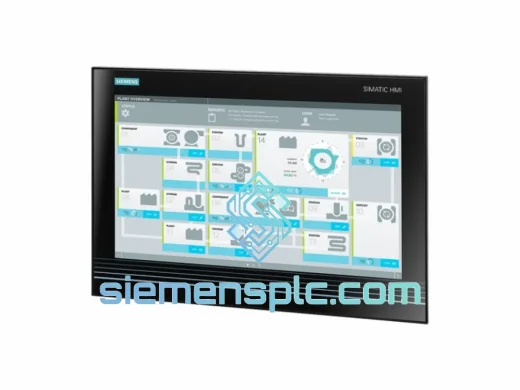
Siemens 6AV7260-5GA10-0BX0 Industrial Panel PC
SIMATIC
Origin DE
Industrial Panel PC
Request verified availability, condition, replacement risk review, packing options and courier lead time for 6ES7214-1AD23-0XB8.
Click Request Quote and the part number is inserted into the inquiry form automatically.
Core fields for model confirmation and RFQ routing. Detailed product narrative remains below.
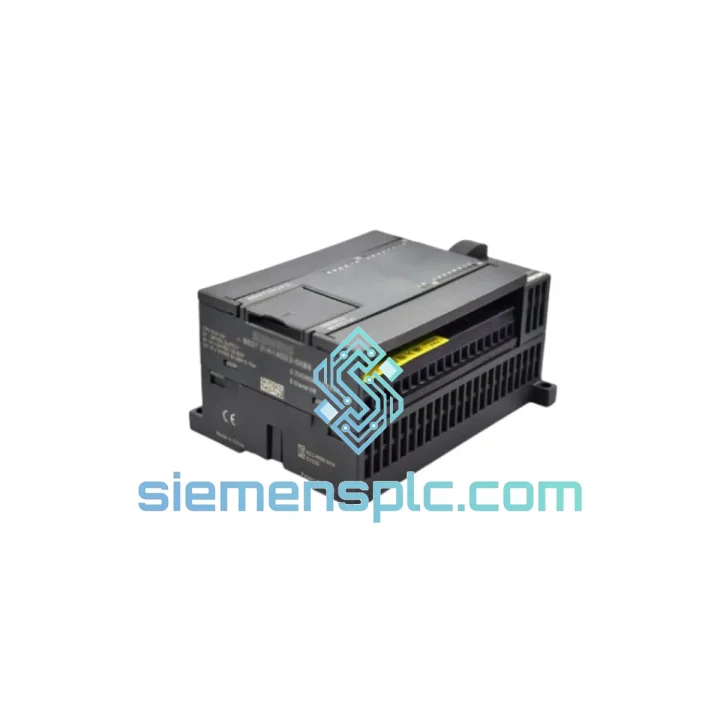
The Siemens 6ES7214-1AD23-0XB8 is the highest-density CPU variant within the S7-200 SMART product line, integrating 40 onboard discrete I/O points — 24 digital inputs at DC 24 V and 16 relay outputs rated at 2 A per point — into a single DIN-rail housing measuring 175 × 100 × 81 mm. Its AC power supply accepts a wide input range of 85 to 264 V AC, making it directly deployable across North American 120 V and European 230 V grid environments without auxiliary power conditioning. The CPU SR40 designation encodes the power supply type (S = AC), output technology (R = Relay), and total I/O count (40), providing unambiguous hardware identification in multi-vendor panel documentation.
Within the S7-200 SMART architecture, the CPU executes a cyclic scan model with a typical instruction processing rate of 0.08 µs per Boolean operation. The 24 KB program memory and 10 KB data memory are partitioned in internal flash, while a dedicated 10 KB EEPROM block provides battery-free retentive storage for critical process variables, recipe parameters, and fault counters. This eliminates the maintenance overhead associated with lithium backup batteries — a common failure point in legacy compact PLC platforms.
The onboard communication stack supports simultaneous operation of an RS-485 port (PPI/MPI/Modbus RTU/USS protocol) and a 10/100 Mbit/s Ethernet port (RJ-45) running Modbus TCP, S7 Protocol, and Open User Communication (OUC). The dual-port architecture allows the CPU to serve as a Modbus TCP server to a SCADA host while concurrently exchanging data with a local HMI panel over RS-485 — without consuming any program scan time for communication arbitration, as both ports are handled by a dedicated communication co-processor.
Four high-speed counter (HSC) channels operate at up to 200 kHz independently of the main scan cycle, enabling encoder feedback, flow pulse counting, and frequency measurement without scan-time jitter. Three pulse output channels (PTO/PWM) at up to 100 kHz support open-loop stepper and servo positioning when paired with appropriate drives — a capability that eliminates the need for a separate motion controller in single-axis applications.
The 6ES7214-1AD23-0XB8 is programmed exclusively with STEP 7-Micro/WIN SMART, which supports Ladder Diagram (LAD), Function Block Diagram (FBD), and Statement List (STL) editors. The software includes a built-in instruction library covering PID loop control, motion control wizards, Modbus RTU/TCP configuration, and USS drive communication — reducing application development time for standard machine functions to hours rather than days.
Expansion capacity reaches up to 6 signal modules (EM series) and 1 communication module (CM01), extending the total addressable I/O to 188 discrete points or a mix of analog and digital channels. The expansion bus uses a proprietary high-speed serial interface with automatic module recognition — no DIP switch addressing or manual slot configuration is required.
Operating temperature range is 0 to 55 °C with 5 to 95% relative humidity (non-condensing), and the unit carries CE, UL, cUL, and FM certifications. Protection class is IP20, consistent with standard control cabinet installation. Mean time between failures (MTBF) data published by Siemens for the S7-200 SMART CPU family exceeds 300,000 hours under rated conditions.
Real-time Stock & RFQ: [email protected] | WhatsApp: +86 18359268345
| Parameter | Value |
|---|---|
| Part Number | 6ES7214-1AD23-0XB8 |
| CPU Designation | CPU SR40 |
| Product Series | Siemens S7-200 SMART |
| Power Supply Input | AC 85–264 V, 47–63 Hz |
| Power Consumption (max) | 25 W |
| Digital Inputs (onboard) | 24 × DC 24 V, sink/source |
| Input Filter Time | 0.2 ms – 12.8 ms (configurable) |
| Digital Outputs (onboard) | 16 × Relay, 2 A / 30 V DC or 250 V AC per point |
| Output Switching Frequency | ≤ 1 Hz (relay mechanical) |
| Total Onboard I/O | 40 points |
| Max Expandable I/O | 188 points (6 EM + 1 CM) |
| Program Memory | 24 KB (flash) |
| Data Memory | 10 KB (RAM) |
| Retentive Memory | 10 KB (EEPROM, battery-free) |
| Boolean Execution Speed | 0.08 µs / instruction |
| High-Speed Counters | 4 channels × 200 kHz |
| Pulse Outputs (PTO/PWM) | 3 channels × 100 kHz |
| Communication Port 1 | RS-485 (PPI / MPI / Modbus RTU / USS) |
| Communication Port 2 | Ethernet RJ-45, 10/100 Mbit/s (Modbus TCP / S7 / OUC) |
| Real-Time Clock | Built-in, ±120 s/month accuracy |
| PID Loops | 8 (software) |
| Operating Temperature | 0 – 55 °C |
| Storage Temperature | −40 – +70 °C |
| Relative Humidity | 5 – 95% RH (non-condensing) |
| Protection Class | IP20 |
| Mounting | DIN rail (EN 60715) or panel mount |
| Dimensions (W × H × D) | 175 × 100 × 81 mm |
| Weight | Approx. 700 g |
| Programming Software | STEP 7-Micro/WIN SMART V2.x |
| Certifications | CE, UL, cUL, FM, RCM |
| Warranty | 12 months from shipment date |
| Country of Origin | China |
The CPU SR40’s internal architecture separates the application processor from the I/O scanning and communication subsystems at the hardware level. The main processor handles program execution and PID computation, while a dedicated I/O controller manages input sampling and output latching in parallel — this parallel pipeline prevents I/O update latency from accumulating into the program scan time, a design characteristic that distinguishes the S7-200 SMART from lower-cost compact PLCs that serialize all three functions on a single core.
Relay Output Isolation Architecture: Each of the 16 relay output points is electrically isolated from the CPU logic bus via the relay coil-contact gap, providing galvanic isolation rated at 1,500 V AC between the output load circuit and the internal 3.3 V logic rail. Output points are grouped into four commons (COM0–COM3), allowing mixed-voltage load circuits — for example, 24 V DC solenoids on COM0 and 230 V AC contactors on COM1 — within the same CPU without external isolation relays. This grouping architecture reduces panel component count in mixed-load applications.
Input Optical Isolation: All 24 digital inputs use optocoupler isolation with a forward current threshold of approximately 4 mA at 24 V DC. The input filter time is software-configurable from 0.2 ms to 12.8 ms per input group, enabling the same hardware to handle both high-frequency pulse signals (short filter) and contact bounce suppression for mechanical switches (long filter) without external RC networks.
EMC Design: The CPU housing incorporates a grounded metal backplane that provides a Faraday shield around the internal PCB assembly. Ferrite beads are placed on the RS-485 signal lines at the PCB level to suppress common-mode noise above 10 MHz. The Ethernet magnetics (integrated into the RJ-45 connector module) provide 1,500 V isolation and common-mode choke filtering, meeting EN 61000-4-4 (EFT/Burst) Level 3 and EN 61000-4-5 (Surge) Level 2 immunity requirements. These measures allow the CPU to operate without additional EMC filters in environments with variable-frequency drives and contactors switching in the same panel.
High-Speed Counter Architecture: The four HSC channels are implemented in dedicated hardware counters clocked directly from the input optocoupler outputs, bypassing the main scan cycle entirely. Each channel supports single-phase, dual-phase (quadrature A/B), and A/B/Z (index pulse) encoder modes. The counter preset and current value registers are accessible from the application program via direct memory addressing (HC0–HC5), and interrupt routines can be triggered on count-equal-to-preset events with a response latency of less than 1 ms — independent of scan cycle length.
EEPROM Retention Logic: The 10 KB retentive data block is written to EEPROM on every controlled power-down sequence and on explicit MOVB/MOVW instructions targeting the V-memory retentive range. The EEPROM write endurance is rated at 100,000 cycles minimum, and the data retention period without power exceeds 10 years at 25 °C — sufficient for the operational lifetime of most machine installations without concern for data loss during extended shutdowns or transport.
Every 6ES7214-1AD23-0XB8 unit supplied by siemensplc.com is sourced as genuine Siemens-manufactured hardware. Each unit undergoes a structured pre-shipment inspection protocol: label authenticity verification against Siemens MLFB (Machine-Readable Product Designation) format, connector pin integrity check, housing seal inspection, and where stock condition permits, a power-on functional test confirming CPU RUN mode entry and Ethernet port link establishment.
Units are packed in anti-static PE bags with desiccant sachets, enclosed in foam-lined corrugated cartons rated for international air freight handling. Outer cartons are marked with ESD warning labels and fragile indicators. For orders of 5 units or more, a packing list with individual serial numbers is included for incoming inspection at the buyer’s facility.
Shipments originate from our warehouse in Xiamen, China — a major logistics hub with direct access to DHL Express, FedEx International Priority, UPS Worldwide Express, and SF International services. Standard transit times are 3–5 business days to Europe and North America, 2–4 business days to Southeast Asia, and 1–2 business days to Hong Kong, Taiwan, and South Korea. For time-critical MRO requirements, same-day dispatch is available for orders confirmed before 14:00 CST. Sea freight consolidation is available for bulk orders exceeding 50 kg.
All export documentation — commercial invoice, packing list, and certificate of origin — is prepared in compliance with destination country customs requirements. HS Code 8537.10 applies to this product for customs classification purposes. A 12-month warranty against manufacturing defects is provided from the shipment date, covering repair or replacement at our discretion.
Email: [email protected]
WhatsApp: +86 18359268345
Web: siemensplc.com
Location: Xiamen, China
© 2026 siemensplc.com. All rights reserved.
We check the full part number, brand, series and visible nameplate information before quotation.
Sales confirms stock path, condition option, quantity and realistic lead time for export dispatch.
DHL, FedEx, UPS or buyer courier arrangements can be reviewed with packing requirements.
Similar brand or category products for fast comparison and multi-item RFQ lists.