Siemens
RFQ Ready
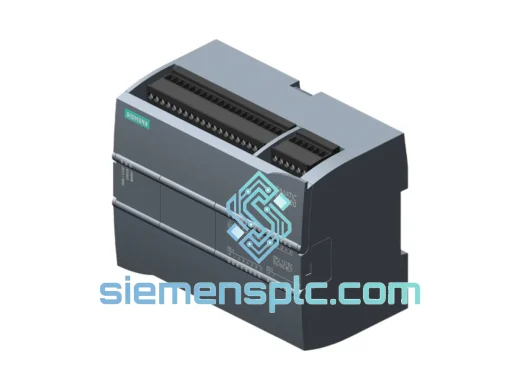
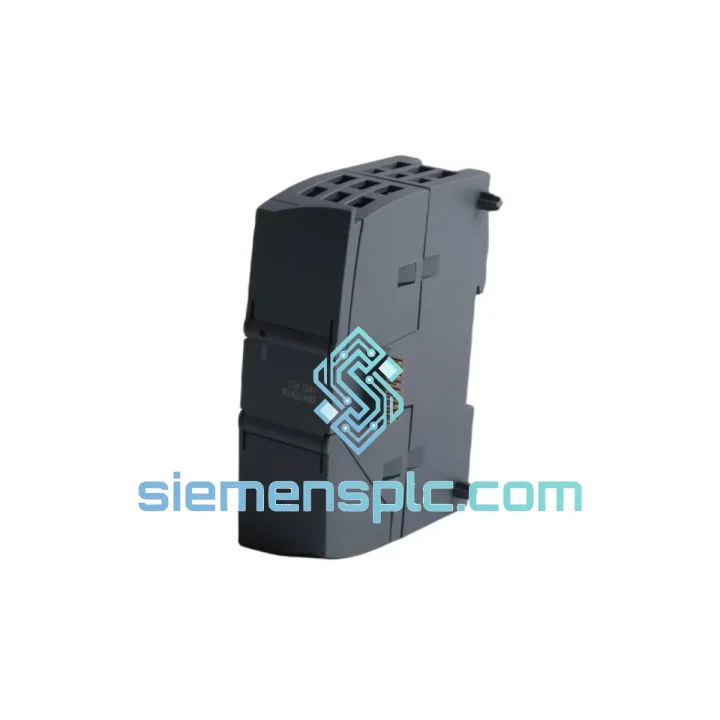
Siemens 6ES7214-1BG40-0XB0 PLC CPU Module
SIMATIC S7-1200
Origin DE
PLC CPU Module
Request verified availability, condition, replacement risk review, packing options and courier lead time for 6ES7241-1CH32-0XB0.
Click Request Quote and the part number is inserted into the inquiry form automatically.
Core fields for model confirmation and RFQ routing. Detailed product narrative remains below.
The Siemens 6ES7241-1CH32-0XB0 is the CM 1241 communication module engineered specifically for the SIMATIC S7-1200 compact controller family. Its function is singular and non-negotiable in mixed-protocol environments: it terminates RS422 and RS485 serial buses directly at the CPU rack, eliminating the need for external protocol converters or gateway PLCs. In control architectures where the S7-1200 must exchange process data with variable-speed drives, power analyzers, flow computers, weighing terminals, or legacy SCADA RTUs, this module is the physical and logical interface that makes deterministic serial communication possible.
RS485 remains the dominant serial standard across global industrial installations — not because it is new, but because its differential signaling topology delivers reliable data transmission at distances up to 1,200 meters in electrically noisy environments. The 6ES7241-1CH32-0XB0 supports both the 2-wire half-duplex RS485 topology and the 4-wire full-duplex RS422 topology within a single hardware unit. This dual-mode capability is not a software toggle applied to a single physical interface; the module’s internal signal conditioning circuitry is designed to handle the distinct electrical characteristics of each standard, including termination resistance management and driver enable timing.
At the protocol layer, the module natively executes Modbus RTU in both Master and Slave roles, the USS drive protocol for direct SINAMICS and MICROMASTER frequency inverter control, and Freeport ASCII mode for custom frame structures. All three protocol stacks are implemented through STEP 7 instruction libraries in TIA Portal, with no requirement for third-party middleware or custom function blocks. The module’s baud rate range spans 300 bps to 115.2 kbps, covering the full spectrum from legacy 9600-baud RTU networks to high-speed 115.2 kbps drive communication links.
Electrically, the 6ES7241-1CH32-0XB0 is galvanically isolated from the S7-1200 backplane bus. This isolation barrier — rated to withstand the transient voltages and ground potential differences common in industrial panel environments — prevents ground loop currents from corrupting the CPU’s internal logic supply. The module draws its operating power (maximum 1.5 W at 5 VDC) entirely from the backplane bus, requiring no external 24 VDC supply wiring. Its 30 mm width allows up to three CM 1241 modules to be mounted on the left side of any S7-1200 CPU without exceeding the rack’s mechanical or electrical budget.
In Modbus RTU Master mode, the module manages the complete request-response cycle: it generates the function code frame, transmits it to the slave device, monitors the inter-frame silence period, receives and validates the CRC, and passes the payload to the CPU’s data area — all without consuming CPU scan cycle time beyond the instruction call overhead. This offload architecture is critical in time-sensitive control loops where the CPU scan must remain deterministic regardless of serial bus latency.
Real-time Stock & RFQ: [email protected] | WhatsApp: +86 18359268345
| Parameter | Specification |
|---|---|
| Order Number (SKU) | 6ES7241-1CH32-0XB0 |
| Module Designation | CM 1241 — Communication Module RS422/RS485 |
| Compatible Platform | SIMATIC S7-1200 (CPU 1211C / 1212C / 1214C / 1215C / 1217C) |
| Serial Interface | RS422 (4-wire, full duplex) / RS485 (2-wire, half duplex) |
| Physical Connector | 9-pin Sub-D female (DB9F) |
| Baud Rate Range | 300 bps — 115,200 bps |
| Data Bits | 7 or 8 |
| Parity Options | None / Even / Odd / Mark / Space |
| Stop Bits | 1 or 2 |
| Flow Control | XON/XOFF, RTS/CTS, None |
| Supported Protocols | Modbus RTU Master/Slave, USS Drive Protocol, Freeport (ASCII) |
| Supply Voltage | 5 VDC via S7-1200 backplane bus |
| Power Consumption | ≤ 1.5 W |
| Electrical Isolation | Galvanically isolated from backplane bus |
| Max. Bus Length (RS485) | 1,200 m at 9,600 bps |
| Max. Nodes (RS485) | 32 unit loads per segment (expandable with repeaters) |
| Operating Temperature | 0 °C to +60 °C (horizontal) / 0 °C to +50 °C (vertical) |
| Storage Temperature | −40 °C to +70 °C |
| Relative Humidity | 5 % to 95 %, non-condensing |
| Degree of Protection | IP20 |
| Dimensions (W × H × D) | 30 mm × 100 mm × 75 mm |
| Weight | Approx. 120 g |
| Certifications | CE, UL, cULus, ATEX Zone 2, FM Class I Div 2 |
| TIA Portal Compatibility | V13 SP1 and above (V15.1 / V17 recommended) |
| Warranty | 12 months from date of shipment |
The 6ES7241-1CH32-0XB0 implements a dedicated UART controller on its internal PCB, separate from the S7-1200 CPU’s main processing core. This architecture means the serial frame assembly, CRC computation, and bus arbitration are handled by the module’s own firmware — not by the CPU’s application program. The result is that serial communication latency does not propagate into the CPU’s OB1 scan cycle, preserving deterministic program execution even when the RS485 bus is operating at low baud rates with long inter-frame gaps.
The RS485 driver stage uses a controlled slew-rate transceiver. Slew-rate limiting reduces the high-frequency harmonic content of the transmitted signal edges, which directly attenuates radiated EMI — a critical design consideration in panel environments where the module may be installed within 200 mm of variable-frequency drives generating switching noise at 4–16 kHz carrier frequencies. The differential signaling architecture provides an inherent common-mode rejection ratio (CMRR) that suppresses ground-referenced noise up to ±7 V, consistent with the RS485 standard’s specification for common-mode voltage tolerance.
The galvanic isolation barrier between the serial interface and the backplane bus is implemented using optocouplers on the data path and a DC/DC converter for the isolated power domain. This two-stage isolation approach ensures that both signal-level transients and power-supply-referenced noise are blocked from reaching the CPU’s 5 VDC logic domain. In installations where the RS485 cable runs through cable trays shared with 400 VAC motor power cables, this isolation is not optional — it is the primary protection mechanism against induced transient voltages that would otherwise latch or damage the CPU’s communication interface.
The module’s RTS (Request to Send) signal management is handled automatically in Modbus RTU and USS modes. The firmware controls the RS485 driver enable line with precise timing relative to the last transmitted bit, preventing bus contention during the turnaround period between master transmission and slave response. In Freeport mode, the application program can control RTS manually via the Send_P2P instruction’s RS485_PORT parameter, giving engineers full control over non-standard half-duplex protocols that require custom turnaround timing.
Every 6ES7241-1CH32-0XB0 unit supplied by siemensplc.com is sourced as genuine Siemens factory-original product. Each unit carries the Siemens holographic authenticity label and is traceable to its manufacturing batch via the product identification code printed on the module housing. We do not supply refurbished, remarked, or third-party-manufactured substitutes.
Pre-shipment inspection covers physical connector condition, housing label accuracy against the official Siemens product datasheet, and packaging integrity. Units are dispatched in original Siemens anti-static packaging with shock-absorbing foam inserts rated for international air freight handling. Shipments from our Xiamen, China warehouse are processed via DHL Express, FedEx International Priority, or UPS Worldwide Expedited — with typical transit times of 3–7 business days to major industrial hubs in Europe, North America, Southeast Asia, and the Middle East. Full export documentation is provided as standard: commercial invoice, packing list, and certificate of origin suitable for customs clearance in all major import jurisdictions. All orders carry a 12-month warranty from the date of shipment against manufacturing defects.
Email: [email protected]
WhatsApp: +86 18359268345
Web: siemensplc.com
Location: Xiamen, China
© 2026 siemensplc.com. All rights reserved.
We check the full part number, brand, series and visible nameplate information before quotation.
Sales confirms stock path, condition option, quantity and realistic lead time for export dispatch.
DHL, FedEx, UPS or buyer courier arrangements can be reviewed with packing requirements.
Similar brand or category products for fast comparison and multi-item RFQ lists.