Siemens
RFQ Ready
Siemens A5E03378158 Communication Processor – SIMATIC S7-300 CP 343-1
SIMATIC S7-300
Origin DE
Communication Processor
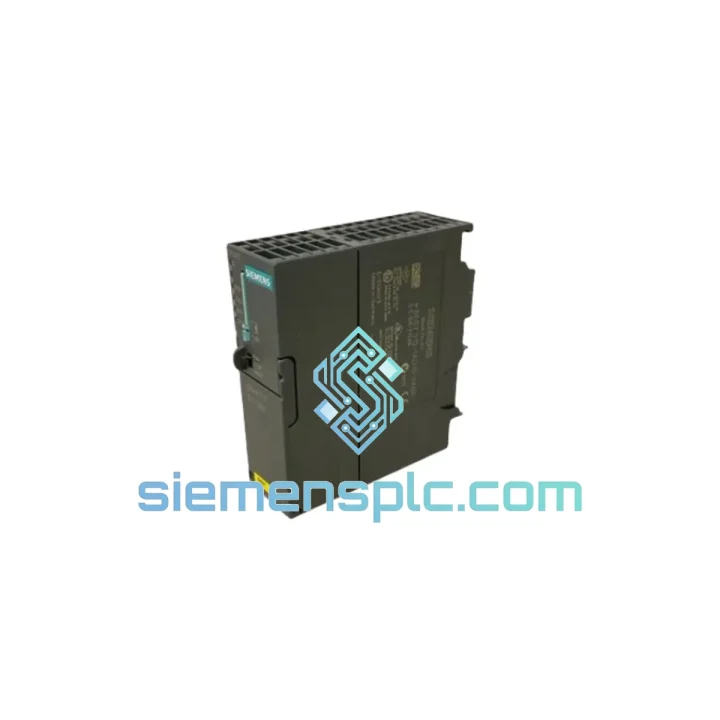
Request verified availability, condition, replacement risk review, packing options and courier lead time for 6ES7312-1AD10-0AB0.
Click Request Quote and the part number is inserted into the inquiry form automatically.
Core fields for model confirmation and RFQ routing. Detailed product narrative remains below.
The 6ES7312-1AD10-0AB0 is a compact central processing unit belonging to the Siemens SIMATIC S7-300 programmable logic controller family. Positioned as the entry-level CPU within the S7-300 lineup, this module is engineered to handle deterministic scan-cycle execution in small-to-medium discrete and process automation applications. Its 32 KB working memory, 0.1 µs binary instruction processing time, and integrated MPI interface make it a technically sound choice for standalone machine control, conveyor sequencing, and auxiliary process loops where PROFIBUS or PROFINET connectivity is not a primary requirement.
Unlike general-purpose embedded controllers, the 6ES7312-1AD10-0AB0 operates within the S7-300 backplane bus architecture, where the CPU arbitrates data exchange with signal modules (SMs), function modules (FMs), and communication processors (CPs) through a deterministic, time-sliced internal bus. The module mounts on a standard S7-300 DIN rail profile and draws its 24 V DC operating power from a dedicated PS 307 power supply module, maintaining electrical isolation between the logic domain and field wiring.
Real-time Stock & RFQ: [email protected] | WhatsApp: +86 18359268345
| Parameter | Specification |
|---|---|
| Order Number (MLFB) | 6ES7312-1AD10-0AB0 |
| Product Family | SIMATIC S7-300 |
| CPU Designation | CPU 312 |
| Working Memory (RAM) | 32 KB (program + data combined) |
| Load Memory | Integrated 64 KB Flash; expandable via SIMATIC MMC |
| Binary Processing Speed | 0.1 µs per instruction |
| Word Processing Speed | 0.2 µs per instruction |
| Floating-Point Math | 3.0 µs per instruction |
| Timer / Counter Elements | 256 / 256 |
| Process Image Input (PII) | 128 bytes |
| Process Image Output (PIQ) | 128 bytes |
| Max. Addressable I/O | 1024 bytes digital I/O; 256 bytes analog I/O |
| Communication Interface | MPI (Multi-Point Interface), 187.5 kbps |
| MPI Stations (max.) | 32 |
| Supply Voltage | 24 V DC (via PS module on backplane) |
| Current Consumption (5 V bus) | 1.1 A |
| Power Dissipation | Approx. 5.5 W |
| Operating Temperature | 0 °C to +60 °C (horizontal mounting) |
| Storage Temperature | −40 °C to +70 °C |
| Relative Humidity | 10 % to 95 %, non-condensing |
| Dimensions (W × H × D) | 40 × 125 × 130 mm |
| Weight | Approx. 850 g |
| Protection Class | IP20 (IEC 60529) |
| Certifications | CE, UL, cULus, ATEX Zone 2 (with appropriate enclosure) |
| Programming Software | SIMATIC STEP 7 v5.4 and above; TIA Portal (legacy mode) |
| Warranty | 12 months against manufacturing defects |
The 6ES7312-1AD10-0AB0 implements a single-chip CPU architecture where the processor core, memory management unit, and backplane bus controller are tightly integrated. The S7-300 backplane bus operates as a synchronous parallel bus at a fixed clock rate, with the CPU acting as the sole bus master. All signal modules connected to the same rail are addressed as passive slaves; the CPU polls their process images at the start of each scan cycle and writes output data at the cycle’s conclusion. This deterministic master-slave arbitration eliminates bus contention and guarantees a bounded worst-case cycle time — a critical property for time-sensitive control loops.
Memory Architecture: The working memory (32 KB RAM) is partitioned into a code area and a data area at runtime. The load memory (64 KB integrated Flash) stores the compiled program blocks (OBs, FBs, FCs, DBs) in a compressed format. On power-up, the CPU decompresses and loads the active program into RAM before entering RUN mode. The SIMATIC Micro Memory Card (MMC) slot provides non-volatile program retention independent of the internal battery, eliminating battery-related maintenance cycles in installations where the MMC is used as the primary load memory medium.
EMC Design: The module’s PCB layout follows Siemens’ internal EMC design guidelines, which mandate ground plane continuity across the backplane connector, shielded signal traces for the MPI transceiver, and transient voltage suppression (TVS) diodes on all external-facing signal lines. The MPI physical layer uses RS-485 differential signaling, providing inherent common-mode noise rejection up to ±7 V — adequate for most industrial cabinet environments where variable-frequency drives (VFDs) and contactors generate conducted and radiated interference.
Watchdog and Fault Handling: An independent hardware watchdog timer monitors the CPU’s scan cycle. If the cycle time exceeds the configured maximum (default: 150 ms), the watchdog triggers a STOP transition and logs a diagnostic event in the module’s internal diagnostic buffer (100-entry ring buffer). This prevents undetected program hangs from propagating to the physical process — a fundamental safety requirement in IEC 61131-3 compliant systems.
MPI Bus Controller: The integrated MPI controller supports token-passing protocol management for up to 32 network nodes. The CPU can simultaneously maintain active connections to a programming device (PG/PC), an HMI panel (OP/TP), and up to two additional S7 connections for peer-to-peer data exchange. Connection establishment and teardown are handled transparently by the operating system, without user program intervention.
Every 6ES7312-1AD10-0AB0 unit dispatched from our Xiamen, China facility is a genuine Siemens-manufactured module sourced through verified supply channels. Prior to shipment, each unit undergoes a structured inspection protocol: visual examination of housing integrity and label authenticity, backplane connector pin inspection under magnification, and a functional power-on test confirming LED status sequence and MPI bus initialization. Units that do not pass all inspection stages are quarantined and not offered for sale.
Packaging follows IEC 61340-5-1 ESD protection requirements: each module is sealed in a conductive anti-static bag, cushioned with 25 mm closed-cell polyethylene foam, and placed in a double-wall corrugated carton rated for 32 ECT. This packaging configuration has been validated for both air freight (IATA) and sea freight (ISTA 2A) transit conditions.
From Xiamen, we ship to destinations across Southeast Asia, the Middle East, Europe, and the Americas. Standard air freight transit times are 3–7 business days to most major industrial hubs. DHL Express, FedEx International Priority, and UPS Worldwide Express are available for time-critical orders. All shipments include a commercial invoice, packing list, and certificate of conformity. Import documentation support (HS code classification, country-of-origin certificates) is available on request.
A 12-month warranty covers all units against manufacturing defects. In the event of a confirmed defect within the warranty period, we provide a replacement unit or full refund — the resolution path is agreed with the customer based on operational urgency. Warranty claims are processed within 2 business days of defect confirmation.
Email: [email protected]
WhatsApp: +86 18359268345
Web: siemensplc.com
Location: Xiamen, China
© 2026 siemensplc.com. All rights reserved.
We check the full part number, brand, series and visible nameplate information before quotation.
Sales confirms stock path, condition option, quantity and realistic lead time for export dispatch.
DHL, FedEx, UPS or buyer courier arrangements can be reviewed with packing requirements.
Similar brand or category products for fast comparison and multi-item RFQ lists.