Siemens
RFQ Ready
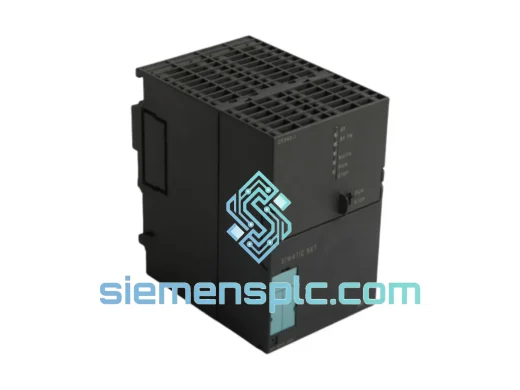
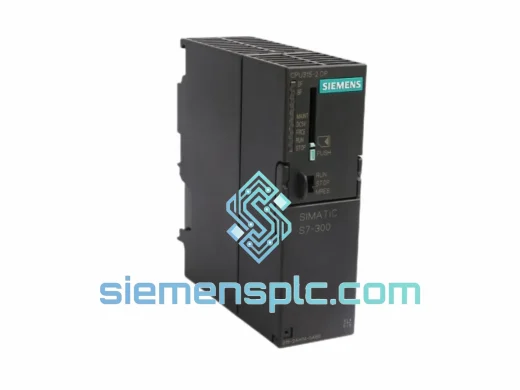
Siemens 6ES7 315-2EH14-0AB0 CPU 315-2 PN/DP PLC Module
SIMATIC S7-300
Origin DE
PLC CPU Module
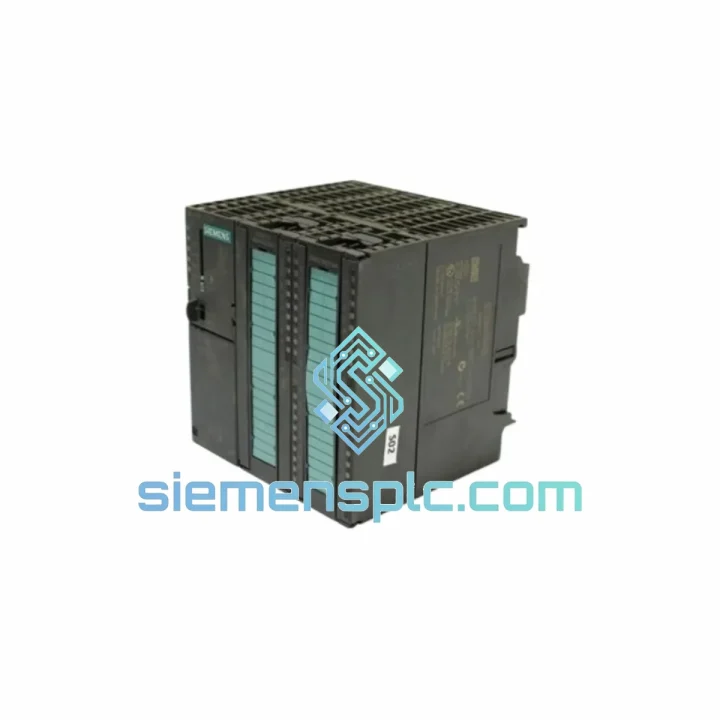
Request verified availability, condition, replacement risk review, packing options and courier lead time for 6ES7314-6BF01-0AB0.
Click Request Quote and the part number is inserted into the inquiry form automatically.
Core fields for model confirmation and RFQ routing. Detailed product narrative remains below.
The Siemens 6ES7314-6BF01-0AB0 is a compact CPU within the SIMATIC S7-300 family, designated CPU 314C-2 PTP. The “C” suffix denotes a compact design with onboard I/O, while “PTP” identifies the second communication interface as a Point-to-Point serial port rather than PROFIBUS DP. This distinction is architecturally significant: the PTP port is a dedicated hardware UART channel managed by a co-processor independent of the main CPU scan cycle, which means serial frame transmission and reception do not consume OB1 cycle time. Engineers specifying this unit for serial-heavy applications — Modbus RTU master polling, USS drive parameter access, or 3964(R) barcode scanner integration — benefit from deterministic serial throughput without penalizing the main control loop.
The CPU executes binary logic operations at 0.1 µs per instruction, placing it in the mid-range performance tier of the S7-300 lineup. With 96 KB of work memory and program storage via SIMATIC Micro Memory Card (MMC), the unit supports projects of moderate complexity — typically 2,000 to 6,000 network rungs in LAD/FBD, or equivalent STL/SCL code blocks. The MMC architecture means the user program is retained without battery backup; the CPU reads the program from flash on every cold restart, eliminating the battery-maintenance overhead common in older S7-300 generations.
Onboard I/O consolidates 24 digital inputs (24 V DC, IEC Type 1 sink), 16 digital outputs (24 V DC, 0.5 A source), 4 analog inputs (±10 V / 0–20 mA, 12-bit resolution), and 2 analog outputs (±10 V / 0–20 mA, 12-bit resolution) into the CPU housing itself. Four integrated 60 kHz hardware counters extend the unit’s capability to incremental encoder feedback and simple positioning tasks without an FM 350-1 function module. This integration reduces rack width, lowers BOM cost, and simplifies wiring in panel designs where space is constrained.
Real-time Stock & RFQ: [email protected] | WhatsApp: +86 18359268345
| Parameter | Specification |
|---|---|
| Order Number (MLFB) | 6ES7314-6BF01-0AB0 |
| Product Family | SIMATIC S7-300 |
| CPU Designation | CPU 314C-2 PTP |
| Work Memory | 96 KB (program + data combined) |
| Load Memory | 512 KB Flash via SIMATIC MMC (MMC required for operation) |
| Bit Processing Speed | 0.1 µs per binary instruction |
| Word Processing Speed | 0.2 µs per word instruction |
| Floating Point Math | 3.0 µs per IEEE 754 operation |
| Integrated DI | 24 × 24 V DC (IEC Type 1, sink input) |
| Integrated DO | 16 × 24 V DC, 0.5 A (source output, short-circuit protected) |
| Integrated AI | 4 × ±10 V or 0–20 mA, 12-bit resolution |
| Integrated AO | 2 × ±10 V or 0–20 mA, 12-bit resolution |
| Integrated Counters | 4 × hardware counters, max 60 kHz |
| Interface 1 (MPI) | Multi-Point Interface, 187.5 kbps, max 32 nodes |
| Interface 2 (PTP) | RS-232 / RS-422 / RS-485, up to 115.2 kbps |
| PTP Protocols Supported | ASCII, 3964(R), RK512, USS, Modbus RTU, Modbus ASCII |
| Max Expansion Modules | 8 per rack, up to 4 racks via IM 360/361 |
| Supply Voltage | 24 V DC (20.4–28.8 V DC permissible range) |
| Current Consumption (typical) | 1.2 A at 24 V DC |
| Power Dissipation | Approx. 5.5 W |
| Dimensions (W × H × D) | 160 × 125 × 130 mm |
| Weight | 790 g |
| Operating Temperature | 0 °C to +60 °C (horizontal mounting) |
| Storage Temperature | −40 °C to +70 °C |
| Relative Humidity | 10–95%, non-condensing (IEC 60068-2-30) |
| Protection Class | IP20 (IEC 60529) |
| EMC Immunity | EN 61000-6-2 (industrial environment) |
| EMC Emission | EN 61000-6-4 |
| Certifications | CE, UL/cUL, RoHS, IEC 61131-2 |
| Programming Software | SIMATIC STEP 7 V5.4 or higher |
| Warranty | 12 months against manufacturing defects |
The CPU 314C-2 PTP implements a dual-processor architecture on a single module. The primary processor — a 32-bit RISC core — handles the PLC scan cycle: OB scheduling, block call stack management, process image update, and backplane S7-300 bus arbitration. A secondary co-processor is dedicated exclusively to the PTP serial interface, managing UART framing, baud rate generation, and protocol state machines (3964R handshake, Modbus CRC calculation, USS telegram assembly) in hardware. This separation ensures that a 115.2 kbps serial burst — for example, a 256-byte Modbus response frame — does not introduce jitter into the OB1 cycle. The co-processor buffers incoming frames in a 1 KB receive FIFO and signals the main CPU via an interrupt (OB 57 / OB 86 depending on firmware version) only when a complete, validated frame is available.
The onboard analog subsystem uses a multiplexed 12-bit successive-approximation ADC with individual channel settling time of approximately 1 ms. Analog inputs are galvanically isolated from the backplane logic via optocoupler barriers rated at 500 V AC isolation voltage, which suppresses common-mode noise from ground loops in long cable runs — a frequent issue in motor-drive environments where PWM switching generates high-frequency ground currents. The analog output section uses a 12-bit DAC with a slew-rate-limited output buffer, providing a clean 0–10 V or 4–20 mA signal without the ringing artifacts that unfiltered R-2R ladder DACs can introduce on capacitive loads.
The four 60 kHz hardware counters operate independently of the CPU scan cycle. Each counter has a dedicated 32-bit up/down register, a programmable comparison value, and a hardware output that can be toggled at the comparison point without OB intervention. This architecture supports A/B quadrature encoder decoding at up to 30 kHz mechanical shaft frequency (60 kHz electrical edge rate), suitable for position feedback on servo axes in the 0–3,000 RPM range with a 1,024 PPR encoder. The counter interrupt (OB 40) latency is bounded by the interrupt response time of the CPU, typically under 1 ms at standard OB1 cycle loads.
EMC design on the S7-300 backplane uses a ground plane architecture where the module’s logic ground is bonded to the DIN rail via the module’s metal front panel clip. This low-impedance chassis bond provides a return path for high-frequency interference currents, keeping them off the signal conductors. The PTP port’s RS-485 driver includes fail-safe biasing resistors that hold the bus in a defined idle state (logic 1) when no driver is active, preventing false start-bit detection during bus contention or cable disconnection events.
Every Siemens 6ES7314-6BF01-0AB0 unit dispatched from our Xiamen, China facility is processed through a structured verification protocol before shipment. Physical authenticity is confirmed by cross-referencing the module’s holographic product label, date code format, and backplane connector pin geometry against Siemens factory reference documentation. Each unit is powered on and the firmware version string is read via MPI to confirm the CPU initializes correctly and passes its internal self-test (STOP → RUN transition with empty program). Diagnostic LED behavior — SF, BF, DC5V, FRCE, RUN, STOP — is verified against the expected power-on sequence defined in the hardware manual.
Units are packed in anti-static ESD bags with desiccant sachets, placed in foam-lined cartons rated for international air freight handling (ISTA 2A drop and vibration profile). Export documentation — commercial invoice, packing list, certificate of origin, and HS Code 8537.10 classification — is prepared for each shipment. Air freight to Europe typically transits in 3–5 business days; North America 4–7 business days; Southeast Asia 2–3 business days. Sea freight consolidation is available for bulk orders. All shipments are tracked end-to-end with carrier AWB numbers provided at dispatch. A 12-month warranty covers manufacturing defects and dead-on-arrival units, with advance replacement available for qualified accounts.
Email: [email protected]
WhatsApp: +86 18359268345
Web: siemensplc.com
Location: Xiamen, China
© 2026 siemensplc.com. All rights reserved.
We check the full part number, brand, series and visible nameplate information before quotation.
Sales confirms stock path, condition option, quantity and realistic lead time for export dispatch.
DHL, FedEx, UPS or buyer courier arrangements can be reviewed with packing requirements.
Similar brand or category products for fast comparison and multi-item RFQ lists.