Siemens
RFQ Ready
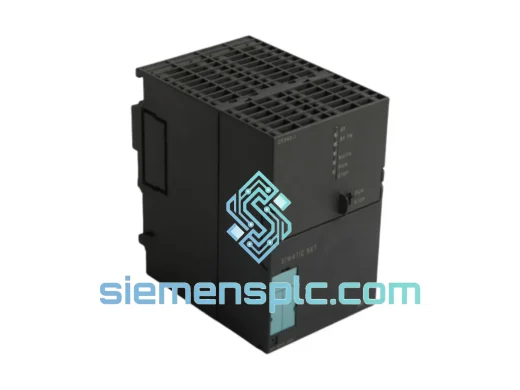
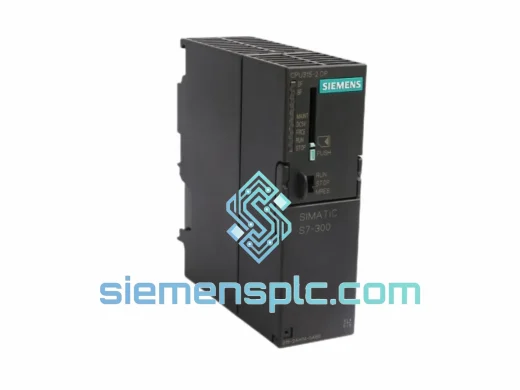
Siemens 6ES7 315-2EH14-0AB0 CPU 315-2 PN/DP PLC Module
SIMATIC S7-300
Origin DE
PLC CPU Module
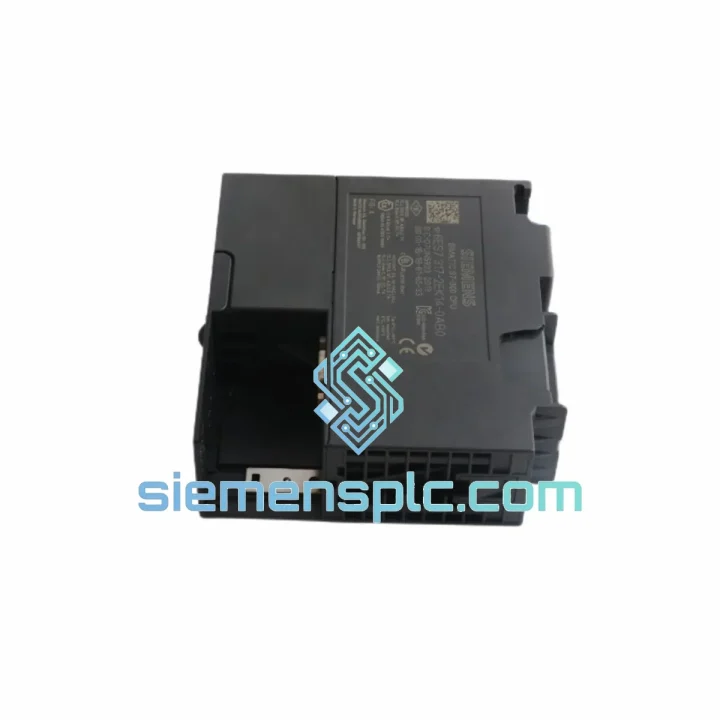
Request verified availability, condition, replacement risk review, packing options and courier lead time for 6ES7317-2EK14-0AB0.
Click Request Quote and the part number is inserted into the inquiry form automatically.
Core fields for model confirmation and RFQ routing. Detailed product narrative remains below.
The 6ES7317-2EK14-0AB0 occupies the upper tier of the SIMATIC S7-300 CPU range. Its defining characteristic is the integration of two independent fieldbus interfaces — a PROFINET IO port with Isochronous Real-Time (IRT) capability and a PROFIBUS DP master/slave port — on a single module, eliminating the need for a supplementary CP communication card. With 512 KB of work memory and a binary instruction cycle time of 0.05 µs, this CPU is specified for applications where program complexity, network topology, and deterministic response time must be addressed simultaneously within a compact DIN-rail form factor.
In a typical control architecture, the CPU317-2 PN/DP functions as the central arbitration node: it executes the cyclic OB1 task, manages interrupt-driven OBs (OB35, OB40, OB82, OB86), coordinates distributed I/O across both fieldbuses, and maintains the data exchange layer with SCADA or MES systems via S7 communication or OPC. The backplane bus interface operates at the S7-300 parallel backplane rate, transferring process image data to and from signal modules within each scan cycle without CPU intervention, freeing execution bandwidth for application logic.
Real-time Stock & RFQ: [email protected] | WhatsApp: +86 18359268345
| Parameter | Value |
|---|---|
| Order Number | 6ES7317-2EK14-0AB0 |
| Product Family | SIMATIC S7-300 |
| CPU Designation | CPU317-2 PN/DP |
| Work Memory | 512 KB (code + data) |
| Load Memory (integrated) | 8 MB Flash (EEPROM-backed) |
| Load Memory (MMC, max.) | 64 MB via Micro Memory Card |
| Binary Instruction Time | 0.05 µs |
| Floating-Point Instruction Time | 0.6 µs |
| Interface 1 | PROFINET IO (2-port integrated switch, IRT, RT, NRT) |
| Interface 2 | PROFIBUS DP Master / Slave (up to 12 Mbit/s) |
| MPI Interface | Integrated, 187.5 kbps (shared with DP port) |
| Max. PROFINET IO Devices | 128 IO devices |
| Max. PROFIBUS DP Slaves | 124 slaves |
| Digital I/O Address Space | 16,384 bits input / 16,384 bits output |
| Analog I/O Address Space | 1,024 words input / 1,024 words output |
| Timers / Counters | 2,048 / 2,048 |
| Data Blocks (max.) | 4,096 DB |
| Nesting Depth | 16 levels per priority class |
| Supply Voltage | 24 V DC (20.4–28.8 V DC) |
| Current Consumption (typ.) | 1.2 A at 24 V DC |
| Power Dissipation (typ.) | 5.5 W |
| Operating Temperature | 0 °C to +60 °C (horizontal mounting) |
| Storage Temperature | −40 °C to +70 °C |
| Relative Humidity | 10–95%, non-condensing (IEC 60068-2-78) |
| Protection Class | IP20 (EN 60529) |
| Vibration Resistance | 10–58 Hz: 0.075 mm; 58–150 Hz: 1 g (IEC 60068-2-6) |
| Shock Resistance | 15 g / 11 ms (IEC 60068-2-27) |
| Dimensions (W × H × D) | 80 × 125 × 130 mm |
| Weight | Approx. 320 g |
| Firmware Version (as shipped) | V3.3 (field-upgradeable via MMC) |
| Programming Software | STEP 7 V5.5+ / TIA Portal V13 SP1+ (legacy device) |
| Warranty | 12 months from dispatch date |
The CPU317-2 PN/DP is built on a 32-bit RISC processor core with a dedicated co-processor for floating-point arithmetic, which accounts for the 0.6 µs REAL instruction execution time — a figure that matters in PID loop implementations where the control algorithm runs inside OB35 at 100 ms intervals with multiple simultaneous loops. The internal memory architecture separates work memory (SRAM, battery-backed) from load memory (Flash), so a power cycle without a backup battery does not corrupt the program; only retentive data markers and DB contents require battery support.
The PROFINET interface implements a 2-port integrated switch using the ERTEC200 ASIC, which enables line topology wiring without external switches — a significant cabinet-space and cost reduction in conveyor or transfer-line installations. IRT mode achieves a send clock as low as 250 µs with a jitter of less than 1 µs, which is sufficient for coordinated motion sequences that do not require a dedicated motion controller. The IRT bandwidth reservation mechanism isolates time-critical IO data from standard TCP/IP traffic on the same physical cable, preventing network congestion from affecting control cycle integrity.
The PROFIBUS DP master interface operates independently of the PROFINET stack. Both interfaces are managed by separate communication processors within the module, meaning a high PROFIBUS DP slave count or a large PROFINET IO update volume does not create a shared-resource bottleneck. The DP interface supports equidistant bus cycle mode, which synchronizes slave update intervals to a fixed grid — a prerequisite for drive applications using SINAMICS or MICROMASTER frequency inverters in speed-controlled mode.
EMC design follows IEC 61000-4 series test criteria. The backplane connector uses a shielded multi-point ground scheme, and the front panel incorporates transient voltage suppression on all signal lines. The module passes 4 kV surge immunity (IEC 61000-4-5) and 2 kV fast transient/burst immunity (IEC 61000-4-4), which are the relevant thresholds for industrial panel environments with inductive switching loads on adjacent contactors and drives.
Every 6ES7317-2EK14-0AB0 unit dispatched from our Xiamen facility is a genuine Siemens-manufactured component sourced through verified supply channels. Siemens AG produces the SIMATIC S7-300 series under ISO 9001:2015 certified manufacturing processes at its Amberg Electronics Plant, one of the most automated electronics factories in Europe, with a documented defect rate below 12 parts per million.
Before dispatch, each unit undergoes a structured pre-shipment inspection: serial number authentication against Siemens product traceability records, power-on functional test with PROFINET ping and PROFIBUS DP token-ring verification, visual inspection of the backplane connector, front panel, MMC slot, and firmware version label, and ESD-safe packaging in anti-static bags with foam-lined double-wall corrugated cartons. A certificate of conformity and test record are available on request for regulated industries.
Logistics from Xiamen, China covers 50+ destination countries. Standard air freight to Europe and North America typically achieves 3–5 business days door-to-door. Express courier options (DHL, FedEx, UPS) are available for plant-down emergencies. All shipments include a commercial invoice, packing list, and HS code 8537.10 documentation for customs clearance. Export compliance screening is performed on every order in accordance with applicable trade regulations.
Email: [email protected]
WhatsApp: +86 18359268345
Web: siemensplc.com
Location: Xiamen, China
© 2026 siemensplc.com. All rights reserved.
We check the full part number, brand, series and visible nameplate information before quotation.
Sales confirms stock path, condition option, quantity and realistic lead time for export dispatch.
DHL, FedEx, UPS or buyer courier arrangements can be reviewed with packing requirements.
Similar brand or category products for fast comparison and multi-item RFQ lists.