Siemens
RFQ Ready
Siemens 6ES7 315-2EH14-0AB0 CPU 315-2 PN/DP PLC Module
SIMATIC S7-300
Origin DE
PLC CPU Module
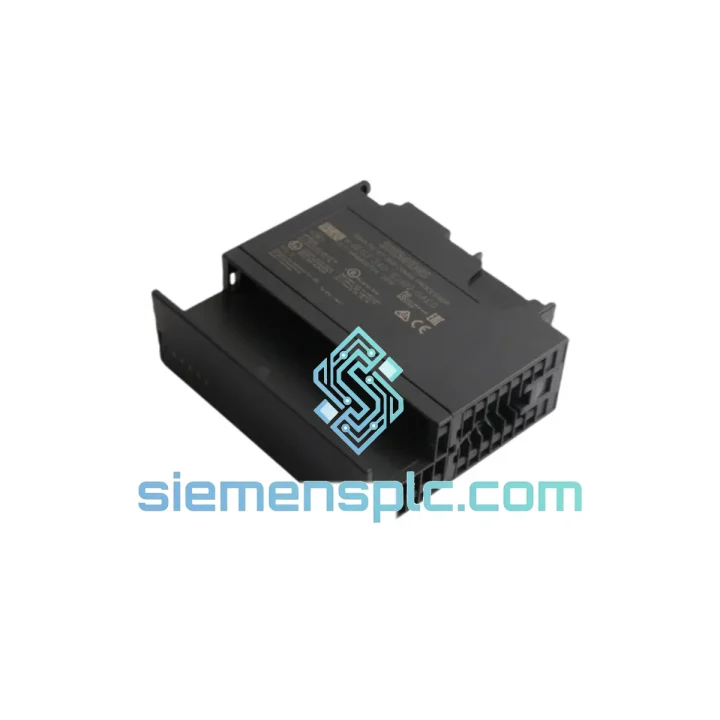
Request verified availability, condition, replacement risk review, packing options and courier lead time for 6ES7340-1CH02-0AE0.
Click Request Quote and the part number is inserted into the inquiry form automatically.
Core fields for model confirmation and RFQ routing. Detailed product narrative remains below.
The 6ES7340-1CH02-0AE0 is a dedicated communication processor (CP) within the Siemens SIMATIC S7-300 modular PLC family. Its singular function is to manage autonomous point-to-point (PtP) serial data exchange over RS422 and RS485 physical layers, entirely independent of the S7-300 CPU’s scan cycle. This architectural separation is not incidental — it is the defining engineering rationale for deploying a CP module rather than relying on integrated CPU serial ports. In process-critical applications where deterministic CPU response time must be preserved, offloading serial I/O to the 6ES7340-1CH02-0AE0 eliminates the variable latency introduced by polling-based serial routines embedded in the main program organization block (OB1).
The module occupies a single slot on the S7-300 DIN rail assembly and draws power exclusively from the 5 VDC backplane bus at 160 mA — no external 24 VDC supply is required. Communication with the CPU occurs via the S7-300 internal P-bus (peripheral bus), using standard STEP 7 function blocks: FB 3 / FC 3 for transmit operations and FB 4 / FC 4 for receive operations. These driver blocks are freely available from Siemens Industry Online Support and integrate directly into the user program without requiring additional licensing.
The RS422/RS485 interface is electrically isolated from the backplane, providing galvanic separation between the serial field network and the PLC rack. This isolation is implemented via optocoupler-based signal conditioning on both transmit and receive paths, with a rated isolation voltage sufficient to withstand the common-mode transients typical of industrial cable runs in electrically noisy environments — motor drive cabinets, welding cells, and high-current switching gear. The RS485 half-duplex mode supports up to 32 nodes on a single bus segment at baud rates from 300 bps to 76.8 kbps. The RS422 full-duplex mode uses a 4-wire configuration (TX+, TX−, RX+, RX−) and supports cable runs up to 1,200 m at 9.6 kbps, making it suitable for distributed plant layouts where field devices are located far from the control cabinet.
Protocol support covers three modes: ASCII (free-format character framing), 3964(R) (block-oriented with acknowledgement handshake), and RK 512 (Siemens-proprietary record-based protocol for PLC-to-PLC data exchange). ASCII mode is the most flexible — it allows engineers to implement custom framing logic in STEP 7 to interface with virtually any third-party device that exposes a serial port, including barcode readers, weighing terminals, vision system controllers, servo drive parameter interfaces, and legacy SCADA RTUs. The 3964(R) protocol adds a defined STX/ETX block structure with BCC checksum and acknowledgement, reducing the application-layer error handling burden. RK 512 is used primarily for S7-300 to S5 legacy system migration scenarios.
From a hardware diagnostic standpoint, the module provides LED status indicators for power (SF/BF), transmit activity (TxD), and receive activity (RxD), enabling rapid visual fault isolation during commissioning and maintenance. Diagnostic data is accessible via the STEP 7 hardware diagnostics interface, including frame error counters, parity error counts, and buffer overflow events — all readable without interrupting ongoing communication.
Real-time Stock & RFQ: [email protected] | WhatsApp: +86 18359268345
| MLFB / Order Number | 6ES7340-1CH02-0AE0 |
| Product Series | SIMATIC S7-300 CP 340 |
| Module Category | Communication Processor (CP) |
| Serial Interface Standard | RS422 (full-duplex, 4-wire) / RS485 (half-duplex, 2-wire) |
| Communication Mode | Point-to-Point (PtP), autonomous |
| Supported Protocols | ASCII, 3964(R), RK 512 |
| Baud Rate Range | 300 bps — 76,800 bps |
| RS485 Max. Bus Nodes | 32 (without repeater) |
| RS422 Max. Cable Length | 1,200 m @ 9.6 kbps |
| Interface Isolation | Galvanic (optocoupler), electrically isolated from backplane |
| Backplane Bus Interface | S7-300 P-bus (peripheral bus) |
| Power Supply | 5 VDC via S7-300 backplane (no external supply required) |
| Current Consumption (5 VDC) | 160 mA |
| Power Dissipation | approx. 0.8 W |
| Operating Temperature | 0 °C to +60 °C |
| Storage Temperature | −40 °C to +70 °C |
| Relative Humidity | 10% to 95%, non-condensing |
| Degree of Protection | IP20 |
| Dimensions (W × H × D) | 40 × 125 × 120 mm |
| Weight | approx. 300 g |
| Mounting | S7-300 DIN rail, slot-independent |
| Configuration Tool | STEP 7 V5.x (HW Config + driver FBs) |
| Certifications | CE, UL 508, IEC 61131-2, RoHS |
| Country of Origin | Germany |
| Warranty | 12 months from date of dispatch |
The 6ES7340-1CH02-0AE0 implements a dedicated microcontroller-based serial engine that operates independently of the S7-300 CPU’s main processor. This architecture means the CP 340 maintains its own transmit and receive buffers, manages baud rate clocking internally, and handles protocol framing (start bits, stop bits, parity, BCC checksum for 3964(R)) without consuming any CPU instruction cycles. The CPU interacts with the module only at the application data level — writing a data record to the CP’s P-bus address space to initiate a transmit, or reading a received data record after the CP signals completion via a status bit in the process image.
EMC Design: The RS422/RS485 driver circuitry uses differential signaling, which provides inherent common-mode noise rejection. In environments with high electromagnetic interference — variable frequency drives, contactors, inductive loads — differential pairs reject common-mode voltages up to the rated common-mode range of the RS485 standard (−7 V to +12 V). The galvanic isolation barrier (optocoupler stage) further prevents ground potential differences between the PLC cabinet ground and the field device ground from inducing error currents on the signal lines. Shielded twisted-pair cable with single-point shield grounding at the cabinet end is the recommended installation practice to maximize this EMC margin.
Receive Buffer Architecture: The CP 340 maintains an internal receive buffer that stores incoming serial data until the CPU reads it via the FB 4 / FC 4 receive function block. This decoupling means that even if the CPU is executing a time-consuming OB (e.g., a complex PID calculation or a large data block copy), incoming serial frames are not lost — they are held in the CP’s buffer. The buffer depth is sufficient for typical industrial message lengths; however, for high-throughput applications, the engineer must ensure the CPU read cycle is fast enough relative to the incoming message rate to prevent buffer overflow, which is flagged in the CP’s diagnostic data.
Slot Independence: Unlike some S7-300 special function modules that require specific rack positions, the CP 340 can be installed in any slot on the S7-300 rack (slots 4–11 on a standard rack). This flexibility simplifies rack layout planning, particularly in retrofit scenarios where an existing rack must accommodate an additional communication module without physical reconfiguration.
Every 6ES7340-1CH02-0AE0 unit supplied by siemensplc.com is sourced through verified industrial distribution channels with full traceability to Siemens-authorized supply chains. Each module undergoes a structured pre-dispatch inspection protocol:
Dispatch is from our warehouse in Xiamen, China. In-stock units ship within 1–3 business days. International express freight (DHL, FedEx, UPS) delivers to most destinations within 3–7 business days. Air freight and sea freight options are available for volume orders. Export documentation complies with Chinese customs regulations and international trade requirements. T/T bank transfer, PayPal, and major credit cards are accepted.
Email: [email protected]
WhatsApp: +86 18359268345
Web: siemensplc.com
Location: Xiamen, China
© 2026 siemensplc.com. All rights reserved.
We check the full part number, brand, series and visible nameplate information before quotation.
Sales confirms stock path, condition option, quantity and realistic lead time for export dispatch.
DHL, FedEx, UPS or buyer courier arrangements can be reviewed with packing requirements.
Similar brand or category products for fast comparison and multi-item RFQ lists.