Siemens
RFQ Ready
Siemens A5E03378158 Communication Processor – SIMATIC S7-300 CP 343-1
SIMATIC S7-300
Origin DE
Communication Processor
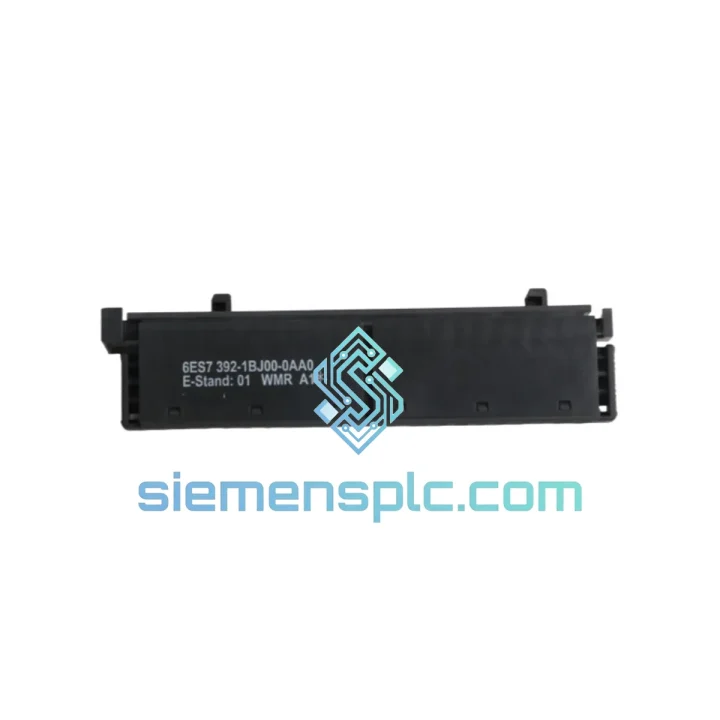
Request verified availability, condition, replacement risk review, packing options and courier lead time for 6ES7392-1BJ00-0AA0.
Click Request Quote and the part number is inserted into the inquiry form automatically.
Core fields for model confirmation and RFQ routing. Detailed product narrative remains below.
Every minute your S7-300 rack sits idle with a missing front connector, your line is bleeding money. The Siemens 6ES7392-1BJ00-0AA0 is a 20-pin screw-type front connector for SIMATIC S7-300 signal and function modules — and we have it on the shelf in Xiamen, ready to move the moment you confirm. No lead-time games, no “check back in 6 weeks.” If you’re reading this at 2 AM during a breakdown, you’re in the right place.
URGENT REQUIREMENT? Contact: [email protected] | WhatsApp: +86 18359268345
| Parameter | Specification | Status |
|---|---|---|
| Part Number | 6ES7392-1BJ00-0AA0 | ✔ Ready to Ship |
| Brand | Siemens | 100% Original |
| Series | SIMATIC S7-300 | — |
| Connector Type | Front Connector, Screw-Type | — |
| Pin Count | 20-pin | — |
| Compatible Module Width | 40 mm (single-width S7-300 SMs/FMs) | — |
| Wire Cross-Section | 0.25 – 1.5 mm² (ferrules recommended) | — |
| Wiring Method | Screw terminals (M2 screws, 0.4 Nm torque) | — |
| Degree of Protection | IP20 | — |
| Operating Temperature | 0 °C to +60 °C | — |
| Storage Temperature | -40 °C to +70 °C | — |
| Weight | Approx. 40 g | — |
| Country of Origin | Germany | — |
| Shipping Origin | Xiamen, China | ✔ In Stock |
Fifteen years of field calls teach you the same lesson: most S7-300 front connector failures are not the connector itself — they’re the result of a botched swap. Here’s what actually matters on-site:
1. The Coding Key — Don’t Skip It
The 6ES7392-1BJ00-0AA0 ships with a coding key that mechanically prevents plugging the wrong connector into the wrong module. Before you pull the old connector, note the key position (A–F). Set the new connector’s key to match. If you ignore this and force-fit, you’ll damage the module housing — and that’s a much bigger problem than a missing connector.
2. Pre-Wire Before the Module Arrives
This is the single biggest time-saver in S7-300 maintenance. The front connector is designed to stay with the cabinet wiring. Pull the old connector, transfer all field wires to the new 6ES7392-1BJ00-0AA0 terminal-by-terminal using the existing label strip, and have it ready before the replacement module even shows up. Module swap becomes a 30-second job.
3. Torque Matters — 0.4 Nm, Not “Tight Enough”
Over-torquing M2 screw terminals is the leading cause of intermittent I/O faults on S7-300 systems. Use a calibrated screwdriver. Under-torquing causes loose contacts that fail under vibration. Both will generate SF (group fault) LEDs and cryptic diagnostic entries in STEP 7 / TIA Portal that waste hours of troubleshooting time.
4. Common Fault Codes Linked to Front Connector Issues
5. No DIP Switches, No Addressing — Zero Configuration Required
Unlike some I/O modules, the 6ES7392-1BJ00-0AA0 is a passive wiring accessory. There are no DIP switches, no firmware, no self-addressing procedure. Plug it in, lock it, done. The only configuration that matters is the coding key position and correct terminal wiring.
Industrial environments don’t care about your maintenance schedule. The 6ES7392-1BJ00-0AA0 is built to Siemens SIMATIC S7-300 standards, which means it’s been validated against the conditions that actually exist on plant floors — not just lab benches.
Vibration: Screw-type terminals maintain contact integrity under continuous mechanical vibration, which is why this connector type is preferred over spring-type in applications involving compressors, presses, and heavy rotating equipment. The locking tab engages a positive mechanical stop on the module housing, preventing connector walk-out under shock loads.
Temperature Cycling: Rated 0 °C to +60 °C operating, with storage down to -40 °C. In practice, this covers the vast majority of industrial cabinet environments, including outdoor enclosures in temperate climates. The terminal block housing is made from glass-fiber reinforced thermoplastic — it doesn’t warp, crack, or deform under sustained heat from adjacent power components.
Humidity and Contamination: IP20 protection keeps fingers and tools out of live terminals. While not sealed against liquid ingress, the connector performs reliably in the humidity ranges typical of factory floors (up to 95% RH non-condensing per IEC 61131-2). For genuinely wet environments, the issue is the open rack, not the connector — address enclosure sealing first.
Contact Durability: Siemens rates the screw terminals for the full service life of the S7-300 platform. In practice, field units with 15+ years of service show no measurable contact degradation when properly torqued at installation. The connector is designed to outlast the module it serves.
Stock is held at our Xiamen warehouse, positioned specifically for fast international dispatch. Here’s how the process works from the moment you confirm your order:
Day 0 — Order Confirmation: Contact us via email or WhatsApp. We confirm stock availability, issue a proforma invoice, and hold the unit against your order. Payment confirmation triggers immediate pick and pack.
Day 1 — Dispatch: Orders confirmed before 14:00 CST ship same business day. We use DHL Express and FedEx International Priority as primary carriers. Both services provide door-to-door tracking from Xiamen to your facility. Export documentation (commercial invoice, packing list, HS code 8538.90) is prepared in-house — no delays waiting on freight forwarders.
Transit Times (Typical):
For genuinely critical situations — production line down, safety system offline — contact us directly on WhatsApp. We can arrange same-day dispatch with courier pickup from our warehouse and provide the AWB number within hours of payment. We’ve done it before. We’ll do it again.
All shipments include full tracking, and we proactively notify you of any customs holds. For orders to countries with import restrictions on industrial electronics, we advise on documentation requirements upfront — no surprises at customs.
Email: [email protected]
WhatsApp: +86 18359268345
Web: siemensplc.com
© 2026 siemensplc.com. All rights reserved.
We check the full part number, brand, series and visible nameplate information before quotation.
Sales confirms stock path, condition option, quantity and realistic lead time for export dispatch.
DHL, FedEx, UPS or buyer courier arrangements can be reviewed with packing requirements.
Similar brand or category products for fast comparison and multi-item RFQ lists.