Siemens
RFQ Ready
Siemens 6ES7467-5GJ02-0AB0 PLC Interface Module
SIMATIC S7-400
Origin DE
PLC Interface Module
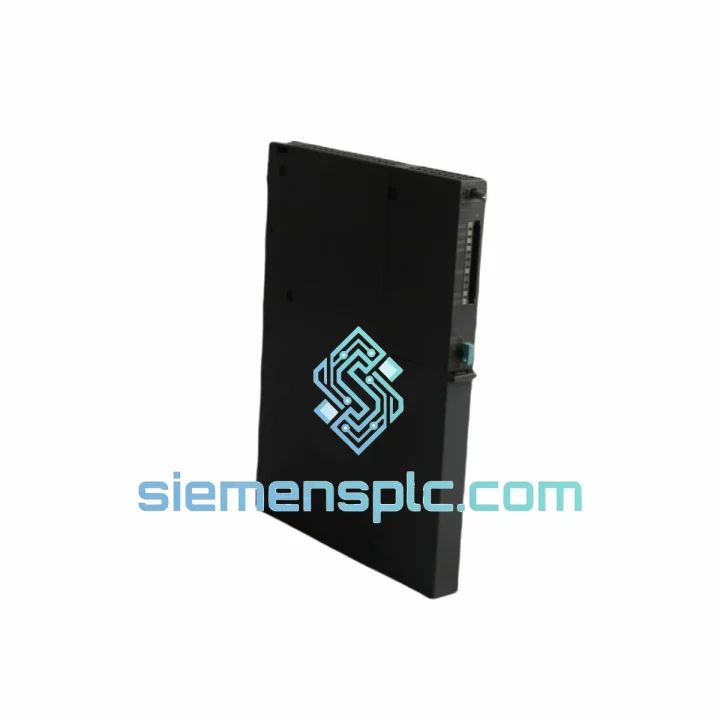
Request verified availability, condition, replacement risk review, packing options and courier lead time for 6ES7416-2XK02-0AB0.
Click Request Quote and the part number is inserted into the inquiry form automatically.
Core fields for model confirmation and RFQ routing. Detailed product narrative remains below.
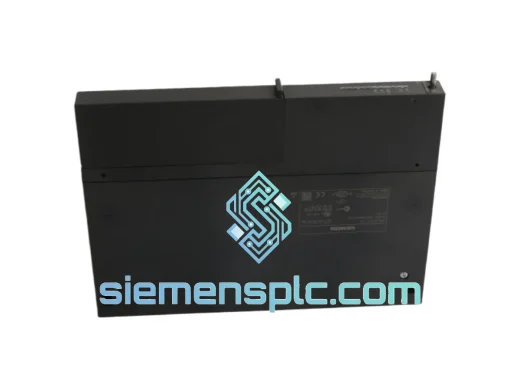
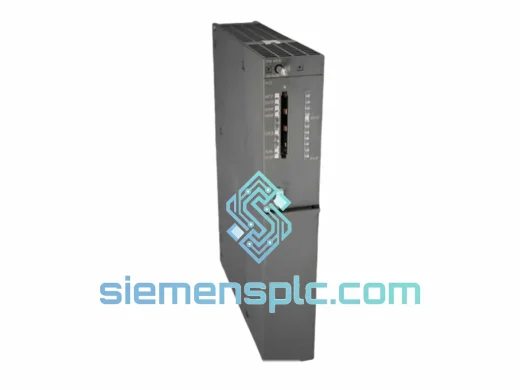
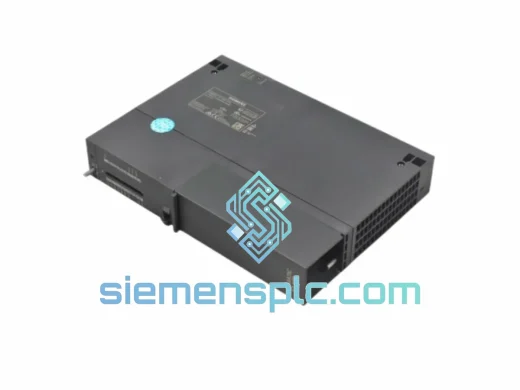
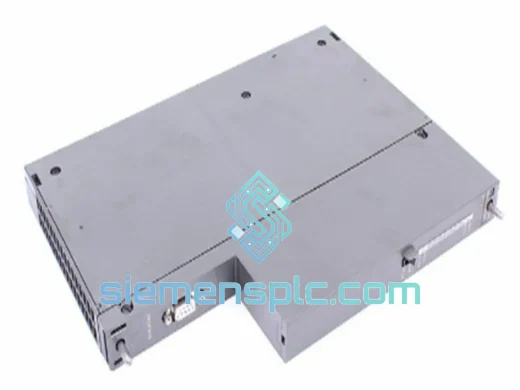
The 6ES7416-2XK02-0AB0 is a high-capacity central processing unit within the Siemens SIMATIC S7-400 series, engineered for large-scale process automation where deterministic cycle execution, deep memory addressing, and integrated fieldbus communication are mandatory requirements. This module occupies the CPU 416-2 DP tier — the second-highest performance class in the S7-400 CPU lineup — and integrates a dedicated PROFIBUS-DP master/slave interface directly on the module backplane connector, eliminating the need for a separate CP slot allocation in distributed I/O topologies.
In a typical S7-400 rack configuration, the CPU 416-2 DP functions as the sole arbitration node for all program execution, I/O update cycles, and inter-rack communication. Its internal program memory architecture supports both load memory (via memory card) and work memory (integrated RAM), with the work memory partitioned between code and data segments. This separation allows the operating system to enforce strict access boundaries between executable OBs, FBs, FCs, and DBs — a design that directly reduces the risk of data corruption during concurrent task execution across multiple priority classes.
The module’s backplane bus interface operates at the S7-400 P-bus and K-bus speeds, enabling high-throughput data exchange with signal modules installed in the same rack. For multi-rack configurations, the IM 460/461 interface module pair extends the K-bus across expansion racks, with the CPU maintaining full address space visibility across all connected I/O. The integrated MPI/DP port supports both MPI (Multi-Point Interface) for programming device connections and PROFIBUS-DP for distributed I/O master operation — both on the same physical connector, selectable via hardware configuration in STEP 7 HW Config.
From a firmware standpoint, the CPU 416-2 DP runs the S7-400 operating system with support for up to 512 OB instances, including cyclic OBs (OB1), time-interrupt OBs (OB10–OB17), hardware-interrupt OBs (OB40–OB47), error OBs (OB80–OB87), and startup OBs (OB100–OB102). This interrupt hierarchy allows engineers to implement priority-based task scheduling without external RTOS dependencies — the CPU’s internal scheduler handles preemption natively, with configurable minimum cycle times down to 1 ms for time-critical interrupt routines.
For system integrators managing brownfield upgrades or MRO (Maintenance, Repair, and Operations) sourcing, the 6ES7416-2XK02-0AB0 represents a direct-fit replacement within any S7-400 UR1, UR2, CR2, ER1, or ER2 rack that previously housed a CPU 416-2 DP variant. Firmware version compatibility must be verified against the existing STEP 7 project before commissioning. Our technical team provides pre-shipment firmware version disclosure on request.
Real-time Stock & RFQ: [email protected] | WhatsApp: +86 18359268345
| Parameter | Value |
|---|---|
| Part Number (MLFB) | 6ES7416-2XK02-0AB0 |
| Product Family | SIMATIC S7-400 |
| CPU Class | CPU 416-2 DP |
| Work Memory (Code) | 2.8 MB |
| Work Memory (Data) | 2.8 MB |
| Load Memory (via MC) | Up to 64 MB (Flash memory card) |
| Processing Speed (Bit Operations) | 0.08 µs per bit operation |
| Processing Speed (Word Operations) | 0.08 µs per word operation |
| Processing Speed (Floating Point) | 0.16 µs per FP operation |
| Max. Digital I/O Addresses | 65,536 bytes (input/output each) |
| Max. Analog I/O Addresses | 4,096 channels (input/output each) |
| Integrated Interface 1 | MPI/DP (PROFIBUS-DP Master/Slave), 12 Mbit/s max |
| Max. DP Slaves (IF1) | 125 |
| Max. S7 Connections | 44 |
| Timers / Counters | 2,048 / 2,048 |
| Data Blocks | Up to 8,191 DBs |
| Supply Voltage | DC 5 V (via backplane bus, supplied by PS 407) |
| Current Consumption (5 VDC) | 1.8 A typical |
| Operating Temperature | 0 °C to +60 °C |
| Storage Temperature | -40 °C to +70 °C |
| Relative Humidity | 10% to 95%, non-condensing |
| Degree of Protection | IP20 |
| Dimensions (W × H × D) | 50 × 290 × 219 mm |
| Weight | approx. 780 g |
| EMC Compliance | EN 61000-6-2, EN 61000-6-4 |
| Certifications | CE, UL, cUL, FM, ATEX (zone 2) |
| Warranty | 12 months from shipment date |
The 6ES7416-2XK02-0AB0 implements a dual-bus architecture at the backplane level. The P-bus (Peripheral Bus) handles high-speed synchronous data transfer between the CPU and signal modules within the same rack, operating at a fixed clock rate that ensures deterministic I/O update latency. The K-bus (Communication Bus) manages asynchronous inter-module communication, including diagnostic data exchange and module identification during startup. This separation prevents I/O scan jitter caused by diagnostic traffic — a common failure mode in single-bus architectures under heavy diagnostic load.
The integrated PROFIBUS-DP interface on IF1 uses an ASIC-based DP controller that operates independently of the main CPU core. This means DP cycle execution — including GSD-defined I/O data exchange with slave devices — continues at its configured bus cycle time even when the CPU is executing a long OB or processing an interrupt. The DP controller maintains its own send/receive buffers and signals the CPU only when new process image data is ready, reducing the CPU overhead associated with fieldbus polling to near zero during steady-state operation.
EMC hardening on this module follows Siemens’ standard S7-400 design rules: all signal lines on the PCB are routed with controlled impedance, and the backplane connector uses a shielded housing that bonds to the rack’s PE rail. The module’s internal power supply filtering includes common-mode chokes on the 5 VDC backplane input, suppressing conducted interference from adjacent high-current modules such as analog output cards driving 4–20 mA loops into inductive loads. This design allows the CPU to maintain stable operation in environments with measured EMC levels up to Class A industrial limits per EN 61000-6-2.
The CPU’s retentive memory area (M, DB, T, C) is backed by a gold-capacitor buffer that maintains data integrity for a minimum of 10 days without backplane power — no external battery required for short-term power interruptions. For extended retention, a backup battery module can be inserted into the CPU’s battery compartment, extending retention to years. This dual-layer retention architecture is particularly relevant for batch process applications where recipe data stored in retentive DBs must survive planned maintenance shutdowns.
Every 6ES7416-2XK02-0AB0 unit shipped from our Xiamen, China facility undergoes a structured inspection protocol before dispatch. Physical inspection covers connector pin integrity, front panel label authenticity (including Siemens holographic markings where applicable), and housing condition. Functional verification includes backplane power-on sequencing and, where test fixtures are available, a full STEP 7 online connection test to confirm CPU operating system version and diagnostic buffer accessibility.
Units are packed in anti-static PE bags, placed in custom-cut EPE foam inserts, and shipped in double-wall corrugated cartons rated for international air freight handling. For high-value orders, wooden crating with moisture-barrier lining is available on request. All shipments include a packing list, commercial invoice with accurate HS code declaration (8537.10), and a certificate of conformity. Export documentation for destinations requiring CITES, dual-use, or end-user certificate compliance is prepared in advance to prevent customs clearance delays.
Standard shipping is via DHL Express or FedEx International Priority, with transit times of 3–7 business days to most destinations in Europe, North America, Southeast Asia, and the Middle East. For time-critical requirements, same-day dispatch is available for orders confirmed before 14:00 CST. All shipments are fully insured and tracked from our warehouse to the delivery address. A 12-month warranty covers manufacturing defects and confirmed functional failures under normal operating conditions, with advance replacement available for qualified accounts.
Email: [email protected]
WhatsApp: +86 18359268345
Web: siemensplc.com
Location: Xiamen, China
© 2026 siemensplc.com. All rights reserved.
We check the full part number, brand, series and visible nameplate information before quotation.
Sales confirms stock path, condition option, quantity and realistic lead time for export dispatch.
DHL, FedEx, UPS or buyer courier arrangements can be reviewed with packing requirements.
Similar brand or category products for fast comparison and multi-item RFQ lists.