Siemens
RFQ Ready
Siemens 6ES7321-1BL00-0AA0 Digital Input Module
SIMATIC
Origin DE
PLC Digital Input Module
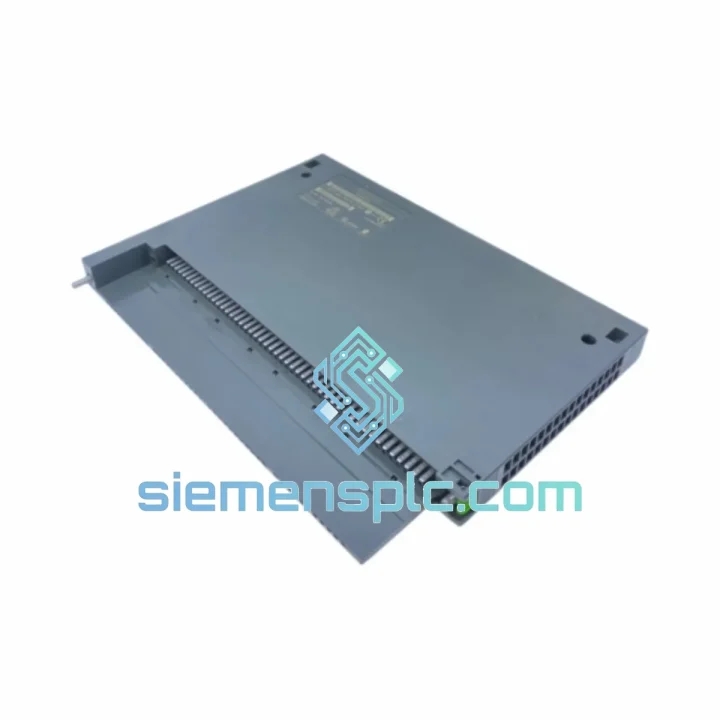
Request verified availability, condition, replacement risk review, packing options and courier lead time for 6ES7431-7KF10-0AB0.
Click Request Quote and the part number is inserted into the inquiry form automatically.
Core fields for model confirmation and RFQ routing. Detailed product narrative remains below.
The 6ES7431-7KF10-0AB0 is a dedicated resistance temperature detector (RTD) analog input module within the SIMATIC S7-400 SM 431 signal module family. It occupies a single 25 mm slot on any S7-400 rack (UR1, UR2, ER1, ER2) and delivers eight independently configurable RTD measurement channels directly onto the CPU process image via the S7-400 P-bus and K-bus backplane interfaces. In a control loop architecture, this module functions as the primary thermal sensing front-end: it excites each RTD element with a precision constant current source, measures the resulting voltage drop across the sensor and lead resistances, performs on-board 15-bit sigma-delta analog-to-digital conversion, applies IEC 60751-compliant linearization, and presents engineering-unit values in tenths of a degree Celsius or tenths of an ohm to the CPU — all without requiring any external signal conditioning hardware.
This design eliminates the latency and calibration overhead associated with external transmitters, reduces panel wiring density, and allows the S7-400 CPU to execute closed-loop temperature control at scan rates consistent with the module’s configurable conversion time (minimum 65 ms per channel). The module is the standard selection for process engineers who require traceable, high-accuracy multi-point RTD acquisition on the S7-400 backplane in chemical, petrochemical, power generation, pharmaceutical, and heavy industrial environments.
📧 Real-time Stock & RFQ: [email protected] | WhatsApp: +86 18359268345
| Order Number (MLFB) | 6ES7431-7KF10-0AB0 |
| Manufacturer | Siemens AG |
| Product Family | SIMATIC S7-400 SM 431 Signal Module |
| Module Function | Analog Input — RTD / Resistance |
| Number of Channels | 8 (configurable as 4 × 4-wire or 8 × 2-wire / 3-wire) |
| Supported Sensor Types | PT100, PT200, PT500, PT1000, NI100, NI1000, Cu10, resistance 0–600 Ω |
| Temperature Range (PT100) | −200 °C to +850 °C |
| Resolution | 15-bit + sign (0.1 °C / 0.1 Ω LSB) |
| Basic Error Limit (PT100, 4-wire) | ±1.0 °C at 25 °C ambient |
| Conversion Time per Channel | ≥ 65 ms (configurable; all 8 channels: ≥ 520 ms) |
| Excitation Current | Constant current source, internally generated |
| Permissible Input Voltage (Destruction Limit) | 75 V DC max |
| Backplane Supply Voltage | 5 V DC via P-bus |
| Current Consumption (5 V DC) | ≤ 100 mA |
| Power Dissipation | ≤ 3.5 W |
| Channel-to-Backplane Isolation | Galvanic (optocoupler-based) |
| Diagnostic Functions | Wire break, short circuit, overflow, underflow, parameterization error (per channel) |
| Operating Temperature | 0 °C to +60 °C |
| Storage Temperature | −40 °C to +70 °C |
| Relative Humidity | 10 % to 95 %, non-condensing |
| Degree of Protection | IP20 |
| Dimensions (W × H × D) | 25 mm × 290 mm × 210 mm |
| Weight | Approx. 500 g |
| Compatible Racks | S7-400 UR1, UR2, ER1, ER2 |
| Front Connector (sold separately) | 6ES7492-1BL00-0AA0 (screw) / 6ES7492-1BH00-0AA0 (spring-cage) |
| Engineering Software | STEP 7 V5.x (HW Config) / TIA Portal V13 SP1 and later |
| Certifications | CE, UL, cUL, FM, ATEX Zone 2 |
| Warranty | 12 months from shipment date |
The SM 431 RTD module’s measurement chain begins at the front connector terminals, where each channel pair connects to a dedicated constant-current excitation circuit. The excitation current — typically in the range of 1 mA to 2 mA depending on sensor type — is sourced from an internal precision reference, ensuring that the voltage developed across the RTD element is proportional solely to its resistance, independent of supply rail fluctuations. In 4-wire (Kelvin) mode, separate force and sense conductor pairs eliminate lead resistance from the measurement entirely: the current flows through the force pair while the voltage is sampled across the sense pair at the module terminals, where input impedance is sufficiently high (>1 MΩ) to make lead resistance in the sense path negligible. In 3-wire mode, the module applies a lead resistance compensation algorithm that assumes equal resistance in both current-carrying leads — a valid approximation for symmetric cable runs up to several hundred meters.
The analog front-end feeds into a 15-bit sigma-delta ADC per channel group. Sigma-delta architecture is selected here for its inherent noise-shaping properties: oversampling at a high clock rate followed by digital decimation filtering suppresses high-frequency noise and achieves effective resolution of 0.1 °C without requiring external anti-aliasing filters. The ADC output passes through a linearization lookup table implemented in module firmware, correcting for the non-linear resistance-temperature characteristic of platinum and nickel RTD elements per IEC 60751 and DIN 43760 standards. The linearized digital value is then transferred to the S7-400 CPU process image input (PII) via the K-bus during each CPU scan cycle.
EMC performance is addressed at multiple levels. The front connector interface incorporates transient voltage suppression (TVS) diodes on each input terminal, clamping fast transients (IEC 61000-4-4 burst, IEC 61000-4-5 surge) before they reach the ADC input stage. Galvanic isolation between the field-side measurement circuitry and the backplane logic is implemented via optocouplers, providing a minimum isolation voltage of 500 V AC and breaking ground loops that are endemic in large industrial installations where multiple earthing points exist across the plant. The module’s PCB layout follows Siemens’ internal EMC design rules: analog and digital ground planes are separated and joined at a single star point, signal traces are routed away from switching power supply traces, and the module housing provides shielding continuity to the rack chassis ground.
Diagnostic logic operates independently of the CPU scan. Each channel’s excitation current and measured voltage are continuously monitored by a supervisory circuit. A wire-break condition is detected when the measured resistance exceeds the upper limit of the configured sensor range (indicating an open circuit in the RTD or wiring). A short-circuit condition is flagged when the measured resistance falls below the lower limit. Both conditions generate a diagnostic interrupt to the CPU (if enabled in HW Config / TIA Portal), allowing the application program to execute fault-handling routines without polling. Parameterization errors — such as configuring a sensor type incompatible with the connected hardware — are detected at module startup and reported via the module’s SF (System Fault) LED and the diagnostic buffer.
Every 6ES7431-7KF10-0AB0 unit dispatched from our Xiamen, China facility is a genuine Siemens-manufactured component. Prior to shipment, each module undergoes a structured incoming inspection protocol: MLFB label verification against the Siemens product database, date code and firmware version recording, visual inspection of the PCB and front connector interface for mechanical damage, and a functional power-on check confirming that the module initializes correctly and reports no system fault (SF LED off) when inserted into a test rack. Units that do not pass all inspection steps are quarantined and not offered for sale.
Packaging follows ESD-safe handling procedures throughout. Modules are stored in anti-static bags within foam-lined boxes, and shipment cartons are sealed with tamper-evident tape. For international orders, we provide commercial invoices with accurate HS code classification (HS 8537.10) and country of origin documentation to support customs clearance in the destination country. Typical dispatch time is within 1 business day of order confirmation. Delivery timelines: 3–5 business days to Southeast Asia and East Asia; 5–10 business days to Europe and the Middle East; 7–14 business days to the Americas. Express courier options (DHL, FedEx, UPS) are available for urgent requirements. All shipments include a tracking number issued at the time of dispatch. The 12-month warranty covers manufacturing defects and functional failure under normal operating conditions; it does not cover damage resulting from incorrect installation, overvoltage beyond the specified destruction limit, or unauthorized modification.
📧 Email: [email protected]
💬 WhatsApp: +86 18359268345
🌐 Web: siemensplc.com
📍 Location: Xiamen, China
© 2026 siemensplc.com. All rights reserved.
We check the full part number, brand, series and visible nameplate information before quotation.
Sales confirms stock path, condition option, quantity and realistic lead time for export dispatch.
DHL, FedEx, UPS or buyer courier arrangements can be reviewed with packing requirements.
Similar brand or category products for fast comparison and multi-item RFQ lists.