Siemens
RFQ Ready
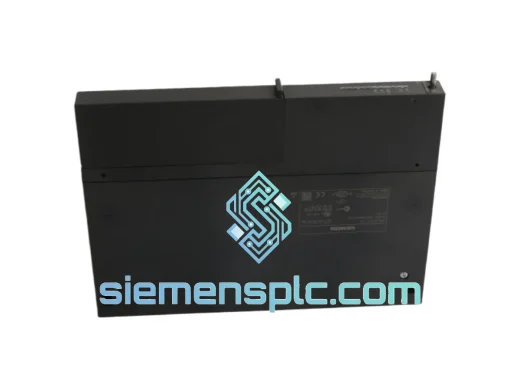
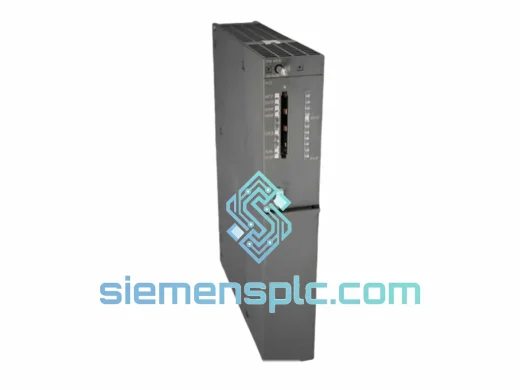
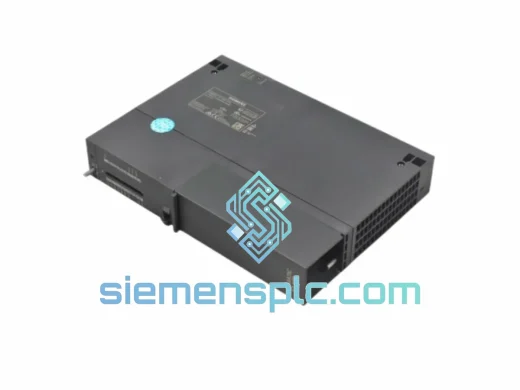
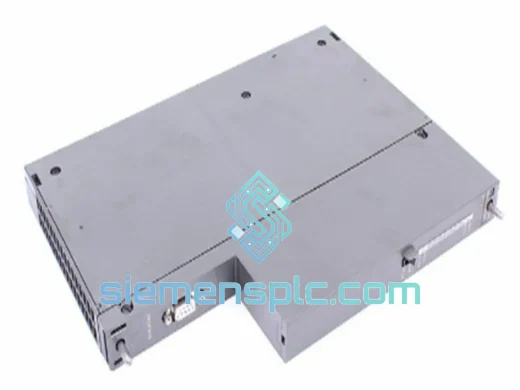
Siemens 6ES7467-5GJ02-0AB0 PLC Interface Module
SIMATIC S7-400
Origin DE
PLC Interface Module
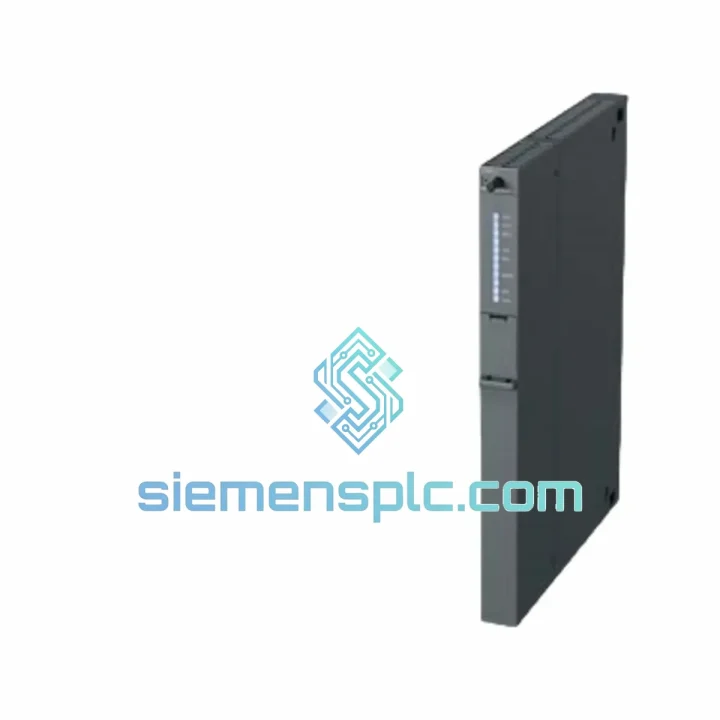
Request verified availability, condition, replacement risk review, packing options and courier lead time for 6GK7443-1EX30-0XE1.
Click Request Quote and the part number is inserted into the inquiry form automatically.
Core fields for model confirmation and RFQ routing. Detailed product narrative remains below.
The 6GK7443-1EX30-0XE1 is a single-slot communication processor within the SIMATIC NET CP 443-1 Advanced family, designed exclusively for the SIMATIC S7-400 modular PLC platform. Its primary function in a control loop is to serve as the deterministic PROFINET IO Controller managing cyclic data exchange with field devices — drives, remote I/O stations, safety modules, and intelligent sensors — while simultaneously operating as a PROFINET IO Device subordinate to an upstream controller. This concurrent dual-role operation, executed within a single hardware module, is the defining architectural characteristic that separates the EX30 generation from earlier CP 443-1 variants and from competing communication processors in the S7-400 ecosystem.
In process control and discrete manufacturing environments, the communication processor sits at the boundary between the PLC’s backplane bus and the plant Ethernet network. Every cyclic IO frame, every acyclic alarm record, every S7 PUT/GET transaction, and every open TCP connection passes through this module. Its throughput ceiling, protocol stack depth, and fault-recovery behavior directly determine whether the overall control system meets its availability and response-time specifications. The 6GK7443-1EX30-0XE1 addresses these requirements through a hardware architecture that separates communication processing from CPU execution, an integrated 2-port switch with MRP stack, and a protocol suite spanning PROFINET, S7, ISO-on-TCP, TCP/IP, UDP, FTP, SMTP, NTP, and SNMP — all active concurrently without mutual interference.
Real-time Stock & RFQ: [email protected] | WhatsApp: +86 18359268345
| Parameter | Specification |
|---|---|
| Order Number | 6GK7443-1EX30-0XE1 |
| Product Family | SIMATIC NET CP 443-1 Advanced |
| Target Platform | SIMATIC S7-400 (all CPU generations, all rack types) |
| Slot Consumption | 1 slot, S7-400 signal module rack |
| Network Ports | 2 × RJ45, 10/100 Mbit/s, full/half duplex, auto-negotiation, auto-MDI/MDIX |
| Integrated Switch | 2-port store-and-forward, line and ring topology support |
| MAC Address Table | 1,024 entries |
| PROFINET IO Controller | Up to 128 IO devices, RT communication class |
| PROFINET IO Device | Simultaneous with Controller role; subordinate to upstream controller |
| PROFINET Update Rate | 1 ms to 512 ms, configurable per IO device |
| MRP Reconfiguration Time | < 200 ms (IEC 62439-2 compliant) |
| S7 Connections | Up to 64 (PUT/GET, SEND/RECEIVE, FETCH/WRITE) |
| Open IE Connections | Up to 64 (TCP/IP, UDP, ISO-on-TCP) |
| Supported Protocols | PROFINET IO RT, S7 Comm, ISO-on-TCP, TCP/IP, UDP, FTP (client/server), SMTP, NTP, HTTP, SNMP v1/v3, DCP, LLDP |
| Web Diagnostics | Integrated HTTP server, port 80; connection tables, port statistics, module health |
| IP Access Control | Configurable ACL per connection endpoint |
| Backplane Interface | S7-400 P-bus, dual-port RAM data exchange model |
| Power Supply | Backplane bus powered; no external 24 V DC required |
| Supply Voltage | 5 V DC via backplane (typ. 1.1 A) |
| Operating Temperature | 0 °C to +60 °C |
| Storage Temperature | −40 °C to +70 °C |
| Relative Humidity | 5 % to 95 %, non-condensing (IEC 60068-2-78) |
| Vibration Resistance | 10–58 Hz: 0.075 mm; 58–150 Hz: 1 g (IEC 60068-2-6) |
| Shock Resistance | 15 g, 11 ms half-sine (IEC 60068-2-27) |
| Dimensions (W × H × D) | 25 mm × 290 mm × 210 mm |
| Weight | Approx. 446 g |
| EMC Immunity | EN 61000-6-2 (industrial) |
| EMC Emissions | EN 61000-6-4 (industrial) |
| Certifications | CE, UL 508, cULus, ATEX Zone 2 (II 3 G), IECEx, DNV GL (marine), KC |
| Configuration Tool | SIMATIC STEP 7 V5.x, SIMATIC NCM PC V6.x |
| Firmware Update | Field-upgradeable via STEP 7 / NCM PC |
| Country of Origin | Germany |
| Warranty | 12 months from shipment date |
The internal architecture of the 6GK7443-1EX30-0XE1 is organized around a dedicated communication ASIC that operates independently of the S7-400 CPU’s execution cycle. This ASIC handles all Ethernet frame reception, protocol demultiplexing, PROFINET RT scheduling, and TCP/IP stack processing without consuming any CPU instruction cycles. The separation is enforced at the backplane interface level: the CP presents a memory-mapped dual-port RAM region to the S7-400 CPU, through which process data is exchanged via interrupt-driven notification rather than polled reads. This model bounds the CPU-to-CP data transfer latency to a deterministic window — typically below 1 ms for S7 communication operations — regardless of the volume of concurrent Ethernet traffic the CP is processing.
The 2-port integrated switch uses a store-and-forward forwarding engine with hardware-level priority queuing. PROFINET RT frames are classified at ingress and placed in a high-priority queue, ensuring they are forwarded before any background TCP/IP traffic. This prevents jitter accumulation in the PROFINET cyclic data path even when the same physical network carries FTP transfers or SNMP polling traffic simultaneously. The forwarding table supports 1,024 MAC entries with hardware-accelerated lookup, eliminating software-based address resolution delays that would otherwise introduce variable latency in high-device-count topologies.
Port isolation is implemented at the switch ASIC level. Broadcast and multicast frames are filtered per VLAN membership rules before reaching the backplane interface, preventing broadcast storms originating from field device faults or network misconfigurations from propagating into the S7-400 rack. This is a measurable reliability advantage in environments where variable-frequency drives, arc welding equipment, or high-current contactors generate conducted and radiated interference that can corrupt Ethernet frames and trigger retransmission storms.
The RJ45 ports incorporate transformer-coupled galvanic isolation rated at 1,500 V AC dielectric strength between the network cable shield and the module’s internal ground plane. The PCB uses a split-ground architecture with separate analog and digital ground domains connected at a single star point, minimizing the conducted interference path between the Ethernet physical layer and the backplane bus. This design satisfies EN 61000-4-4 (electrical fast transient) and EN 61000-4-5 (surge) immunity requirements at the levels specified for industrial process control equipment.
The MRP Manager function is implemented as a hardware state machine within the switch ASIC, not as a firmware process. When the Manager detects a ring break — identified by the absence of test frames within the configured monitoring interval (default 20 ms) — the port state machine transitions the blocked redundant port to forwarding state within the 200 ms reconfiguration window. Because this transition is executed in hardware, it is not subject to firmware scheduling delays or CPU load variations. The result is a reconfiguration time that is bounded and repeatable across all operating conditions, satisfying the IEC 62439-2 requirement for high-availability ring networks.
PROFINET IO Controller operation uses the RT communication class with hardware-timestamped frame transmission. The CP maintains a local process image for all 128 configurable IO devices, updating it each cycle and generating a backplane interrupt to the S7-400 CPU when new input data is available. This interrupt-driven model decouples the OB1 cycle time from the PROFINET update rate, allowing the CPU to execute its control program at its natural scan rate while the CP manages IO device communication independently.
All Siemens 6GK7443-1EX30-0XE1 units available through siemensplc.com are procured through traceable industrial supply channels with documented chain of custody. Pre-shipment inspection covers housing integrity, RJ45 connector pin condition, firmware version label authenticity, factory seal continuity, and serial number verification against Siemens product documentation. Units with available test bench capacity undergo powered POST verification — confirming backplane communication, port link negotiation, and web server response — before packaging.
All shipments originate from our stocking facility in Xiamen, China, served by DHL Express, FedEx International Priority, TNT, and UPS Worldwide Expedited. Typical transit times: 2–4 business days to East and Southeast Asia; 3–5 business days to the Middle East and South Asia; 4–7 business days to Europe and North America. Export documentation — commercial invoice, packing list, certificate of origin, and ECCN classification — is prepared for every shipment. Modules are packed in anti-static bags within rigid foam-lined cartons with tamper-evident sealing. Shock indicators are included for high-value single-unit shipments on request.
A 12-month warranty from the shipment date covers manufacturing defects and verified functional failures under normal operating conditions as defined by Siemens product documentation. Warranty claims are acknowledged within 2 business days. Orders of 5 or more units receive priority processing, dedicated logistics coordination, and volume pricing. Emergency stock requests with same-day dispatch are accommodated subject to inventory availability.
Email: [email protected]
WhatsApp: +86 18359268345
Web: siemensplc.com
Location: Xiamen, China
© 2026 siemensplc.com. All rights reserved.
We check the full part number, brand, series and visible nameplate information before quotation.
Sales confirms stock path, condition option, quantity and realistic lead time for export dispatch.
DHL, FedEx, UPS or buyer courier arrangements can be reviewed with packing requirements.
Similar brand or category products for fast comparison and multi-item RFQ lists.