Siemens
RFQ Ready
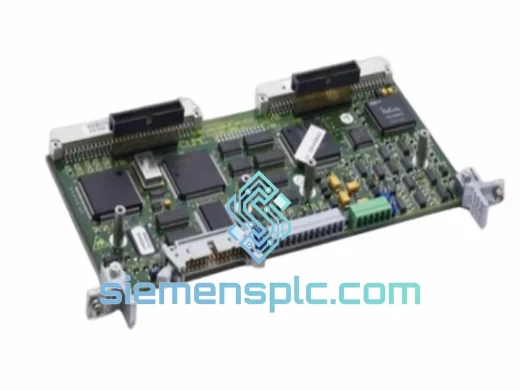
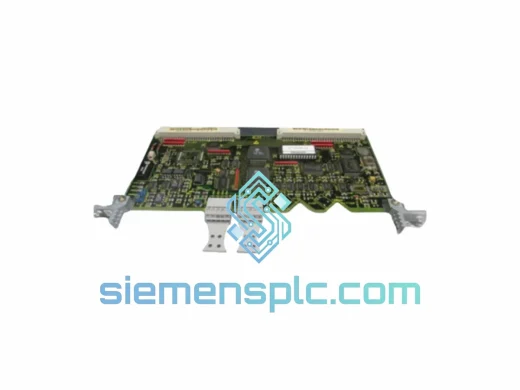
Siemens 6SE7090-0XX84-0BD1 Serial Interface Board – MASTERDRIVES
MASTERDRIVES
Origin DE
Serial Interface Board
Request verified availability, condition, replacement risk review, packing options and courier lead time for 6SE7027-2ED84-1HF3.
Click Request Quote and the part number is inserted into the inquiry form automatically.
Core fields for model confirmation and RFQ routing. Detailed product narrative remains below.
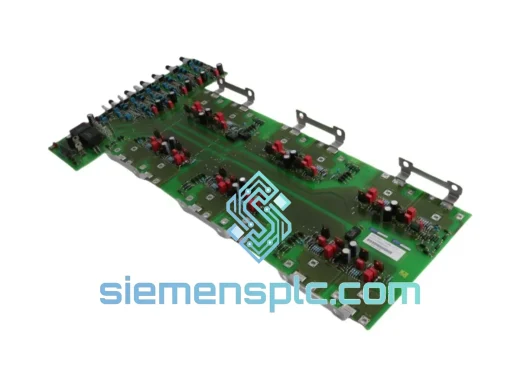
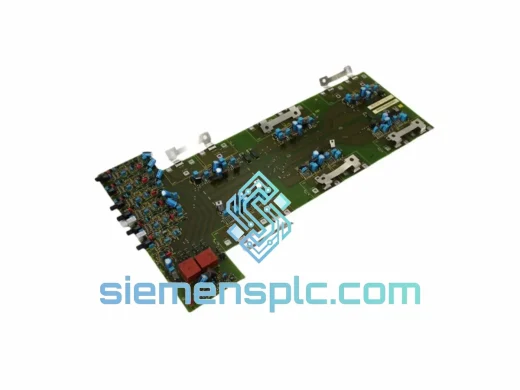
The 6SE7027-2ED84-1HF3 is a Compact Plus format inverter module within the Siemens MASTERDRIVES MC (Motion Control) drive family. It occupies the inverter stage of a shared DC-bus multi-axis topology, accepting rectified DC voltage from a common supply unit and delivering precisely regulated three-phase AC output to a connected servo or induction motor. Rated at 27 A continuous output current with a 380–480 V AC input range, this module is designed for applications where deterministic torque response, high dynamic stiffness, and coordinated multi-axis synchronization are non-negotiable engineering requirements.
Unlike standalone VFDs that integrate rectifier, DC link, and inverter into a single enclosure, the 6SE7027-2ED84-1HF3 operates exclusively as the inverter stage. This architectural separation allows multiple inverter modules to share a single rectifier and common DC bus rail, reducing total harmonic distortion (THD) at the supply point, enabling regenerative energy exchange between braking and motoring axes, and significantly reducing panel footprint per axis.
The module’s IGBT switching stage operates under closed-loop field-oriented vector control, supporting both speed and torque control modes. When paired with a SIMOVERT MASTERDRIVES CU (Control Unit) board, the 6SE7027-2ED84-1HF3 achieves current loop cycle times in the range of 400 µs, enabling servo-class dynamic response suitable for CNC feed axes, winding tension control, and high-inertia positioning applications.
Real-time Stock & RFQ: [email protected] | WhatsApp: +86 18359268345
| Parameter | Value |
|---|---|
| Part Number / SKU | 6SE7027-2ED84-1HF3 |
| Brand | Siemens AG |
| Series | SIMOVERT MASTERDRIVES MC (Motion Control) |
| Module Function | DC-Bus Inverter Stage (Compact Plus) |
| Rated Output Current | 27 A (continuous) |
| DC Bus Input Voltage | 510–650 V DC (derived from 380–480 V AC supply unit) |
| Output Voltage | 3-phase AC, 0 to U_DC/√2 (PWM modulated) |
| Output Frequency Range | 0–300 Hz |
| Switching Frequency | 2.5 / 5 / 10 kHz (selectable) |
| Control Method | Field-Oriented Vector Control (FOC), V/f characteristic |
| Current Loop Cycle Time | ~400 µs (with CU board) |
| Cooling | Forced air (integrated fan, rear-mount heat sink) |
| Protection Class | IP20 |
| Ambient Operating Temp. | 0 °C to +40 °C (derated above 40 °C) |
| Storage Temperature | -25 °C to +70 °C |
| Relative Humidity | ≤ 95 % RH, non-condensing |
| Altitude | Up to 1000 m ASL without derating |
| Weight | ~21 kg |
| Certifications | CE (LVD + EMC), UL, cUL, RoHS |
| Warranty | 12 months against manufacturing defects |
The 6SE7027-2ED84-1HF3 employs a three-phase IGBT bridge inverter topology with gate driver circuits isolated from the control plane via optocoupler barriers rated at ≥ 2.5 kV isolation voltage. This galvanic separation between the power semiconductor gate signals and the low-voltage control logic is a fundamental EMC countermeasure: it prevents high dV/dt switching transients on the DC bus from coupling into the signal processing layer, which is critical in multi-axis cabinets where multiple inverter modules share a common backplane.
The DC bus capacitor bank within the module provides local energy buffering, absorbing voltage spikes generated during rapid deceleration of the connected motor before they propagate to the shared bus rail. The capacitor sizing is calculated to handle the peak regenerative energy of the rated load at maximum deceleration ramp rates, preventing bus overvoltage trips in systems without a dedicated braking chopper.
The IGBT gate drive circuitry incorporates desaturation detection — a protection mechanism that monitors the collector-emitter voltage of each IGBT during the on-state. If a short-circuit condition causes the device to exit saturation, the gate driver responds within 2–3 µs to initiate a controlled soft-shutdown sequence, limiting fault current to a safe level before the device is destroyed. This is substantially faster than any external fuse or circuit breaker response time.
Thermal management is handled by a rear-mounted aluminum extrusion heat sink with an integrated axial fan. The thermal resistance junction-to-heatsink (R_th(j-h)) of the IGBT modules is matched to the heat sink’s thermal resistance to ambient (R_th(h-a)) such that the junction temperature remains below 125 °C at rated continuous current and 40 °C ambient. A PTC thermistor embedded in the heat sink provides analog temperature feedback to the control unit, enabling proactive thermal derating before an overtemperature trip occurs.
The module’s backplane connector interfaces with the MASTERDRIVES MC system bus, carrying DC bus power rails, 24 V DC auxiliary supply, and the serial communication link to the CU control board. The bus connector is keyed and polarized, preventing incorrect module insertion in mixed-module cabinets.
Every 6SE7027-2ED84-1HF3 unit dispatched from our Xiamen, China facility is a genuine Siemens OEM component, sourced through verified industrial supply channels. Units are not refurbished, remanufactured, or relabeled. The Siemens factory serial number and date code on each unit’s nameplate are intact and traceable.
Pre-shipment inspection covers: nameplate label integrity and legibility, housing and connector pin condition, firmware version marking verification, and a power-on functional check confirming the module’s self-diagnostic routine completes without fault codes. Units that do not pass inspection are quarantined and not dispatched.
Packaging uses anti-static ESD shielding bags, closed-cell polyethylene foam inserts sized to the module’s Compact Plus form factor, and double-wall corrugated cartons rated for international air freight handling. Tamper-evident sealing tape is applied at all carton seams.
Logistics from Xiamen covers all major global markets. Standard export documentation — commercial invoice, packing list, and certificate of origin — is prepared for every shipment. HS code 8504.40 is applied for customs classification. DHL Express and FedEx International Priority are the primary carriers for single-unit and small-quantity orders, with transit times of 3–5 business days to Europe, North America, and Southeast Asia. Sea freight consolidation is available for bulk procurement contracts.
A 12-month warranty against manufacturing defects is provided on all units. Warranty claims are processed with photographic documentation of the fault condition. Replacement or credit is issued upon verification.
Email: [email protected]
WhatsApp: +86 18359268345
Web: siemensplc.com
Location: Xiamen, China
© 2026 siemensplc.com. All rights reserved.
We check the full part number, brand, series and visible nameplate information before quotation.
Sales confirms stock path, condition option, quantity and realistic lead time for export dispatch.
DHL, FedEx, UPS or buyer courier arrangements can be reviewed with packing requirements.
Similar brand or category products for fast comparison and multi-item RFQ lists.