
Siemens
In Stock OK
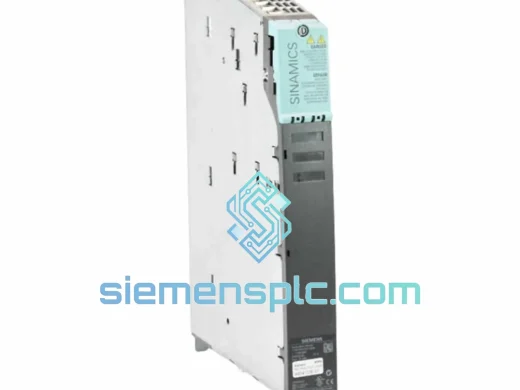
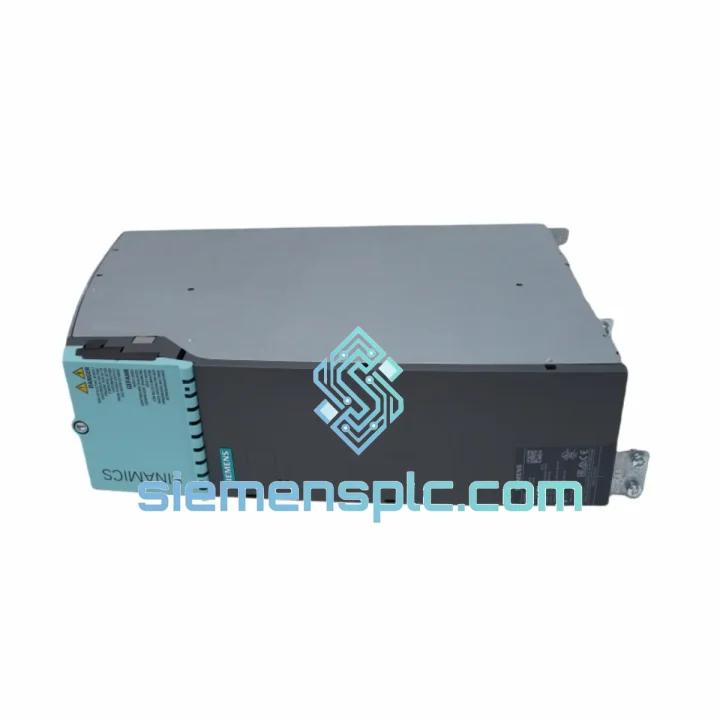
Siemens 6SL3130-7TE21-6AA4 Active Line Module – SINAMICS S120
Request verified availability, condition, replacement risk review, packing options and courier lead time for 6SL3130-7TE21-6AA4.
BrandSiemens
Part Number6SL3130-7TE21-6AA4
ConditionAvailability Check
Lead TimeRFQ Confirmation
DocumentsDatasheet / photos by RFQ
ShippingExport packing available
Auto-filled RFQ
6SL3130-7TE21-6AA4
Click Request Quote and the part number is inserted into the inquiry form automatically.
- Reply by email: [email protected]
- WhatsApp / Tel: +86 18359268345
- Mon-Sat 9:00-18:00 GMT+8
Procurement Data
Key Product Information
Core fields for model confirmation and RFQ routing. Detailed product narrative remains below.
- Brand
- Siemens
- Primary Part Number
- 6SL3130-7TE21-6AA4
- Product Type
- Active Line Module
- Series / Family
- SINAMICS
- Manufacturer
- Siemens AG, Germany
- Country of Origin
- DE
- Catalog Category
- Motor Drives
- Warranty
- 12 months from shipment date
Model confirmed for inquiry
6SL3130-7TE21-6AA4
Send quantity, destination and urgency. The RFQ form keeps this part number attached.
Request Quote
Product Overview
Siemens 6SL3130-7TE21-6AA4 — Regenerative Active Line Module in SINAMICS S120 Multi-Axis Drive Architecture
The 6SL3130-7TE21-6AA4 is a booksize-format Active Line Module (ALM) within the Siemens SINAMICS S120 drive family. Its primary function is bidirectional power conversion between the three-phase AC mains supply and the shared DC bus that feeds all downstream Motor Modules in a coordinated multi-axis system. Unlike passive or diode-bridge infeed units, this module employs an IGBT-based active front-end topology that enables four-quadrant operation: it draws sinusoidal current from the grid during motoring phases and returns regenerated energy to the mains during braking phases, eliminating the need for braking resistors in most duty cycles.
At its rated operating point, the module accepts a 3 AC 380–480 V (±10%) supply at 47–63 Hz and delivers a regulated DC bus voltage of approximately 600–720 V DC at a continuous input current of 16 A, corresponding to approximately 11 kW of bidirectional power throughput. The DC bus output connects directly to the shared busbar system shared by all booksize Motor Modules in the same cabinet section, providing a stiff, low-impedance voltage rail that is critical for deterministic torque response across all axes.
The module communicates with the CU320-2 Control Unit exclusively via DRIVE-CLiQ — Siemens’ proprietary serial interface that carries both control data and electronic nameplate information. On power-up, the CU320-2 automatically identifies the ALM’s rated parameters, firmware version, and hardware revision through DRIVE-CLiQ enumeration, eliminating manual parameter entry for the infeed stage. This auto-topology recognition is a prerequisite for correct DC bus pre-charge sequencing and mains contactor control logic managed by the Control Unit.
The active front-end switching stage operates at a carrier frequency of 4 kHz (default), producing a total harmonic distortion (THD) of the mains current below 5% under rated load conditions. This performance satisfies IEC 61000-3-12 and IEEE 519 harmonic limits without external passive filters, making the module suitable for installation in facilities with sensitive measurement or communication equipment on the same supply bus. The integrated EMC filter within the mandatory Active Interface Module (AIM) — which must be ordered separately — provides the differential and common-mode attenuation required for CE compliance under the EMC Directive 2014/30/EU.
Thermal management relies on internal forced-air cooling with an integrated fan. The module is rated for ambient temperatures from 0 °C to +40 °C at full rated current, with a linear derating curve above 40 °C up to a maximum of +55 °C. Altitude derating applies above 1,000 m ASL at a rate of 1% per 100 m. The enclosure protection class is IP20, requiring installation inside a closed control cabinet with appropriate ingress protection for the installation environment.
The 6SL3130-7TE21-6AA4 supports Siemens Safety Integrated functions including STO (Safe Torque Off) and SS1 (Safe Stop 1) in accordance with IEC 62061 SIL 2 and ISO 13849-1 PLd/PLe, implemented through the Control Unit’s F-DI inputs without requiring external safety relays for these two functions. This reduces cabinet wiring complexity and component count in safety-critical applications.
Real-time Stock & RFQ: [email protected] | WhatsApp: +86 18359268345
Technical Parameters
| Part Number | 6SL3130-7TE21-6AA4 |
| Product Family | SINAMICS S120 |
| Module Classification | Active Line Module (ALM), Booksize Format |
| Rated Input Voltage | 3 AC 380–480 V (±10%) |
| Rated Input Current | 16 A (continuous) |
| Rated Bidirectional Power | ~11 kW |
| DC Bus Output Voltage | 600–720 V DC (regulated) |
| Mains Frequency Range | 47–63 Hz |
| Switching Frequency (default) | 4 kHz |
| Mains Current THD | <5% at rated load |
| Cooling | Internal forced-air (integrated fan) |
| Ambient Temperature | 0 °C to +40 °C (full rating); up to +55 °C with derating |
| Altitude | Up to 1,000 m ASL (derating above) |
| Protection Class | IP20 |
| Communication Interface | DRIVE-CLiQ (auto-topology recognition) |
| Compatible Control Units | CU320-2 DP, CU320-2 PN, SIMOTION D4x5-2 |
| Fieldbus Options | PROFIBUS DP, PROFINET IRT (via Control Unit) |
| Safety Functions | STO (SIL 2 / PLe), SS1 (SIL 2 / PLd) |
| Certifications | CE, UL 508C, cUL, RoHS 2011/65/EU |
| Harmonic Standards | IEC 61000-3-12, IEEE 519 |
| Manufacturer | Siemens AG, Germany |
| Country of Origin | Germany |
| Warranty | 12 months from shipment date |
Hardware Logical Analysis
The active front-end stage of the 6SL3130-7TE21-6AA4 is built around a three-phase IGBT bridge operating in voltage-source converter (VSC) mode. The gate driver board interfaces with the main IGBT module via isolated gate drive signals, with desaturation detection circuits on each IGBT leg providing sub-microsecond overcurrent shutdown response. This hardware-level protection operates independently of the firmware control loop, ensuring that a software fault cannot prevent physical overcurrent protection from engaging.
The DC bus capacitor bank is sized to maintain bus voltage ripple below 2% at rated load, providing sufficient energy storage to ride through brief mains disturbances (voltage dips up to 20% for up to 20 ms, per IEC 61800-3 Class C2 immunity). The pre-charge circuit — controlled by the CU320-2 — limits inrush current during power-up by charging the capacitor bank through a series resistor before the main contactor closes, protecting both the capacitor bank and the upstream supply infrastructure.
EMC design within the module follows Siemens’ standard practice of separating power and signal ground planes on the control PCB, with opto-isolated interfaces between the DRIVE-CLiQ transceiver and the gate driver logic. The chassis is bonded to PE at multiple points to provide a low-impedance return path for high-frequency common-mode currents, reducing conducted emissions on the DRIVE-CLiQ cable and the 24 V DC supply rail. The module’s metal housing acts as a Faraday shield for the internal electronics, attenuating radiated emissions from the switching stage.
The current measurement subsystem uses closed-loop Hall-effect sensors on two of the three input phases, with the third phase current derived by Kirchhoff’s current law. Sensor bandwidth exceeds 10 kHz, providing accurate current feedback for the inner current control loop operating at the 4 kHz switching frequency. The voltage measurement inputs use resistive dividers with differential amplifiers, providing mains voltage phase angle information to the phase-locked loop (PLL) that synchronizes the PWM output to the grid frequency — a prerequisite for unity power factor operation and correct reactive power compensation.
System Integration Benefits
- Bidirectional Energy Flow: Regenerated braking energy is returned to the mains grid at unity power factor, reducing net energy consumption in high-duty-cycle applications such as press lines and test benches by a measurable margin compared to resistive braking.
- Low Harmonic Distortion: THD below 5% on the mains current eliminates the need for passive harmonic filters in most installations, reducing panel space and component cost while satisfying IEC 61000-3-12 and IEEE 519 compliance requirements.
- Stiff DC Bus Regulation: Active voltage regulation of the DC bus provides a stable supply rail for all Motor Modules, decoupling individual axis load transients from the shared bus and enabling tighter speed and torque control bandwidth across all axes simultaneously.
- DRIVE-CLiQ Auto-Topology: Automatic electronic nameplate reading on power-up eliminates manual parameter assignment for the infeed stage, reducing commissioning time and the risk of parameter mismatch errors in multi-axis systems.
- Integrated Safety Without External Relays: STO and SS1 functions are implemented in firmware on the CU320-2 using F-DI inputs, removing the need for external safety relays for these two stop categories and simplifying the safety circuit wiring.
- Scalable Multi-Axis Architecture: The shared DC bus architecture allows Motor Modules of different power ratings to be added or removed without modifying the infeed stage, provided the total connected load remains within the ALM’s rated power envelope.
- Diagnostic Transparency via STARTER / TIA Portal: The module exposes a comprehensive set of diagnostic parameters (r0002, r0046, r0949 fault buffer) accessible in real time via STARTER or TIA Portal V16+, enabling root-cause analysis of faults without physical access to the cabinet.
- Firmware Updateability: Firmware updates are applied via the CU320-2 memory card or STARTER without hardware replacement, allowing functional improvements and safety patches to be deployed in the field across the module’s service life.
- Unity Power Factor Operation: The active front-end maintains near-unity displacement power factor (cos φ ≈ 1.0) across the full load range, reducing reactive power demand charges on facilities with kVAr-based tariffs.
- Compatibility with SIMOTION D: Full integration with SIMOTION D4x5-2 motion controllers via DRIVE-CLiQ enables coordinated cam, gearing, and path interpolation across all axes sharing the DC bus, with the ALM status visible in the SIMOTION diagnostic buffer.
Quality Assurance & Global Logistics
Every 6SL3130-7TE21-6AA4 unit supplied by siemensplc.com is sourced through verified channels with full supply chain traceability back to Siemens AG manufacturing. Each unit is delivered in original Siemens factory packaging with intact holographic labels, production date codes, and factory test documentation. Pre-shipment inspection covers visual integrity, label authenticity verification against Siemens’ published authenticity guidelines, and PCB marking cross-check.
Shipments originate from our warehouse in Xiamen, China, with access to major international freight forwarders and express courier services (DHL, FedEx, UPS). Standard export documentation — commercial invoice, packing list, certificate of origin, and HS Code 8504.40 declaration — is prepared for every international order. Air freight to Europe typically clears customs within 3–5 business days; sea freight consolidation is available for volume orders. All units carry a 12-month warranty from the date of shipment, covering manufacturing defects under normal operating conditions.
Contact Information
Email: [email protected]
WhatsApp: +86 18359268345
Web: siemensplc.com
Location: Xiamen, China
© 2026 siemensplc.com. All rights reserved.
Ready to quote
[email protected]
Send This Part Number to Sales
RFQ workflow
Quality workflow ->
Confirmation Process
01Model confirmation
We check the full part number, brand, series and visible nameplate information before quotation.
02Availability reply
Sales confirms stock path, condition option, quantity and realistic lead time for export dispatch.
03Packing & courier
DHL, FedEx, UPS or buyer courier arrangements can be reviewed with packing requirements.
Continue sourcing
Browse full catalog ->
Related Automation Parts
Similar brand or category products for fast comparison and multi-item RFQ lists.
Siemens
RFQ Ready
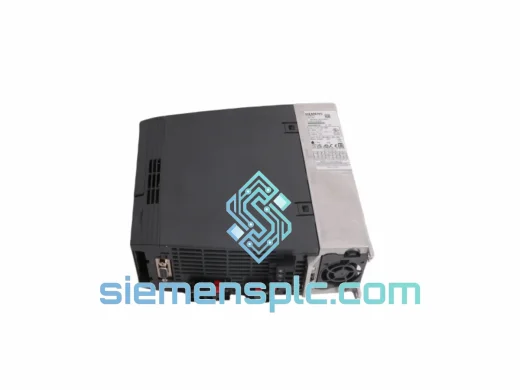
Siemens 6SL3210-1KE18-8UP1 AC Drive Power Module
SINAMICS
Origin DE
AC Drive Power Module
Siemens
RFQ Ready
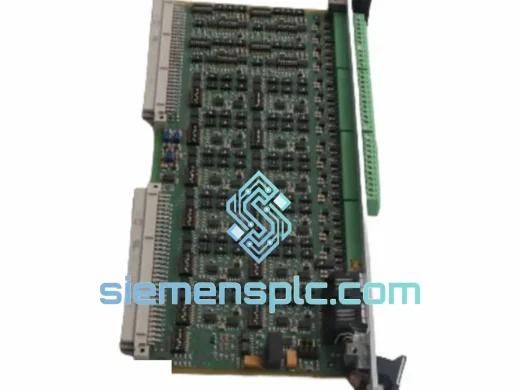
Siemens 383VA21N1F Control Interface Board – SINAMICS
SINAMICS
Origin DE
Control Interface Board
Siemens
RFQ Ready
Siemens ULC0186 A5E00182136 PCB Drive Control Board – SINAMICS MICROMASTER
SINAMICS
Origin DE
PCB Drive Control Board