Siemens
RFQ Ready
Siemens SITRANS FU E950 Ultrasonic Flow Calculator – SITRANS FU Series
SITRANS
Origin DE
Ultrasonic Flow Calculator
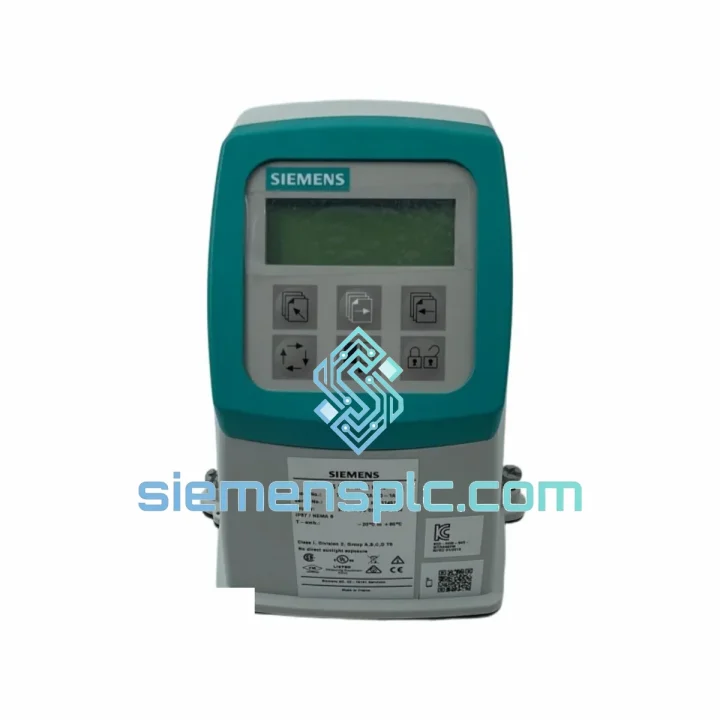
Request verified availability, condition, replacement risk review, packing options and courier lead time for 7ME6920-1AA30-1AA0.
Click Request Quote and the part number is inserted into the inquiry form automatically.
Core fields for model confirmation and RFQ routing. Detailed product narrative remains below.
Your electromagnetic flowmeter line is dead. The batch is on hold. Maintenance is on the phone. You already know the part number: 7ME6920-1AA30-1AA0. What you need now is a unit on a plane — not a two-week lead time from a regional distributor. We stock this transmitter in Xiamen and can have it moving via DHL Express within hours of order confirmation. No runaround, no minimum order, no excuses.
URGENT REQUIREMENT? Contact: [email protected] | WhatsApp: +86 18359268345
| Parameter | Specification |
|---|---|
| Part Number | 7ME6920-1AA30-1AA0 ✅ Ready to Ship |
| Series | SITRANS F M MAG 6000 |
| Function | Electromagnetic Flowmeter Transmitter (Remote/Wall-mount) |
| Supply Voltage | 85–260 V AC / 20–55 V DC (universal) |
| Output | 4–20 mA HART 5/6 + Pulse/Frequency + Digital I/O |
| Communication | HART 5/6 & PROFIBUS PA |
| Display | Backlit LCD, 6-digit |
| Protection | IP67 / NEMA 4X |
| Ambient Temp | −20 °C to +60 °C |
| Accuracy | ±0.2% of reading |
| Compatible Sensors | MAG 1100, MAG 3100, MAG 5000, MAG 6000 series |
| Certifications | CE, ATEX, FM, CSA |
| Origin | Germany |
| Stock Status | ✅ In Stock — Ships from Xiamen |
Ten years of field work teaches you that most MAG 6000 failures fall into three buckets. Here is what to check before you condemn the transmitter — and what to watch when you swap it out.
Fault Code E001 / E002 — Sensor Communication Lost: Before pulling the transmitter, check the 4-wire sensor cable at both ends. Corrosion on the terminal block inside the transmitter housing is a chronic failure point in humid environments. Clean with contact spray, re-torque to 0.5 Nm, and power-cycle. If the fault persists after cable verification, the transmitter’s input board is the likely culprit — proceed with replacement.
Fault Code E010 — Empty Pipe: This is almost always a process issue, not a transmitter failure. Verify the pipe is full and the sensor electrodes are not coated. However, if the empty-pipe detection threshold has drifted, it can be recalibrated via parameter P3.4.1 in the MAG 6000 menu. On a replacement unit, this parameter defaults to factory setting — re-enter your site-specific value before commissioning.
Fault Code E020 — Hardware Fault / Internal Error: This one is the transmitter. No workaround. Replace the unit.
Replacement Configuration Checklist — Do Not Skip These:
The MAG 6000 platform was not designed for a climate-controlled instrument room. It was designed for the places where things actually break — outdoor pump stations in coastal humidity, chemical plant cable trays running at 55 °C ambient, food processing areas that get hosed down twice a shift. The IP67 / NEMA 4X housing is not a marketing claim; it is a tested rating that means the unit survives temporary submersion to 1 meter for 30 minutes. The conformal-coated PCBs inside resist condensation that would corrode a standard board within months in a tropical environment.
Vibration is the silent killer of field instruments. The MAG 6000 transmitter is rated for continuous vibration per IEC 60068-2-6 — 2g from 10 to 150 Hz. In practice, this means it survives being mounted on a pump skid without the terminal connections working loose over a six-month run. The terminal block design uses captive screws with spring-loaded retention, which is a detail that matters at 3 AM when you are doing a hot swap and cannot afford a loose wire.
Temperature cycling is handled by the wide ambient range of −20 °C to +60 °C. In northern China winters or Middle Eastern summers, the unit does not require supplemental heating or cooling. The LCD remains readable down to −20 °C without the display blackout that affects cheaper transmitters at low temperature.
Our warehouse is located in Xiamen, Fujian — one of China’s primary export hubs with direct access to Xiamen Gaoqi International Airport and daily DHL and FedEx flight connections to major hubs in Frankfurt, Dubai, Singapore, and Los Angeles. This geography is not accidental. It means your replacement part can be on a plane the same evening you place the order.
Standard express timeline (DHL/FedEx Priority):
Orders confirmed before 14:00 CST are processed for same-day dispatch. We prepare a commercial invoice with accurate HS code (9026.10) and country of origin documentation to minimize customs clearance delays. For customers in the EU, we can provide an EUR.1 movement certificate on request to support preferential duty treatment. For time-critical shipments, we offer a door-to-door tracking link via WhatsApp so your maintenance planner knows exactly where the part is at every stage.
All units are packed in anti-static foam-lined cartons with desiccant sachets. The transmitter housing is protected against transit shock with corner padding rated for a 1-meter drop test. We have shipped to 47 countries without a single transit damage claim on this product line.
Ready to order or need a datasheet, compatibility confirmation, or urgent quote?
📧 Email: [email protected]
📱 WhatsApp: +86 18359268345
🌐 Web: siemensplc.com
© 2026 siemensplc.com. All rights reserved.
We check the full part number, brand, series and visible nameplate information before quotation.
Sales confirms stock path, condition option, quantity and realistic lead time for export dispatch.
DHL, FedEx, UPS or buyer courier arrangements can be reviewed with packing requirements.
Similar brand or category products for fast comparison and multi-item RFQ lists.