Siemens
RFQ Ready
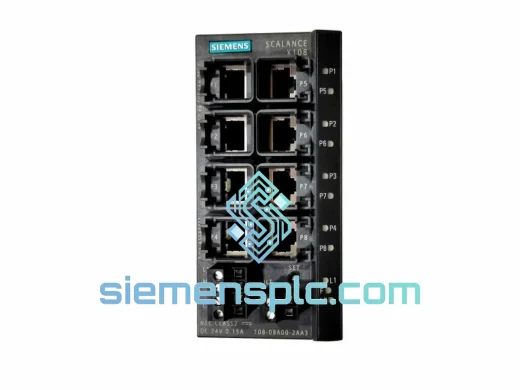
SIEMENS 6GK5108-0BA00-2AA3 Industrial Ethernet Switch
SIMATIC
Origin DE
Industrial Ethernet Switch
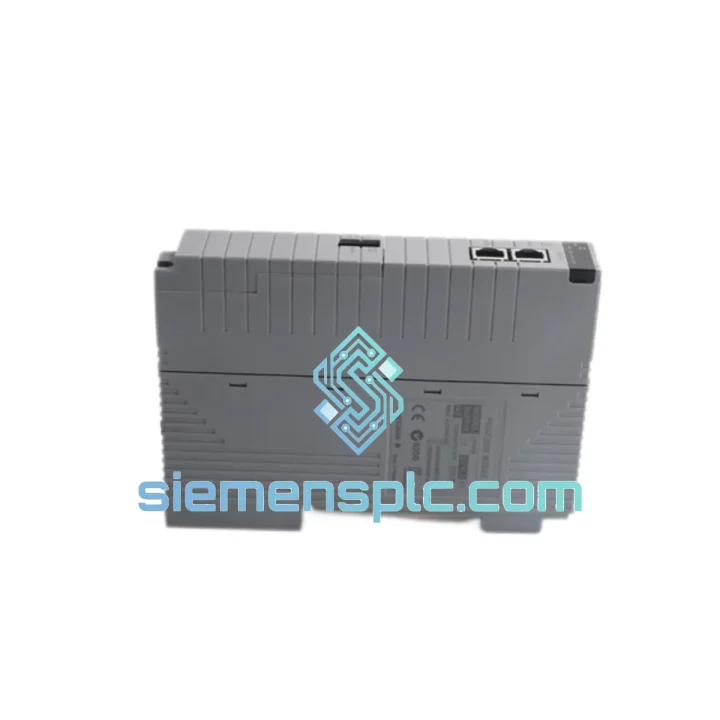
Request verified availability, condition, replacement risk review, packing options and courier lead time for CP451-11.
Click Request Quote and the part number is inserted into the inquiry form automatically.
Core fields for model confirmation and RFQ routing. Detailed product narrative remains below.
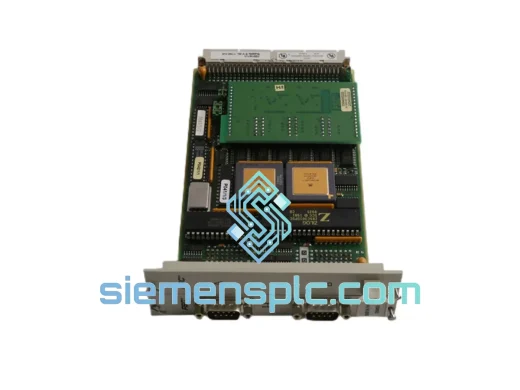
The CP451-11 occupies a structurally defined role within the SIMATIC S7-400 backplane: it offloads all serial communication processing from the CPU, maintaining deterministic scan cycle performance even under sustained high-throughput data exchange. In process automation environments where the CPU must sustain sub-10 ms cycle times across hundreds of I/O points, delegating protocol handling to a dedicated communication processor is not a design preference — it is an architectural necessity. The CP451-11 handles this responsibility through an onboard processor and configurable serial interface stack, executing protocol framing, error detection, and message queuing independently of the main CPU’s task scheduler.
This module supports point-to-point serial communication via RS-232C, RS-422, and RS-485 physical layers, enabling integration with legacy field devices, barcode readers, weighing systems, drives with serial interfaces, and third-party controllers that predate fieldbus standardization. Its dual-port architecture allows simultaneous operation on two independent serial channels, each configurable for different baud rates, parity settings, and protocol stacks — a practical requirement in brownfield installations where heterogeneous device populations are the norm rather than the exception.
📦 Real-time Stock & RFQ: [email protected] | WhatsApp: +86 18359268345
| Parameter | Specification |
|---|---|
| Manufacturer | Siemens AG |
| Part Number | CP451-11 |
| Product Family | SIMATIC S7-400 Communication Processors |
| Module Type | Serial Communication Processor (CP) |
| Physical Interfaces | 2× serial ports (RS-232C / RS-422 / RS-485 selectable) |
| Supported Baud Rates | 300 bps – 115.2 kbps per port |
| Data Bits | 7 or 8 bits configurable |
| Parity | None / Even / Odd |
| Stop Bits | 1 or 2 |
| Protocol Support | 3964(R), RK512, ASCII driver, USS, free-layer protocol |
| Backplane Interface | SIMATIC S7-400 P-bus / K-bus |
| Supply Voltage | 5 VDC via backplane (internal) |
| Power Consumption | Approx. 1.5 W from backplane |
| Operating Temperature | 0 °C to +60 °C |
| Storage Temperature | –40 °C to +70 °C |
| Relative Humidity | 10% – 95%, non-condensing |
| Dimensions (W×H×D) | 25 mm × 290 mm × 210 mm (single-width S7-400 format) |
| Weight | Approx. 400 g |
| Degree of Protection | IP20 |
| EMC Compliance | EN 61000-6-2 (immunity), EN 61000-6-4 (emission) |
| Certifications | CE, UL, cUL, ATEX (zone 2 with appropriate enclosure) |
| Configuration Tool | STEP 7 V5.x / TIA Portal with legacy CP configuration package |
| Warranty | 12 months from date of shipment |
The CP451-11’s internal architecture centers on a dedicated microcontroller that manages the serial interface state machines independently of the S7-400 backplane transaction cycle. This separation is architecturally significant: the backplane operates on a synchronous token-passing protocol, and any blocking operation at the CP level — such as waiting for a serial acknowledgment — would stall the entire rack’s communication arbitration if handled by the CPU directly. The CP451-11 eliminates this risk by buffering inbound and outbound serial data in onboard FIFO memory, presenting completed message frames to the CPU only after full reception and CRC/parity validation.
The RS-485 interface implementation includes integrated line termination resistors and fail-safe biasing networks, which maintain defined logic levels on the bus during idle periods — a critical requirement in electrically noisy industrial environments where floating bus lines can generate spurious start bits and corrupt frame synchronization. The RS-422 differential signaling mode extends reliable communication distances to 1,200 m at reduced baud rates, supporting distributed architectures where field devices are physically remote from the control cabinet.
EMC hardening is implemented at the hardware level through multi-stage LC filtering on the backplane power rails, optocoupler isolation on the serial signal lines, and a grounded metal housing that provides Faraday shielding against radiated interference. The module’s ground plane layout follows IEC 61000-4-4 burst immunity design guidelines, enabling reliable operation in environments with inductive switching transients from motor starters, solenoid valves, and relay coils operating in close proximity.
The 3964(R) protocol implementation within the CP451-11 includes hardware-level STX/ETX framing with BCC checksum generation and verification, reducing CPU load for data integrity checking to zero. The RK512 driver extends this with block-structured data transfer, supporting read and write operations to defined S7 data block addresses — enabling peer-to-peer data exchange between S7 stations without requiring a master PLC or additional network infrastructure.
Every CP451-11 unit dispatched from our Xiamen, China facility undergoes a structured pre-shipment inspection protocol. Physical examination covers PCB surface condition, connector pin integrity, housing latch mechanism, and label authenticity against Siemens’ published part marking standards. Where test infrastructure permits, modules are powered via a compatible S7-400 rack and queried for firmware version and self-diagnostic status before packaging.
Units are packed in anti-static ESD shielding bags, placed in foam-lined cartons rated for international air freight handling, and sealed with tamper-evident tape. Each shipment includes a packing list, commercial invoice with HS code declaration, and a condition report. Certificate of conformance documentation is available upon request for regulated procurement environments.
Logistics from Xiamen covers DHL Express (2–4 business days to most destinations), FedEx International Priority, and sea freight consolidation for bulk orders. We maintain active export documentation workflows for shipments to Southeast Asia, the Middle East, Europe, South America, and North America. All units carry a 12-month warranty from the date of shipment — covering functional failure under normal operating conditions, with replacement or credit issued subject to return inspection.
Email: [email protected]
WhatsApp: +86 18359268345
Web: siemensplc.com
Location: Xiamen, China
© 2026 siemensplc.com. All rights reserved.
We check the full part number, brand, series and visible nameplate information before quotation.
Sales confirms stock path, condition option, quantity and realistic lead time for export dispatch.
DHL, FedEx, UPS or buyer courier arrangements can be reviewed with packing requirements.
Similar brand or category products for fast comparison and multi-item RFQ lists.