Siemens
RFQ Ready
Siemens T8191 Safety Controller Module – Trusted TMR Series
Trusted Series
Origin DE
Safety Controller Module
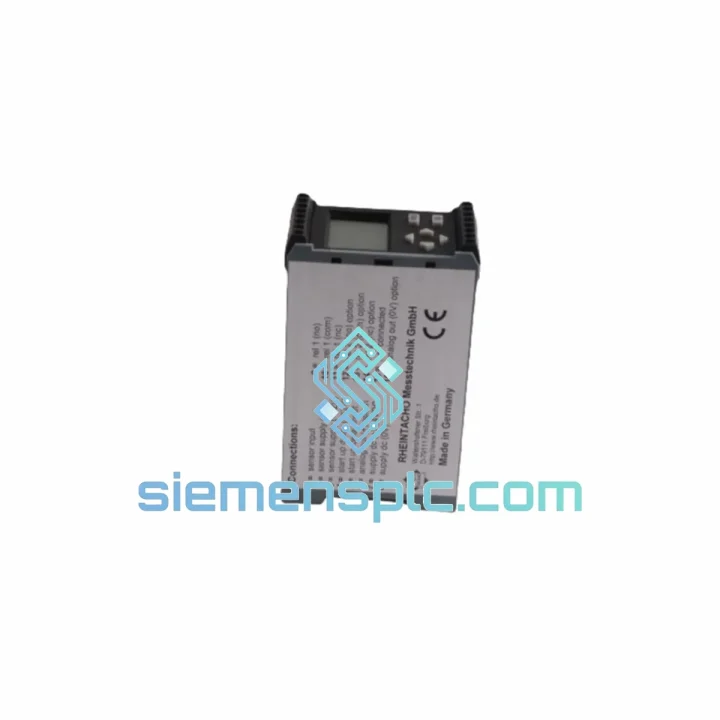
Request verified availability, condition, replacement risk review, packing options and courier lead time for ESC-PLATINE.
Click Request Quote and the part number is inserted into the inquiry form automatically.
Core fields for model confirmation and RFQ routing. Detailed product narrative remains below.
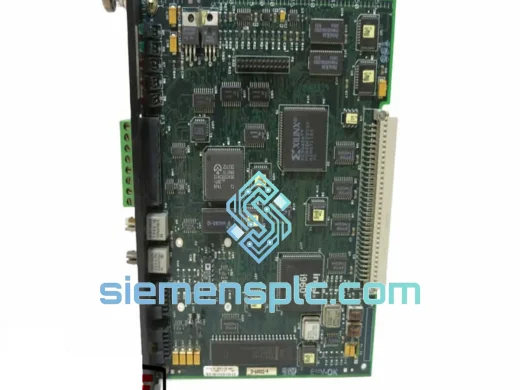
The Siemens ESC-PLATINE is a dedicated electronic safety circuit board designed to function as the primary safety arbitration layer in SIMATIC-compatible and third-party industrial control systems where personnel protection and process integrity must be enforced at the hardware level. Its core function is the deterministic evaluation of dual-channel safety input signals — emergency stop loops, safety gate interlock contacts, enabling device inputs, and protective field monitoring outputs — before any drive-enable or motion-release command is permitted to propagate to downstream actuators.
The board’s architecture is built around the principle that safety-critical decisions must not depend on software execution cycles. All input signal evaluation, cross-channel comparison, and output relay control are implemented in hardwired logic with a fixed, bounded response time. This design approach satisfies the structural requirements of IEC 62061 SIL 3 and ISO 13849-1 Performance Level e (PLe), Category 4, which mandate that no single component failure shall result in loss of the safety function, and that any such failure must be detectable before or at the next safety demand.
Each safety input terminal on the ESC-PLATINE is connected to two independent signal paths. Both paths are processed through separate optocoupler stages, feeding into independent logic gate arrays that operate in parallel. A dedicated cross-comparison circuit — clocked at 1 ms resolution — continuously evaluates whether the two channel states are consistent within the configured discrepancy time window. If the two channels diverge beyond the permissible tolerance, whether caused by a wiring open-circuit, contact bounce anomaly, optocoupler degradation, or deliberate single-fault injection during proof testing, the board immediately de-energizes the safety output relay and latches a diagnostic fault code. The fault latch requires a deliberate manual reset, preventing automatic restart after a safety event — a requirement under EN ISO 13849-1 for Category 4 systems.
The output stage uses a force-guided relay with mechanically linked auxiliary contacts. The normally-closed auxiliary contact is continuously monitored by the board’s feedback input. If the main output contact fails to open when commanded — a contact-weld condition — the auxiliary contact remains closed, and the board detects the feedback mismatch on the next self-test cycle. This prevents any re-enable command from being accepted while the relay is in a faulted state, satisfying the output monitoring requirements of EN 60947-5-1 for safety relay applications. The relay’s rated switching capacity and mechanical endurance are specified to support the full operational lifetime of the host machine without contact degradation under normal load conditions.
An independent hardware watchdog circuit monitors the host CPU’s execution health via a question-and-answer protocol. The ESC-PLATINE’s onboard microcontroller issues periodic challenge tokens to the host controller and expects correctly computed responses within a defined timeout window — typically 150 ms in standard configurations. If the host CPU fails to respond correctly, whether due to a firmware exception, communication bus saturation, or hardware fault, the ESC-PLATINE autonomously initiates a safe-state transition without waiting for a software-level shutdown command. This hardware-enforced fail-safe behavior is essential in applications where CPU load spikes during complex motion profiles could otherwise delay a safety response beyond the system’s required response time.
Electromagnetic compatibility is addressed through multi-layer PCB construction with dedicated ground planes separating safety signal traces from power supply rails. Transient voltage suppression diodes are placed at each external terminal to clamp inductive load spikes from relay coils and solenoid valves. The board is rated for conducted disturbance immunity per EN 61000-4-4 (EFT/Burst, 2 kV) and EN 61000-4-5 (Surge, 1 kV line-to-line), allowing installation in switchgear cabinets adjacent to variable frequency drives and contactor banks without additional shielding. The DC/DC converter in the power supply section incorporates input filtering rated to reject common-mode noise up to 1 kV peak, with separate regulated rails for the logic section and relay coil driver to prevent switching transients from coupling into signal processing circuitry.
In multi-zone safety architectures, the ESC-PLATINE supports zone-selective shutdown strategies. Individual safety zones can be de-energized independently while adjacent zones remain operational, enabling partial-stop implementations that preserve production throughput during maintenance access events. This is directly applicable to automotive body-shop welding cells, palletizing systems, and collaborative robot installations where operators require access to one station while neighboring stations continue their production cycle.
Fault data — including channel discrepancy events, internal self-test failures, watchdog timeout conditions, and external wiring short-circuit detections — is transmitted to the host controller’s diagnostic buffer in structured fault codes. Maintenance personnel can identify the root cause at the HMI level without oscilloscope-level signal tracing, measurably reducing mean time to repair compared to systems that require panel-level probing for fault isolation.
Real-time Stock & RFQ: [email protected] | WhatsApp: +86 18359268345
| Parameter | Specification |
|---|---|
| Part Number / SKU | ESC-PLATINE |
| Manufacturer | Siemens AG |
| Product Series | SIMATIC Safety / Industrial Safety Control |
| Safety Integrity Level | SIL 3 per IEC 62061 |
| Performance Level | PLe, Category 4 per ISO 13849-1 |
| Input Architecture | Dual-channel, optocoupler-isolated, cross-monitored at 1 ms |
| Discrepancy Monitoring Window | Configurable; ≤ 500 ms typical |
| Watchdog Timeout | ≤ 150 ms (hardware-enforced, independent of host CPU) |
| Output Relay Type | Force-guided (mechanically linked), auxiliary contact feedback monitored |
| Supply Voltage | 24 V DC (±20%) |
| Power Consumption | ≤ 8 W typical |
| Operating Temperature | 0 °C to +55 °C |
| Storage Temperature | −25 °C to +70 °C |
| Relative Humidity | 5% to 95%, non-condensing |
| EMC Immunity — EFT/Burst | 2 kV per EN 61000-4-4 |
| EMC Immunity — Surge | 1 kV line-to-line per EN 61000-4-5 |
| Degree of Protection | IP20 (panel-mounted) |
| Mounting | DIN rail / backplane slot |
| PCB Construction | Multi-layer with dedicated ground planes |
| Certifications | CE, UL, cUL (subject to variant) |
| Country of Origin | Germany |
| Warranty | 12 months from date of dispatch |
The ESC-PLATINE’s input stage implements optocoupler isolation on every safety input terminal. Each channel drives a dedicated optocoupler whose output feeds into an independent combinational logic gate array. The two arrays operate in strict parallel, and their output states are compared by a cross-comparison circuit clocked at a fixed 1 ms resolution. This architecture eliminates common-cause failures at the input stage: a single wiring fault, contact weld, or optocoupler degradation affects only one channel, and the resulting state divergence is flagged within one comparison clock cycle — well within the response time budget of any SIL 3 safety function.
The force-guided output relay provides hardware-level output verification through its mechanically linked auxiliary contact. The normally-closed auxiliary contact is wired back to the board’s feedback monitoring input. On every power-up and after every safety output de-energization event, the board verifies that the auxiliary contact state is consistent with the commanded relay state before permitting a re-enable. A welded main contact — where the relay fails to open despite a de-energize command — is detected within one feedback monitoring cycle, and the board locks out further re-enable commands until the fault is cleared and a manual reset is performed.
The power supply section uses a DC/DC converter with differential-mode and common-mode input filtering. Separate regulated output rails supply the logic section and the relay coil driver circuit. This rail separation prevents the inductive switching transients generated by relay coil energization and de-energization from coupling into the signal processing circuitry through shared supply impedance — a failure mode that can cause spurious logic state changes in boards with single-rail power architectures. TVS diodes at each external terminal provide sub-nanosecond clamping of inductive load spikes, protecting the optocoupler input stages from overvoltage stress during contactor and solenoid switching events in adjacent cabinet equipment.
Every Siemens ESC-PLATINE unit dispatched from siemensplc.com is procured through documented supply channels with full batch and serial number traceability back to the manufacturing source. Prior to dispatch, each board undergoes a structured pre-shipment inspection covering connector pin integrity, PCB surface condition, component seating verification, and label authenticity. Units are sealed in anti-static ESD bags and packed within foam-lined outer cartons rated for international freight handling, protecting the PCB assembly from both electrostatic discharge and mechanical shock during transit.
Shipments originate from Xiamen, China, with access to DHL Express, FedEx International Priority, and UPS Worldwide Express services. Standard transit times to major industrial procurement hubs — Frankfurt, Detroit, Tokyo, Seoul, Singapore, Dubai — range from 3 to 5 business days under express freight. Full export documentation accompanies every international shipment: commercial invoice, packing list, and certificate of conformity. Country-of-origin certificates and additional customs documentation for regulated procurement environments are available upon request.
A 12-month warranty from the date of dispatch covers manufacturing defects under normal operating and storage conditions as specified in the product datasheet. Warranty claims are acknowledged within 1 business day. Replacement or credit arrangements are confirmed after technical fault verification by our engineering team. For volume procurement, blanket order arrangements and consignment stock programs are available — contact our sales team for terms.
Email: [email protected]
WhatsApp: +86 18359268345
Web: siemensplc.com
Location: Xiamen, China
© 2026 siemensplc.com. All rights reserved.
We check the full part number, brand, series and visible nameplate information before quotation.
Sales confirms stock path, condition option, quantity and realistic lead time for export dispatch.
DHL, FedEx, UPS or buyer courier arrangements can be reviewed with packing requirements.
Similar brand or category products for fast comparison and multi-item RFQ lists.