Siemens
RFQ Ready
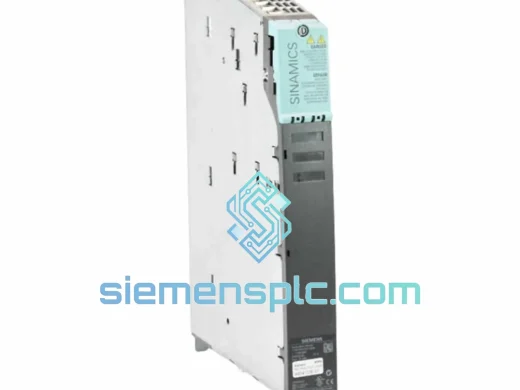
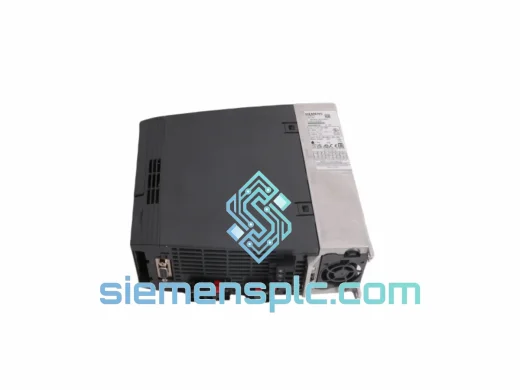
Siemens 6SL3210-1KE18-8UP1 AC Drive Power Module
SINAMICS
Origin DE
AC Drive Power Module
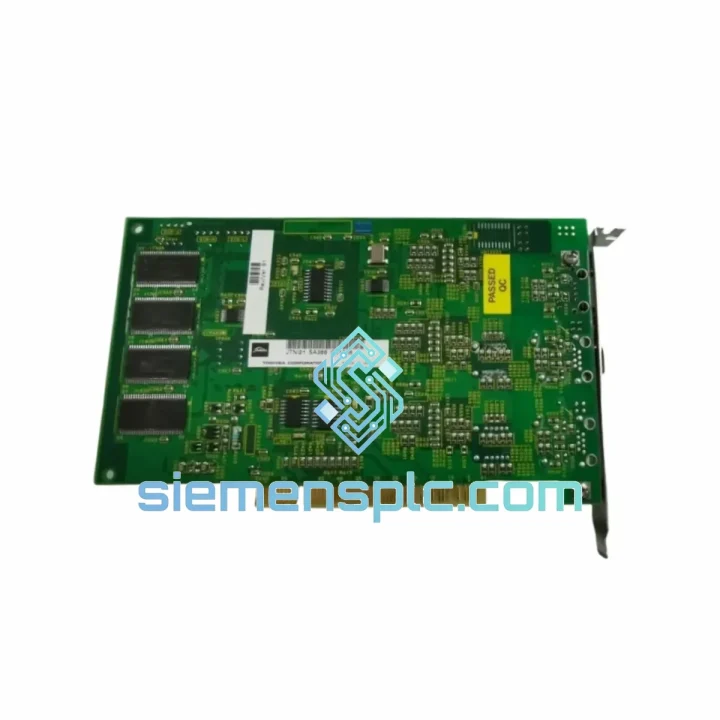
Request verified availability, condition, replacement risk review, packing options and courier lead time for JTNI21-SA366-2N8C3053-B.
Click Request Quote and the part number is inserted into the inquiry form automatically.
Core fields for model confirmation and RFQ routing. Detailed product narrative remains below.
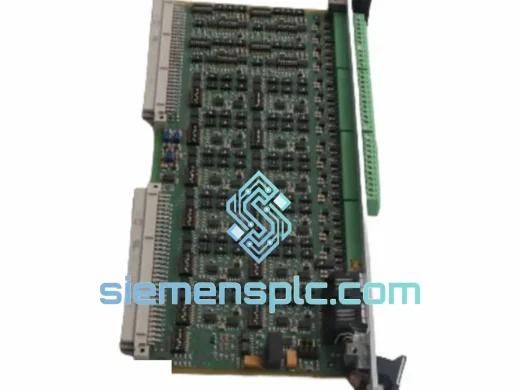
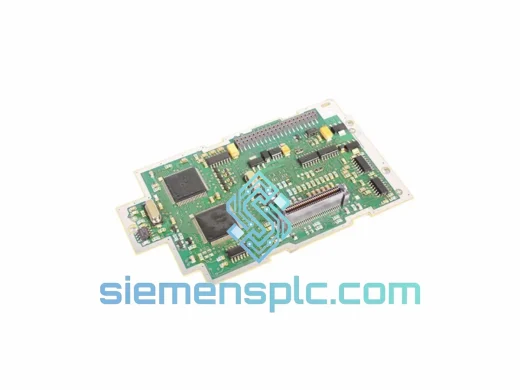
The Siemens JTNI21-SA366-2N8C3053-B is a drive control board engineered for integration within Siemens SA366-series drive chassis, serving as the primary interface layer between the power electronics stage and the supervisory control system. In a closed-loop motion control architecture, this board occupies the signal conditioning and gate-drive command tier — receiving torque and speed references from the upper-level controller, translating them into precise PWM switching sequences, and simultaneously feeding back real-time diagnostic data across the drive bus. Its hardware revision designation, 2N8C3053-B, indicates a production-release drawing that governs connector pinout, component placement, and firmware compatibility boundaries. Engineers replacing or upgrading drive boards must match this revision identifier exactly to avoid signal-level mismatches or firmware boot failures.
The board is designed for three-phase industrial power environments where continuous duty cycles, high ambient electromagnetic interference, and strict deterministic response requirements are standard operating conditions. Its physical architecture reflects Siemens’ established practice of separating high-voltage gate-drive circuitry from low-voltage logic planes using reinforced PCB isolation barriers, a design discipline that directly reduces common-mode noise injection into the control signal path. The JTNI21 module identifier places this board within a specific functional family of Siemens drive sub-assemblies, sharing a common mechanical form factor and bus interface standard with other boards in the SA366 platform, which simplifies spare-parts management in multi-drive installations.
From a system-level perspective, the JTNI21-SA366-2N8C3053-B supports integration with Siemens SIMATIC S7 PLC families via the standard drive communication bus, enabling coordinated multi-axis motion sequences, centralized fault logging, and parameter synchronization without additional gateway hardware. This native interoperability is a measurable operational advantage in process automation lines where drive-to-controller latency directly affects throughput consistency.
Real-time Stock & RFQ: [email protected] | WhatsApp: +86 18359268345
| Manufacturer | Siemens AG |
| Part Number / SKU | JTNI21-SA366-2N8C3053-B |
| Series | SA366 / JTNI21 |
| Module Classification | Drive Control Board (Gate-Drive & Signal Interface Layer) |
| Reference Drawing | 2N8C3053-B |
| Compatible Drive Platform | Siemens SA366 Drive Chassis; SINAMICS-compatible configurations |
| Communication Interface | PROFIBUS / PROFINET (revision-dependent); Siemens Drive Bus |
| PLC Compatibility | SIMATIC S7-300, S7-400, S7-1500 (via drive bus) |
| Power Environment | 3-Phase Industrial AC |
| PCB Isolation | Reinforced isolation barrier between gate-drive and logic planes |
| Weight | 800 g (approx.) |
| Country of Origin | Germany |
| Condition Available | New OEM / Tested Refurbished (specify at order) |
| Warranty | 12 months from shipment date |
| Packaging | Anti-static bag + foam-lined carton |
The JTNI21-SA366-2N8C3053-B implements a layered PCB architecture that physically separates the gate-drive output stage from the digital control logic using a reinforced dielectric barrier. This isolation approach limits capacitive coupling between the high-dV/dt switching nodes — where voltage transitions can exceed several hundred volts per microsecond — and the low-level analog and digital signal traces that carry encoder feedback, current measurement signals, and serial communication data. Without this barrier, common-mode transients generated during IGBT switching events would corrupt ADC readings and introduce jitter into the PWM timing chain, degrading speed regulation accuracy.
The board’s EMC design follows Siemens’ internal shielding and grounding topology standards, which include dedicated ground planes segmented by functional domain, ferrite bead filtering on inter-board connectors, and controlled-impedance routing for high-frequency signal lines. These measures collectively reduce conducted and radiated emissions to levels compliant with EN 61800-3 Category C2, the standard applicable to industrial drive systems installed in second-environment locations.
The 2N8C3053-B drawing revision encodes specific component-level changes relative to the prior -A revision, including updated gate resistor values that optimize IGBT turn-on and turn-off timing for reduced switching losses at rated current. This is not a cosmetic revision — substituting a -A board in a system calibrated for -B switching characteristics will alter the thermal profile of the power module and may trigger overcurrent protection events under dynamic load conditions.
The board’s diagnostic logic continuously monitors DC bus voltage, phase current balance, heatsink temperature via NTC thermistor input, and gate-drive supply rail integrity. Fault conditions are latched and transmitted to the host controller within one communication cycle, enabling the supervisory PLC to execute a controlled stop sequence rather than relying on hardware overcurrent trip alone. This two-tier fault response architecture — board-level latch plus controller-level response — is a standard Siemens design practice that reduces mechanical stress on connected loads during fault events.
Every Siemens JTNI21-SA366-2N8C3053-B unit dispatched from our Xiamen, China facility is sourced exclusively through verified Siemens-authorized distribution channels or certified secondary market suppliers with full batch traceability. Prior to shipment, each board undergoes a structured inspection protocol: visual examination of PCB surface, connector integrity check, component-level verification against the 2N8C3053-B reference drawing, and functional power-on test where applicable. Units that do not pass all inspection criteria are quarantined and not offered for sale.
Packaging follows ESD-safe handling standards: boards are sealed in anti-static poly bags with humidity indicator cards, placed in foam-lined inner cartons, and packed in double-wall corrugated outer cartons rated for international air and sea freight. Shipments from Xiamen reach major industrial hubs in Southeast Asia within 3–5 business days via express air freight, European destinations within 5–8 business days, and North American destinations within 5–7 business days. All shipments include tracking numbers and commercial invoices with HS code documentation to facilitate customs clearance.
A 12-month warranty covers all units against manufacturing defects and functional failure under normal operating conditions. Warranty claims are processed with a target response time of 48 hours from receipt of the defective unit. Certificates of conformity and test reports are available on request for regulated industries requiring documented component traceability.
Email: [email protected]
WhatsApp: +86 18359268345
Web: siemensplc.com
Location: Xiamen, China
© 2026 siemensplc.com. All rights reserved.
We check the full part number, brand, series and visible nameplate information before quotation.
Sales confirms stock path, condition option, quantity and realistic lead time for export dispatch.
DHL, FedEx, UPS or buyer courier arrangements can be reviewed with packing requirements.
Similar brand or category products for fast comparison and multi-item RFQ lists.