Siemens
RFQ Ready
Siemens AKTA-CU950 PLC Communication Module – S7 Series
S7 Series
Origin DE
PLC Communication Module
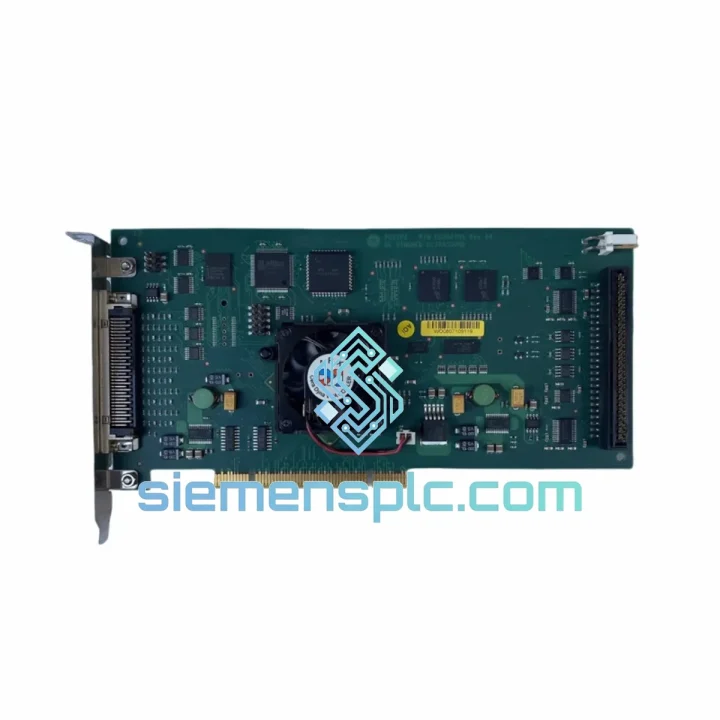
Request verified availability, condition, replacement risk review, packing options and courier lead time for PC2IP3.
Click Request Quote and the part number is inserted into the inquiry form automatically.
Core fields for model confirmation and RFQ routing. Detailed product narrative remains below.
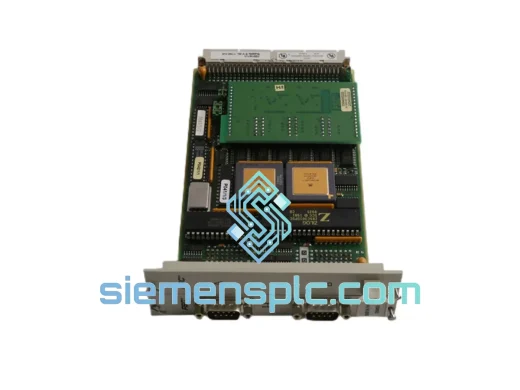
The Siemens PC2IP3 is a dedicated Profibus DP Communication Module engineered for deployment within Siemens S7-series programmable logic controller platforms. Its primary function is to serve as a Profibus DP master or slave interface, establishing a deterministic, cyclic data exchange channel between the central controller and distributed field devices — including remote I/O stations, variable-frequency drives, servo amplifiers, intelligent sensors, and third-party Profibus DP-compliant instruments.
In a typical control loop, the PC2IP3 occupies a dedicated backplane slot and communicates with the CPU via the internal S7 backplane bus at high-speed parallel transfer rates. The module autonomously manages the Profibus DP token-passing protocol, offloading fieldbus cycle management from the CPU and ensuring that scan-cycle jitter remains within deterministic bounds — a critical requirement in motion-coordinated and process-critical applications where timing deviation directly affects output quality or safety margins.
Profibus DP operates on the RS-485 physical layer with baud rates selectable from 9.6 kbps up to 12 Mbps. The PC2IP3 supports auto-baud detection, enabling seamless integration into existing Profibus segments without manual rate configuration. At 12 Mbps, the module sustains a bus cycle time of under 1 ms for networks with up to 32 active stations, making it suitable for high-speed discrete manufacturing lines where actuator response latency is a binding constraint.
The module’s GSD (General Station Description) file architecture allows engineering teams to import device profiles directly into Siemens STEP 7 or TIA Portal, enabling drag-and-drop I/O address assignment and automatic parameter block generation. This eliminates manual register mapping and reduces commissioning time by a measurable margin on multi-slave networks.
Electrically, the PC2IP3 draws power exclusively from the S7 backplane bus, with no external 24 VDC supply required. This simplifies cabinet wiring and reduces the number of power distribution terminals in the control panel. The module’s internal DC/DC converter provides galvanic isolation between the backplane logic domain and the Profibus RS-485 physical layer, with an isolation voltage rated to withstand transient surges common in industrial environments with heavy inductive loads.
From a diagnostic standpoint, the PC2IP3 exposes a structured fault register accessible via the CPU’s diagnostic buffer. Bus interruptions, slave station failures, configuration mismatches, and parameter errors are each assigned discrete diagnostic codes, allowing maintenance personnel to isolate faults to the specific slave address without requiring a bus analyzer. This diagnostic transparency is particularly valuable in facilities operating 24/7 where mean-time-to-repair (MTTR) is a tracked KPI.
The module is rated for continuous operation across an ambient temperature range of 0°C to 60°C, with storage tolerance extending to -40°C / +85°C. Conformal coating options are available for installations in high-humidity or chemically aggressive environments. The PC2IP3 carries CE marking and complies with EN 61131-2 for programmable controller equipment, as well as EMC Directive 2014/30/EU.
Stocked and dispatched from Xiamen, China, with same-day processing on confirmed orders. All units are sourced through verified Siemens distribution channels and carry a 12-month warranty against manufacturing defects.
Real-time Stock & RFQ: [email protected] | WhatsApp: +86 18359268345
| Parameter | Specification |
|---|---|
| Part Number | PC2IP3 |
| Manufacturer | Siemens AG |
| Module Category | Profibus DP Communication Module |
| Compatible Platform | Siemens S7 Series PLC |
| Fieldbus Protocol | Profibus DP (EN 50170 / IEC 61158 Type 3) |
| Physical Layer | RS-485, shielded twisted pair |
| Baud Rate Range | 9.6 kbps – 12 Mbps (auto-detect) |
| Max Slave Stations | Up to 125 Profibus DP slaves per segment |
| Bus Cycle Time (32 slaves @ 12 Mbps) | < 1 ms |
| Connector Interface | 9-pin Sub-D (DB9) female, per EN 50170 |
| Backplane Power Supply | Via S7 backplane bus (no external 24 VDC required) |
| Isolation Voltage (Bus ↔ Backplane) | Galvanic isolation, rated per IEC 61131-2 |
| Operating Temperature | 0°C to +60°C |
| Storage Temperature | -40°C to +85°C |
| Relative Humidity | 10% – 95%, non-condensing |
| EMC Compliance | CE, EMC Directive 2014/30/EU, EN 61131-2 |
| Form Factor | Single-slot S7 backplane module |
| Approvals | CE, UL (where applicable) |
| Weight | Approx. 280 g |
| Warranty | 12 months from date of shipment |
The PC2IP3’s internal architecture is built around a dedicated Profibus DP ASIC (Application-Specific Integrated Circuit) that handles the complete data link layer (DL) and physical layer (PHY) state machine independently of the host CPU. This co-processor architecture means the S7 CPU is not burdened with token-passing arbitration, slave polling sequencing, or bus error recovery — all of which are handled autonomously by the module’s onboard firmware.
Galvanic Isolation and EMC Design: The RS-485 bus interface is galvanically isolated from the S7 backplane logic domain via an optocoupler barrier rated for continuous operation in environments with high common-mode voltage transients. This isolation architecture prevents ground loop currents — a frequent source of data corruption in large industrial installations with multiple earthing points — from propagating into the controller backplane. The module’s PCB layout follows IEC 61000-4 series guidelines, with separate ground planes for the digital logic domain and the bus interface domain, connected only at a single star-ground point to minimize conducted EMI coupling.
Bus Termination and Signal Integrity: The PC2IP3 supports active bus termination via the DB9 connector, with termination resistors switchable through the connector housing (per Profibus standard). At 12 Mbps, signal integrity on the RS-485 bus is highly sensitive to cable impedance matching and stub length. The module’s driver output stage is designed to drive a 150 Ω characteristic impedance cable with a minimum eye opening compliant with EN 50170 at maximum baud rate, ensuring reliable operation at the physical layer limit.
Redundancy Arbitration Logic: In system configurations where Profibus DP redundancy is implemented (dual-ring or dual-master topologies), the PC2IP3 participates in the token-passing arbitration protocol with a configurable station address and retry timeout. The module’s firmware implements the full DP state machine including Data_Exchange, Fail_Safe, and Clear modes, enabling graceful degradation to a defined safe state upon bus fault detection without requiring CPU intervention.
Diagnostic Register Architecture: The module maintains a 244-byte diagnostic buffer per slave station, structured per the Profibus DP standard diagnostic telegram format. Station status bytes, master address, GC command, and extended diagnostics are all accessible via the CPU’s SFC (System Function Call) interface, providing a structured fault tree that maintenance systems can poll via OPC-UA or SCADA without requiring physical access to the cabinet.
Every Siemens PC2IP3 unit dispatched from our Xiamen facility undergoes a structured pre-shipment inspection protocol. Electrical continuity, backplane connector integrity, and firmware version verification are checked against Siemens factory acceptance criteria. Units sourced through verified Siemens distribution channels carry full manufacturer traceability, including batch codes and date-of-manufacture records available on request.
Anti-counterfeit verification is applied to every unit: PCB silk-screen markings, holographic labels, component date codes, and physical dimensions are cross-referenced against Siemens factory reference samples. Any unit that does not pass this inspection is quarantined and not offered for sale.
Packaging follows ESD-safe protocols: anti-static bags, foam-lined cartons, and moisture barrier packaging for sea freight shipments. Export documentation — including commercial invoice, packing list, certificate of origin, and ECCN classification — is prepared for all international orders to ensure smooth customs clearance in the destination country.
Logistics from Xiamen, China covers all major global destinations. Air freight options include DHL Express, FedEx International Priority, and UPS Worldwide Express, with typical transit times of 3–5 business days to Europe, North America, and Southeast Asia. Sea freight consolidation is available for bulk orders. All shipments are tracked end-to-end with proactive status updates provided to the buyer.
A 12-month warranty is provided on all units from the date of shipment, covering manufacturing defects and functional failures under normal operating conditions. Warranty claims are processed with a target replacement dispatch of 5 business days from fault confirmation.
📧 Email: [email protected]
💬 WhatsApp: +86 18359268345
🌐 Web: siemensplc.com
📍 Location: Xiamen, China
© 2026 siemensplc.com. All rights reserved.
We check the full part number, brand, series and visible nameplate information before quotation.
Sales confirms stock path, condition option, quantity and realistic lead time for export dispatch.
DHL, FedEx, UPS or buyer courier arrangements can be reviewed with packing requirements.
Similar brand or category products for fast comparison and multi-item RFQ lists.