Siemens
In Stock OK
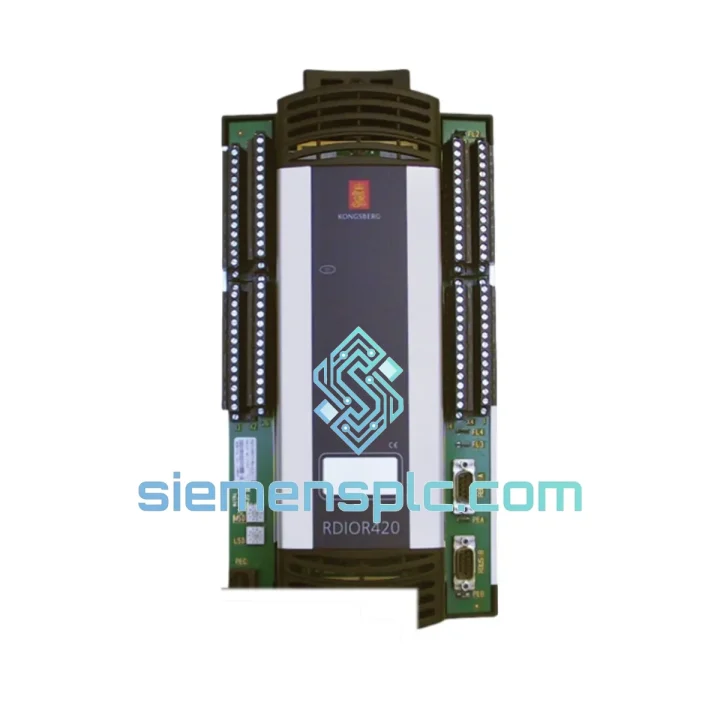
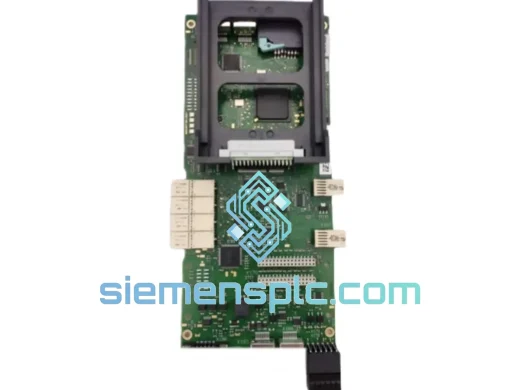
Siemens RDIOR420S Remote Digital Input Module – ET 200 Series
Request verified availability, condition, replacement risk review, packing options and courier lead time for RDIOR420S.
BrandSiemens
Part NumberRDIOR420S
ConditionAvailability Check
Lead TimeRFQ Confirmation
DocumentsDatasheet / photos by RFQ
ShippingExport packing available
Auto-filled RFQ
RDIOR420S
Click Request Quote and the part number is inserted into the inquiry form automatically.
- Reply by email: [email protected]
- WhatsApp / Tel: +86 18359268345
- Mon-Sat 9:00-18:00 GMT+8
Procurement Data
Key Product Information
Core fields for model confirmation and RFQ routing. Detailed product narrative remains below.
- Brand
- Siemens
- Primary Part Number
- RDIOR420S
- Product Type
- Remote I/O Module
- Product Family
- Other series
- Manufacturer
- Siemens AG
- Country of Origin
- DE
- Catalog Category
- I/O Modules
- Operating Temp.
- −25 °C to +60 °C
- Warranty
- 12 months from date of shipment
Model confirmed for inquiry
RDIOR420S
Send quantity, destination and urgency. The RFQ form keeps this part number attached.
Request Quote
Product Overview
Siemens RDIOR420S Remote Digital Input Module — Distributed I/O Signal Acquisition in Process Automation
In distributed control architectures, the fidelity of discrete signal acquisition at the field level determines the responsiveness of the entire control loop. The Siemens RDIOR420S is a remote digital input module engineered for deployment within Siemens’ distributed I/O infrastructure, providing deterministic capture of 24 VDC digital field signals across up to 32 channels. Each channel is galvanically isolated via optocoupler barriers rated at 500 V AC, suppressing common-mode interference generated by inductive loads, motor starters, and solenoid valve coils — noise sources that routinely corrupt signal integrity in panel-dense industrial environments.
The module interfaces with the PROFIBUS DP or PROFINET backplane depending on the host station configuration, transmitting input state data to the CPU with a cycle update time of ≤1 ms per scan under standard GSD/GSDML parameterization. This deterministic latency profile makes the RDIOR420S suitable for time-critical interlock logic, emergency shutdown (ESD) input monitoring, and safety-relevant discrete acquisition tasks where signal delay directly affects process safety margins.
Mechanically, the RDIOR420S mounts on a standard S7-300/ET 200M rail system using a bus connector that provides both electrical continuity and mechanical retention without additional fasteners. The module’s front connector accepts 0.25–1.5 mm² conductors, accommodating both solid and stranded field wiring. Operating temperature range spans −25 °C to +60 °C, with storage rated to −40 °C, making it deployable in outdoor marshalling cabinets and unheated equipment rooms without derating.
Real-time Stock & RFQ: [email protected] | WhatsApp: +86 18359268345
Technical Parameters
| Parameter | Specification |
|---|---|
| Part Number / SKU | RDIOR420S |
| Manufacturer | Siemens AG |
| Module Type | Remote Digital Input Module |
| Series | ET 200 / S7-300 Compatible Distributed I/O |
| Number of Digital Inputs | 32 channels (configurable in groups of 8) |
| Input Voltage (Nominal) | 24 V DC |
| Input Voltage Range | 20.4 V DC – 28.8 V DC (−15% / +20%) |
| Signal “1” Threshold | ≥ 15 V DC |
| Signal “0” Threshold | ≤ 5 V DC |
| Input Current per Channel | Approx. 7 mA at 24 V DC |
| Galvanic Isolation | Optocoupler, 500 V AC rated |
| Cycle Update Time | ≤ 1 ms (PROFIBUS DP / PROFINET) |
| Backplane Communication | PROFIBUS DP or PROFINET (host-dependent) |
| Operating Temperature | −25 °C to +60 °C |
| Storage Temperature | −40 °C to +70 °C |
| Relative Humidity | 5% – 95%, non-condensing |
| Degree of Protection | IP20 (IEC 60529) |
| EMC Compliance | EN 61000-6-2 (Industrial Immunity), EN 61000-6-4 (Emission) |
| Mounting | DIN rail, S7-300 / ET 200M bus connector |
| Conductor Cross-Section | 0.25 – 1.5 mm² (solid or stranded) |
| Weight | Approx. 200 g |
| Country of Origin | Germany |
| Warranty | 12 months from date of shipment |
Hardware Logical Analysis
The RDIOR420S implements a per-channel optocoupler isolation topology rather than a group-shared isolation barrier. This architectural decision carries measurable consequences for fault containment: a ground fault or transient overvoltage event on one field conductor cannot propagate across the isolation boundary to adjacent channels or to the backplane bus. In installations where field wiring traverses cable trays shared with power conductors — a common condition in process plants — this per-channel isolation architecture reduces the probability of cascade failures that would otherwise take multiple input channels offline simultaneously.
The module’s input filter network applies a hardware RC debounce with a configurable time constant (0.1 ms, 0.5 ms, 3 ms, or 15 ms selectable via GSD parameterization). This filter suppresses contact bounce from mechanical limit switches and relay contacts without introducing software polling overhead on the CPU. For high-frequency pulse inputs, the 0.1 ms setting preserves signal fidelity up to approximately 5 kHz, while the 15 ms setting is appropriate for slow-acting float switches and pressure switches where contact chatter is the primary concern.
EMC hardening is achieved through a combination of measures: the PCB layout routes high-impedance input traces with guard rings tied to chassis ground, the front connector shell provides 360° shielded termination for screened cables, and the module housing is bonded to the DIN rail ground bus via a low-impedance spring contact. Together, these measures achieve compliance with EN 61000-4-4 (EFT/Burst, 2 kV) and EN 61000-4-5 (Surge, 1 kV line-to-earth) without external surge protection devices on standard installations.
Diagnostic data is mapped to the process image input (PII) area and accessible via standard STEP 7 or TIA Portal diagnostic blocks. The module reports wire-break detection (where sensor supply monitoring is enabled), short-circuit conditions on sensor supply outputs, and module-level hardware faults — all without requiring custom function blocks. This diagnostic transparency reduces mean time to repair (MTTR) by allowing maintenance personnel to isolate faults to the channel level from the engineering station without physical inspection of the field wiring.
System Integration Benefits
- Zero-configuration backplane addressing: The module slot address is automatically assigned by the ET 200M / S7-300 rack geometry, eliminating manual DIP switch configuration and the associated commissioning errors.
- TIA Portal and STEP 7 native support: Full GSD/GSDML device description files are available, enabling drag-and-drop hardware configuration with automatic I/O address assignment and parameter validation.
- Deterministic scan cycle integration: Input states are transferred to the CPU process image within a single OB1 scan cycle, ensuring that interlock logic operates on data that is never more than one scan period old — a critical requirement for safety-relevant discrete monitoring.
- Channel-level diagnostic transparency: Wire-break, short-circuit, and module fault diagnostics are reported via standard SFB 52/54 diagnostic blocks, enabling alarm generation in WinCC or SCADA systems without custom programming.
- Modular scalability: Up to 8 modules can be stacked on a single ET 200M IM 153 interface module, providing up to 256 digital inputs per station without additional network nodes or address space fragmentation.
- Hot-swap capability: The module supports removal and insertion under power (RIUP) when the host station is configured for this mode, allowing channel replacement during live plant operation without process shutdown.
- Configurable input filtering: Four selectable debounce time constants (0.1 / 0.5 / 3 / 15 ms) allow the same module to serve both high-speed encoder feedback and slow-acting field switch applications within the same installation.
- Consistent signal ground referencing: All 32 input channels share a common reference potential that is isolated from the backplane supply, preventing ground loop currents from introducing offset errors in adjacent analog measurement channels on the same rack.
Quality Assurance & Global Logistics
Every Siemens RDIOR420S unit supplied by siemensplc.com is sourced through verified supply channels and subjected to a structured pre-shipment inspection protocol. Physical inspection covers connector pin integrity, housing condition, label legibility, and firmware version marking. Functional verification confirms backplane communication handshake, channel-level input response across all 32 points, and diagnostic register readback via a calibrated test fixture. Units that do not pass all verification stages are quarantined and not offered for sale.
Packaging uses anti-static foam inserts within double-wall corrugated cartons, with desiccant sachets included for shipments to high-humidity destinations. Each shipment is accompanied by a packing list, commercial invoice, and certificate of origin. For customers requiring additional documentation — such as material safety data sheets, RoHS compliance declarations, or third-party inspection certificates — these are available upon request at no additional charge.
Logistics operations are managed from Xiamen, China, with daily dispatch via DHL Express, FedEx International Priority, and UPS Worldwide Expedited. Transit times to major industrial hubs: Europe 3–5 business days, Southeast Asia 2–3 business days, Middle East 4–6 business days, North America 5–7 business days. Sea freight consolidation is available for large-volume orders. All export documentation is prepared in compliance with Chinese customs regulations and destination country import requirements. A 12-month warranty covers manufacturing defects and premature failure under normal operating conditions.
Contact Information
Email: [email protected]
WhatsApp: +86 18359268345
Web: siemensplc.com
Location: Xiamen, China
© 2026 siemensplc.com. All rights reserved.
Ready to quote
[email protected]
Send This Part Number to Sales
RFQ workflow
Quality workflow ->
Confirmation Process
01Model confirmation
We check the full part number, brand, series and visible nameplate information before quotation.
02Availability reply
Sales confirms stock path, condition option, quantity and realistic lead time for export dispatch.
03Packing & courier
DHL, FedEx, UPS or buyer courier arrangements can be reviewed with packing requirements.
Continue sourcing
Browse full catalog ->
Related Automation Parts
Similar brand or category products for fast comparison and multi-item RFQ lists.
Siemens
RFQ Ready
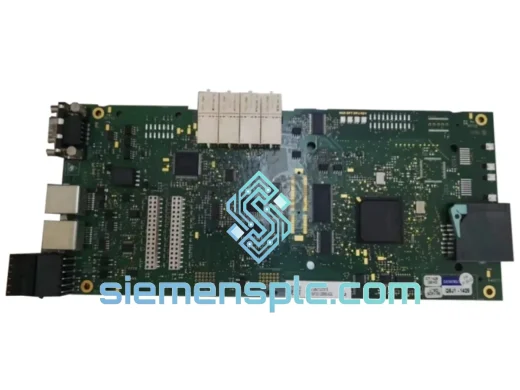
Siemens 6RY1803-0AA05-0AA1 Digital Output Module
SIMOREG
Origin DE
Digital Output Module