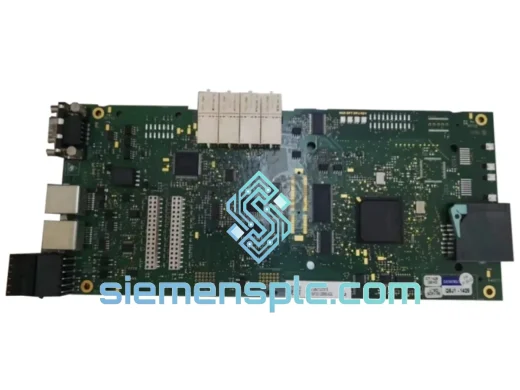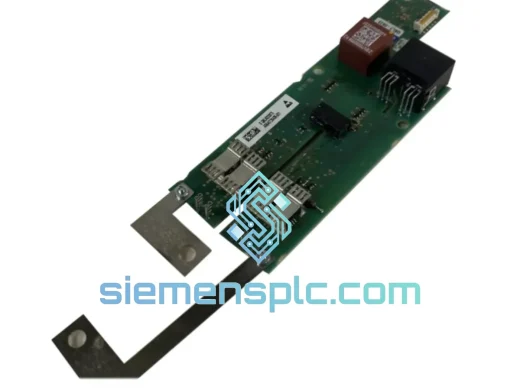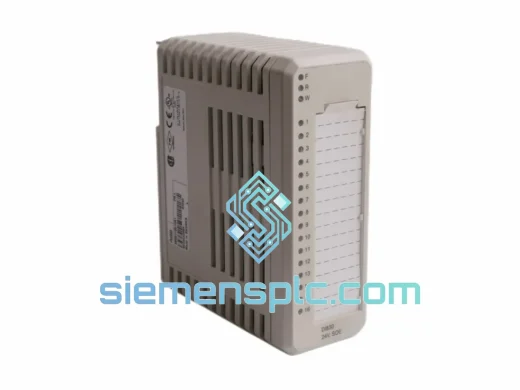
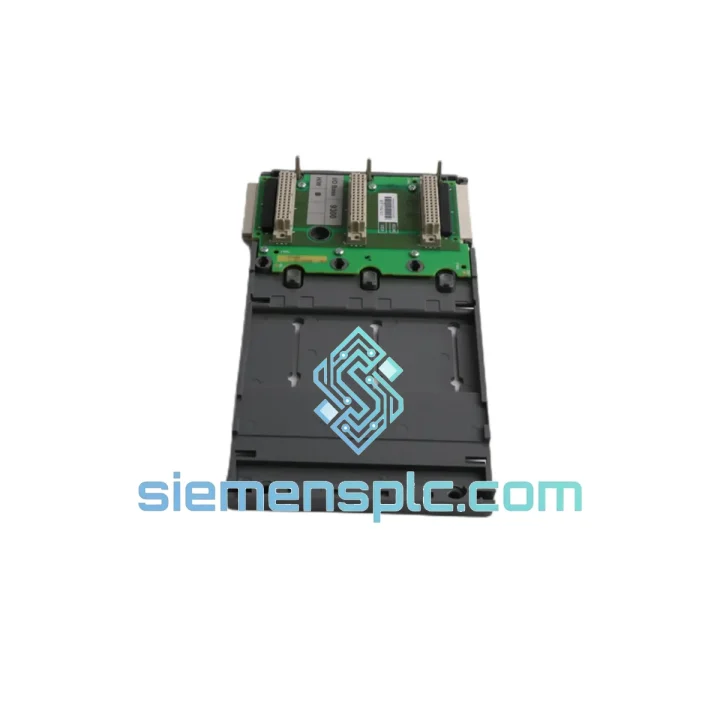
Siemens
In Stock OK
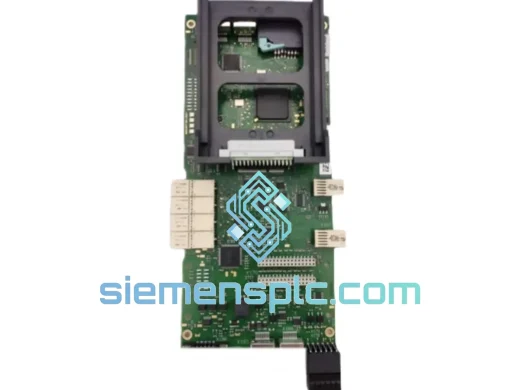
Siemens T9300 I/O Base Unit – Triple Modular Redundancy
Request verified availability, condition, replacement risk review, packing options and courier lead time for T9300.
BrandSiemens
Part NumberT9300
ConditionAvailability Check
Lead TimeRFQ Confirmation
DocumentsDatasheet / photos by RFQ
ShippingExport packing available
Auto-filled RFQ
T9300
Click Request Quote and the part number is inserted into the inquiry form automatically.
- Reply by email: [email protected]
- WhatsApp / Tel: +86 18359268345
- Mon-Sat 9:00-18:00 GMT+8
Procurement Data
Key Product Information
Core fields for model confirmation and RFQ routing. Detailed product narrative remains below.
- Brand
- Siemens
- Primary Part Number
- T9300
- Product Type
- Safety PLC I/O Module
- Product Family
- Other series
- Manufacturer
- Siemens
- Country of Origin
- DE
- Catalog Category
- I/O Modules
- Operating Temp.
- 0 °C to +60 °C (standard industrial enclosure)
- Warranty
- 12 months from date of dispatch (new surplus units)
Model confirmed for inquiry
T9300
Send quantity, destination and urgency. The RFQ form keeps this part number attached.
Request Quote
Product Overview
Siemens T9300 TMR I/O Base Unit: Deterministic Safety Architecture for High-Integrity Process Control
The Siemens T9300 is a dedicated I/O base unit engineered for deployment within Triple Modular Redundancy (TMR) safety-instrumented system architectures. Its primary function within the control loop is to provide a physically and electrically isolated termination and signal-routing layer between field instruments and the redundant processor triad. By decoupling field wiring from the active electronics, the T9300 enables hot-swap module replacement without interrupting the 2oo3 voting logic that governs process safety decisions — a critical operational requirement in continuous-process industries where unplanned shutdowns carry measurable financial and safety consequences.
In a TMR control loop, the I/O base unit is not a passive terminal block. It arbitrates signal paths across three independent I/O channels, maintains galvanic isolation barriers between field and logic domains, and provides the mechanical backbone for the redundant module stack. The T9300 fulfills all three roles within a single, compact form factor rated for industrial cabinet environments.
📩 Real-time Stock & RFQ: [email protected] | WhatsApp: +86 18359268345
Technical Parameters
| Manufacturer | Siemens |
| Part Number / SKU | T9300 |
| Module Classification | I/O Base Unit – TMR Safety Platform |
| Redundancy Architecture | Triple Modular Redundancy (TMR), 2oo3 voting logic compatible |
| Safety Integrity Level | SIL 2 / SIL 3 (IEC 61508, IEC 61511) |
| Backplane Interface | Proprietary high-speed TMR backplane bus |
| Channel Isolation | Optical isolation per I/O channel; galvanic separation between field and logic domains |
| Operating Temperature | 0 °C to +60 °C (standard industrial enclosure) |
| Storage Temperature | −25 °C to +70 °C |
| Relative Humidity | 5 % to 95 %, non-condensing |
| Power Input | Supplied via host TMR chassis backplane rail |
| Mounting | Rack-mount / DIN-rail compatible base unit |
| Approx. Weight | 220 g (module only, without field wiring) |
| EMC Compliance | EN 61000-4 series; designed for Class A industrial environments |
| Certifications | CE, RoHS; SIL-rated per OEM system-level certification |
| Warranty | 12 months from date of dispatch (new surplus units) |
Hardware Logical Analysis
The T9300’s hardware design reflects the engineering constraints imposed by SIL 3 operation: every signal path, power rail, and communication channel must be independently faultable without propagating failure to the remaining two channels in the triad.
Optical Isolation Architecture: Each I/O channel incorporates a discrete optocoupler stage that provides a minimum 500 V galvanic barrier between field wiring and the backplane logic domain. This isolation prevents ground loops, transient voltage spikes from inductive field loads, and common-mode interference from coupling into the processor voting logic. The optocoupler response time is matched across all three channels to within ±2 µs, ensuring that the 2oo3 voter receives temporally coherent signal representations — a requirement that becomes critical when monitoring fast-changing process variables such as pressure transients or valve position feedback.
EMC Shielding and Filtering: The base unit PCB incorporates a multi-layer ground plane structure with dedicated analog and digital ground domains separated by a split-plane boundary. Ferrite bead filters are placed on all field-side signal entry points to attenuate high-frequency conducted interference in the 1 MHz–1 GHz range. The chassis itself provides a Faraday enclosure effect when properly bonded to cabinet earth, reducing radiated susceptibility in environments with variable-frequency drives, high-current switching gear, or RF transmitters in proximity.
Backplane Bus Arbitration: The T9300 interfaces with the TMR processor triad via a deterministic backplane bus that operates on a fixed scan cycle. Bus arbitration logic within the base unit ensures that all three processor channels receive identical field data within the same scan window, preventing asymmetric data states that could cause spurious 2oo3 disagreements. The bus protocol includes cyclic redundancy check (CRC) framing on each data transaction, with hardware-level error flagging that does not require processor intervention to detect and log communication faults.
Connector and Contact Reliability: Field termination connectors on the T9300 use gold-plated contacts rated for a minimum of 500 mating cycles, with a contact resistance specification of <10 mΩ at rated current. This specification is relevant in MRO scenarios where the base unit may be removed and reinstalled during maintenance cycles without degradation of signal integrity at the field termination points.
System Integration Benefits
- Non-Interrupted Hot-Swap Capability: The T9300 base unit retains field wiring during module replacement, allowing I/O modules to be extracted and reinserted without disconnecting field instruments — eliminating the need to de-energize or bypass field loops during maintenance windows.
- Deterministic Scan Cycle Preservation: By handling all field-side signal conditioning and isolation within the base unit, the T9300 offloads analog front-end processing from the processor modules, preserving the processor’s deterministic scan cycle budget for safety logic execution.
- Fault Transparency and Diagnostic Granularity: The base unit’s hardware CRC checking and channel-level fault flagging provide the processor triad with precise fault location data — distinguishing between field wiring faults, module faults, and backplane communication errors without requiring manual diagnostic intervention.
- Reduced Wiring Complexity in Redundant Architectures: A single T9300 base unit consolidates the field termination points for all three TMR channels, reducing the total field cable count by up to 66 % compared to architectures using three independent single-channel I/O racks.
- Consistent Signal Latency Across Channels: Matched optocoupler response times and synchronized backplane bus timing ensure that all three processor channels operate on temporally identical field data, minimizing the probability of transient 2oo3 disagreements caused by inter-channel signal skew.
- Long-Term Spare Parts Availability: The T9300’s standardized form factor and backplane interface allow it to be stocked as a universal spare across multiple TMR system installations, reducing the number of distinct spare part numbers required in a plant’s MRO inventory.
- Compatibility with SIS Audit Requirements: The base unit’s documented isolation architecture and CRC-based communication integrity support the evidence requirements of IEC 61511 safety lifecycle audits, providing traceable hardware-level safeguards that complement software-layer safety functions.
- Scalable I/O Expansion: The T9300 base unit is designed to operate within a modular rack system, allowing I/O capacity to be expanded by adding additional base units to the TMR chassis without modifying existing field wiring or processor configuration.
Quality Assurance & Global Logistics
Every Siemens T9300 unit dispatched from our Xiamen facility passes a documented pre-shipment verification protocol. Visual inspection confirms PCB integrity, connector condition, and label authenticity against OEM reference standards. Functional power-on testing verifies initialization sequences, backplane bus communication, and LED status outputs. Units are graded as New Surplus, Refurbished, or Tested Used — condition is stated explicitly in the quotation and on the accompanying condition report.
Packaging follows ESD-safe handling procedures per ANSI/ESD S20.20: anti-static bags, desiccant packs, and foam-lined outer cartons. A certificate of conformance and condition report are included on request to support your incoming inspection and SIS change management documentation.
Logistics from Xiamen, China covers global destinations via DHL Express, FedEx International Priority, and SF Express International. Standard lead time is 3–10 business days from order confirmation. Emergency procurement options including next-flight-out courier are available for critical plant outages. All shipments include commercial invoice, packing list, and certificate of origin. Export compliance documentation is provided where required by destination country regulations.
Contact Information
📧 Email: [email protected]
📱 WhatsApp: +86 18359268345
🌐 Web: siemensplc.com
📍 Location: Xiamen, China
© 2026 siemensplc.com. All rights reserved.
Ready to quote
[email protected]
Send This Part Number to Sales
RFQ workflow
Quality workflow ->
Confirmation Process
01Model confirmation
We check the full part number, brand, series and visible nameplate information before quotation.
02Availability reply
Sales confirms stock path, condition option, quantity and realistic lead time for export dispatch.
03Packing & courier
DHL, FedEx, UPS or buyer courier arrangements can be reviewed with packing requirements.
Continue sourcing
Browse full catalog ->
Related Automation Parts
Similar brand or category products for fast comparison and multi-item RFQ lists.
Siemens
RFQ Ready
Siemens 6RY1803-0AA05-0AA1 Digital Output Module
SIMOREG
Origin DE
Digital Output Module