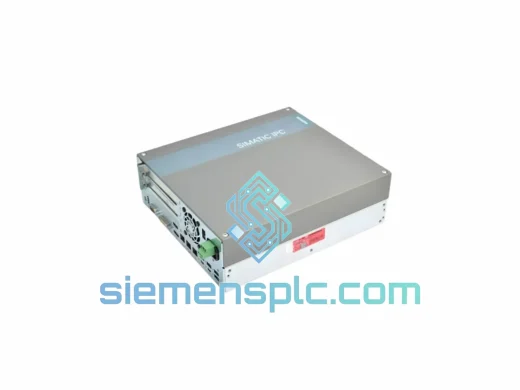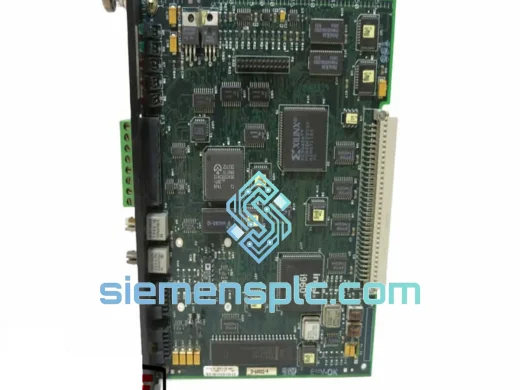
Siemens
RFQ Ready
Siemens T8191 Safety Controller Module – Trusted TMR Series
Trusted Series
Origin DE
Safety Controller Module
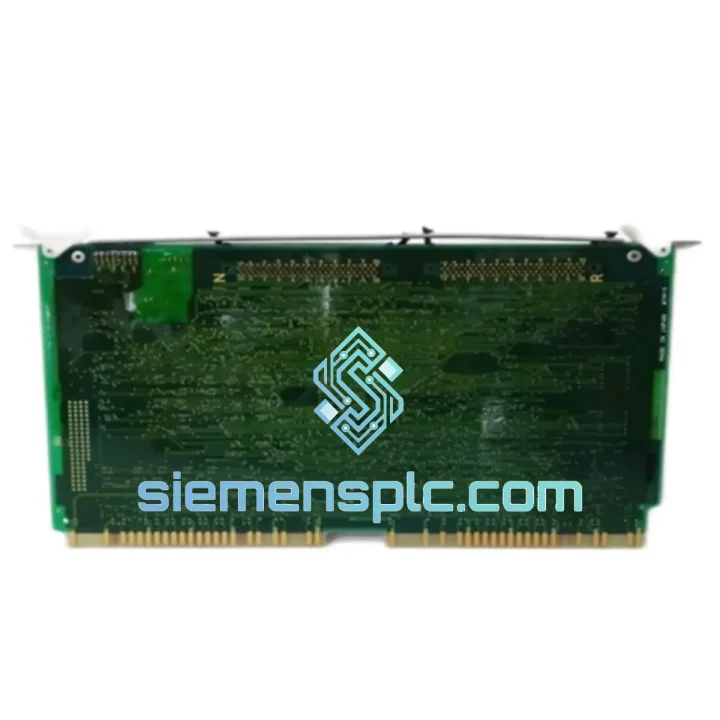
Request verified availability, condition, replacement risk review, packing options and courier lead time for XV371A.
Click Request Quote and the part number is inserted into the inquiry form automatically.
Core fields for model confirmation and RFQ routing. Detailed product narrative remains below.
The Siemens XV371A is a dedicated signal distribution module engineered for deployment within SIMATIC S7-based distributed control systems and process automation backplanes. Its primary function is to condition, route, and isolate field-level analog and digital signals before they reach the controller’s I/O bus — a role that directly determines the fidelity of process variable acquisition and the determinism of closed-loop control response. In high-density panel installations where dozens of field instruments share a common marshalling zone, the XV371A provides the structured signal pathway that prevents cross-channel interference and simplifies field wiring termination.
Unlike passive terminal blocks, the XV371A incorporates active signal conditioning circuitry that maintains signal integrity across extended cable runs typical of large-scale process plants. The module’s architecture is optimized for 24 VDC loop-powered transmitter circuits, with each channel independently buffered to prevent load-sharing artifacts that would otherwise introduce measurement offset in 4–20 mA current loops. This design characteristic is particularly relevant in applications where multiple controllers or SCADA systems must simultaneously read the same field transmitter — a topology common in safety-instrumented system (SIS) architectures requiring independent verification channels.
Real-time Stock & RFQ: [email protected] | WhatsApp: +86 18359268345
| Manufacturer | Siemens AG |
| Part Number | XV371A |
| Module Category | Signal Distribution Module |
| Compatible Platform | SIMATIC S7-300 / S7-400 / ET 200 distributed I/O |
| Signal Type | Analog (4–20 mA) and discrete digital signal distribution |
| Channel Isolation | Opto-electronic isolation per channel; isolation voltage ≥ 500 V AC |
| Supply Voltage | 24 V DC (–15% / +20%), reverse polarity protected |
| Current Consumption | ≤ 120 mA at 24 V DC (module internal) |
| Signal Input Range | 0–20 mA / 4–20 mA selectable per channel group |
| Output Load Impedance | ≤ 600 Ω per output channel |
| Operating Temperature | 0 °C to +60 °C (storage: –40 °C to +85 °C) |
| Relative Humidity | 5% to 95%, non-condensing (IEC 60068-2-30) |
| EMC Compliance | EN 61000-4-2 (ESD), EN 61000-4-4 (EFT/Burst), EN 61000-4-5 (Surge) |
| Mounting | 35 mm DIN rail (EN 60715) or S7 rack backplane adapter |
| Protection Class | IP20 (IEC 60529) |
| Dimensions (W × H × D) | 40 mm × 125 mm × 117 mm |
| Weight | Approx. 210 g |
| Certifications | CE, UL, cUL, RoHS 2011/65/EU |
| Warranty | 12 months from date of shipment |
The XV371A’s internal architecture is structured around a per-channel opto-electronic isolation stage followed by a precision current mirror output driver. Each input channel feeds a high-impedance current sense resistor (typically 50 Ω) whose voltage drop is sampled by a rail-to-rail operational amplifier configured in a transimpedance topology. The amplifier output drives the primary side of an optocoupler rated at a current transfer ratio (CTR) of ≥ 100% across the full operating temperature range — a specification that ensures the output current tracks the input without gain compression at the thermal extremes of the module’s rated envelope.
The isolation barrier between the field-side and the system-side circuits is implemented using a dual-layer PCB with a minimum creepage distance of 8 mm and a clearance of 6 mm, conforming to IEC 60664-1 for overvoltage category III environments. This physical separation is reinforced by a guard ring trace connected to chassis ground, which intercepts capacitively coupled high-frequency noise before it can propagate across the isolation boundary — a design measure that directly improves the module’s immunity to fast transient bursts (IEC 61000-4-4, Level 3).
On the EMC front, the XV371A incorporates a common-mode choke at each field terminal pair, attenuating differential-mode noise above 100 kHz by a minimum of 40 dB. Transient voltage suppression (TVS) diodes rated at 600 W peak pulse power are placed across each input terminal to clamp inductive kickback from field cable inductance during switching events. The combination of these passive protection elements with the active isolation stage gives the module a demonstrated immunity to conducted disturbances up to 10 V RMS per IEC 61000-4-6, which is the threshold required for installation in proximity to variable-frequency drives and high-current motor starters.
The backplane connector interface uses a gold-plated 40-pin edge connector with a contact normal force of ≥ 1.5 N per pin, maintaining reliable electrical contact through the thermal cycling and vibration loads specified in IEC 60068-2-6 (10–150 Hz, 1 g). The connector’s pin assignment is designed to place power and ground pins at the outer edges of the connector body, minimizing the risk of signal contamination from supply rail noise through mutual inductance coupling.
Every Siemens XV371A unit supplied through siemensplc.com is sourced directly from Siemens AG’s authorized distribution network or from verified surplus channels with full traceability documentation. Prior to shipment, each module undergoes a structured acceptance test that includes power-on functional verification, per-channel signal path continuity measurement, isolation resistance testing at 500 V DC, and visual inspection against Siemens’ cosmetic acceptance criteria. Units that do not meet all acceptance parameters are quarantined and not offered for sale.
Our logistics operation is based in Xiamen, China — a port city with direct air freight connections to major industrial hubs across Southeast Asia, the Middle East, Europe, and the Americas. Standard orders are dispatched within 1–3 business days of payment confirmation. Express air freight options via DHL, FedEx, and UPS are available for emergency plant maintenance scenarios, with typical transit times of 3–5 business days to most destinations. All shipments are packed in anti-static ESD bags with foam-lined outer cartons rated for the shock and vibration loads specified in ASTM D4169 Distribution Cycle 13.
Export documentation — including commercial invoice, packing list, certificate of origin, and ECCN classification — is prepared for every international shipment. For regulated industries requiring a certificate of conformance (CoC) or material test report (MTR), these documents are available upon request at the time of order placement. A 12-month warranty covers all units against manufacturing defects and premature failure under normal operating conditions as defined in the Siemens product specification sheet.
Email: [email protected]
WhatsApp: +86 18359268345
Web: siemensplc.com
Location: Xiamen, China
© 2026 siemensplc.com. All rights reserved.
We check the full part number, brand, series and visible nameplate information before quotation.
Sales confirms stock path, condition option, quantity and realistic lead time for export dispatch.
DHL, FedEx, UPS or buyer courier arrangements can be reviewed with packing requirements.
Similar brand or category products for fast comparison and multi-item RFQ lists.