TOKYO ELECTRON
RFQ Ready
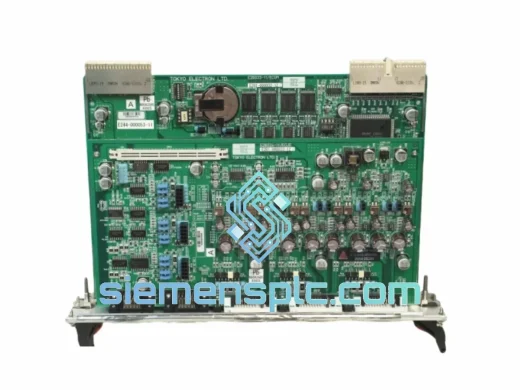
Tokyo Electron MPC-T0070A-14 RDC 3000439-000 Motion Control Board
Origin Japan
Motion Control Board
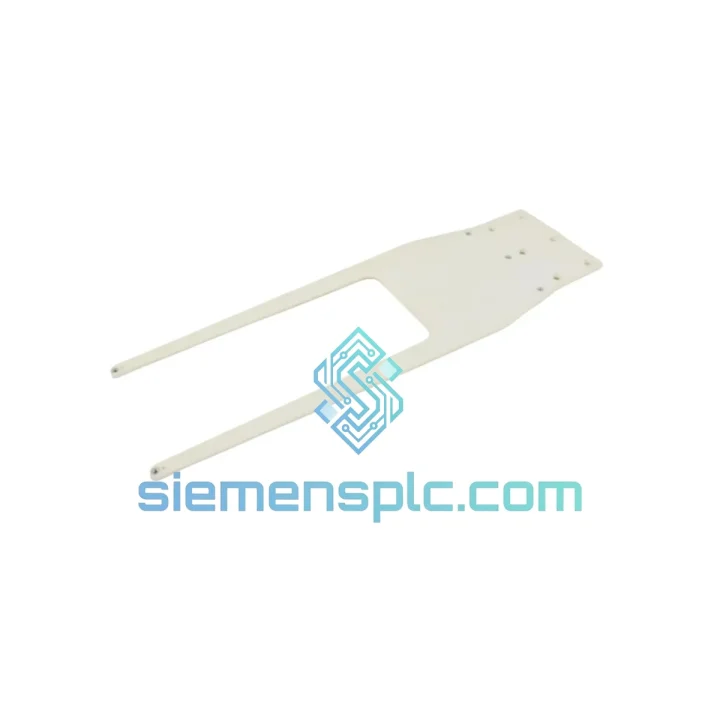
Request verified availability, condition, replacement risk review, packing options and courier lead time for 2985-429601-13.
Click Request Quote and the part number is inserted into the inquiry form automatically.
Core fields for model confirmation and RFQ routing. Detailed product narrative remains below.
The 2985-429601-13 is an OEM-specification Integrated Robotic Arm (IRA) Fork Assembly manufactured by Tokyo Electron (TEL) for exclusive deployment within the ACT 12 atmospheric cluster tool platform. This component occupies the terminal position in the ACT 12’s substrate transfer kinematic chain — the mechanical interface between the IRA wrist joint and the wafer surface. Its dimensional accuracy, material selection, and surface engineering are not incidental; they are the direct determinants of wafer placement repeatability, particle budget compliance, and equipment availability across the tool’s operational lifecycle.
Within the ACT 12 architecture, the IRA module executes all atmospheric substrate movements: load port extraction, pre-aligner station handoff, and front-opening unified pod (FOUP) interface cycling. The fork assembly’s blade geometry — including blade length, taper profile, slot width, and pad contact coordinates — is derived from TEL’s internal kinematic model for the IRA wrist. Deviations from this geometry, even within tolerances acceptable for general mechanical fabrication, produce measurable wafer center offset at the aligner chuck, increase pad-contact particle generation, and in worst cases trigger wafer slip events that activate tool interlocks and halt production. The 2985-429601-13 is produced to TEL’s original dimensional drawings, cross-referenced under internal catalog numbers 6715-H318A and 0040-06711, ensuring dimensional conformance without field adjustment.
The fork is rated for both 200 mm and 300 mm wafer formats in atmospheric (non-vacuum) transfer environments, with a blade natural frequency engineered above the IRA arm’s maximum acceleration profile to suppress resonant oscillation during high-speed substrate cycling. Blade tip deflection under a 300 mm wafer load (approximately 130 g) is maintained below 0.05 mm across the full fab ambient temperature range of 20–25 °C ± 2 °C — a figure that keeps wafer center offset within the pre-aligner’s correction window and prevents alignment fault accumulation over extended production runs.
The three-point PEEK (polyether ether ketone) contact pad arrangement provides static wafer stability at all IRA arm orientations within its programmed range of motion. PEEK is specified for its low particle generation rate, resistance to photoresist solvent exposure, and a coefficient of friction sufficient to prevent wafer slide during arm deceleration without generating electrostatic charge. The ceramic coating on the blade surface provides electrical isolation between the wafer and the aluminum blade substrate, suppressing ESD events during wafer contact and acting as a hard barrier against aluminum oxide particle generation from surface wear — a critical requirement in front-end-of-line (FEOL) environments where metallic contamination directly impacts gate oxide integrity.
Real-time Stock & RFQ: [email protected] | WhatsApp: +86 18359268345
| Parameter | Specification |
|---|---|
| Part Number | 2985-429601-13 |
| Cross Reference Numbers | 6715-H318A / 0040-06711 |
| OEM Manufacturer | Tokyo Electron (TEL) |
| Platform Compatibility | TEL ACT 12 Atmospheric Cluster Tool |
| Robot Module | IRA (Integrated Robotic Arm) |
| Assembly Configuration | Single-blade fork, end-effector mount |
| Wafer Format | 200 mm / 300 mm (confirm BOM revision) |
| Transfer Environment | Atmospheric (non-vacuum) |
| Blade Material | Ceramic-coated high-modulus aluminum alloy |
| Contact Pad Material | PEEK (polyether ether ketone), 3-point geometry |
| Blade Tip Deflection (300 mm wafer) | < 0.05 mm at rated IRA velocity |
| Wafer Center Offset at Aligner | ≤ ±0.5 mm (within pre-aligner correction range) |
| Positional Repeatability | ±0.3 mm across 20–25 °C ± 2 °C ambient range |
| Mounting Interface | TEL IRA standard wrist flange, dowel pin registration |
| Surface Finish / Cleanliness Class | Class 10 cleanroom-compatible |
| Gross Weight | 2,600 g (approx.) |
| Condition Available | New OEM / Certified Refurbished |
| Warranty | 12 months from date of shipment |
| Packaging Standard | ESD-safe anti-static foam-lined rigid enclosure |
| Documentation | Certificate of Conformance (CoC) available on request |
| Country of Origin | Japan |
The 2985-429601-13 operates within a deterministic kinematic chain where three hardware design principles govern its performance envelope:
Blade Stiffness and Resonance Margin: The fork blade is machined from a high-modulus aluminum alloy with a ceramic surface treatment applied via controlled thermal spray. This combination delivers a blade natural frequency that exceeds the IRA arm’s maximum acceleration profile by a defined margin, preventing resonant oscillation during high-speed substrate transfer cycles. The ceramic layer also increases surface hardness to approximately 1,200 HV, reducing wear-induced dimensional drift over the component’s service life. At the ACT 12’s rated arm velocity, blade tip deflection under a 300 mm wafer load remains below 0.05 mm — a figure validated against the pre-aligner’s correction range to ensure alignment faults do not accumulate during extended production campaigns.
PEEK Pad Contact Mechanics: The three-point PEEK pad arrangement is geometrically calculated to place the wafer’s center of gravity within the triangle formed by the three contact points, ensuring static stability at all IRA arm orientations within its programmed range of motion. PEEK’s coefficient of friction against silicon (approximately 0.35–0.45 dry) is sufficient to prevent wafer slide during arm deceleration at rated velocity without generating electrostatic charge — a property that distinguishes it from rubber-based pad materials that accumulate charge through triboelectric contact. PEEK’s chemical resistance to photoresist solvents (including NMP and PGMEA) prevents pad degradation in environments where solvent vapor exposure is unavoidable.
Wrist Flange Registration System: The mounting interface between the fork assembly and the IRA wrist flange uses a close-tolerance dowel pin registration system machined to TEL’s original tolerance stack. This eliminates rotational play at the joint — a failure mode common in aftermarket fork assemblies that rely on bolt-clamping friction alone. The dowel pin system constrains the fork’s blade centerline to align with the IRA’s programmed Tool Center Point (TCP) within the original calibration tolerance, allowing fork replacement without robot re-teaching. This is not a marginal benefit: IRA kinematic re-calibration on the ACT 12 platform requires a qualified TEL field service engineer and typically consumes 4–8 hours of tool downtime. The 2985-429601-13’s flange geometry eliminates this requirement entirely for routine fork replacement.
ESD and Particle Control Architecture: The ceramic coating on the blade surface provides electrical isolation between the wafer and the aluminum blade substrate, with a surface resistivity in the range of 10⁸–10¹⁰ Ω/sq — sufficient to suppress ESD events during wafer contact without creating a fully insulating surface that would prevent controlled charge dissipation. The coating also acts as a hard barrier against aluminum oxide particle generation from blade surface wear, a critical requirement in FEOL environments where metallic contamination at concentrations above 10¹⁰ atoms/cm² can degrade gate oxide integrity and reduce device yield.
Every 2985-429601-13 unit supplied through siemensplc.com is sourced via verified supply channels with full chain-of-custody documentation. Pre-shipment inspection covers dimensional verification of blade geometry against TEL’s original drawing tolerances, PEEK pad condition assessment, wrist flange interface fit check using a calibrated gauge, and ESD compliance testing per ANSI/ESD S20.20. Units that do not meet TEL’s original dimensional specifications are rejected at incoming inspection — no exceptions and no rework-to-print substitutions.
Packaging follows semiconductor industry handling standards: each fork assembly is individually bagged in anti-static polyethylene (surface resistivity < 10¹¹ Ω/sq), nested in custom-cut conductive foam rated for the component’s weight and geometry, and enclosed in a rigid outer carton validated for international air freight mechanical shock and vibration profiles per ISTA 2A. This packaging configuration protects the blade’s ceramic coating and PEEK pads through the handling cycle from warehouse to fab incoming dock.
Shipments originate from our warehouse in Xiamen, China — a logistics hub with direct air freight connections to major semiconductor manufacturing regions including Taiwan, South Korea, Japan, the United States, and the Netherlands. Standard international delivery is 3–7 business days via DHL Express or FedEx International Priority. AOG (emergency) orders are processed same business day with next-available-flight dispatch. Export documentation including commercial invoice, packing list, and HTS classification is prepared for all international shipments to support customs clearance without delay. A Certificate of Conformance (CoC) is available for every unit upon request, providing the part number, lot number, inspection date, and conformance statement required for fab IQC acceptance.
Email: [email protected]
WhatsApp: +86 18359268345
Web: siemensplc.com
Location: Xiamen, China
© 2026 siemensplc.com. All rights reserved.
We check the full part number, brand, series and visible nameplate information before quotation.
Sales confirms stock path, condition option, quantity and realistic lead time for export dispatch.
DHL, FedEx, UPS or buyer courier arrangements can be reviewed with packing requirements.
Similar brand or category products for fast comparison and multi-item RFQ lists.