TOSHIBA
In Stock OK
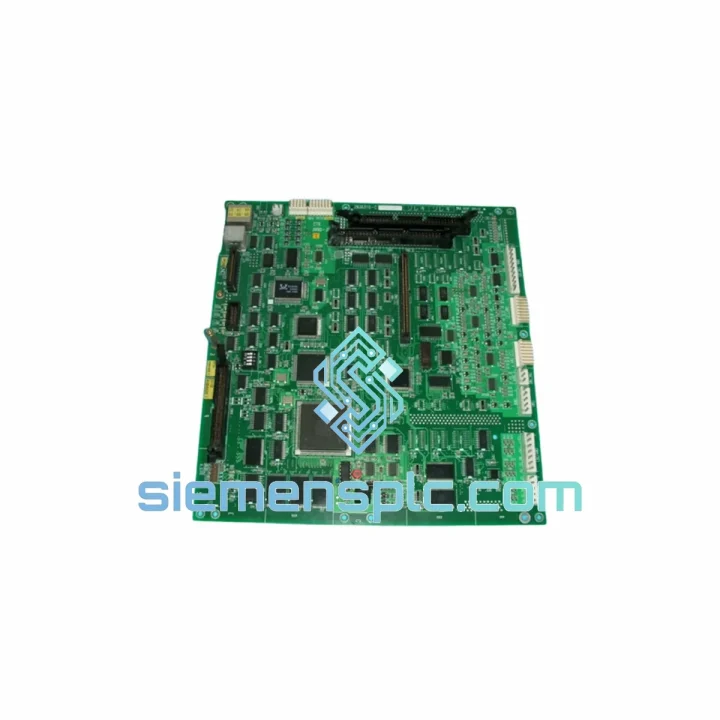
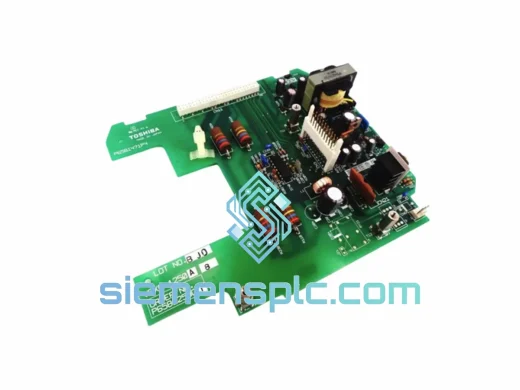
TOSHIBA 2N3A-3110-C CTR ARND-3110 Inverter Controller Board – ARND Series
Request verified availability, condition, replacement risk review, packing options and courier lead time for 2N3A-3110-C.
BrandTOSHIBA
Part Number2N3A-3110-C
ConditionAvailability Check
Lead TimeRFQ Confirmation
DocumentsDatasheet / photos by RFQ
ShippingExport packing available
Auto-filled RFQ
2N3A-3110-C
Click Request Quote and the part number is inserted into the inquiry form automatically.
- Reply by email: [email protected]
- WhatsApp / Tel: +86 18359268345
- Mon-Sat 9:00-18:00 GMT+8
Procurement Data
Key Product Information
Core fields for model confirmation and RFQ routing. Detailed product narrative remains below.
- Brand
- TOSHIBA
- Primary Part Number
- 2N3A-3110-C
- Product Type
- Inverter Controller Board
- Product Family
- Other series
- Manufacturer
- TOSHIBA
- Country of Origin
- Japan
- Catalog Category
- Motor Drives
- Operating Temp.
- -10°C to +55°C (ambient, with adequate drive ventilation)
- Warranty
- 12 months against manufacturing defects
- Compliance
- IEC 61800 series (variable speed electrical power drive systems)
Model confirmed for inquiry
2N3A-3110-C
Send quantity, destination and urgency. The RFQ form keeps this part number attached.
Request Quote
Product Overview
TOSHIBA 2N3A-3110-C CTR ARND-3110 — Gate Signal Coordinator and Fault Arbitration Core of the ARND-3110 VFD Platform
The TOSHIBA 2N3A-3110-C CTR ARND-3110 is the dedicated assembly controller board engineered for the ARND-3110 series variable frequency drive (VFD) platform. Within the inverter’s internal hierarchy, this PCB occupies the critical interface layer between the main CPU module and the IGBT power stage, executing three primary functions: PWM gate signal generation, closed-loop feedback arbitration, and real-time fault state management. Its removal or failure renders the entire drive inoperable, making it the highest-priority replacement component in any ARND-3110 maintenance scenario.
Unlike generic controller boards, the 2N3A-3110-C CTR is platform-specific to the ARND-3110 chassis. Its firmware, connector pinout, and signal timing are factory-calibrated to match the ARND-3110’s power topology — a 3-phase PWM inverter operating at a nominal DC bus voltage derived from rectified 380–480 V AC input. The board receives speed reference and torque demand signals from the main control CPU via the drive’s internal parallel bus, processes real-time current and voltage feedback from the hall-effect sensors and DC bus voltage divider, and outputs precisely timed gate drive pulses to the six IGBT switches in the power module. Switching frequency is typically fixed at 2–15 kHz depending on drive configuration, with dead-time insertion managed at this board level to prevent shoot-through events in the IGBT bridge.
Fault detection logic embedded in the 2N3A-3110-C CTR monitors overcurrent thresholds (typically 200% of rated current for instantaneous trip), DC bus overvoltage (trip threshold approximately 800 V DC for 480 V input class), heatsink thermal sensors, and gate driver desaturation signals. Upon fault detection, the board asserts a hardware interlock that disables all gate outputs within microseconds — independent of the main CPU — ensuring the power stage is protected even if the control software is unresponsive. This hardware-level protection architecture is a defining characteristic of industrial-grade VFD design and distinguishes the ARND-3110 platform from lower-tier drives that rely solely on software fault handling.
Real-time Stock & RFQ: [email protected] | WhatsApp: +86 18359268345
Technical Parameters
| Parameter | Specification |
|---|---|
| Manufacturer | TOSHIBA |
| Part Number | 2N3A-3110-C CTR ARND-3110 |
| Board Classification | Assembly Controller Board (PCB) |
| Compatible Platform | TOSHIBA ARND-3110 Series VFD |
| Primary Function | PWM gate signal generation, feedback arbitration, fault management |
| Nominal DC Bus Voltage | Derived from 380–480 V AC 3-phase rectified input |
| Switching Frequency Range | 2–15 kHz (drive-configurable) |
| Overcurrent Trip Threshold | ≥200% rated current (instantaneous hardware interlock) |
| Overvoltage Trip Threshold | ~800 V DC (480 V input class) |
| Gate Drive Output | 6-channel IGBT gate drive (3-phase full bridge) |
| Feedback Inputs | Hall-effect current sensors, DC bus voltage divider, NTC thermal sensors |
| Internal Bus Interface | Parallel bus to main CPU module |
| Form Factor | Plug-in PCB assembly, ARND-3110 chassis-specific |
| Operating Temperature | -10°C to +55°C (ambient, with adequate drive ventilation) |
| Compliance | IEC 61800 series (variable speed electrical power drive systems) |
| Country of Origin | Japan |
| Weight | Approx. 400 g |
| Warranty | 12 months against manufacturing defects |
Hardware Logical Analysis
The 2N3A-3110-C CTR board’s hardware architecture reflects the design priorities of industrial VFD engineering: deterministic switching, fault isolation speed, and signal integrity under electrically noisy conditions.
Dead-Time Insertion Circuit: To prevent simultaneous conduction of the upper and lower IGBTs in any phase leg (shoot-through), the board implements a hardware dead-time insertion circuit independent of the PWM generation logic. This ensures that even if the PWM signal transitions are corrupted by noise, the gate drive outputs cannot simultaneously activate complementary switches. Dead-time values are typically in the range of 2–5 µs for the IGBT modules used in the ARND-3110 power stage.
Desaturation Detection: Each gate driver channel on the board monitors the collector-emitter voltage (Vce) of its associated IGBT during the on-state. If Vce rises above the desaturation threshold — indicating the IGBT is failing to fully conduct, typically due to overcurrent — the gate driver immediately pulls the gate low and asserts a fault signal to the board’s fault arbitration logic. This response occurs in under 2 µs, far faster than any software interrupt handler.
EMC Design: The board employs a multi-layer PCB stack-up with dedicated ground planes to minimize common-mode noise coupling from the high-dV/dt switching transitions in the adjacent power stage. Gate drive signal traces are routed with controlled impedance and shielded from analog feedback signal traces. Ferrite beads are placed on gate drive output lines to suppress high-frequency ringing. Optocouplers provide galvanic isolation between the low-voltage control logic and the high-voltage gate drive circuits, with isolation ratings consistent with the drive’s working voltage class.
Thermal Monitoring Integration: NTC thermistor inputs from the heatsink are conditioned on-board through a precision voltage divider and ADC interface. The board’s logic compares the digitized temperature reading against configurable thresholds and asserts a pre-alarm or trip signal accordingly. This on-board conditioning eliminates the need for the main CPU to poll thermal data at high frequency, reducing bus loading and improving thermal response latency.
System Integration Benefits
- Direct OEM Drop-In Replacement: The 2N3A-3110-C CTR is dimensionally and electrically identical to the factory-installed board. No firmware flashing, parameter reconfiguration, or mechanical modification is required — connector mating and board seating restore full drive functionality.
- Hardware-Level Fault Isolation: The board’s autonomous fault interlock operates independently of the main CPU, ensuring the power stage is protected within microseconds of a fault event. This prevents secondary damage to IGBT modules and DC bus capacitors during fault conditions.
- Deterministic PWM Timing: Gate signal timing is generated by dedicated hardware logic on the board, not by software running on the main CPU. This eliminates jitter introduced by CPU interrupt latency and ensures consistent switching behavior across all operating conditions.
- Reduced System Downtime: Board-level replacement targets the failed component precisely, avoiding the cost and lead time of a complete drive replacement. A trained technician can swap the 2N3A-3110-C CTR in under 30 minutes with standard tools.
- Diagnostic Transparency: Fault codes generated by the board’s fault arbitration logic are passed to the drive’s display and communication interfaces, enabling maintenance personnel to identify the root cause of a trip event without specialized test equipment.
- Compatibility with Drive Communication Protocols: The board’s internal bus interface is compatible with the ARND-3110’s communication stack, preserving full functionality of fieldbus interfaces (e.g., Modbus RTU, PROFIBUS) that rely on the main CPU for protocol handling.
- Thermal Derating Support: On-board thermal monitoring feeds real-time heatsink temperature data to the drive’s control logic, enabling automatic output current derating before a thermal trip occurs — extending drive service life in high-ambient-temperature installations.
- Supply Chain Continuity: For facilities operating multiple ARND-3110 drives, maintaining a spare 2N3A-3110-C CTR board eliminates single-point-of-failure risk at the component level, supporting a proactive maintenance strategy without the capital cost of spare complete drives.
Quality Assurance & Global Logistics
Every TOSHIBA 2N3A-3110-C CTR ARND-3110 board supplied by siemensplc.com is sourced through verified OEM and authorized distributor channels. Pre-shipment inspection includes visual PCB examination for physical damage, solder joint integrity, and connector condition; electrical continuity checks on gate drive output lines; and cross-referencing against known-good reference units to screen for counterfeit components. A certificate of conformance and inspection report are available upon request for quality-critical procurement processes.
Logistics operations are based in Xiamen, China, a major export hub with direct access to international freight carriers including DHL Express, FedEx International Priority, and UPS Worldwide Expedited. In-stock units are dispatched within 1–3 business days of order confirmation. ESD-protective packaging (anti-static bag, foam cushioning, rigid outer carton) is standard for all PCB shipments. Export documentation including commercial invoice, packing list, and HS code declaration (HS 8537.10) is prepared for all international shipments to facilitate customs clearance. Delivery to major industrial regions in Europe, Southeast Asia, the Middle East, and the Americas typically completes within 3–7 business days via express freight.
Contact Information
Email: [email protected]
WhatsApp: +86 18359268345
Web: siemensplc.com
Location: Xiamen, China
© 2026 siemensplc.com. All rights reserved.
Ready to quote
[email protected]
Send This Part Number to Sales
RFQ workflow
Quality workflow ->
Confirmation Process
01Model confirmation
We check the full part number, brand, series and visible nameplate information before quotation.
02Availability reply
Sales confirms stock path, condition option, quantity and realistic lead time for export dispatch.
03Packing & courier
DHL, FedEx, UPS or buyer courier arrangements can be reviewed with packing requirements.
Continue sourcing
Browse full catalog ->
Related Automation Parts
Similar brand or category products for fast comparison and multi-item RFQ lists.
TOSHIBA
RFQ Ready
TOSHIBA TN721 GTN721 Servo Drive Power Supply Module
Origin Japan
Servo Drive Power Supply Module
TOSHIBA
RFQ Ready
TOSHIBA P6581471P4 VFXF-1250 VFD Control Circuit Board – VFXF Series
Origin Japan
VFD Control Circuit Board