
TRICONEX
In Stock OK
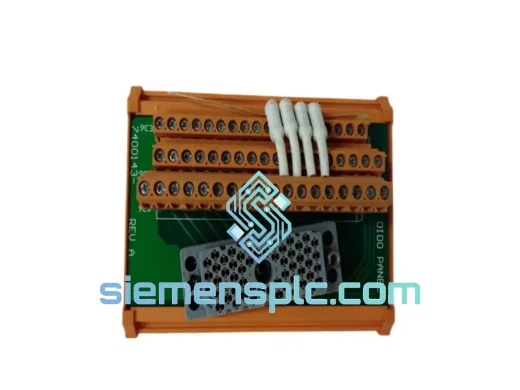
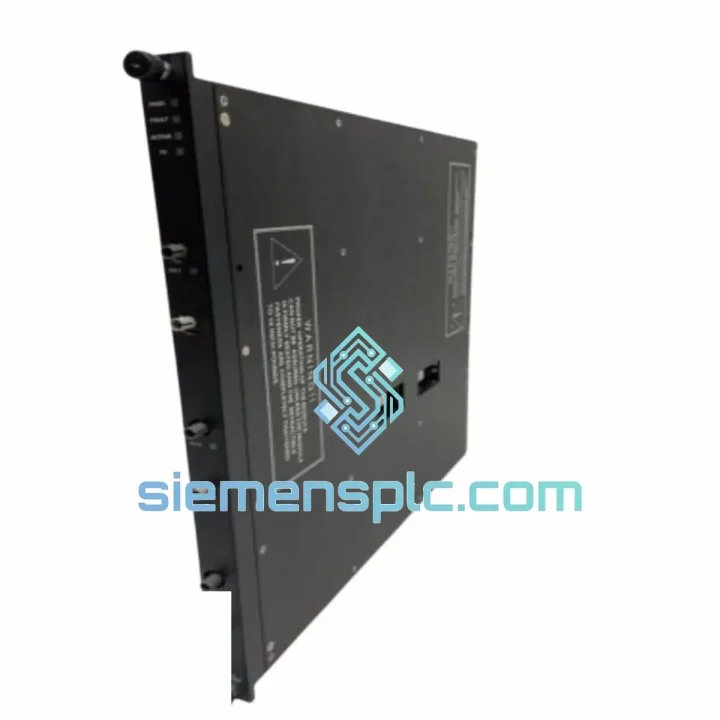
TRICONEX 3007 Safety PLC Processor Module – Tricon TMR Series
Request verified availability, condition, replacement risk review, packing options and courier lead time for 3007.
BrandTRICONEX
Part Number3007
ConditionAvailability Check
Lead TimeRFQ Confirmation
DocumentsDatasheet / photos by RFQ
ShippingExport packing available
Auto-filled RFQ
3007
Click Request Quote and the part number is inserted into the inquiry form automatically.
- Reply by email: [email protected]
- WhatsApp / Tel: +86 18359268345
- Mon-Sat 9:00-18:00 GMT+8
Procurement Data
Key Product Information
Core fields for model confirmation and RFQ routing. Detailed product narrative remains below.
- Brand
- TRICONEX
- Primary Part Number
- 3007
- Product Type
- Safety PLC Processor Module
- Series / Family
- Tricon
- Country of Origin
- US
- Catalog Category
- DCS & Safety Modules
- Operating Temp.
- 0°C to +60°C
- Warranty
- 12 months from date of shipment
Model confirmed for inquiry
3007
Send quantity, destination and urgency. The RFQ form keeps this part number attached.
Request Quote
Product Overview
TRICONEX 3007 TMR Processor Module – Fault-Tolerant CPU for SIL 3 Safety Instrumented Systems
The TRICONEX 3007 is the central processing unit of the Tricon Triple Modular Redundant (TMR) safety controller platform. Designed for deployment in Safety Instrumented Systems (SIS) where IEC 61508 SIL 3 integrity is a non-negotiable design constraint, the 3007 operates as one of three identical processor legs executing safety application logic in parallel across independent hardware paths. The architecture does not rely on software-level fault masking — fault tolerance is enforced at the silicon, backplane interconnect, and voter circuit layers, making the 3007 a deterministic hardware solution for Emergency Shutdown Systems (ESD), High Integrity Pressure Protection Systems (HIPPS), Burner Management Systems (BMS), and turbine/compressor control in oil and gas, petrochemical, power generation, and nuclear auxiliary facilities.
Each 3007 module interfaces with the Tricon chassis via the TriBus proprietary backplane — a deterministic serial bus architecture that enforces bounded I/O scan latency regardless of application logic complexity. The three processor legs independently read field inputs, execute compiled TriStation 1131 IEC 61131-3 application logic, and write output states. A dedicated hardware voter circuit continuously arbitrates the outputs of all three legs; any single-leg deviation is isolated and annunciated without interrupting the safety function or requiring a process shutdown. This 2-out-of-3 (2oo3) voting mechanism maintains the required Probability of Failure on Demand (PFD) within SIL 3 bounds across the full proof-test interval defined in the plant’s Safety Requirements Specification (SRS).
Real-time Stock & RFQ: [email protected] | WhatsApp: +86 18359268345
Technical Parameters
| Parameter | Specification |
|---|---|
| Part Number | 3007 |
| Platform | Tricon TMR Safety Controller |
| Architecture | Triple Modular Redundant (TMR), 2oo3 hardware voting |
| Safety Integrity Level | IEC 61508 SIL 3 |
| Programming Standard | IEC 61131-3 via TriStation 1131 |
| Backplane Interface | TriBus proprietary deterministic serial bus |
| Processor Legs | 3 independent CPUs per chassis slot |
| Voter Circuit | Hardware-implemented, silicon-level 2oo3 arbitration |
| Operating Voltage | 5 VDC (supplied via Tricon chassis backplane) |
| Operating Temperature | 0°C to +60°C |
| Storage Temperature | -40°C to +85°C |
| Relative Humidity | 5% to 95% non-condensing |
| EMC Compliance | IEC 61000-4 series (ESD, EFT, surge, conducted/radiated immunity) |
| Certifications | TÜV SIL 3, FM, CSA, ATEX (zone 2 via barrier) |
| Communication Ports | TriStation port (RS-232), Tricon Communication Module (TCM) interface |
| Firmware Update | Online via TriStation 1131 engineering workstation |
| Diagnostic Coverage | >99% internal self-diagnostics per IEC 61508-2 |
| MTBF | >200,000 hours (per Bellcore TR-332) |
| Warranty | 12 months from date of shipment |
Hardware Logical Analysis
The 3007’s fault-tolerance model is grounded in physical redundancy rather than software abstraction. Three discrete processor boards — each carrying its own microprocessor, RAM, and local I/O interface logic — are mounted within a single module housing. All three boards receive identical input data simultaneously from the TriBus backplane. Each board independently executes the application program and generates an output vector. The voter circuit, implemented in dedicated gate-array logic (not firmware), compares the three output vectors on a bit-by-bit basis at every scan cycle.
When all three legs agree, the voted output is committed to the field I/O modules. When one leg deviates — whether due to a processor fault, memory corruption, or transient upset — the voter isolates that leg’s output from the consensus result and raises a diagnostic alarm via the Tricon system status bus. The faulty leg can be replaced online (hot-swap) without de-energizing the chassis or interrupting the safety function, provided the remaining two legs maintain agreement. This online repair capability directly reduces the mean time to repair (MTTR) and sustains the system’s PFD within the SIL 3 envelope between scheduled proof tests.
EMC hardening on the 3007 addresses both conducted and radiated interference. The backplane power rails are filtered with LC networks at each module connector, suppressing high-frequency transients generated by adjacent I/O switching. The processor boards use ground-plane isolation between the logic domain and the backplane interface, reducing common-mode noise coupling. Transient voltage suppression (TVS) diodes protect all inter-board signal lines against ESD events up to ±2 kV (IEC 61000-4-2 Level 4). The module housing provides shielding continuity through conductive gaskets at the front panel, maintaining chassis-level EMC integrity per IEC 61000-4-3 radiated immunity requirements.
Memory integrity is maintained through ECC (Error Correcting Code) on the application RAM of each processor leg. Single-bit errors are corrected transparently; multi-bit errors are flagged as a leg fault and trigger voter isolation. The application program stored in non-volatile flash is verified against a stored CRC at every power-up and at configurable intervals during runtime, ensuring that firmware corruption is detected before it can affect the safety function.
System Integration Benefits
- Deterministic scan cycle: The TriBus backplane enforces a fixed I/O scan period, eliminating jitter-induced timing faults in time-critical safety loops such as HIPPS valve actuation sequences.
- Online module replacement: A degraded 3007 leg can be swapped without process interruption, maintaining SIL 3 availability during the repair window and avoiding unplanned shutdowns.
- Transparent diagnostics: The Tricon system status bus reports per-leg health, voter decisions, and I/O module faults to the TriStation 1131 workstation and to DCS/SCADA systems via the TCM, providing full diagnostic transparency without custom programming.
- IEC 61131-3 programming: TriStation 1131 supports Ladder Diagram (LD), Function Block Diagram (FBD), and Structured Text (ST), allowing safety logic to be developed, verified, and documented within a single IEC-compliant environment.
- Seamless DCS integration: The Tricon Communication Module (TCM) supports Modbus TCP, OPC DA/UA, and proprietary peer-to-peer protocols, enabling the 3007-based SIS to exchange process data with Honeywell Experion, Emerson DeltaV, ABB 800xA, and Yokogawa CENTUM without gateway hardware.
- Proof-test support: The 3007 supports partial stroke testing and forced I/O states via TriStation 1131, allowing proof tests to be executed with minimal process impact and full audit trail logging.
- Scalable I/O architecture: A single Tricon chassis supports up to 120 I/O points per rack, expandable via remote I/O expanders, allowing the 3007 to serve as the CPU for both compact skid-mounted ESD panels and large-scale plant-wide SIS networks.
- Long-term parts availability: The Tricon platform has maintained backward hardware compatibility across multiple generations. The 3007 is compatible with Tricon chassis and I/O modules spanning over two decades of production, protecting the capital investment in existing SIS infrastructure.
Quality Assurance & Global Logistics
Every TRICONEX 3007 unit supplied by siemensplc.com is sourced as genuine OEM hardware. Each module undergoes incoming inspection including visual examination, label verification, and functional power-on testing before being added to available stock. Units are stored in ESD-controlled, climate-regulated warehouse conditions in Xiamen, China, in compliance with IPC-A-610 handling standards for electronic assemblies.
Export documentation — including commercial invoice, packing list, certificate of origin, and where required, ECCN classification — is prepared in-house to minimize customs clearance delays. Standard shipment is via DHL Express or FedEx International Priority, with typical transit times of 3–5 business days to Europe, North America, Southeast Asia, and the Middle East. For time-critical plant shutdowns or emergency procurement, same-day dispatch is available for in-stock units when orders are confirmed before 14:00 CST. All shipments are fully insured and tracked from dispatch to delivery. A 12-month warranty covers manufacturing defects and confirmed functional failures under normal operating conditions.
Contact Information
Email: [email protected]
WhatsApp: +86 18359268345
Web: siemensplc.com
Location: Xiamen, China
© 2026 siemensplc.com. All rights reserved.
Ready to quote
[email protected]
Send This Part Number to Sales
RFQ workflow
Quality workflow ->
Confirmation Process
01Model confirmation
We check the full part number, brand, series and visible nameplate information before quotation.
02Availability reply
Sales confirms stock path, condition option, quantity and realistic lead time for export dispatch.
03Packing & courier
DHL, FedEx, UPS or buyer courier arrangements can be reviewed with packing requirements.
Continue sourcing
Browse full catalog ->
Related Automation Parts
Similar brand or category products for fast comparison and multi-item RFQ lists.
TRICONEX
RFQ Ready
Triconex 8311 SIS Pressure Measuring Module
Tricon
Origin US
Safety Instrumented System Module
TRICONEX
RFQ Ready
Triconex 7400208C-020 Safety Terminator Module
Tricon
Origin US
Safety Terminator Module
TRICONEX
RFQ Ready
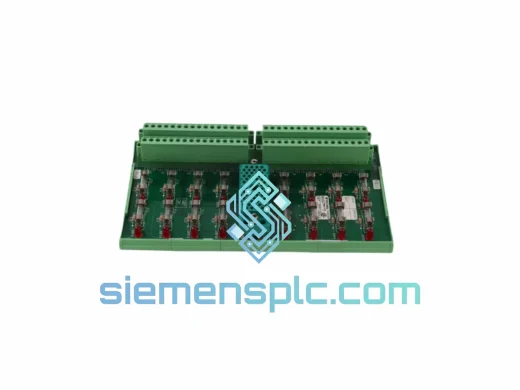
Triconex 7400169-310 9662-1XX Termination Panel
Tricon
Origin US
Safety PLC Termination Panel