Vibro-Meter
RFQ Ready
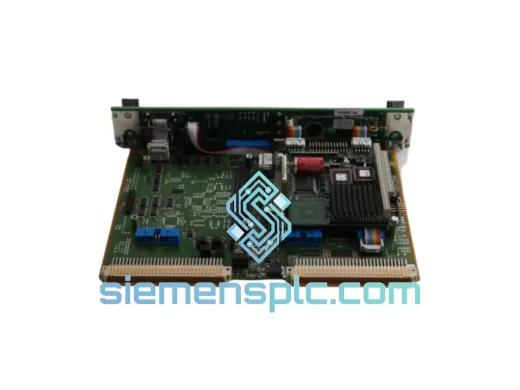
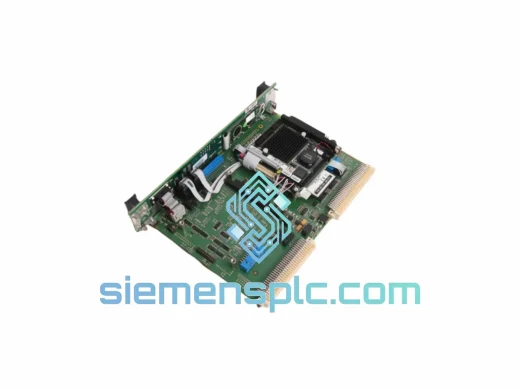
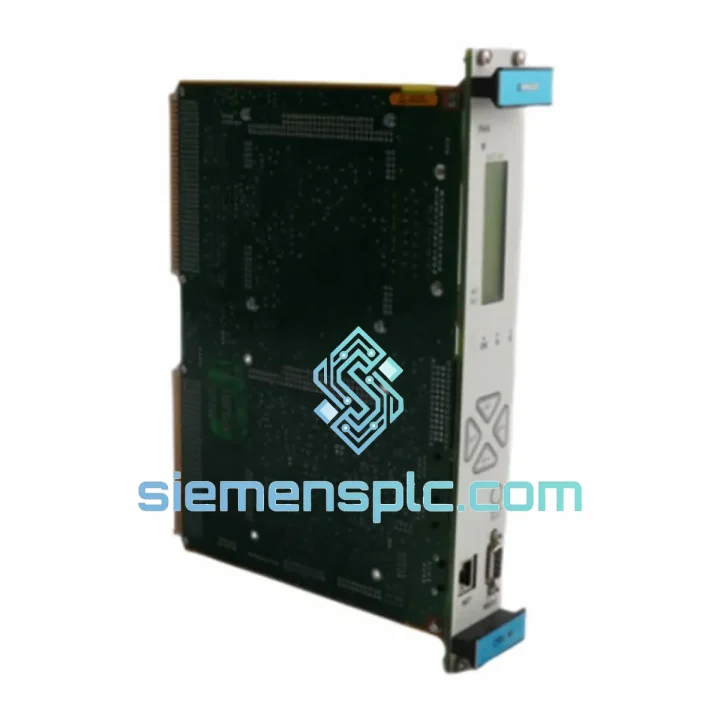
VIBRO-METER VM600 CPU M 200-595-100-032 CPU Module
Origin Switzerland
PLC & DCS CPU Module
Request verified availability, condition, replacement risk review, packing options and courier lead time for VIBRO-METER.
Click Request Quote and the part number is inserted into the inquiry form automatically.
Core fields for model confirmation and RFQ routing. Detailed product narrative remains below.
The VIBRO-METER VM600 CPU M 200-595-045-114 is the supervisory processing core of the VM600 Machinery Protection System platform, manufactured by Meggitt SA (formerly Vibro-Meter SA) in Switzerland. This CPU card governs all real-time data acquisition, channel arbitration, alarm state management, and communication gateway functions within a VM600 rack assembly. Its role in the control loop is not peripheral — it is the deterministic decision engine that translates raw transducer signals into actionable protection outputs with sub-millisecond response latency.
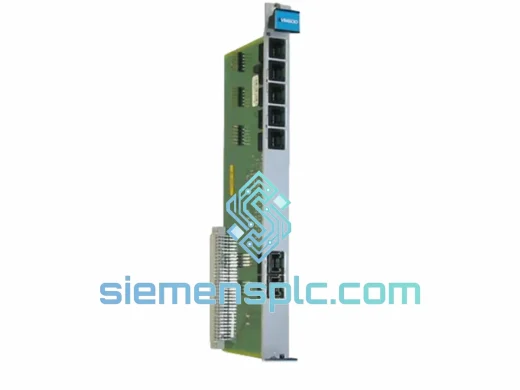
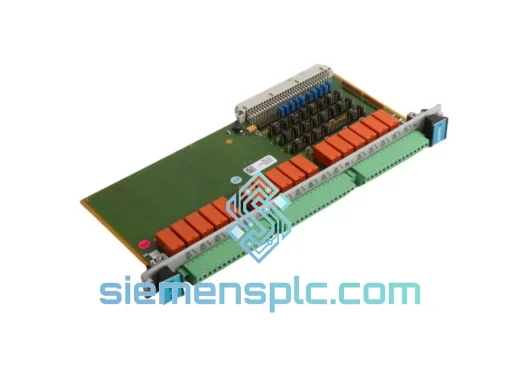
In a typical VM600 rack deployment, the CPU M card occupies the dedicated CPU slot and interfaces directly with the rack backplane bus. It polls each installed signal conditioning card — AMC8, MPC4, IOC4T — at fixed scan intervals, aggregates channel status data, evaluates alarm thresholds, and drives relay outputs or fieldbus messages accordingly. The architecture is designed for continuous operation in rotating equipment environments: gas turbines, steam turbines, centrifugal compressors, and large pump trains where unplanned downtime carries six-figure cost consequences per hour.
Real-time Stock & RFQ: [email protected] | WhatsApp: +86 18359268345
| Parameter | Specification |
|---|---|
| Manufacturer | Meggitt SA (VIBRO-METER), Switzerland |
| Full Part Number | VM600 CPU M 200-595-045-114 |
| Module Classification | Central Processing Unit Card — Rack Master Controller |
| Platform Series | VM600 Machinery Protection System |
| Form Factor | Single-width Eurocard, rack-mount |
| Compatible Chassis | VM600 6-slot and 12-slot rack assemblies |
| Backplane Interface | VM600 proprietary high-speed backplane bus |
| Communication Ports | Ethernet (RJ-45), RS-232/RS-485 serial |
| Supported Protocols | Modbus RTU/TCP, OPC-DA (via VM600 software stack) |
| Operating Temperature | 0 °C to +60 °C |
| Storage Temperature | −25 °C to +70 °C |
| Relative Humidity | 5% to 95% non-condensing |
| Supply Voltage | Powered via rack backplane (24 VDC nominal) |
| Approx. Module Weight | ~500 g |
| Country of Origin | Switzerland |
| Warranty | 12 months from dispatch date |
The VM600 CPU M card’s hardware design reflects the engineering constraints of continuous-duty machinery protection: determinism, fault isolation, and signal integrity under industrial electromagnetic environments.
Backplane Bus Architecture: The CPU M communicates with signal conditioning cards via the VM600 rack backplane, a parallel bus structure that supports synchronous polling of all installed cards within a fixed scan cycle. This eliminates the variable latency inherent in token-passing or event-driven bus topologies. Each card slot is addressed independently, and the CPU M maintains a live channel map that reflects the physical card population — empty slots are flagged rather than silently skipped, enabling rack configuration validation at startup.
EMC Design and Isolation: The card’s PCB layout incorporates ground plane segmentation to separate the digital processing domain from the analog front-end signals routed through the backplane. Transient suppression components are placed at all external interface connectors — Ethernet and serial ports — to clamp ESD events to levels below the IEC 61000-4-2 Class 4 threshold. The rack chassis itself provides a Faraday enclosure, and the CPU M’s metal faceplate maintains chassis ground continuity, ensuring that high-frequency interference from adjacent VFDs or switchgear does not couple into the processing core.
Watchdog and Fail-Safe Logic: An independent hardware watchdog timer monitors the CPU M’s main processing loop. If the firmware fails to service the watchdog within the configured timeout window — typically 100–500 ms — the watchdog asserts a hardware reset and simultaneously drives the rack’s relay outputs to their de-energized (safe) state. This fail-safe behavior is hardwired at the logic level and cannot be masked by software faults, ensuring that a firmware hang does not result in a silent protection gap.
Non-Volatile Configuration Storage: Alarm setpoints, channel configurations, and communication parameters are stored in onboard non-volatile memory (EEPROM or Flash). On power cycle, the CPU M reloads its full configuration without requiring a host PC connection, making it suitable for remote or unmanned installations where a configuration server may not be continuously available.
Dual-Port Ethernet Topology: Where the CPU M variant supports dual Ethernet, the two ports can be configured for network redundancy — primary and secondary paths to the plant DCS or historian — with automatic failover. This eliminates the communication system as a single point of failure in the protection data chain.
Every VM600 CPU M 200-595-045-114 unit supplied by siemensplc.com is sourced through documented industrial distribution channels and subjected to a structured pre-shipment inspection protocol. Physical examination covers PCB condition, connector pin integrity, faceplate labeling accuracy, and ESD packaging compliance. Part number and revision markings are cross-referenced against manufacturer documentation prior to dispatch.
Units are packed in anti-static ESD shielding bags, placed in foam-lined cartons rated for air freight handling, and sealed with tamper-evident tape. A packing checklist and inspection record accompany each shipment. Certificate of conformity is available on request for procurement teams requiring documentation for incoming inspection records.
Logistics operations are based in Xiamen, China, with established accounts with DHL Express, FedEx International Priority, and UPS Worldwide Expedited. In-stock units are typically dispatched within 1–2 business days of order confirmation. Tracking numbers are provided within 24 hours of shipment. For time-critical plant shutdowns or emergency MRO requirements, same-day dispatch arrangements can be confirmed by contacting the sales team directly.
Export documentation — commercial invoice, packing list, HS code declaration, and country-of-origin certificate — is prepared for every international shipment. Served markets include Asia-Pacific, the Middle East, Europe, North America, and Africa. Bulk order pricing and consolidated freight options are available for procurement teams sourcing multiple units or mixed VM600 spare parts kits.
Email: [email protected]
WhatsApp: +86 18359268345
Web: siemensplc.com
Location: Xiamen, China
© 2026 siemensplc.com. All rights reserved.
We check the full part number, brand, series and visible nameplate information before quotation.
Sales confirms stock path, condition option, quantity and realistic lead time for export dispatch.
DHL, FedEx, UPS or buyer courier arrangements can be reviewed with packing requirements.
Similar brand or category products for fast comparison and multi-item RFQ lists.