VIPA
In Stock OK
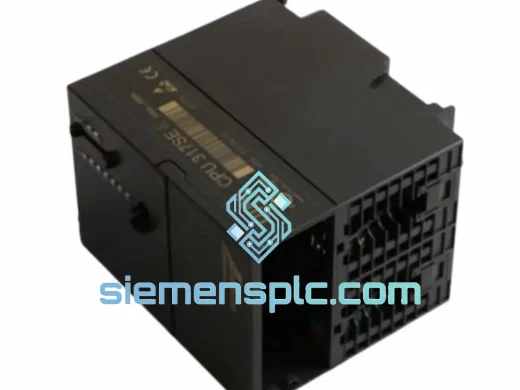
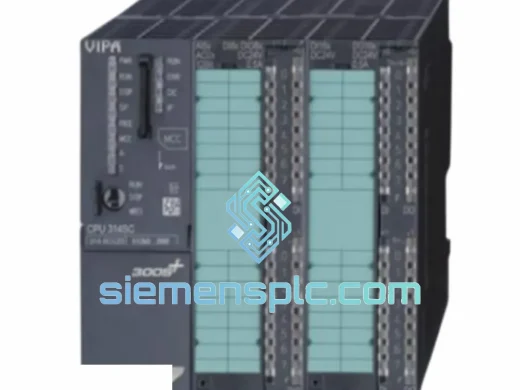
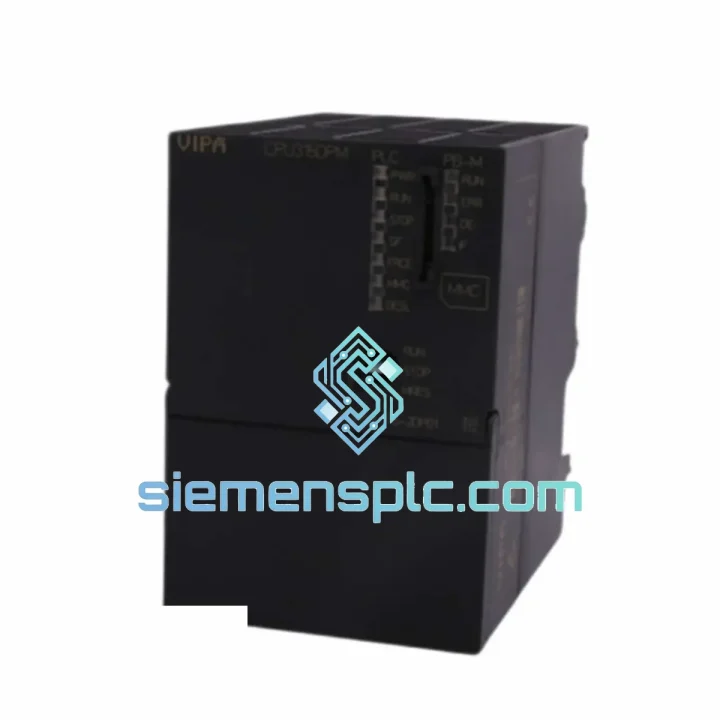
VIPA 315-2DP01 CPU315DPM PLC CPU Module – SPEED7 Series
Request verified availability, condition, replacement risk review, packing options and courier lead time for 315-2DP01.
BrandVIPA
Part Number315-2DP01
ConditionAvailability Check
Lead TimeRFQ Confirmation
DocumentsDatasheet / photos by RFQ
ShippingExport packing available
Auto-filled RFQ
315-2DP01
Click Request Quote and the part number is inserted into the inquiry form automatically.
- Reply by email: [email protected]
- WhatsApp / Tel: +86 18359268345
- Mon-Sat 9:00-18:00 GMT+8
Procurement Data
Key Product Information
Core fields for model confirmation and RFQ routing. Detailed product narrative remains below.
- Brand
- VIPA
- Primary Part Number
- 315-2DP01
- Product Type
- PLC CPU Module
- Product Family
- Other series
- Manufacturer
- VIPA GmbH (Yaskawa Group)
- Country of Origin
- DE
- Catalog Category
- Communication
- Operating Temp.
- 0 °C to +60 °C
- Warranty
- 12 months from date of shipment
Model confirmed for inquiry
315-2DP01
Send quantity, destination and urgency. The RFQ form keeps this part number attached.
Request Quote
Product Overview
VIPA 315-2DP01 CPU315DPM — SPEED7 CPU Module in S7-300 Architecture: Control Loop Role & Functional Position
The VIPA 315-2DP01, carrying the functional designation CPU315DPM, is a SPEED7-core central processing unit designed for deployment within SIMATIC S7-300-compatible rack systems. Its architectural position in a control loop is that of the deterministic program executor and PROFIBUS-DP master coordinator. Unlike a standard Siemens 315-2DP, this module integrates VIPA’s proprietary SPEED7 processing engine, which operates the user program cycle independently of the backplane communication cycle — a structural separation that eliminates the mutual blocking latency inherent in conventional S7-300 CPU designs.
In a closed-loop control architecture, the CPU315DPM occupies the position between the field-level I/O layer and the supervisory SCADA or HMI layer. It executes OB1 cyclic tasks, interrupt-driven OBs (OB35, OB40, OB82, etc.), and manages the PROFIBUS-DP master stack with a configurable polling cycle independent of the main scan cycle. This dual-cycle architecture is the defining hardware characteristic that separates SPEED7 CPUs from their Siemens counterparts at equivalent order numbers.
Real-time Stock & RFQ: [email protected] | WhatsApp: +86 18359268345
Technical Parameters
| Parameter | Specification |
|---|---|
| Manufacturer | VIPA GmbH (Yaskawa Group) |
| Order Number | 315-2DP01 |
| Functional Designation | CPU315DPM |
| Processing Core | SPEED7 (proprietary VIPA architecture) |
| Work Memory (RAM) | 512 KB integrated; expandable to 8 MB via MMC |
| Load Memory | Up to 8 MB via Siemens-compatible MMC card |
| Retentive Memory | 128 KB (battery-backed or capacitor-backed) |
| Bit Processing Speed | 0.1 µs per binary instruction (SPEED7 core) |
| Floating Point Operations | 0.6 µs per REAL instruction |
| PROFIBUS-DP Interface | 1 × integrated DP master/slave, up to 12 Mbit/s |
| MPI Interface | 187.5 kbit/s (shared physical port with DP) |
| Max. DP Slaves | 124 slaves per DP master segment |
| Max. I/O Address Space | 2 KB input / 2 KB output (via backplane + DP) |
| Backplane Bus | S7-300 K-Bus (parallel, synchronous) |
| Supply Voltage | DC 24 V via backplane (PS307 or equivalent) |
| Current Consumption (5 V bus) | ≤ 1.2 A |
| Operating Temperature | 0 °C to +60 °C |
| Storage Temperature | −40 °C to +70 °C |
| Relative Humidity | 10 % to 95 %, non-condensing |
| Protection Class | IP20 (IEC 60529) |
| Dimensions (W × H × D) | 40 mm × 125 mm × 130 mm |
| Weight | Approx. 300 g |
| Programming Environment | Siemens STEP 7 V5.x / VIPA SPEED7 Studio |
| Firmware Update | Via MMC card |
| Warranty | 12 months from date of shipment |
Hardware Logical Analysis
SPEED7 Dual-Cycle Execution Architecture: The CPU315DPM implements a hardware-level separation between the user program execution cycle and the PROFIBUS-DP communication cycle. The SPEED7 ASIC contains two independent execution pipelines: one dedicated to OB/FC/FB program processing and one managing the DP master stack. This means a DP polling cycle of 1 ms does not consume any OB1 scan time budget — a structural advantage over Siemens 315-2DP where DP communication is handled within the same processor time slice as user code.
Backplane K-Bus Interface Logic: The module interfaces with the S7-300 K-Bus via a dedicated bus interface unit (BIU) embedded in the module housing. The BIU handles all backplane arbitration independently, presenting a memory-mapped I/O image to the SPEED7 core. This architecture ensures that signal module (SM) read/write cycles do not introduce jitter into the OB35 interrupt cycle, which is critical for PID control loops requiring ≤ 1 ms determinism.
EMC Design and Isolation: The CPU315DPM’s internal PCB layout follows IEC 61000-4 series immunity requirements. The PROFIBUS-DP physical layer uses RS-485 differential signaling with integrated bus termination logic. The module passes EN 61131-2 electromagnetic compatibility tests, including 2 kV surge immunity (IEC 61000-4-5) and 4 kV ESD contact discharge (IEC 61000-4-2). The backplane connector uses gold-plated contacts rated for ≥ 100 mating cycles, maintaining contact resistance below 30 mΩ throughout service life.
Memory Architecture and Retention: Work memory is implemented as SRAM with capacitor-backed retention for power-fail scenarios. The MMC interface supports Siemens 6ES7 953-series cards, allowing program storage up to 8 MB without battery dependency. The retentive data area (M, DB, T, C) is preserved across power cycles via the internal supercapacitor, with a hold time of approximately 30 days at 25 °C ambient — eliminating battery replacement as a maintenance task in most deployment scenarios.
Interrupt Latency and OB Processing: Hardware interrupt OBs (OB40–OB47) are serviced with a maximum latency of 0.5 ms from the triggering edge at the SM input to OB40 execution start. Cyclic interrupt OBs (OB35) maintain ±0.1 ms jitter at a 10 ms base cycle. These figures are achievable because the SPEED7 core does not share interrupt arbitration bandwidth with the DP communication stack.
System Integration Benefits
- Drop-in S7-300 Compatibility: The CPU315DPM mounts on any standard S7-300 rail and is recognized by STEP 7 V5.x as a 315-2DP variant. Existing hardware configurations, symbol tables, and network projects require no structural modification for migration.
- Accelerated Scan Cycle: SPEED7 binary instruction throughput of 0.1 µs reduces OB1 cycle time by a factor of 3–10× compared to the Siemens 315-2DP (0.3 µs/instruction), directly improving closed-loop response bandwidth in time-critical applications.
- Independent DP Master Polling: The integrated DP master operates on its own hardware timer, decoupled from OB1 scan. This guarantees consistent DP bus cycle times regardless of user program complexity or interrupt load — a prerequisite for isochronous motion control via PROFIBUS.
- Expanded Address Space: With 2 KB input and 2 KB output process image, the CPU315DPM supports larger distributed I/O configurations than the standard 315-2DP (1 KB / 1 KB), reducing the need for partial process image updates (UPDAT_PI/UPDAT_PO) in large installations.
- Diagnostic Transparency: The module populates standard S7 diagnostic buffers (OB82, OB86) with structured fault records including timestamp, module address, and fault class. PROFIBUS-DP slave diagnostics are forwarded to the CPU diagnostic buffer, enabling centralized fault analysis without additional diagnostic tools.
- MMC-Based Firmware and Program Management: Program upload, firmware update, and CPU initialization are all performed via the MMC slot without requiring a programming cable connection. This simplifies field replacement procedures and reduces commissioning time in remote installations.
- Reduced Panel Wiring Complexity: The integrated DP master eliminates the need for a separate CP342-5 communication processor in single-network architectures, freeing one rack slot and reducing 24 V bus current draw by approximately 200 mA.
- Long-Term Supply Chain Stability: As a Yaskawa Group product, VIPA components maintain a documented 10-year production lifecycle commitment, providing a reliable procurement path for long-running plant installations where Siemens 315-series availability is constrained.
Quality Assurance & Global Logistics
Every VIPA 315-2DP01 CPU315DPM unit supplied by siemensplc.com is sourced through verified industrial distribution channels. Units are inspected against VIPA’s published hardware revision documentation, with firmware version and label authenticity cross-referenced prior to dispatch. A 12-month warranty from shipment date covers manufacturing defects and functional failures under normal operating conditions.
Logistics operations are based in Xiamen, Fujian Province, China — a major export hub with direct access to international freight carriers. Standard dispatch lead time for in-stock units is 1–3 business days. Shipping options include DHL Express (3–5 days to Europe/North America), FedEx International Priority, and UPS Worldwide Express. For bulk orders exceeding 10 units, sea freight consolidation via Xiamen Port is available with full export documentation including commercial invoice, packing list, and HS code 8537.10 classification certificate.
All shipments comply with applicable export control regulations. Country-of-origin documentation and CE declaration of conformity are available upon request. Anti-static ESD packaging (ANSI/ESD S541 compliant) is used for all CPU modules. Each unit is individually serial-number logged in our dispatch records, supporting traceability for warranty claims and customs verification.
Contact Information
Email: [email protected]
WhatsApp: +86 18359268345
Web: siemensplc.com
Location: Xiamen, China
© 2026 siemensplc.com. All rights reserved.
Ready to quote
[email protected]
Send This Part Number to Sales
RFQ workflow
Quality workflow ->
Confirmation Process
01Model confirmation
We check the full part number, brand, series and visible nameplate information before quotation.
02Availability reply
Sales confirms stock path, condition option, quantity and realistic lead time for export dispatch.
03Packing & courier
DHL, FedEx, UPS or buyer courier arrangements can be reviewed with packing requirements.
Continue sourcing
Browse full catalog ->
Related Automation Parts
Similar brand or category products for fast comparison and multi-item RFQ lists.