Westinghouse
RFQ Ready
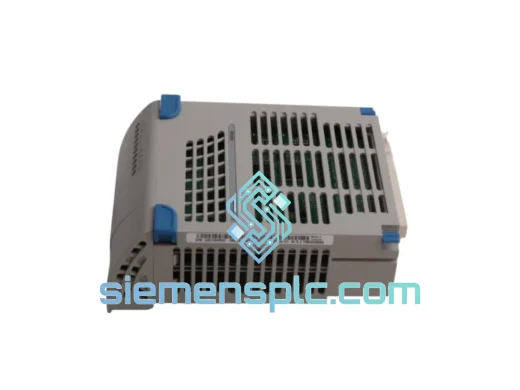
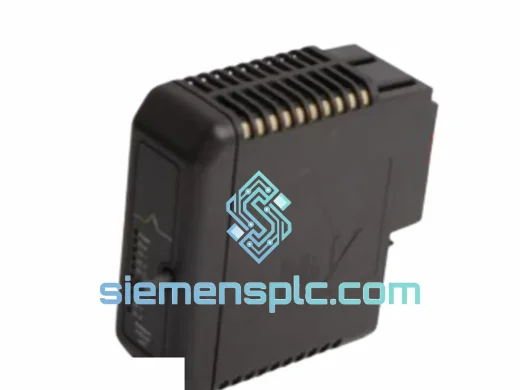
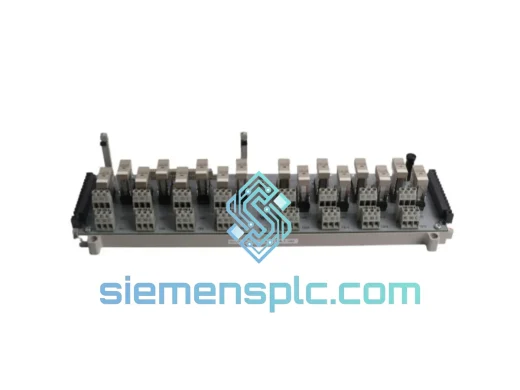
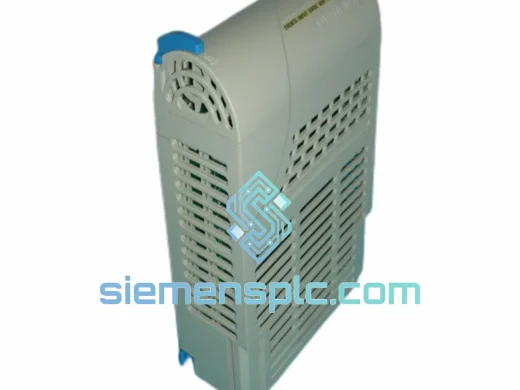
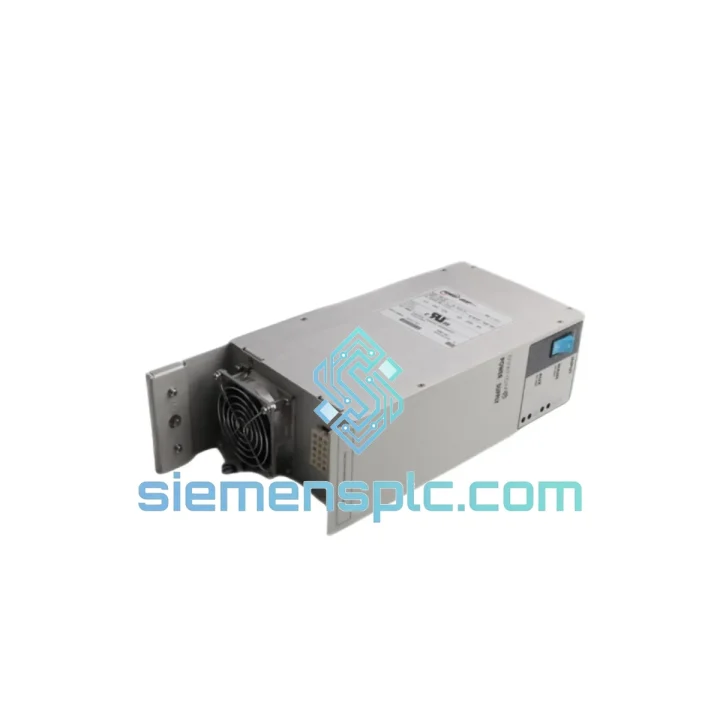
Westinghouse 5X00357G05 Programmable Controller
WDPF
Origin US
Programmable Controller
Request verified availability, condition, replacement risk review, packing options and courier lead time for WH5-2FF.
Click Request Quote and the part number is inserted into the inquiry form automatically.
Core fields for model confirmation and RFQ routing. Detailed product narrative remains below.
In a Westinghouse WDPF (Westinghouse Distributed Processing Family) control architecture, every I/O card, node controller, and fieldbus interface draws its operating power from a single regulated source within the cabinet. The WH5-2FF 1X00416H01 occupies that position. It is not a peripheral accessory — it is the primary DC power conditioning unit that determines whether the entire node remains operational or collapses under transient load, input voltage sag, or thermal stress. Plants running WDPF systems in power generation, hydrocarbon processing, and pulp-and-paper manufacturing have relied on this module for continuous 24/7 operation across decades of service. Understanding its internal architecture explains why.
The WH5 series was designed around a linear regulation topology rather than a switching architecture, a deliberate engineering choice for the DCS environment. Linear regulators inherently produce lower conducted noise on the output rail — a critical property when the downstream loads include analog input cards with 12-bit or 16-bit resolution. A switching supply operating at 50–200 kHz introduces ripple that, without extensive filtering, couples into low-level signal conditioning circuits and degrades measurement accuracy. The WH5-2FF eliminates this risk by maintaining a clean, low-impedance DC output whose noise floor is measured in millivolts rather than tens of millivolts. For a WDPF node processing 4–20 mA thermocouple or RTD signals, this distinction is not academic — it is the difference between a ±0.1% measurement and a ±0.5% measurement under loaded conditions.
The 1X00416H01 variant within the WH5-2FF family is configured for the standard WDPF node cabinet backplane voltage requirements. The module accepts a wide-range AC input, passes it through an internal transformer stage for galvanic isolation, and delivers regulated DC to the cabinet bus. Galvanic isolation between the AC mains and the DC output bus is a fundamental safety and EMC requirement in industrial control panels: it prevents ground loops from propagating common-mode noise from the plant electrical distribution network into the control system’s signal ground reference. In environments where large motors, variable-frequency drives, and arc furnaces share the same facility power infrastructure, this isolation is the first line of defense against measurement corruption and spurious controller trips.
The module’s thermal design reflects the operating environment it was built for. WDPF cabinets are typically installed in control rooms or marshalling enclosures where ambient temperatures can reach 40–55°C under summer conditions or during HVAC failures. The WH5-2FF 1X00416H01 is rated for continuous operation across this range without derating, achieved through conservative component selection and a heatsink geometry that promotes natural convection airflow within the cabinet. The absence of forced-air cooling fans within the module itself eliminates a common failure mode — fan bearing wear — that plagues switching power supplies in long-term industrial deployments.
Redundancy is a non-negotiable requirement in continuous-process DCS applications. The WH5-2FF supports parallel redundant power supply configurations within the WDPF node cabinet. Two modules can be installed simultaneously, with their outputs connected to the cabinet bus through diode-OR or active-OR circuitry. In this configuration, the failure of one module does not interrupt power to the node — the surviving module assumes the full load without a voltage transient that could cause controller resets. This architecture allows hot-swap replacement of a failed module during live plant operation, a capability that is essential in facilities where scheduled maintenance windows are measured in hours per year.
The physical form factor of the 1X00416H01 is designed for the WH5 series cabinet slot geometry. The module slides into a dedicated power supply bay within the WDPF node enclosure and connects to the backplane through a keyed edge connector. The keying prevents incorrect module insertion — a protection mechanism that matters in environments where maintenance personnel may be working under time pressure during an unplanned outage. The front panel includes status indicators that provide immediate visual confirmation of output voltage within specification, allowing a technician to verify module health without instrumentation.
From a procurement standpoint, the WH5-2FF 1X00416H01 is a long-lifecycle component. Westinghouse WDPF systems were installed in large numbers during the 1980s and 1990s, and many of these installations remain in active service. The original equipment manufacturer no longer produces this module as a new part, which means the global supply is drawn from tested surplus, new-old-stock inventory, and professionally refurbished units. Sourcing from a supplier with documented testing procedures and traceability records is therefore not optional — it is the only way to ensure that a replacement module will perform to the original specification rather than introducing a new failure point into a system that was otherwise stable.
Real-time Stock & RFQ: [email protected] | WhatsApp: +86 18359268345
| Parameter | Value / Specification |
|---|---|
| Part Number | WH5-2FF |
| Variant / Revision | 1X00416H01 |
| Manufacturer | Westinghouse Electric Corporation |
| Platform | WDPF (Westinghouse Distributed Processing Family) |
| Module Function | Regulated DC Power Supply for WDPF Node Cabinet |
| Regulation Topology | Linear (low-noise, low-ripple output) |
| Input Isolation | Galvanic isolation, AC mains to DC output bus |
| Redundancy Support | Parallel redundant (N+1) configuration compatible |
| Cooling Method | Natural convection, no internal fan |
| Form Factor | Rack-mount, WH5 series cabinet slot |
| Connector Interface | Keyed backplane edge connector |
| Status Indication | Front-panel LED, output voltage in-spec confirmation |
| Weight | 3.12 kg |
| Operating Temperature | 0°C to +55°C continuous, no derating |
| Warranty | 12 months from date of shipment |
| Condition | Genuine OEM — tested surplus / new-old-stock (confirmed at order) |
The WH5-2FF 1X00416H01 implements several hardware-level design decisions that distinguish it from generic industrial power supplies:
Linear Regulation and Output Noise Floor: The linear pass element maintains a continuous conduction path between input and output, with the control loop adjusting the pass transistor’s base drive to hold the output voltage constant against load and line variations. This topology produces an output noise spectral density that is orders of magnitude lower than a PWM switching converter at equivalent power levels. For WDPF analog I/O cards operating at full 16-bit resolution, the power supply noise floor directly sets the measurement noise floor — a specification that cannot be recovered downstream through software filtering without sacrificing dynamic response.
Galvanic Isolation and Common-Mode Rejection: The internal transformer stage provides a defined isolation barrier between the AC input and the DC output. This barrier breaks the conductive path for common-mode currents that would otherwise flow from the plant ground network through the power supply into the control system’s signal reference. In facilities with large variable-frequency drives or arc welding equipment, common-mode voltages of 10–50 V at frequencies from DC to several kilohertz are routinely present on the facility ground. Without isolation, these voltages appear as offsets and noise on analog measurement channels. The WH5-2FF’s isolation barrier attenuates this interference to levels below the measurement resolution of the connected I/O cards.
Redundant Output Architecture: The module’s output stage is designed for parallel operation with a second WH5-2FF unit. The output impedance characteristics and voltage setpoint tolerance are matched to allow current sharing between two modules without requiring active load-balancing circuitry. The diode-OR output configuration ensures that a failed module — including a short-circuit failure mode — does not pull down the cabinet bus voltage, because the reverse-biased diode in the failed module’s output path blocks reverse current flow from the healthy module.
EMC Design: Input filtering on the AC side suppresses conducted emissions from the power supply back onto the facility power network, maintaining compliance with industrial EMC standards. The module’s metal enclosure provides shielding against radiated emissions from the internal transformer and pass element, preventing interference with adjacent communication modules in the WDPF cabinet.
Every WH5-2FF 1X00416H01 unit dispatched from our Xiamen, China facility undergoes a structured acceptance process before it is offered for sale. Visual inspection confirms the absence of physical damage, corrosion on connector pins, and component-level anomalies on the PCB. Functional testing verifies that the output voltage is within the original Westinghouse specification under both no-load and rated-load conditions. Units that pass both stages are logged with a unique inspection reference number that accompanies the shipment documentation.
Packaging is anti-static and shock-protected, using foam-lined cartons sized to the module’s physical dimensions to prevent movement during air freight or courier transit. We ship internationally from Xiamen via DHL Express, FedEx International Priority, and UPS Worldwide Expedited, with typical transit times of 3–7 business days to North America, Europe, Southeast Asia, and the Middle East. Export documentation — including commercial invoice, packing list, and certificate of origin — is prepared in compliance with the destination country’s import requirements. For orders requiring expedited customs clearance, we provide HS code classification support and pre-shipment documentation review.
All units are covered by a 12-month warranty from the date of shipment. Warranty claims are handled directly by our technical team, with replacement or credit resolution within 10 business days of receiving the returned unit and inspection confirmation.
Email: [email protected]
WhatsApp: +86 18359268345
Web: siemensplc.com
Location: Xiamen, China
© 2026 siemensplc.com. All rights reserved.
We check the full part number, brand, series and visible nameplate information before quotation.
Sales confirms stock path, condition option, quantity and realistic lead time for export dispatch.
DHL, FedEx, UPS or buyer courier arrangements can be reviewed with packing requirements.
Similar brand or category products for fast comparison and multi-item RFQ lists.