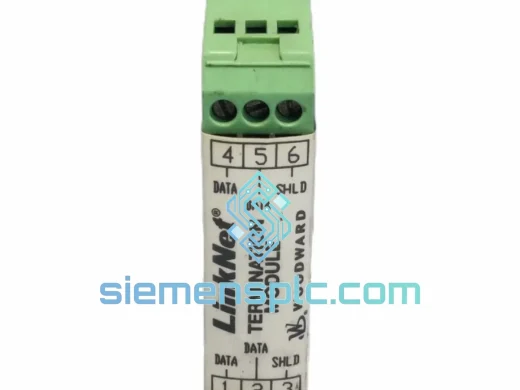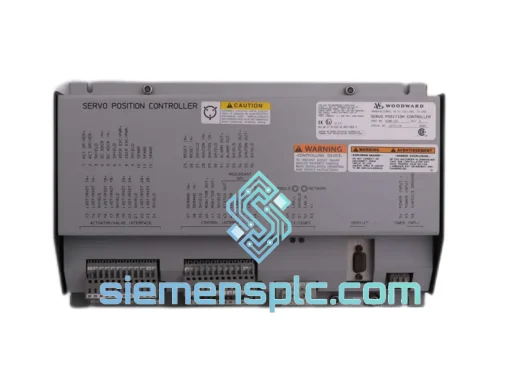
Woodward
RFQ Ready
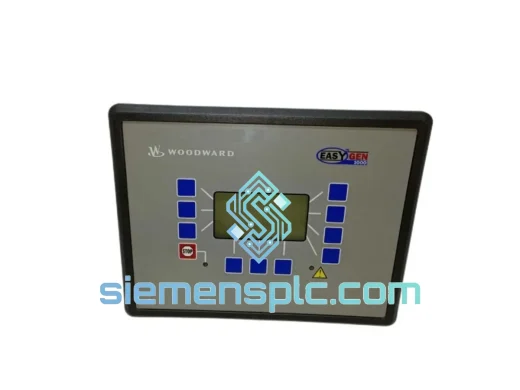
WOODWARD EASYGEN-1000 8440-1809 Genset Controller
LCD 12/24VDC
Origin US
Genset Controller
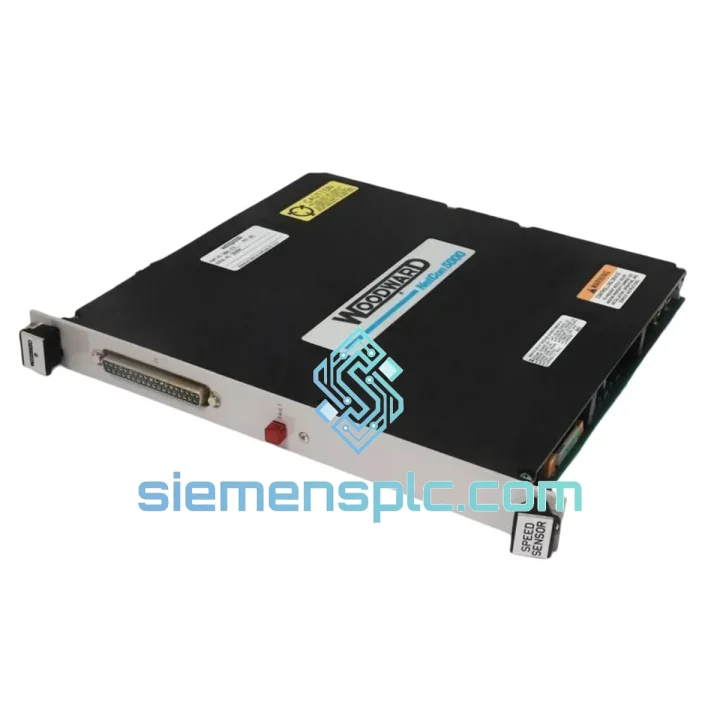
Request verified availability, condition, replacement risk review, packing options and courier lead time for 5464-544.
Click Request Quote and the part number is inserted into the inquiry form automatically.
Core fields for model confirmation and RFQ routing. Detailed product narrative remains below.
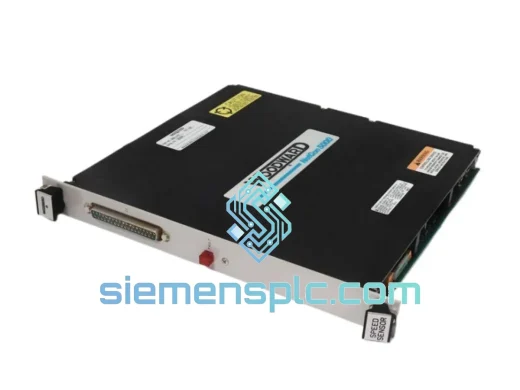
The WOODWARD 5464-544 occupies a structurally critical position within the MicroNet distributed control platform. Unlike analog input cards or discrete output modules that interact directly with field instruments, the 5464-544 operates one layer deeper — it governs the deterministic serial data link between the master controller chassis and remote I/O expansion racks. In any MicroNet installation where the field termination panels are physically separated from the controller enclosure, this module is the sole conduit through which the CPU maintains scan-cycle visibility to remote process variables. Loss of this link does not degrade control performance gradually; it severs it entirely. That architectural reality defines the engineering weight this component carries in gas turbine governor systems, steam turbine speed control loops, and compressor anti-surge applications across the power generation and hydrocarbon processing sectors.
The module slots into the master MicroNet chassis and establishes a high-speed, differential serial connection to a corresponding transceiver or remote I/O assembly in the expansion rack. The MicroNet CPU treats the remote rack as a logical extension of its own backplane — scan cycle timing, I/O addressing, and diagnostic polling all traverse the 5464-544 link transparently. The application program requires no modification to accommodate remote rack topology; the transceiver layer is invisible to the control logic. This architectural transparency is a deliberate design choice that simplifies system commissioning and reduces the risk of configuration errors during rack expansion projects.
Real-time Stock & RFQ: [email protected] | WhatsApp: +86 18359268345
| Parameter | Specification |
|---|---|
| Part Number | 5464-544 |
| Manufacturer | WOODWARD |
| Platform | MicroNet Distributed Control System |
| Module Function | High-speed serial remote transceiver for chassis-to-rack communication |
| Communication Interface | Differential serial, MicroNet proprietary protocol |
| Signal Transmission | Balanced differential pair; inherent common-mode noise rejection |
| Optical Isolation | Opto-isolated communication lines; galvanic separation between chassis and cable |
| Supply Voltage | 24 VDC nominal, sourced from MicroNet backplane power rail |
| Form Factor | Single-slot MicroNet rack module; proprietary backplane edge connector |
| Operating Temperature | 0 °C to +60 °C |
| Storage Temperature | −40 °C to +85 °C |
| Relative Humidity | 5 % to 95 % RH, non-condensing |
| Vibration Tolerance | Qualified for turbine control panel environments per WOODWARD platform standards |
| Certifications | CE; UL/cUL under MicroNet system listing; SIL applicability per system-level assessment |
| Weight (as shipped) | 960 g |
| Warranty | 12 months from date of shipment |
The 5464-544 implements a differential serial transceiver topology rather than a single-ended RS-232 or TTL interface. Differential signaling means the receiver evaluates the voltage difference between two conductors rather than the absolute voltage on a single wire. In a turbine control panel environment — where high-power motor drives, ignition systems, and high-current bus bars generate broadband electromagnetic interference — common-mode noise couples equally onto both conductors of a differential pair and is rejected at the receiver input stage. This is not a passive filter; it is a fundamental property of the differential architecture that provides noise immunity proportional to the common-mode rejection ratio (CMRR) of the receiver IC, typically exceeding 60 dB in industrial-grade transceivers.
The optical isolation stage on the communication lines introduces a galvanic break between the MicroNet chassis ground reference and the cable shield. This prevents ground loop currents — which arise when two chassis at different ground potentials are connected by a shielded cable — from injecting noise into the data stream. In multi-chassis installations where the controller enclosure and the remote I/O panel are powered from different distribution boards, ground potential differences of several volts are common. Without optical isolation, these differences appear as differential noise on the serial link and can cause framing errors or data corruption at the receiver. The 5464-544 eliminates this failure mode by design.
The backplane interface of the 5464-544 connects directly to the MicroNet internal bus, which operates on a deterministic, time-division multiplexed (TDM) schedule managed by the CPU module. The transceiver module does not introduce additional latency beyond the fixed propagation delay of the serial link; it does not buffer or reformat data. This pass-through architecture preserves the scan-cycle determinism that turbine governor applications require — a missed or delayed I/O update during a load rejection transient can result in overspeed protection activation or, in worst cases, turbine trip. The 5464-544’s transparent relay function ensures that remote rack I/O data arrives at the CPU within the same scan window as local backplane data, subject only to cable propagation delay.
The module’s single-slot form factor and proprietary backplane connector enforce correct installation orientation and prevent cross-slot insertion errors. The connector pinout is keyed to the MicroNet chassis slot assignment for transceiver modules, which means the module cannot be physically installed in an I/O slot — a mechanical interlock that eliminates a class of commissioning errors that would otherwise require firmware-level diagnosis to identify.
Every WOODWARD 5464-544 unit offered through siemensplc.com is sourced from verified channels including decommissioned industrial control system overhauls, authorized distributor surplus, and documented secondary market suppliers with traceable part provenance. Before any unit is listed for sale, it passes a structured inspection protocol: board-level visual examination for corrosion, thermal damage, and connector integrity; part number and revision suffix verification against WOODWARD documentation; and functional bench testing where MicroNet-compatible test fixtures are available to confirm communication link establishment prior to dispatch.
Units are packaged in ESD-safe anti-static bags, placed in foam-lined cartons dimensioned to prevent transit movement, and sealed with humidity indicator cards for international shipments crossing moisture-sensitive logistics corridors. High-resolution photographs of the specific unit — showing label, revision marking, connector condition, and board surface — are available upon request before order confirmation, allowing procurement engineers to verify physical condition against their acceptance criteria without waiting for delivery.
Dispatch originates from Xiamen, China. Standard international shipment is via DHL Express or FedEx International Priority, with typical transit times of 3–5 business days to Europe, North America, Southeast Asia, and the Middle East. Sea freight consolidation is available for multi-unit orders where delivery timeline permits. Export documentation — including commercial invoice, packing list, and certificate of origin — is prepared to customs clearance standards for the destination country. HS code classification and ECCN determination are provided on request to support import compliance review.
A 12-month warranty covers manufacturing defects and functional failure under normal operating conditions. Warranty claims are processed with a replacement-first policy: a replacement unit is dispatched upon receipt of the failed module, minimizing downtime for installations where a spare is not held on-site.
Email: [email protected]
WhatsApp: +86 18359268345
Web: siemensplc.com
Location: Xiamen, China
© 2026 siemensplc.com. All rights reserved.
We check the full part number, brand, series and visible nameplate information before quotation.
Sales confirms stock path, condition option, quantity and realistic lead time for export dispatch.
DHL, FedEx, UPS or buyer courier arrangements can be reviewed with packing requirements.
Similar brand or category products for fast comparison and multi-item RFQ lists.