Woodward
RFQ Ready
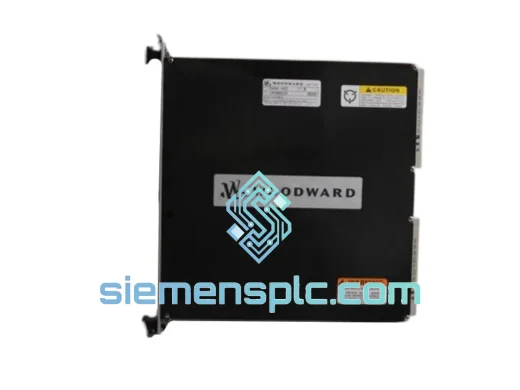
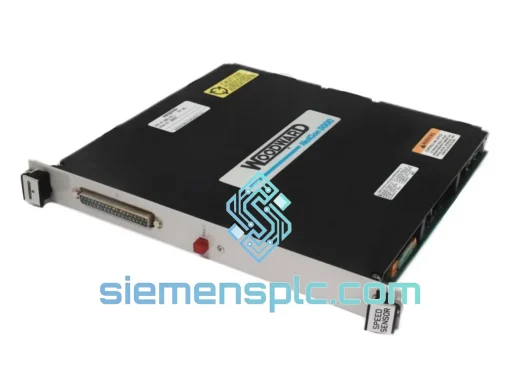
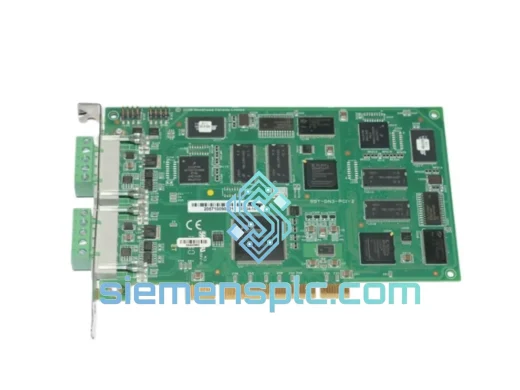
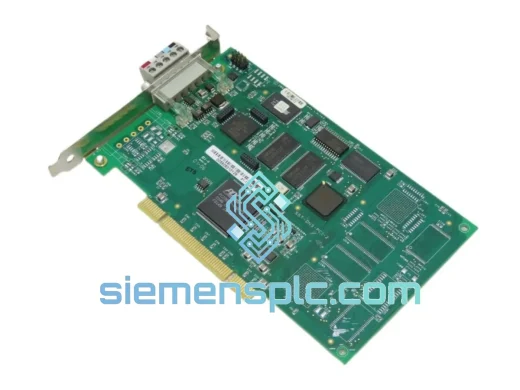
WOODWARD SST-DN4-102-2 VME Bus Interface Module – SST Series
Origin US
VME Bus Interface Module
Request verified availability, condition, replacement risk review, packing options and courier lead time for 8440-1750.
Click Request Quote and the part number is inserted into the inquiry form automatically.
Core fields for model confirmation and RFQ routing. Detailed product narrative remains below.
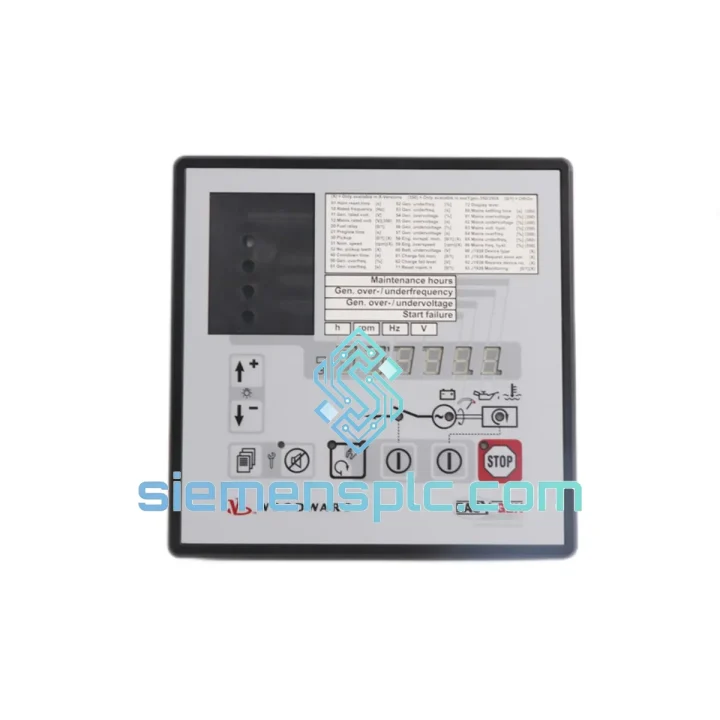
The WOODWARD 8440-1750 EasyGen-1500-55B is a dedicated genset management controller designed to consolidate speed governing interface, voltage regulation interface, protection relay functions, synchronization, and load sharing into a single panel-mount unit. It targets diesel and gas reciprocating engine genset applications where deterministic protection response, multi-unit parallel operation, and SCADA integration are mandatory requirements. The controller operates across an 8–35 VDC supply range, tolerating battery voltage sag during engine cranking sequences—a critical characteristic for automatic mains failure (AMF) applications where auxiliary battery condition cannot be guaranteed.
At its core, the EasyGen-1500-55B executes protection functions on a real-time kernel that is architecturally separated from the HMI and communication tasks. This separation ensures that ANSI 27/59/81/32/46/51 protection trips are not delayed by Modbus polling cycles or display refresh operations. Measured trip response from fault detection to relay output activation is under 20 ms for voltage and frequency protection elements—a figure that satisfies the protection coordination requirements of most utility interconnection agreements and classification society rules for marine power systems.
The synchronizer module within the 8440-1750 continuously monitors phase angle difference, voltage magnitude difference, and frequency difference between the incoming generator and the live busbar. A close command is issued only when all three parameters simultaneously fall within user-configured windows. Dead-bus detection logic prevents inadvertent live-bus closing onto a de-energized bus, and the check-sync relay output provides a hardware interlock to the breaker closing coil. This architecture eliminates the need for a separate synchronizing relay (ANSI 25), reducing panel component count and associated wiring fault probability.
Load sharing between parallel gensets is implemented via a dedicated CAN bus load-share line. Each EasyGen-1500-55B on the network broadcasts its measured real power output and receives the aggregate plant load data. The load-share algorithm computes the required governor reference adjustment for each unit to maintain proportional loading relative to rated kW capacity. Steady-state load deviation between units is held below 1% of rated kW under stable grid conditions. The network supports up to 32 controllers, covering genset plant sizes from small island-mode microgrids to large industrial captive power stations.
The controller provides two analog output channels (0–20 mA or 4–20 mA, software-selectable) for governor actuator and AVR interface. These outputs drive external governor actuators (e.g., WOODWARD ProAct, EG3P) and compatible AVRs directly, without requiring intermediate signal conditioning. Twelve configurable digital inputs accept dry-contact or voltage signals for external interlock wiring, AMF logic inputs (mains breaker auxiliary contact, bus voltage presence), and engine protection sensor inputs (coolant temperature, oil pressure, fuel level). Seven relay outputs (5 A, 250 VAC rated) drive contactors, alarm annunciators, and breaker trip coils directly.
Communication is provided via CAN bus (J1939 and CANopen protocol support) and Modbus RTU over RS-485. An optional Modbus TCP module extends connectivity to Ethernet-based SCADA and DCS systems without replacing the RS-485 wiring infrastructure. The Modbus register map (documented in WOODWARD publication 26839) exposes all measured values, protection status bits, setpoint parameters, and event log entries to the supervisory system, enabling full remote monitoring and parameter adjustment without local panel access.
The front panel provides a backlit 4-line × 20-character LCD display and a membrane keypad for local parameter viewing and setpoint adjustment. All configuration parameters are stored in non-volatile memory and retained through power cycling. The unit mounts in a standard 144 × 144 mm panel cutout, with a DIN rail adapter available for rail-mount installations. Operating temperature range is −20°C to +70°C, covering outdoor tropical and cold-climate installations without derating.
📩 Real-time Stock & RFQ: [email protected] | WhatsApp: +86 18359268345
| Part Number | 8440-1750 |
| Model Designation | EasyGen-1500-55B |
| Manufacturer | WOODWARD |
| Auxiliary Supply Voltage | 8–35 VDC (battery-tolerant, cranking-safe) |
| Auxiliary Supply Current | ≤ 250 mA at 24 VDC nominal |
| Generator Voltage Input | Up to 690 VAC line-to-line; configurable PT ratio for MV applications |
| Mains Voltage Input | Up to 690 VAC line-to-line; independent measurement channel |
| Frequency Measurement Range | 40–70 Hz (covers 50 Hz and 60 Hz systems) |
| Current Input | 1 A or 5 A CT secondary (software-selectable) |
| Digital Inputs | 12 configurable, dry-contact or voltage-sensing |
| Relay Outputs | 7 × SPDT, 5 A / 250 VAC rated |
| Analog Outputs | 2 × 0–20 mA / 4–20 mA (software-selectable per channel) |
| CAN Bus | J1939 / CANopen, up to 32 nodes on load-share network |
| Serial Communication | Modbus RTU, RS-485, 2-wire |
| Ethernet (Optional) | Modbus TCP via optional expansion module |
| Protection Functions | ANSI 27/59 (voltage), 81U/81O (frequency), 32 (reverse power), 46 (negative sequence current), 51/51N (overcurrent/earth fault) |
| Synchronizer | Automatic, with check-sync relay; dead-bus and live-bus closing modes |
| Load Sharing Modes | Isochronous (kW-based) and droop; proportional to rated capacity |
| Protection Trip Response | < 20 ms from fault detection to relay output |
| Display | Backlit LCD, 4 lines × 20 characters |
| Operating Temperature | −20°C to +70°C |
| Storage Temperature | −40°C to +85°C |
| Relative Humidity | 5–95% RH, non-condensing |
| Panel Cutout | 138 × 138 mm (fits 144 × 144 mm standard cutout) |
| Overall Dimensions | 144 × 144 × 65 mm (H × W × D) |
| Weight | Approx. 0.8 kg |
| Certifications | CE, UL, cUL, DNV GL Type Approval |
| EMC Immunity | IEC 61000-4-2/3/4/5/6/8/11 |
| Vibration | IEC 60068-2-6 Test Fc |
| Warranty | 12 months from date of shipment |
Real-Time Kernel Isolation: The EasyGen-1500-55B firmware partitions execution into two independent task domains. The protection and measurement domain runs on a fixed-cycle real-time interrupt with a 1 ms base period, ensuring that voltage, frequency, current, and power measurements are updated and protection thresholds evaluated every millisecond regardless of HMI or communication load. The application domain handles Modbus register servicing, LCD refresh, and keypad scanning at lower priority. This architecture prevents communication bus saturation or display rendering from introducing latency into the protection trip path—a failure mode observed in single-threaded genset controllers where heavy Modbus polling has caused protection delays exceeding 200 ms.
Analog Output Signal Conditioning: The two 0–20 mA / 4–20 mA analog outputs are generated by 12-bit DACs with hardware low-pass filtering on each channel. The governor output channel updates at 10 ms intervals, providing smooth speed reference signals to proportional governor actuators without step-change artifacts that could induce engine speed hunting. The AVR output channel is independently configurable for voltage droop slope (0–10% per unit) and reactive power (VAR) control mode, enabling power factor correction without external VAR controllers.
EMC Design and Isolation Architecture: All digital input circuits incorporate optical isolation with a minimum 2.5 kV isolation voltage, protecting the controller’s internal logic from ground potential differences and transient voltages induced by contactor switching on the same panel. The relay output contacts are rated for 5 A at 250 VAC resistive, with arc suppression networks on inductive loads. The RS-485 communication port includes common-mode choke filtering and transient voltage suppression (TVS) diodes rated for IEC 61000-4-5 Level 4 surge immunity (4 kV open-circuit, 2 kA short-circuit). These measures allow the controller to operate reliably in panels adjacent to variable frequency drives (VFDs) and large contactors without requiring additional external EMC filters.
Non-Volatile Parameter Storage: All setpoints, configuration parameters, and event log entries are stored in internal EEPROM with write-cycle endurance exceeding 1,000,000 cycles. The event log retains the last 99 events with timestamps referenced to the internal real-time clock (RTC), which is battery-backed to maintain timekeeping through power outages. This event log is accessible via Modbus registers and the front-panel display, providing post-incident analysis capability without external data logging hardware.
Every WOODWARD 8440-1750 EasyGen-1500-55B unit offered through siemensplc.com is sourced from verified supply channels with documented chain of custody. Units are inspected against a four-stage protocol: visual and physical examination of enclosure integrity, connector condition, and label authenticity; functional power-on verification of LCD, keypad, and communication port activity with firmware version logging; I/O continuity and isolation resistance testing (>100 MΩ at 500 VDC) across all digital input and relay output channels; and Modbus RTU register map verification via RS-485 test bench with CAN bus node confirmation. Inspection records and unit-specific test reports are available upon request.
Shipments originate from Xiamen, China, with dispatch within 1–3 business days of payment confirmation. Export documentation—commercial invoice, packing list, certificate of origin, and HS code declaration—is prepared for all international shipments to facilitate customs clearance. Preferred carriers are DHL Express and FedEx International Priority for time-sensitive orders; sea freight consolidation is available for bulk orders. Anti-static packaging with shock-absorbing foam inserts is standard. All units carry a 12-month warranty from the date of shipment covering manufacturing defects and functional failures under normal operating conditions.
📧 Email: [email protected]
📱 WhatsApp: +86 18359268345
🌐 Web: siemensplc.com
📍 Location: Xiamen, China
© 2026 siemensplc.com. All rights reserved.
We check the full part number, brand, series and visible nameplate information before quotation.
Sales confirms stock path, condition option, quantity and realistic lead time for export dispatch.
DHL, FedEx, UPS or buyer courier arrangements can be reviewed with packing requirements.
Similar brand or category products for fast comparison and multi-item RFQ lists.