Woodward
RFQ Ready
WOODWARD PCU1000 PCI Communication Module
Fast Replacement
Origin US
PCI Communication Module
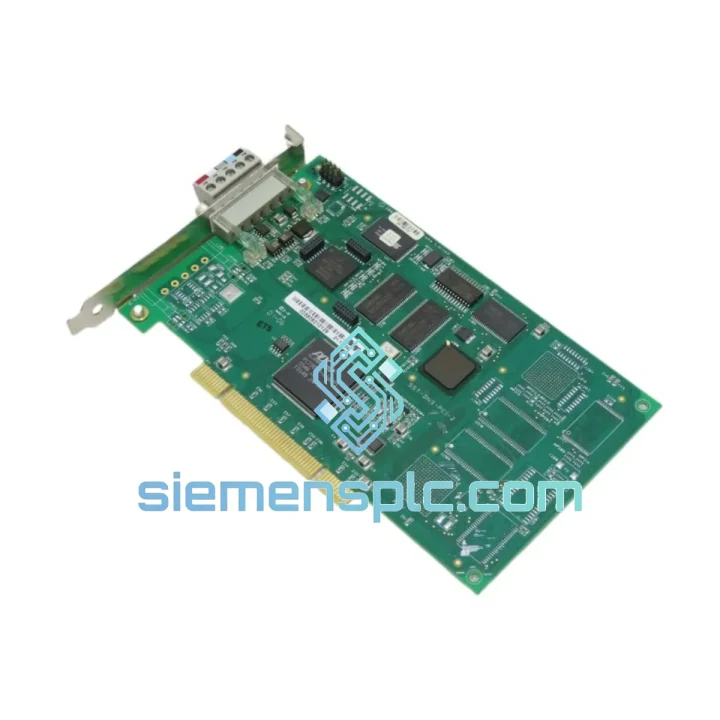
Request verified availability, condition, replacement risk review, packing options and courier lead time for SST-DN4-102-2.
Click Request Quote and the part number is inserted into the inquiry form automatically.
Core fields for model confirmation and RFQ routing. Detailed product narrative remains below.
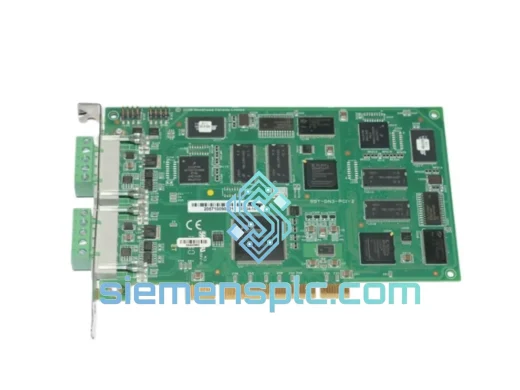
The SST-DN4-102-2 is a single-slot 6U VMEbus DeviceNet master/slave interface card manufactured under the SST product line, now part of WOODWARD’s industrial controls portfolio. It occupies a single VME slot and presents a memory-mapped register interface to the host CPU board, enabling deterministic, interrupt-driven DeviceNet network management without burdening the main processor with protocol stack execution. In turbine governor systems, compressor control panels, and power generation platforms where VMEbus remains the backplane standard, this module functions as the sole communication bridge between the deterministic VME control domain and the CAN-physical-layer DeviceNet field device network.
Unlike software-only DeviceNet stacks running on a general-purpose CPU, the SST-DN4-102-2 offloads all DeviceNet MAC-layer arbitration, node commissioning, and I/O scan table management to an onboard dedicated controller. The host VME processor interacts with the module through a dual-port RAM (DPRAM) interface, reading and writing structured I/O image tables at deterministic latency — typically sub-millisecond for polled I/O — without waiting for CAN bus arbitration cycles to complete. This architecture is essential in closed-loop turbine speed control or compressor surge protection applications where scan jitter directly affects control loop stability.
📩 Real-time Stock & RFQ: [email protected] | WhatsApp: +86 18359268345
| Parameter | Specification |
|---|---|
| Part Number | SST-DN4-102-2 |
| Manufacturer | WOODWARD (SST product line) |
| Form Factor | 6U VMEbus, single slot |
| Bus Standard | ANSI/IEEE 1014 VMEbus (A24/D16, A32/D32) |
| Network Protocol | DeviceNet (ISO 11898 CAN physical layer) |
| DeviceNet Spec | ODVA DeviceNet Specification Release 2.0 |
| Network Ports | 1 × DeviceNet port (5-pin open-style connector) |
| Node Capacity | Up to 64 nodes per network segment (MAC ID 0–63) |
| Supported Baud Rates | 125 kbps / 250 kbps / 500 kbps |
| I/O Messaging Modes | Polled, Strobe, Change-of-State (COS), Cyclic |
| Host Interface | Dual-port RAM (DPRAM), memory-mapped |
| Operating Voltage | +5 VDC via VME backplane (P1 connector) |
| Power Consumption | ≤ 5 W typical |
| Operating Temperature | 0 °C to +60 °C |
| Storage Temperature | −40 °C to +85 °C |
| Relative Humidity | 5 % to 95 % RH, non-condensing |
| EMC Compliance | IEC 61000-4-2 (ESD), IEC 61000-4-4 (EFT), IEC 61000-4-6 (conducted RF) |
| Firmware | Field-upgradeable via SST DeviceNet Configuration Utility |
| Weight | Approx. 300 g |
| Warranty | 12 months from date of shipment |
The SST-DN4-102-2 is built around a dedicated DeviceNet controller ASIC paired with an onboard microprocessor that manages the full DeviceNet protocol stack independently of the VME host CPU. The CAN transceiver is galvanically isolated from the VME backplane ground plane through an optocoupler barrier rated at ≥ 500 V isolation, which eliminates ground loop currents between the VME chassis and the DeviceNet trunk cable — a common source of intermittent communication faults in industrial environments with multiple grounding points across large plant floors.
The DPRAM interface between the onboard controller and the VME bus uses a hardware semaphore arbitration scheme. Both the VME host and the onboard DeviceNet processor can request exclusive access to shared memory regions; the semaphore logic prevents simultaneous write collisions without requiring software polling loops on the host side. This allows the host CPU to service the DeviceNet I/O image table via VME interrupt (IRQ1–IRQ7 selectable) rather than continuous polling, freeing host CPU cycles for control algorithm execution.
EMC hardening on the SST-DN4-102-2 includes multi-layer PCB construction with dedicated ground planes, ferrite bead filtering on all power supply rails entering the board, and TVS diode arrays on the DeviceNet connector pins to clamp transient voltages from cable-induced surges. The CAN bus differential pair is routed with controlled impedance (120 Ω characteristic impedance matching the DeviceNet trunk cable specification) to minimize signal reflections at high baud rates. These design choices allow reliable 500 kbps operation on trunk cables up to 100 m — the maximum permitted by the DeviceNet specification at that baud rate.
The module supports both Group 2 Only slave mode and full master mode with configurable scan list tables stored in onboard non-volatile memory. Scan list entries define each slave node’s expected I/O data size, connection type, and expected packet rate (EPR), enabling the module to autonomously detect node failures and assert a configurable fault output to the host via the DPRAM status register — without requiring the host CPU to monitor individual CAN frames.
Every SST-DN4-102-2 unit supplied through siemensplc.com is sourced from verified industrial channels and undergoes a structured pre-shipment inspection process. Physical inspection covers PCB label integrity, firmware revision markings, connector condition, and absence of remarking or repackaging indicators. Functional verification confirms DeviceNet communication establishment, baud rate negotiation, and DPRAM register accessibility via VME bus. A Certificate of Conformance (COC) is issued per shipment, with pre-shipment photographs of the actual unit available upon request.
Logistics operations are based in Xiamen, China. In-stock units are dispatched within 1–3 business days of order confirmation. Standard international shipping is via DHL Express or FedEx International Priority, with typical transit times of 3–7 business days to Europe, North America, Southeast Asia, and the Middle East. All shipments include commercial invoice, packing list, and country of origin declaration. Export classification and customs documentation are handled for most destination countries. Units are packed in anti-static ESD bags within foam-lined, moisture-barrier cartons to ISTA 2A transit standards. The 12-month warranty covers defects in materials and workmanship under normal operating conditions from the date of shipment.
📧 Email: [email protected]
📱 WhatsApp: +86 18359268345
🌐 Web: siemensplc.com
📍 Location: Xiamen, China
© 2026 siemensplc.com. All rights reserved.
We check the full part number, brand, series and visible nameplate information before quotation.
Sales confirms stock path, condition option, quantity and realistic lead time for export dispatch.
DHL, FedEx, UPS or buyer courier arrangements can be reviewed with packing requirements.
Similar brand or category products for fast comparison and multi-item RFQ lists.