
Yaskawa
In Stock OK
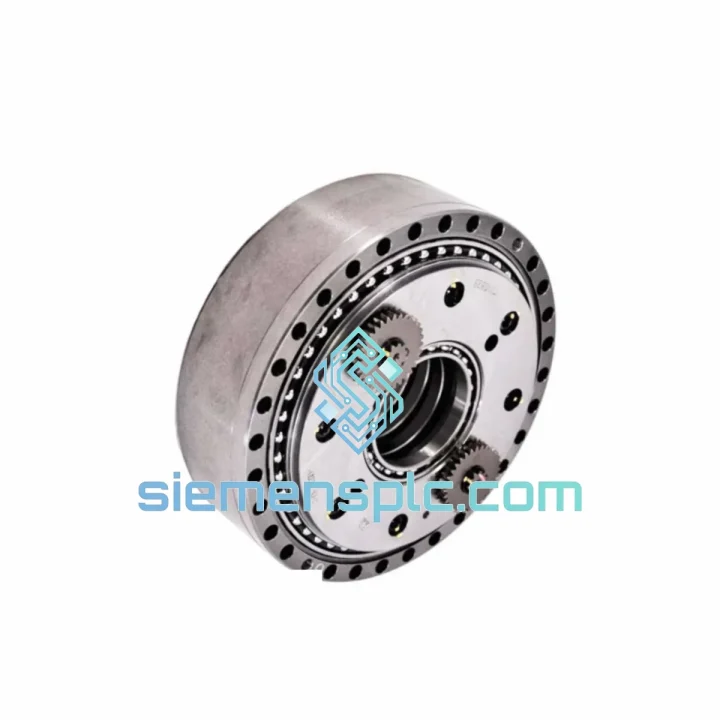
Yaskawa HW0380219-A-HP-25A-11-F0-SP Harmonic Drive Reducer – Motoman Series
Request verified availability, condition, replacement risk review, packing options and courier lead time for HW0380219-A-HP-25A-11-F0-SP.
BrandYaskawa
Part NumberHW0380219-A-HP-25A-11-F0-SP
ConditionAvailability Check
Lead TimeRFQ Confirmation
DocumentsDatasheet / photos by RFQ
ShippingExport packing available
Auto-filled RFQ
HW0380219-A-HP-25A-11-F0-SP
Click Request Quote and the part number is inserted into the inquiry form automatically.
- Reply by email: [email protected]
- WhatsApp / Tel: +86 18359268345
- Mon-Sat 9:00-18:00 GMT+8
Procurement Data
Key Product Information
Core fields for model confirmation and RFQ routing. Detailed product narrative remains below.
- Brand
- Yaskawa
- Primary Part Number
- HW0380219-A-HP-25A-11-F0-SP
- Product Type
- Harmonic Drive Reducer
- Series / Family
- Motoman Robot Joint Axis
- Country of Origin
- JP
- Catalog Category
- Motor Drives
- Warranty
- 12 months from date of shipment
Model confirmed for inquiry
HW0380219-A-HP-25A-11-F0-SP
Send quantity, destination and urgency. The RFQ form keeps this part number attached.
Request Quote
Product Overview
Yaskawa HW0380219-A-HP-25A-11-F0-SP: Strain Wave Gear Reducer for Motoman Robot Joint Axes
The Yaskawa HW0380219-A-HP-25A-11-F0-SP is a factory-assembled strain wave gear (harmonic drive) reducer produced by Yaskawa Electric Corporation as an OEM joint-axis transmission component for the Motoman industrial robot platform. Within the servo control loop, this unit occupies the mechanical interface between the axis servo motor and the robot link structure, performing torque amplification and speed reduction at a fixed ratio of 25:1 (HP-25) while maintaining the sub-arc-minute angular fidelity that closed-loop position control requires. The strain wave mechanism achieves this through elastic deformation of a thin-walled steel flexspline rather than rigid gear meshing, which eliminates the backlash inherent in planetary and spur gear architectures and allows the servo amplifier to operate on a mechanically rigid transmission path.
In the Motoman servo architecture — whether driven by a DX200 or YRC1000 controller — each joint axis executes an independent position control loop. The controller issues interpolated position commands over the MECHATROLINK-III synchronous fieldbus at a 0.5 ms or 1 ms cycle time. The servo amplifier closes the current and velocity loops locally, while the position loop is closed at the controller level using 23-bit absolute multi-turn encoder feedback from the motor shaft. The reducer’s 25:1 ratio is factored into the controller’s axis configuration parameters, so the encoder resolution at the output link is effectively 23 bits × 25 = approximately 209 million counts per output revolution, yielding a theoretical position resolution of 0.0000017° per count. Any mechanical compliance or lost motion in the reducer directly degrades this resolution and introduces following error under dynamic load — which is why zero-backlash transmission is a non-negotiable specification for robot joint axes.
The HP-25 ratio is selected for wrist and elbow axes where the balance between output torque, joint velocity, and distal link inertia must be optimized. The F0 output flange code specifies a precision-ground flange face with a standardized bolt circle matched to the Motoman robot link casting, ensuring concentricity between the reducer output axis and the robot link pivot without shimming or post-assembly alignment. The hollow-shaft configuration (code 11) routes the motor encoder cable, brake wiring, and end-effector utilities through the geometric center of the joint, eliminating external cable loops that would otherwise impose bending moments on the joint bearing and introduce cable fatigue as a maintenance variable. The SP designation confirms factory pre-filling with Yaskawa-approved harmonic drive grease, sealed and torque-verified before shipment, removing field lubrication as a maintenance step and eliminating the risk of incorrect lubricant selection.
Real-time Stock & RFQ: [email protected] | WhatsApp: +86 18359268345
Technical Parameters
| Parameter | Specification |
|---|---|
| Part Number | HW0380219-A-HP-25A-11-F0-SP |
| Brand | Yaskawa Electric Corporation |
| Series | Motoman Robot OEM Joint Drive |
| Reducer Type | Strain Wave Gear (Harmonic Drive) |
| Reduction Ratio | 25:1 (HP-25) |
| Output Interface | F0 – Precision Flange Output |
| Shaft Configuration | Code 11 – Hollow-shaft through-bore |
| Lubrication | SP – Factory pre-filled, sealed, torque-verified |
| Rated Output Torque | Per Yaskawa axis BOM (axis-specific) |
| Transmission Efficiency | 75–85% at rated load (typical for HP series) |
| Lost Motion (new) | <1 arc-min (typical for HP-25 series) |
| Torsional Stiffness | 10–30 Nm/arc-min (HP series, load-dependent) |
| System Position Resolution | ~0.0000017° per encoder count (23-bit × 25:1) |
| Compatible Robot Families | Motoman MA, MH, MHJ, MPL, GP series |
| Compatible Controllers | DX200, YRC1000, YRC1000micro |
| Fieldbus (System) | MECHATROLINK-III, 0.5 ms / 1 ms cycle |
| Encoder Resolution (System) | 23-bit absolute multi-turn |
| Ambient Operating Temperature | 0°C to +40°C |
| Storage Temperature | -20°C to +60°C (sealed, pre-greased) |
| Approximate Weight | 560 g |
| Country of Origin | Japan |
| Condition | Genuine New / Surplus New |
| Warranty | 12 months from date of shipment |
Hardware Logical Analysis
The strain wave gear mechanism of the HW0380219-A-HP-25A-11-F0-SP comprises three functional elements: the wave generator, the flexspline, and the circular spline. The wave generator is an elliptical cam with a thin-section ball bearing pressed onto the motor shaft. Its elliptical profile continuously deforms the flexspline — a thin-walled steel cup with external teeth — into an ellipse, engaging approximately 30% of the total tooth count simultaneously at any angular position. The circular spline is a rigid ring gear with internal teeth; the tooth count differential between the flexspline and circular spline is two teeth, so each full motor revolution advances the output by 2/N_cs turns, where N_cs is the circular spline tooth count. At a 25:1 ratio, the output completes one revolution per 25 motor revolutions, with torque amplified by the same factor minus transmission losses.
The distributed tooth engagement — approximately 30% of teeth in simultaneous contact — is the structural basis for the zero-backlash characteristic. There is no clearance between mating teeth because the elastic deformation of the flexspline maintains continuous contact across the engagement arc. This also distributes the tooth load across a large contact area, reducing Hertzian contact stress per tooth and extending the fatigue life of the tooth flanks relative to a single-tooth-contact gear stage of equivalent ratio.
The hollow-shaft through-bore (code 11) eliminates the bending moment that external cable bundles impose on the joint bearing. In robot designs with external cable routing, the cable bundle acts as a spring element in parallel with the joint, introducing a load-dependent position offset and a fatigue failure mode at the cable bend radius. The through-bore architecture removes both effects. The F0 flange output provides a precision-ground mounting face with flatness and runout tolerances matched to the Yaskawa robot link casting, ensuring that the reducer output axis is concentric with the robot link pivot axis without post-assembly alignment fixtures or shimming procedures.
From an EMC perspective, the reducer is a passive mechanical component, but its all-steel construction provides structural shielding continuity through the robot arm. The Yaskawa servo system addresses EMC at the amplifier level: PWM outputs incorporate integrated common-mode chokes, the robot arm cable harness is shielded and grounded at the controller chassis, and the system is designed to comply with EN 61000-6-2 (industrial immunity) and EN 61000-6-4 (industrial emissions). The reducer’s mechanical rigidity contributes to system-level EMC by eliminating the resonant mechanical modes that flexible couplings or compliant transmissions can introduce into the servo loop, which would otherwise require notch filters that reduce closed-loop bandwidth.
System Integration Benefits
- Zero-backlash transmission: Continuous tooth contact across the full torque range eliminates position error hysteresis. The servo amplifier operates on a mechanically rigid path, permitting higher proportional gain without inducing oscillation, which directly reduces steady-state following error under dynamic load profiles.
- High torsional stiffness: Stiffness values in the 10–30 Nm/arc-min range (HP series, load-dependent) determine the mechanical bandwidth of the joint servo loop. Higher stiffness allows higher closed-loop bandwidth, faster settling times, and reduced vibration at path reversals — measurable as improved TCP (tool center point) accuracy during high-speed contouring.
- Predictable wear progression: The primary wear mode of a harmonic drive is fretting of the wave generator bearing, which produces a gradual, measurable increase in lost motion. This is detectable by the controller’s servo monitoring functions as a trend in following error, enabling condition-based maintenance scheduling rather than fixed-interval replacement.
- Compact axial envelope: The cup-type flexspline integrates the output flange directly into the flexspline body, minimizing axial stack height at the joint. In wrist axes, reduced axial length decreases the moment of inertia of the distal robot links, improving dynamic response and payload-to-weight ratio.
- Through-bore cable routing: Eliminating external cable loops reduces the robot’s effective collision envelope, removes cable fatigue as a maintenance variable, and eliminates the drag torque that cable bundles impose on the joint — a torque disturbance that the servo loop must compensate and that degrades path accuracy at low speeds.
- Drop-in OEM dimensional compatibility: The HW0380219-A factory assembly number guarantees that bolt pattern, shaft bore diameter, flange face geometry, and grease specification are identical to the original production unit. No adaptation hardware, shimming, or alignment procedures are required beyond standard torque specifications from the Yaskawa maintenance manual.
- Factory SP lubrication: Pre-filled and sealed grease eliminates incorrect lubricant selection or quantity during field maintenance — a leading cause of premature harmonic drive failure. The grease film is correctly distributed across the wave generator bearing and flexspline contact surfaces from the first power-on cycle, without a break-in lubrication procedure.
- Encoder-based diagnostic transparency: The 23-bit absolute multi-turn encoder on the motor shaft, combined with the known 25:1 ratio, allows the YRC1000 controller to compute joint output position to sub-arc-minute resolution without a secondary output-side encoder. Mechanical anomalies that alter the effective transmission ratio — bearing wear, flexspline fatigue, grease degradation — manifest as measurable trends in servo following error, providing early warning before functional failure.
Quality Assurance & Global Logistics
Each Yaskawa HW0380219-A-HP-25A-11-F0-SP unit dispatched from our Xiamen, China facility undergoes a structured incoming inspection protocol before release for shipment:
- Part number authentication: Factory label markings and laser-etched identifiers are cross-referenced against the Yaskawa part number database to confirm specification compliance and rule out counterfeit or misidentified units.
- Dimensional verification: Output flange face runout, bore concentricity, and bolt circle position are measured against Yaskawa drawing tolerances using calibrated metrology instruments.
- Rotation and drag torque assessment: The wave generator is cycled through multiple full rotations to verify smooth operation, absence of binding, and correct grease distribution. Drag torque outside the specified range — indicative of bearing damage or grease contamination — is cause for rejection.
- Seal integrity check: The flexspline lip seal and output flange O-ring are inspected for deformation, cracking, or compression set that would allow grease egress or contamination ingress during service.
- Protective packaging: Units are individually wrapped in anti-static film, placed in foam-lined boxes with desiccant packs, and sealed for protection during international transit.
International logistics from Xiamen are executed via DHL Express, FedEx International Priority, and air freight consolidation, with typical transit times of 3–7 business days to Europe, North America, and Southeast Asia. Full export documentation — commercial invoice, packing list, and certificate of origin — is prepared for every shipment. The 12-month warranty from date of shipment covers manufacturing defects and is supported by our technical team, who provide failure analysis reports and replacement coordination for all warranty claims.
Contact Information
Email: [email protected]
WhatsApp: +86 18359268345
Web: siemensplc.com
Location: Xiamen, China
© 2026 siemensplc.com. All rights reserved.
Ready to quote
[email protected]
Send This Part Number to Sales
RFQ workflow
Quality workflow ->
Confirmation Process
01Model confirmation
We check the full part number, brand, series and visible nameplate information before quotation.
02Availability reply
Sales confirms stock path, condition option, quantity and realistic lead time for export dispatch.
03Packing & courier
DHL, FedEx, UPS or buyer courier arrangements can be reviewed with packing requirements.
Continue sourcing
Browse full catalog ->
Related Automation Parts
Similar brand or category products for fast comparison and multi-item RFQ lists.
Yaskawa
RFQ Ready
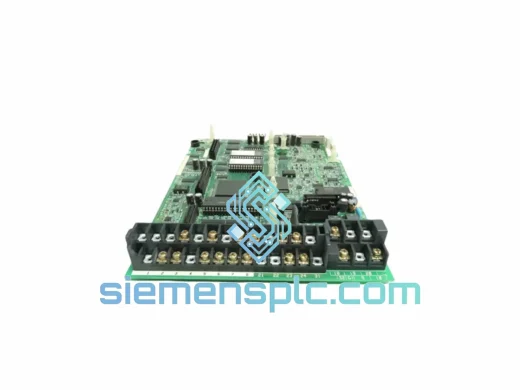
YASKAWA YPHT11017-1A Drive Control Board
Varispeed G7 F7 Series
Origin JP
PLC & Drive Control Board
Yaskawa
RFQ Ready
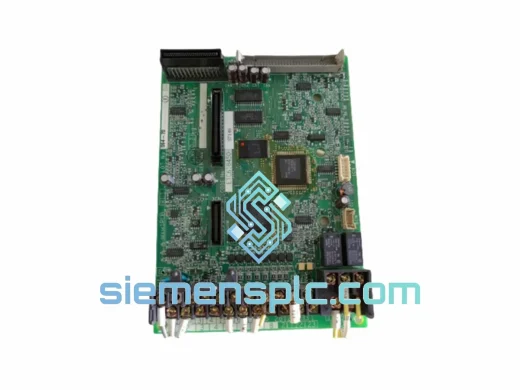
YASKAWA YPCT31240-1C Drive Control Board – Varispeed Series
F7 Series
Origin JP
Drive Control Board
Yaskawa
RFQ Ready
YASKAWA YPCT21092-1-4 Inverter Control Board
Industrial VFD
Origin JP
Inverter Control Board