Yaskawa
RFQ Ready
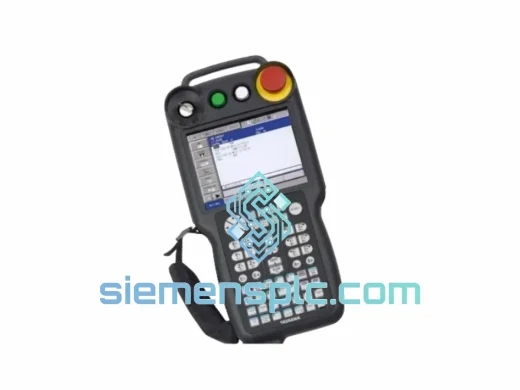
Yaskawa JZRCR-YPP21-1 Robot Teach Pendant
Motoman DX200
Origin JP
Robot Teach Pendant
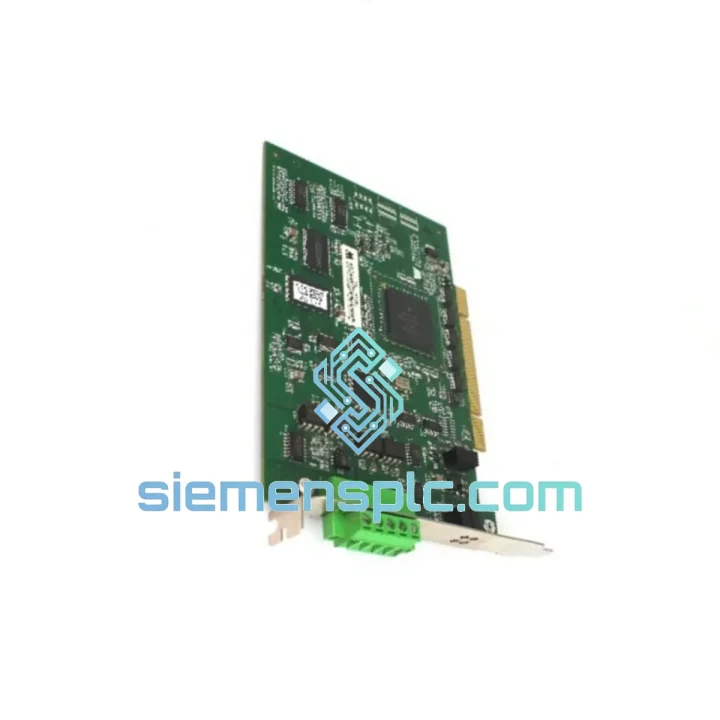
Request verified availability, condition, replacement risk review, packing options and courier lead time for JANCD-NTU01-1.
Click Request Quote and the part number is inserted into the inquiry form automatically.
Core fields for model confirmation and RFQ routing. Detailed product narrative remains below.
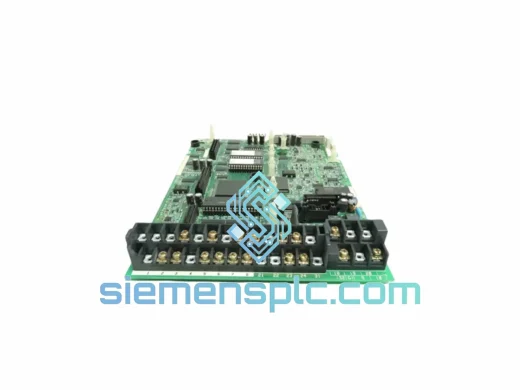
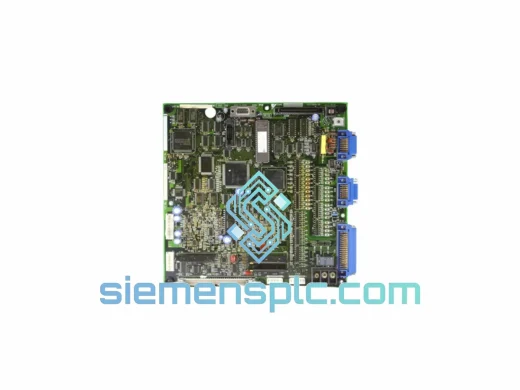
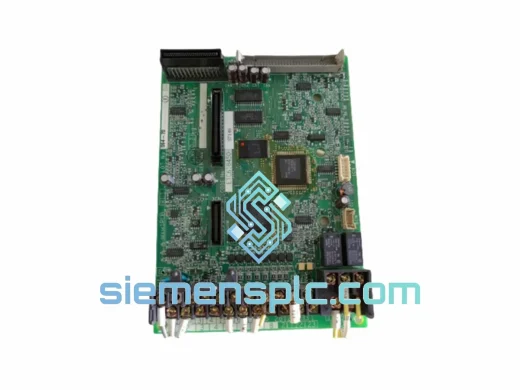
The JANCD-NTU01-1 is a dedicated network communication printed circuit board manufactured by YASKAWA Electric Corporation, engineered specifically for integration within the NX100 and DX100 robot controller platforms. Unlike generic fieldbus adapters, this board is designed as a native backplane module — it occupies a defined slot within the controller’s internal card cage and communicates directly with the CPU board via YASKAWA’s proprietary high-speed parallel bus, bypassing the latency penalties associated with external gateway devices.
In a standard NX100 controller cabinet, the backplane bus operates at a fixed scan cycle synchronized to the motion control kernel. The JANCD-NTU01-1 participates in this deterministic cycle, meaning network data is exchanged at a fixed interval aligned with the robot’s interpolation period — typically 4 ms for standard motion tasks. This architecture eliminates the asynchronous jitter that would otherwise be introduced by an external communication gateway, making the board suitable for applications where network-triggered motion commands must arrive within a bounded time window.
The board’s physical construction follows YASKAWA’s standard PCB specification for controller-internal modules: a multi-layer FR4 substrate with conformal coating on the solder side, gold-plated edge connectors for the backplane interface, and a dedicated metal bracket for mechanical retention within the card cage. The component population includes a dedicated network controller ASIC, local SRAM for packet buffering, and an isolated DC/DC converter stage that separates the board’s logic supply from the backplane rail — a design choice that prevents conducted noise from the network cable from propagating into the controller’s internal power domain.
The isolation boundary on the JANCD-NTU01-1 is implemented at the physical layer of the network interface. Transformer-based isolation is used on the network connector side, providing galvanic separation between the external cable shield and the board’s internal ground plane. This is a critical design requirement in welding robot installations, where high-frequency conducted emissions from welding power sources can reach several hundred volts on cable shields if the grounding topology is not carefully managed. The transformer isolation ensures that these transients do not couple into the controller’s logic circuitry.
Fault detection on the JANCD-NTU01-1 is handled through a combination of hardware watchdog logic and software-level diagnostic registers accessible to the NX100/DX100 operating system. If the network controller ASIC fails to complete a communication cycle within the defined timeout window, the watchdog asserts a fault signal on the backplane bus, which the CPU board interprets as a network communication error. This fault is then surfaced to the operator via the teach pendant alarm system with a specific alarm code, allowing maintenance personnel to distinguish a network board fault from a cable fault or a remote device fault without requiring external diagnostic equipment.
The board supports YASKAWA’s internal network protocol used for inter-controller communication and optional fieldbus expansion. When used in multi-robot or multi-controller configurations, the JANCD-NTU01-1 enables synchronized motion coordination between multiple NX100 or DX100 units by providing a shared communication channel with deterministic timing. This is particularly relevant in automotive body-in-white welding lines where multiple robot controllers must execute coordinated motion sequences with inter-robot timing tolerances below 10 ms.
Replacement of the JANCD-NTU01-1 in a production environment requires attention to board revision compatibility. The suffix “-1” denotes a specific hardware revision. Substitution with the JANCD-NTU01B-1 (B-suffix revision) is generally compatible in NX100 systems running firmware V1.30 or later, but the firmware version must be confirmed before substitution to avoid initialization failures. The board does not require individual calibration after replacement; however, the controller’s network configuration parameters stored in non-volatile memory must be verified after board swap to confirm that communication addresses and timing parameters are intact.
Real-time Stock & RFQ: [email protected] | WhatsApp: +86 18359268345
| Parameter | Value |
|---|---|
| Part Number | JANCD-NTU01-1 |
| Manufacturer | YASKAWA Electric Corporation |
| Product Category | Network Communication PC Board |
| Compatible Controllers | NX100, DX100 |
| Backplane Bus Interface | YASKAWA proprietary parallel bus (card-edge connector) |
| Network Isolation | Transformer-based galvanic isolation on network port |
| Logic Supply | Isolated DC/DC converter from backplane rail |
| PCB Construction | Multi-layer FR4, conformal-coated solder side |
| Edge Connector Finish | Gold-plated, card-cage retention bracket included |
| Watchdog Timeout | Hardware watchdog with backplane fault assertion |
| Typical Communication Cycle | 4 ms (synchronized to NX100/DX100 interpolation period) |
| Operating Temperature | 0°C to +55°C (per YASKAWA NX100 controller specification) |
| Storage Temperature | -20°C to +70°C |
| Humidity | 10% to 90% RH, non-condensing |
| Weight | Approx. 600 g |
| Country of Origin | Japan |
| Warranty | 12 months from date of shipment |
The JANCD-NTU01-1’s hardware design addresses three primary engineering constraints present in robot controller environments: deterministic timing, electromagnetic immunity, and fault transparency.
Deterministic Backplane Synchronization: The board’s network controller ASIC is clocked from a reference derived from the backplane bus, not from an independent crystal oscillator. This design choice ensures that the board’s communication cycle is phase-locked to the controller’s motion kernel scan, eliminating the need for software-level timestamp correction when correlating network events with robot motion states. In practice, this means that a network-triggered I/O event can be mapped to a specific interpolation cycle without accumulated timing error.
Galvanic Isolation Architecture: The transformer isolation on the network port provides a common-mode rejection ratio sufficient to suppress transients generated by resistance spot welding equipment operating at currents above 10 kA. The isolation barrier is rated to withstand the impulse voltages specified in IEC 61000-4-5 for industrial environments, protecting the controller’s internal logic from damage during welding gun tip dressing or electrode replacement procedures that can generate high-energy transients on cable shields.
Local Packet Buffering: The dedicated SRAM on the board provides a two-frame deep receive buffer, allowing the network controller ASIC to complete a DMA transfer to the backplane bus without stalling the network receive path. This prevents packet loss during the brief period when the backplane bus is occupied by a high-priority motion data transfer, which is a known timing constraint in NX100 systems with multiple option boards installed.
EMC Compliance Design: The board’s ground plane topology uses a split-plane approach: the network-side ground is isolated from the logic ground except at a single star point adjacent to the isolation transformer. This prevents high-frequency return currents from the network cable from flowing through the logic ground plane, which would otherwise increase radiated emissions from the controller cabinet and potentially cause susceptibility issues in adjacent sensitive equipment.
Every JANCD-NTU01-1 unit supplied through siemensplc.com is sourced as genuine YASKAWA OEM stock. Units are not remanufactured or third-party clones. Each board is inspected upon receipt: edge connectors are examined for fretting corrosion, the conformal coating is checked for delamination or cracking, and the board is powered on in a compatible test fixture to verify that the network controller ASIC initializes correctly and that the watchdog circuit responds to a simulated timeout condition.
Packaging follows IEC 61340-5-1 ESD protection requirements: each board is placed in a conductive anti-static bag, heat-sealed, and packed in a foam-lined corrugated carton rated for international air freight handling. A humidity indicator card is included inside the sealed bag to detect any moisture ingress during transit.
Shipments originate from Xiamen, China. Standard export documentation — commercial invoice, packing list, and certificate of origin — is prepared for each order. DHL Express, FedEx International Priority, and UPS Worldwide Express are the primary carriers, with typical transit times of 3–5 business days to major industrial hubs in Europe, North America, and Southeast Asia. For time-critical maintenance situations, same-day dispatch is available for orders confirmed before 14:00 CST. A 12-month warranty covers defects in materials and workmanship from the date of shipment.
Email: [email protected]
WhatsApp: +86 18359268345
Web: siemensplc.com
Location: Xiamen, China
© 2026 siemensplc.com. All rights reserved.
We check the full part number, brand, series and visible nameplate information before quotation.
Sales confirms stock path, condition option, quantity and realistic lead time for export dispatch.
DHL, FedEx, UPS or buyer courier arrangements can be reviewed with packing requirements.
Similar brand or category products for fast comparison and multi-item RFQ lists.