
Yaskawa
In Stock OK
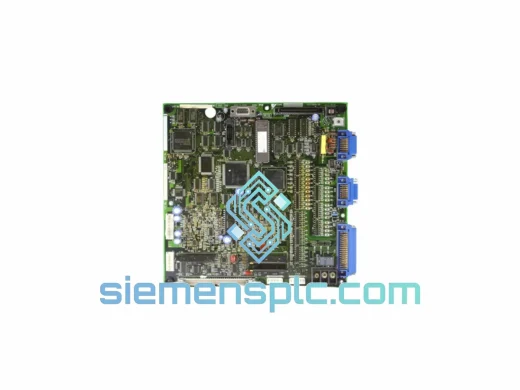
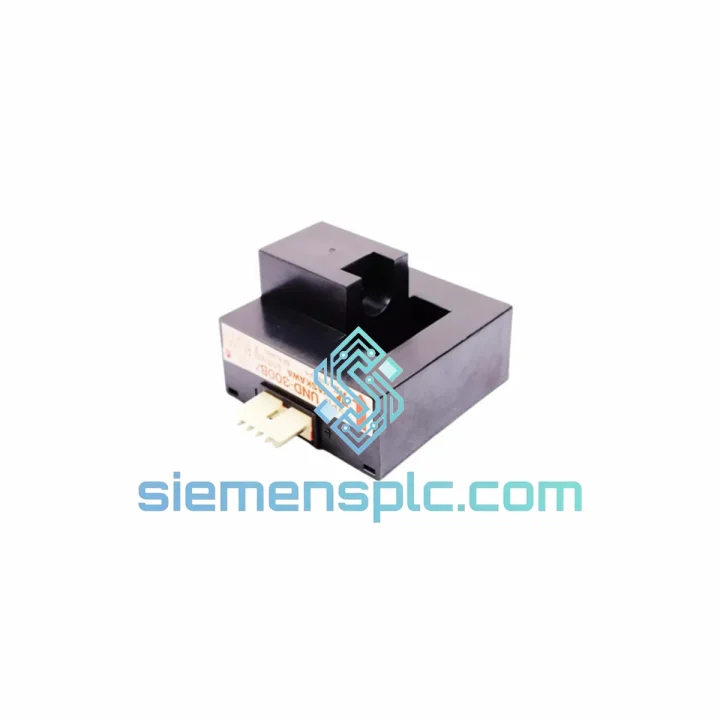
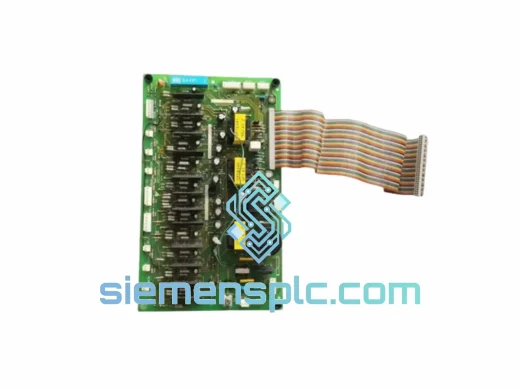
YASKAWA UND-300B/75 Power Supply Module – UND Series
Request verified availability, condition, replacement risk review, packing options and courier lead time for UND-300B/75.
BrandYaskawa
Part NumberUND-300B/75
ConditionAvailability Check
Lead TimeRFQ Confirmation
DocumentsDatasheet / photos by RFQ
ShippingExport packing available
Auto-filled RFQ
UND-300B/75
Click Request Quote and the part number is inserted into the inquiry form automatically.
- Reply by email: [email protected]
- WhatsApp / Tel: +86 18359268345
- Mon-Sat 9:00-18:00 GMT+8
Procurement Data
Key Product Information
Core fields for model confirmation and RFQ routing. Detailed product narrative remains below.
- Brand
- Yaskawa
- Primary Part Number
- UND-300B/75
- Product Type
- Power Supply Module
- Series / Family
- UND Series
- Country of Origin
- JP
- Catalog Category
- Motor Drives
- Humidity
- 5%–95% RH, non-condensing
- Warranty
- 12 months from date of shipment
Model confirmed for inquiry
UND-300B/75
Send quantity, destination and urgency. The RFQ form keeps this part number attached.
Request Quote
Product Overview
YASKAWA UND-300B/75 DC Bus Power Supply Module: Core Role in Servo Drive Control Architecture
The YASKAWA UND-300B/75 is a dedicated DC bus power supply module designed to serve as the centralized energy conditioning unit within YASKAWA servo drive systems. Its primary function is to convert three-phase AC mains input into a regulated, low-ripple DC bus voltage that feeds downstream SERVOPACK amplifier units. In multi-axis servo configurations — common in CNC machining centers, industrial robots, and automated assembly lines — the UND-300B/75 acts as the shared power backbone, decoupling individual axis amplifiers from direct AC line disturbances and enabling coordinated regenerative braking energy redistribution across the DC bus.
Unlike distributed PSU architectures where each axis carries its own rectifier stage, the UND-300B/75 centralizes rectification and capacitor bank management. This topology reduces total harmonic distortion (THD) injected back into the facility power grid, simplifies thermal management by concentrating heat dissipation in a single, well-ventilated enclosure zone, and allows the system integrator to size the power supply once for the aggregate axis load rather than per-axis. The module’s 300 A / 75 kW rating positions it for medium-to-large servo clusters where aggregate continuous shaft power demands exceed what a distributed approach can efficiently handle.
Real-time Stock & RFQ: [email protected] | WhatsApp: +86 18359268345
Technical Parameters
| Parameter | Specification |
|---|---|
| Part Number / SKU | UND-300B/75 |
| Brand | YASKAWA Electric Corporation |
| Series | UND (Unified DC Bus Power Supply) |
| Module Type | DC Bus Power Supply Module (Centralized PSU) |
| Rated Output Current | 300 A (DC bus continuous) |
| Rated Output Power | 75 kW |
| Input Voltage | Three-phase AC 200–230 V / 380–480 V (±10%) |
| Input Frequency | 50 / 60 Hz |
| DC Bus Output Voltage | Approx. 270–680 VDC (input-dependent) |
| Ripple Voltage (peak-to-peak) | ≤ 3% of nominal DC bus voltage under full load |
| Cooling Method | Forced air cooling (internal fan, front-exhaust) |
| Protection Class | IP20 (panel-mount, enclosed cabinet required) |
| Ambient Operating Temperature | 0°C to +55°C (derating above +45°C) |
| Storage Temperature | -20°C to +85°C |
| Humidity | 5%–95% RH, non-condensing |
| Weight | 4,460 g (approx.) |
| Origin | Japan |
| Condition | Genuine OEM — New / Surplus (specify at inquiry) |
| Warranty | 12 months from date of shipment |
Hardware Logical Analysis
The UND-300B/75 employs a three-phase full-bridge diode rectifier front-end followed by a large-capacitance DC link bank. The capacitor bank is not a simple bulk filter; it is segmented into parallel sub-banks with individual balancing resistors to equalize charge distribution and prevent localized voltage stress that would accelerate electrolytic degradation. This design extends mean time between failures (MTBF) under the cyclic load profiles typical of servo systems, where regenerative braking events cause rapid bus voltage excursions.
EMC performance is addressed at two levels. At the input stage, a three-phase line reactor (typically external, specified by YASKAWA system design guidelines) works in conjunction with the module’s internal common-mode choke to attenuate both differential-mode and common-mode conducted emissions. The PCB layout routes high-current DC bus traces with controlled impedance and minimized loop area, reducing radiated emissions from the bus bar assembly. Ground planes are partitioned to separate the high-frequency switching return paths from the analog signal ground, preventing noise coupling into the module’s internal monitoring circuits.
The module incorporates a pre-charge circuit that limits inrush current during power-on by inserting a series resistance into the DC bus charging path. Once the bus voltage reaches approximately 85% of its nominal value, a bypass relay closes to short the pre-charge resistor, completing the low-impedance bus connection. This sequence prevents nuisance tripping of upstream circuit breakers and protects the capacitor bank from high-energy inrush stress. The pre-charge relay status is exposed via a digital output signal that downstream SERVOPACK units monitor before enabling their own gate drivers — a hardware interlock that prevents axis amplifiers from attempting to operate on an incompletely charged bus.
Thermal protection is implemented through NTC thermistors bonded directly to the rectifier diode heatsink and the capacitor bank mounting plate. The module’s internal logic monitors these temperatures continuously and generates a fault signal if either zone exceeds its threshold, triggering a controlled shutdown sequence rather than an abrupt power cut. This protects both the module itself and the servo axes, which receive advance warning to decelerate to a safe stop before bus power is removed.
System Integration Benefits
- Deterministic bus voltage stability: The centralized capacitor bank provides a low-impedance energy reservoir that absorbs transient load steps from individual axes without significant bus voltage droop, preserving the voltage margin required for accurate torque control across all axes simultaneously.
- Regenerative energy sharing: When one axis decelerates and pumps regenerative energy back onto the DC bus, other axes accelerating at the same moment absorb that energy directly, reducing the net energy drawn from the AC mains and lowering heat dissipation in braking resistors.
- Simplified cabinet wiring: A single AC input connection and a single DC bus bar distribution point replace the multiple individual AC feeds that a distributed PSU architecture would require, reducing wiring complexity, potential fault points, and commissioning time.
- Centralized fault diagnostics: All power-related fault signals — overcurrent, overvoltage, undervoltage, overtemperature, pre-charge failure — originate from one module and are routed to the system controller via a single diagnostic interface, simplifying fault tree analysis during troubleshooting.
- Scalable axis count: Additional SERVOPACK axis modules can be added to the DC bus up to the 300 A / 75 kW aggregate limit without modifying the power supply, provided the bus bar and cabinet thermal design accommodate the additional load.
- Reduced THD injection: Centralizing rectification allows the use of a single, correctly sized AC line reactor at the mains entry point, achieving lower THD than multiple small reactors on individual distributed supplies, which is relevant for facilities with sensitive equipment on the same distribution panel.
- Coordinated soft-start sequencing: The pre-charge interlock signal integrates with the system PLC startup sequence, ensuring all axes receive a fully charged bus before motion commands are issued, eliminating a class of startup faults common in systems without coordinated power sequencing.
- Predictive maintenance visibility: Continuous thermistor monitoring and bus voltage telemetry provide data points that a condition monitoring system can trend over time, enabling maintenance teams to identify gradual capacitor degradation or cooling fan performance decline before they cause unplanned downtime.
Quality Assurance & Global Logistics
Every YASKAWA UND-300B/75 unit shipped from our Xiamen, China facility is a genuine YASKAWA Electric Corporation OEM component. Units are sourced through verified industrial supply channels with traceable procurement documentation. Before dispatch, each module undergoes a structured inspection protocol: visual examination of PCB markings, connector integrity, and OEM label authenticity; DC bus capacitor ESR spot-check where test access permits; and serial number cross-reference against known YASKAWA production records.
Packaging is engineered for the module’s 4.46 kg mass and sensitivity to electrostatic discharge. The unit is placed in a conductive anti-static bag, surrounded by 50 mm closed-cell polyethylene foam on all six faces, and enclosed in a double-walled export carton rated for international air freight handling. For shipments to destinations with strict customs documentation requirements, we provide a commercial invoice, packing list, and certificate of origin as standard. DHL Express, FedEx International Priority, and UPS Worldwide Express are the primary carriers, with typical transit times of 3–5 business days to Europe, North America, and Southeast Asia. Bulk orders and project-based procurement with scheduled delivery windows are accommodated — contact us to discuss logistics planning for your project timeline.
All units carry a 12-month warranty from the date of shipment, covering manufacturing defects and verified functional failures under normal operating conditions as specified in YASKAWA’s published environmental and electrical ratings.
Contact Information
Email: [email protected]
WhatsApp: +86 18359268345
Web: siemensplc.com
Location: Xiamen, China
© 2026 siemensplc.com. All rights reserved.
Ready to quote
[email protected]
Send This Part Number to Sales
RFQ workflow
Quality workflow ->
Confirmation Process
01Model confirmation
We check the full part number, brand, series and visible nameplate information before quotation.
02Availability reply
Sales confirms stock path, condition option, quantity and realistic lead time for export dispatch.
03Packing & courier
DHL, FedEx, UPS or buyer courier arrangements can be reviewed with packing requirements.
Continue sourcing
Browse full catalog ->
Related Automation Parts
Similar brand or category products for fast comparison and multi-item RFQ lists.
Yaskawa
RFQ Ready
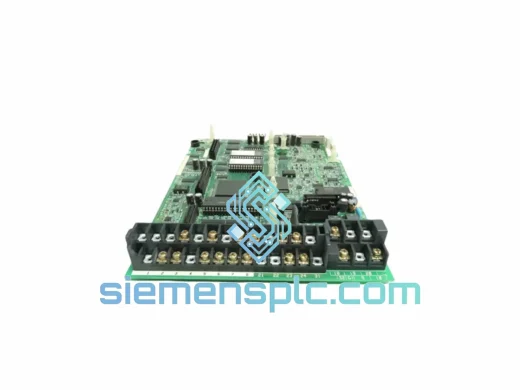
YASKAWA YPHT11017-1A Drive Control Board
Varispeed G7 F7 Series
Origin JP
PLC & Drive Control Board
Yaskawa
RFQ Ready
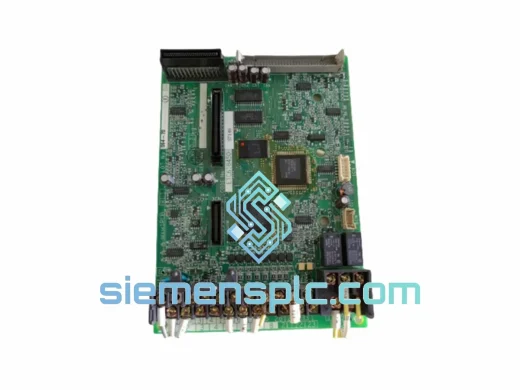
YASKAWA YPCT31240-1C Drive Control Board – Varispeed Series
F7 Series
Origin JP
Drive Control Board
Yaskawa
RFQ Ready
YASKAWA YPCT21092-1-4 Inverter Control Board
Industrial VFD
Origin JP
Inverter Control Board