Yokogawa
RFQ Ready
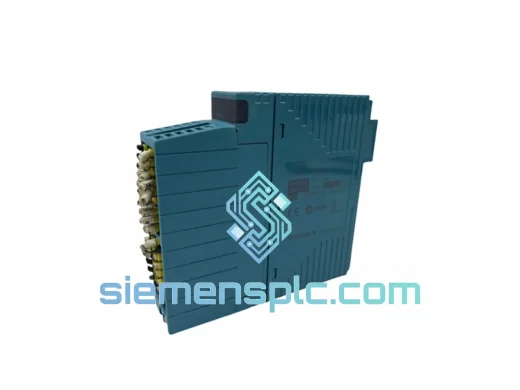
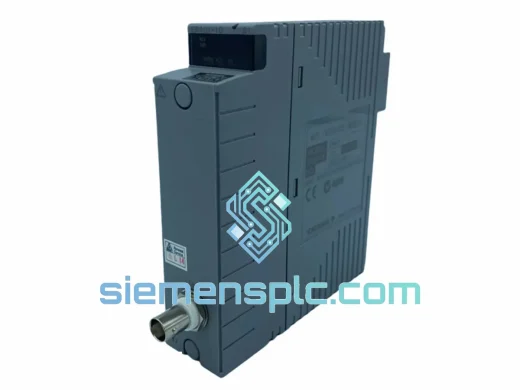
Yokogawa SAI143-H63/PRP S3 DCS Analog Input Module
CENTUM VP
Origin JP
DCS Analog Input Module
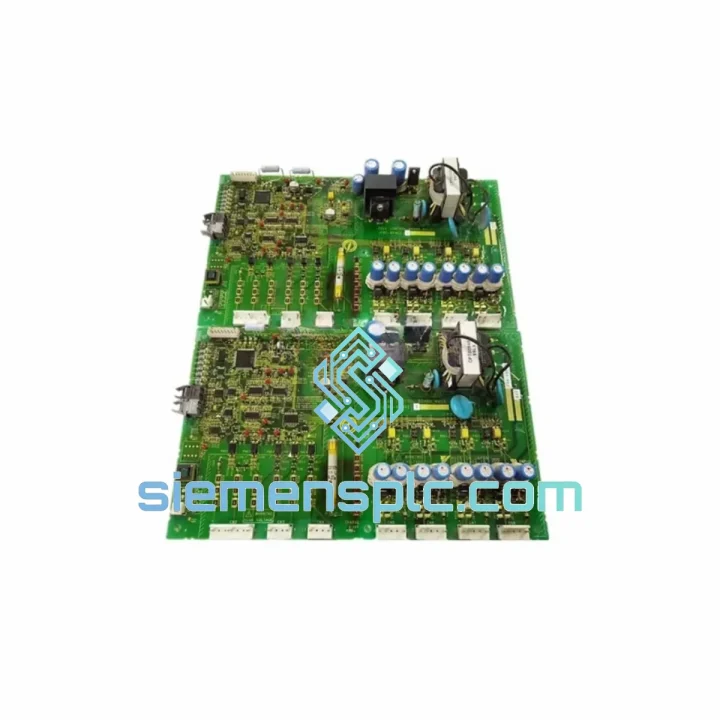
Request verified availability, condition, replacement risk review, packing options and courier lead time for 915U-2-900US.
Click Request Quote and the part number is inserted into the inquiry form automatically.
Core fields for model confirmation and RFQ routing. Detailed product narrative remains below.
The Yokogawa 915U-2-900US is a 900 MHz ISM-band wireless radio telemetry module engineered for deterministic, long-range data acquisition in distributed industrial control architectures. Operating within the 902–928 MHz unlicensed spectrum, this module delivers superior obstacle penetration and extended propagation range compared to 2.4 GHz alternatives — a critical advantage in process plants where structural steel, concrete walls, and dense equipment clusters attenuate higher-frequency signals. The 915U-2-900US functions as a transparent wireless bridge between field instruments and host control systems, enabling engineers to extend SCADA reach, eliminate cable trenching costs, and maintain real-time process visibility across geographically dispersed measurement points.
Within a 915U mesh network, each 915U-2-900US node participates in a self-healing, frequency-hopping spread spectrum (FHSS) topology. FHSS distributes transmission energy across 50+ discrete channels within the 900 MHz band, statistically reducing the probability of sustained co-channel interference to near-zero under typical industrial RF environments. The module’s embedded microcontroller manages channel arbitration, collision avoidance, and acknowledgment retransmission autonomously — offloading protocol overhead from the host PLC or DCS CPU and preserving deterministic scan cycle integrity.
Real-time Stock & RFQ: [email protected] | WhatsApp: +86 18359268345
| Parameter | Specification |
|---|---|
| Part Number / SKU | 915U-2-900US |
| Manufacturer | Yokogawa Electric Corporation |
| Series | 915U Wireless Telemetry |
| RF Frequency Band | 902–928 MHz (ISM Band, FHSS) |
| Modulation | Frequency-Hopping Spread Spectrum (FHSS) |
| RF Output Power | Up to 100 mW (20 dBm) conducted |
| Antenna Connector | RP-SMA female (external antenna) |
| Communication Interface | RS-232 / RS-485 serial; optional Ethernet gateway pairing |
| Baud Rate Support | 1,200 – 115,200 bps configurable |
| Supply Voltage | 10–30 V DC (wide-range input) |
| Power Consumption | ≤ 2.5 W typical at 24 V DC |
| Operating Temperature | –40 °C to +70 °C |
| Storage Temperature | –55 °C to +85 °C |
| Relative Humidity | 5–95% RH, non-condensing |
| Enclosure / Protection | IP30 (DIN-rail mount); IP67 with optional field enclosure |
| Mounting | 35 mm DIN-rail (EN 60715) |
| Weight | 260 g (module only, excluding antenna) |
| Regulatory Approvals | FCC Part 15 (USA), Industry Canada (IC), RoHS compliant |
| Warranty | 12 months from date of shipment |
The 915U-2-900US is built around a dual-processor architecture: a dedicated RF baseband processor handles all physical-layer tasks — channel hopping sequence generation, preamble detection, CRC-16 frame validation, and automatic repeat request (ARQ) retransmission — while a separate application processor manages the serial protocol stack, configuration memory, and diagnostic state machine. This separation ensures that RF link degradation events (e.g., a temporary multipath fade) do not introduce jitter into the serial data stream presented to the host controller.
EMC Design: The RF front-end employs a low-noise amplifier (LNA) with a noise figure below 3 dB, paired with a bandpass filter tuned to the 902–928 MHz window. This filter rejects out-of-band interference from adjacent GSM-850 and cellular LTE Band 5 transmitters — a common co-existence challenge in industrial sites with on-site cellular infrastructure. The PCB layout follows a split-ground plane strategy: the RF section ground plane is isolated from the digital logic ground plane and joined at a single star point near the DC input filter, minimizing conducted noise coupling from switching power supplies into the receiver chain.
FHSS Synchronization: The hopping sequence is derived from a pseudo-random number generator (PRNG) seeded with a user-configurable network ID. All nodes sharing the same network ID maintain synchronization via a beacon frame transmitted by the designated master node at each hop interval (typically 20 ms). If a slave node misses three consecutive beacons, it initiates an autonomous re-synchronization scan — scanning all 50 channels in sequence until it re-acquires the master beacon. This mechanism ensures network self-healing without host controller intervention, maintaining data continuity during transient RF obstructions.
Serial Transparency: The module operates in a transparent serial bridge mode by default. Any byte sequence received on the RS-232/RS-485 port is encapsulated in a 915U RF frame, transmitted, and reconstructed byte-for-byte at the remote node’s serial port. This transparency is protocol-agnostic: Modbus RTU, DNP3, PROFIBUS DP (via RS-485 adapter), and proprietary Yokogawa serial protocols all pass through without modification, eliminating the need for protocol conversion middleware.
Every Yokogawa 915U-2-900US unit supplied by siemensplc.com is sourced through verified Yokogawa distribution channels. Each module carries original Yokogawa factory labeling, serial number, and manufacturing date code. Prior to dispatch from our Xiamen, China facility, each unit undergoes a three-stage inspection: visual examination of housing, connector, and label integrity; power-on functional verification of RF link establishment; and serial number cross-reference against Yokogawa’s product traceability database.
Shipping from Xiamen is supported via DHL Express (3–5 business days to most destinations), FedEx International Priority, UPS Worldwide Expedited, and air freight consolidation for volume orders. Export documentation — including commercial invoice, packing list, certificate of origin, and MSDS where applicable — is prepared in compliance with destination country customs requirements. In-stock orders are dispatched within 1–2 business days of payment confirmation. A 12-month warranty covers manufacturing defects; DOA units are replaced or credited within 5 business days of confirmed fault report.
📧 Email: [email protected]
📱 WhatsApp: +86 18359268345
🌐 Web: siemensplc.com
📍 Location: Xiamen, China
© 2026 siemensplc.com. All rights reserved.
We check the full part number, brand, series and visible nameplate information before quotation.
Sales confirms stock path, condition option, quantity and realistic lead time for export dispatch.
DHL, FedEx, UPS or buyer courier arrangements can be reviewed with packing requirements.
Similar brand or category products for fast comparison and multi-item RFQ lists.