Yokogawa
In Stock OK
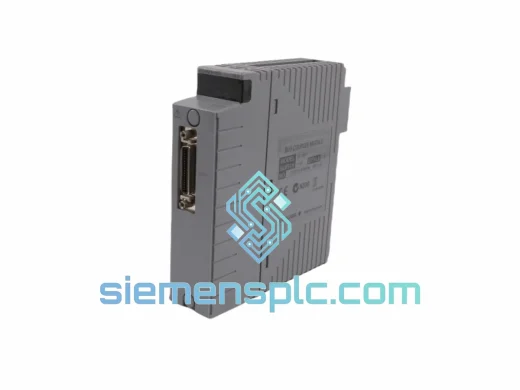
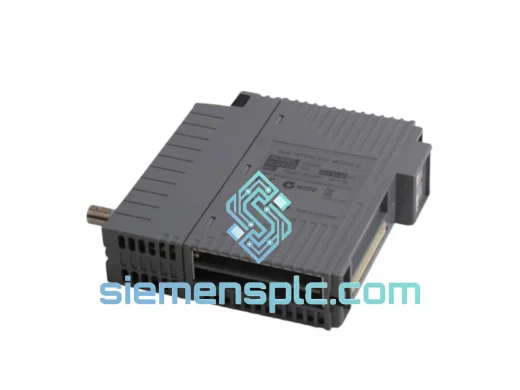
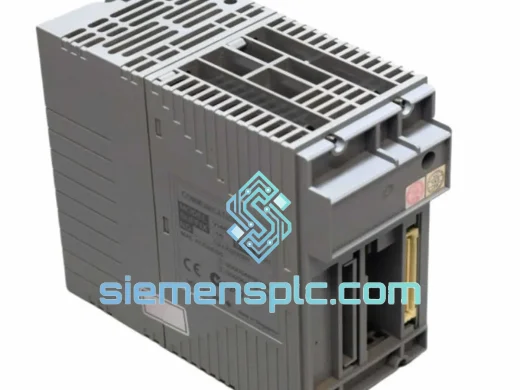
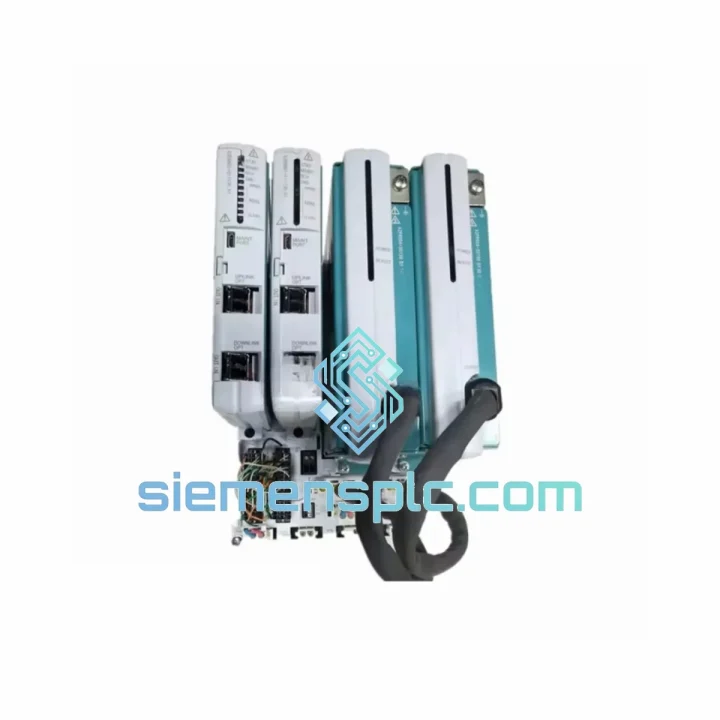
Yokogawa A2PW504-S0130 A2EN501-S11130 A2NN30D-440101113 DCS Module – CENTUM VP
Request verified availability, condition, replacement risk review, packing options and courier lead time for A2PW504-S0130.
BrandYokogawa
Part NumberA2PW504-S0130
ConditionAvailability Check
Lead TimeRFQ Confirmation
DocumentsDatasheet / photos by RFQ
ShippingExport packing available
Auto-filled RFQ
A2PW504-S0130
Click Request Quote and the part number is inserted into the inquiry form automatically.
- Reply by email: [email protected]
- WhatsApp / Tel: +86 18359268345
- Mon-Sat 9:00-18:00 GMT+8
Procurement Data
Key Product Information
Core fields for model confirmation and RFQ routing. Detailed product narrative remains below.
- Brand
- Yokogawa
- Primary Part Number
- A2PW504-S0130
- Product Type
- DCS Field Control Node
- Series / Family
- CENTUM VP
- Country of Origin
- JP
- Catalog Category
- DCS & Safety Modules
- Operating Temp.
- 0 °C to +55 °C
- Warranty
- 12 months from shipment date — manufacturing defects covered
- Compliance
- CE, RoHS 2
Model confirmed for inquiry
A2PW504-S0130
Send quantity, destination and urgency. The RFQ form keeps this part number attached.
Request Quote
Product Overview
Yokogawa A2PW504-S0130 / A2EN501-S11130 / A2NN30D-440101113 — Tripartite Node Assembly for CENTUM VP Distributed Process Control
The A2PW504-S0130, A2EN501-S11130, and A2NN30D-440101113 form a functionally complete, slot-resident node assembly on Yokogawa’s A2-series backplane, designed for deployment within CENTUM VP and CS 3000 distributed control systems. Each module occupies a dedicated backplane slot and performs a discrete, non-overlapping function: power conditioning and rail regulation, deterministic Vnet/IP network arbitration, and real-time field I/O execution respectively. The three modules operate as a tightly coupled subsystem — the power supply feeds regulated DC rails to both the communication node and the field control node, while the communication node provides the high-speed token-bus link through which the field control node exchanges process data with the domain station at fixed, guaranteed intervals.
This assembly is specified for continuous-duty process environments including hydrocarbon refining, LNG terminal automation, pharmaceutical batch sequencing, power generation balance-of-plant control, and municipal water treatment SCADA. The node architecture supports Yokogawa’s dual-redundancy scheme for both the A2EN501-S11130 and A2NN30D-440101113, enabling SIL 2-rated control loop configurations under IEC 61511 without external safety relay hardware. Compatibility spans CENTUM VP R4 through R6 and CS 3000 R3, providing a direct upgrade path for brownfield installations without I/O rewiring or function block reprogramming.
Real-time Stock & RFQ: [email protected] | WhatsApp: +86 18359268345
Technical Parameters
| Parameter | A2PW504-S0130 | A2EN501-S11130 | A2NN30D-440101113 |
|---|---|---|---|
| Module Role | Node Power Supply Unit | Vnet/IP Communication Node | Field Control Node (FCN) |
| AC Input Range | 100–240 V AC, 50/60 Hz | Backplane-powered | Backplane-powered |
| DC Backup Input | 24 V DC (simultaneous with AC) | — | — |
| Regulated Output Rails | +5 V DC, +24 V DC | — | — |
| AC→DC Transfer Time | <20 ms (bumpless) | — | — |
| Network Protocol | — | Vnet/IP over 100BASE-TX | Vnet/IP + field I/O bus |
| Bus Cycle Time | — | 100 ms (fixed, deterministic) | 100 ms / 500 ms selectable |
| SOE Event Resolution | — | <10 ms timestamping | <10 ms |
| Max FCN Nodes / Domain | — | 64 nodes | — |
| Max I/O Modules / Node | — | — | 10 modules |
| Redundancy Architecture | Dual AC+DC bumpless transfer | Dual hot-standby ring | Dual hot-standby |
| Failover Completion | <20 ms | <100 ms (hardware-initiated) | <1 s |
| Processor Core | — | Dedicated ASIC (no OS jitter) | 32-bit RISC + RTOS kernel |
| Program Storage | — | — | Non-volatile flash (power-loss safe) |
| Field Isolation Barrier | — | — | 500 V DC optical isolation |
| EMC Immunity — EFT | — | — | IEC 61000-4-4, 2 kV |
| EMC Immunity — Surge | — | — | IEC 61000-4-5, 1 kV |
| Operating Temperature | 0 °C to +55 °C | 0 °C to +55 °C | 0 °C to +55 °C |
| Storage Temperature | −25 °C to +70 °C | −25 °C to +70 °C | −25 °C to +70 °C |
| Relative Humidity | 10–90% RH, non-condensing | 10–90% RH, non-condensing | 10–90% RH, non-condensing |
| Backplane Interface | A2-series node unit | A2-series node unit | A2-series node unit |
| Compliance | CE, RoHS 2 | CE, RoHS 2 | CE, RoHS 2, IEC 61511 |
| Warranty | 12 months from shipment date — manufacturing defects covered | ||
Hardware Logical Analysis
The A2PW504-S0130 uses a switching-mode conversion topology with active power factor correction (PFC), sustaining an input power factor above 0.95 across the full 100–240 V AC range. Its dual-input arbitration circuit monitors AC mains and 24 V DC backup in parallel. AC dropout detection triggers at voltages below 85 V AC; the transfer relay engages the DC rail within 20 ms — within the hold-up window of downstream module bulk capacitors — delivering zero-glitch backplane continuity. Each output rail is individually fused and supervised by a dedicated voltage monitoring circuit. If any rail deviates beyond ±5% of nominal, the supervisory circuit asserts a hardware fault signal to the A2NN30D, initiating a controlled node shutdown sequence rather than an uncontrolled processor reset. This prevents partial-write corruption of process output registers during power anomalies.
The A2EN501-S11130 implements the full Vnet/IP protocol stack in dedicated ASIC logic, bypassing any general-purpose processor and eliminating OS scheduling latency from the communication path entirely. The token-passing arbitration mechanism allocates each node a fixed transmission window within every 100 ms bus cycle, independent of network load — a determinism guarantee that standard IEEE 802.3 CSMA/CD Ethernet cannot provide without external QoS infrastructure. Two independent 100BASE-TX physical ports support the dual-redundant ring topology. The ASIC monitors frame integrity on both ports simultaneously; upon detecting consecutive frame loss on the active port, it switches the active path in hardware within one bus cycle (<100 ms) without any CPU interrupt or software intervention. This hardware-level path switching is the key distinction between Vnet/IP and software-managed redundant Ethernet implementations, where OS interrupt latency can extend switchover to several seconds.
The A2NN30D-440101113 executes IEC 61131-3 function block diagrams on a 32-bit RISC processor under a hard real-time operating system (RTOS). The RTOS scheduler enforces strict deadline monotonic priority on the I/O scan task, preempting all lower-priority threads to guarantee field value acquisition, control calculation, and output write completion within the configured cycle period. The PCB employs a multi-layer ground plane stack-up with dedicated analog and digital ground islands, joined at a single star point to prevent digital switching noise from coupling into analog measurement paths. Ferrite bead filters on all I/O bus lines attenuate high-frequency common-mode noise above 10 MHz. TVS diodes on field-side connector pins clamp transient overvoltages to safe levels within nanoseconds, providing the first line of defense against inductive load switching transients in motor control and valve actuator applications. The 500 V DC optical isolation barrier between backplane logic and field I/O bus lines eliminates ground loop current paths in installations where field enclosures and control room panels share different earth reference potentials — a common condition in large-footprint petrochemical plants.
System Integration Benefits
- Automatic configuration download on insertion: Upon hot-swap insertion, the A2NN30D contacts the domain station and downloads its complete function block configuration from the engineering database. No manual re-programming is required. A trained technician can complete a node replacement and return the loop to automatic control in under 15 minutes, minimizing process deviation during unplanned maintenance.
- Hard real-time scan cycle with zero jitter: The RTOS-enforced I/O scan guarantees process variable delivery to the control loop at exactly the configured 100 ms or 500 ms interval. Consistent update timing is a prerequisite for stable derivative action in PID controllers managing fast-response loops such as pressure and flow, where variable scan jitter introduces artificial derivative spikes.
- Hardware-initiated redundancy switchover: Both the A2EN501 and A2NN30D trigger failover via hardware watchdog timeout, not software polling. This means switchover completes even if the primary module’s processor has entered an unresponsive state — a failure mode that software-polled redundancy schemes cannot detect until a polling timeout expires.
- Out-of-band diagnostic reporting: The A2EN501 transmits node health telemetry — CPU utilization, memory allocation, Vnet/IP error counters, and power rail status — to the CENTUM VP HIS over a dedicated diagnostic channel that does not consume control cycle bandwidth. Operators receive continuous visibility into node health without any impact on process control determinism.
- Domain scalability to 64 nodes: A single Vnet/IP domain accommodates up to 64 A2NN30D field control nodes, each managing up to 10 I/O modules. This architecture allows a single pair of domain stations to supervise more than 640 I/O modules distributed across geographically separated field enclosures, without additional communication infrastructure or intermediate concentrators.
- Flash-resident program retention across power cycles: Function block programs, PID tuning parameters, and alarm setpoints stored in the A2NN30D’s non-volatile flash memory survive both controlled shutdowns and unplanned power loss events. There is no dependency on battery-backed SRAM, eliminating the battery replacement maintenance interval present in older DCS node designs.
- Documented SIL 2 pathway under IEC 61511: The dual-redundant node architecture, combined with Yokogawa’s certified safety function block library, provides a documented engineering basis for SIL 2 safety instrumented function (SIF) design. This reduces the safety lifecycle engineering effort for process plants required to comply with IEC 61511 or equivalent national standards.
- Brownfield compatibility with CS 3000 R3: The A2-series modules are electrically and firmware-compatible with CS 3000 R3 installations. Existing function block programs, I/O module wiring, and engineering database configurations migrate without modification, allowing plants to replace end-of-life CS 3000 nodes with CENTUM VP-compatible hardware during scheduled turnarounds rather than requiring a full system replacement project.
Quality Assurance & Global Logistics
Every unit dispatched from our Xiamen, China facility passes a structured pre-shipment inspection covering label authenticity verification against Yokogawa’s published OEM part number database, connector pin condition assessment, and physical integrity inspection. A certificate of conformance and itemized packing list accompany each shipment.
Modules are individually sealed in ESD-protective anti-static bags, cushioned in foam-lined inner cartons, and enclosed in moisture-barrier outer packaging rated for international air and sea freight handling. Export documentation — commercial invoice, packing list, and HS 8537.10 classification — is prepared per shipment to support customs clearance at destination. Standard dispatch is via DHL Express or FedEx International Priority, with transit times of 3–7 business days to industrial hubs across Europe, the Middle East, Southeast Asia, and the Americas. Same-day dispatch is available for confirmed in-stock orders placed before 14:00 CST.
A 12-month warranty covers manufacturing defects from the date of shipment. Warranty replacement units are dispatched within 5 business days of receiving and inspecting the returned module. Technical support is provided by engineers with direct CENTUM VP commissioning experience, available via email and WhatsApp during business hours (UTC+8, Monday–Saturday).
Contact Information
Email: [email protected]
WhatsApp: +86 18359268345
Web: siemensplc.com
Location: Xiamen, China
© 2026 siemensplc.com. All rights reserved.
Ready to quote
[email protected]
Send This Part Number to Sales
RFQ workflow
Quality workflow ->
Confirmation Process
01Model confirmation
We check the full part number, brand, series and visible nameplate information before quotation.
02Availability reply
Sales confirms stock path, condition option, quantity and realistic lead time for export dispatch.
03Packing & courier
DHL, FedEx, UPS or buyer courier arrangements can be reviewed with packing requirements.
Continue sourcing
Browse full catalog ->
Related Automation Parts
Similar brand or category products for fast comparison and multi-item RFQ lists.