Yokogawa
RFQ Ready
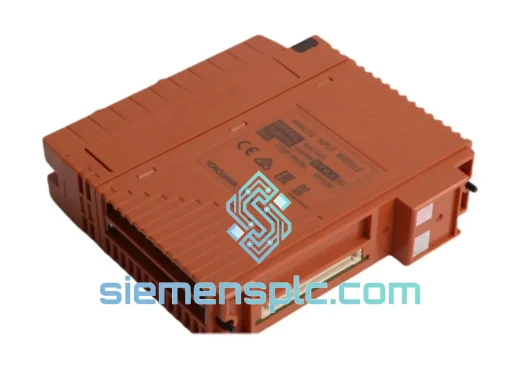
Yokogawa SAI143-H63/PRP S3 DCS Analog Input Module
CENTUM VP
Origin JP
DCS Analog Input Module
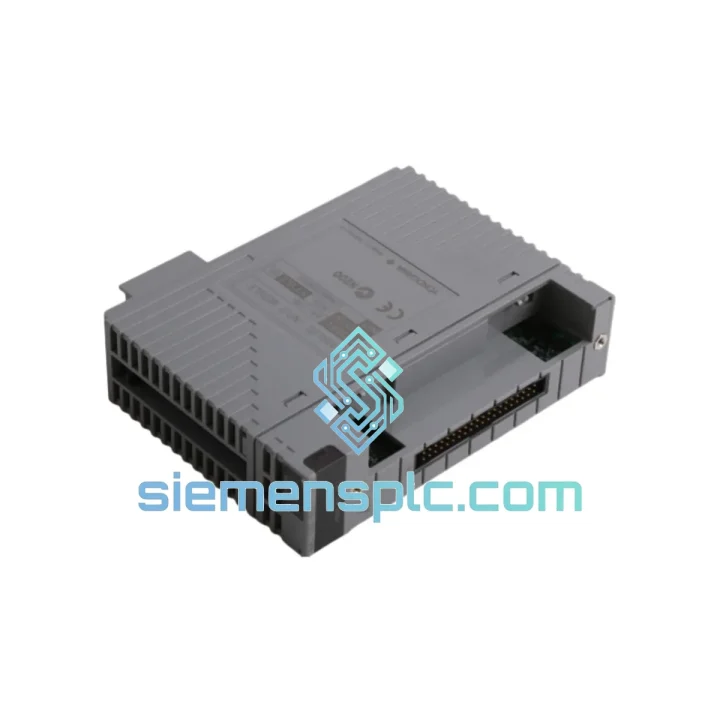
Request verified availability, condition, replacement risk review, packing options and courier lead time for AAI135-S00.
Click Request Quote and the part number is inserted into the inquiry form automatically.
Core fields for model confirmation and RFQ routing. Detailed product narrative remains below.
Your CENTUM VP or CS 3000 field control station just dropped an I/O fault. The AAI135-S00 S2 slot is dark. The operator screen is showing bad PV on eight analog loops. Production is at a standstill. You’ve already called the instrument tech — now you need the part. That’s exactly why this page exists.
We stock the YOKOGAWA AAI135-S00 S2 Analog Input Module in Xiamen, China, and we ship globally via DHL Express and FedEx International Priority. From the moment you confirm your order, our logistics team moves. No warehouse delays, no customs clearance guesswork — we’ve done this route hundreds of times.
URGENT REQUIREMENT? Contact: [email protected] | WhatsApp: +86 18359268345
| Parameter | Specification |
|---|---|
| Part Number | AAI135-S00 S2 |
| Manufacturer | YOKOGAWA Electric Corporation |
| Module Type | Analog Input (AI) — Current Input |
| Compatible Platform | CENTUM VP, CENTUM CS 3000 |
| Signal Range | 4–20 mA DC |
| Channel Count | 8 channels (single-ended) |
| Input Impedance | ≤ 250 Ω (per channel) |
| Isolation | Channel-to-bus galvanic isolation |
| Resolution | 16-bit A/D conversion |
| Accuracy | ±0.1% of full scale (at 25°C) |
| HART Support | Passive HART pass-through (verify with FCS firmware) |
| Suffix S2 | Hardware option set — must match BOM exactly |
| Mounting | FCS node unit backplane (AMM12 / AMM22 node) |
| Bus Interface | YOKOGAWA V-net / ER Bus |
| Operating Temperature | 0°C to +55°C |
| Storage Temperature | -25°C to +70°C |
| Humidity | 5% to 95% RH (non-condensing) |
| Power Consumption | Refer to YOKOGAWA AAI135 datasheet |
| Origin | Japan |
| Stock Status | ✅ Ready to Ship — Xiamen, China |
Common failure signatures for the AAI135-S00 S2:
In the field, this module fails in predictable patterns. Knowing them cuts your diagnostic time from hours to minutes.
1. Partial channel failure (2–3 channels reading 0 mA or pegged at 20 mA): This is the most common failure mode. The A/D converter or the input multiplexer degrades over time in high-humidity or high-vibration environments. The FCS will flag individual channel alarms (IOP or BCV status in CENTUM VP engineering workspace). Do not attempt to re-range or re-calibrate — the hardware is failing. Replace the module.
2. Full module dropout — FCS logs “I/O Module Failure” or “Node Communication Error”: The backplane connector pins on the AAI135 are a known wear point after repeated hot-swap cycles. Inspect the gold-plated edge connector for oxidation or bent pins before condemning the module. If the connector is clean and the module still fails self-test (LED pattern: red FAIL steady), the internal power regulation circuit has failed. Replace immediately.
3. HART communication loss on all channels: If HART pass-through was working and suddenly stops across all 8 channels simultaneously, suspect the module’s HART modem circuit rather than individual field devices. Swap the module first — if HART restores, the module was the fault. If HART remains absent, check the FCS firmware version; some CENTUM VP releases require a specific patch for AAI135 HART support.
Replacement procedure — step by step:
Step 1 — Confirm the exact part number before ordering. The AAI135 family includes multiple suffix variants (S00, S10, S2, etc.). The suffix S2 designates a specific hardware option set that affects terminal block wiring and firmware compatibility. Ordering the wrong suffix will result in a module that physically seats but fails FCS hardware diagnostics. Pull the existing module’s label and photograph it before placing your RFQ.
Step 2 — Check FCS node redundancy status. If your FCS node is in simplex mode, replacing the AAI135 will cause a brief I/O interruption on all 8 channels. Coordinate with the control room operator to place affected loops in manual before pulling the module. In redundant FCS configurations, the standby FCS takes over I/O scanning during the swap — verify this in your CENTUM VP system status display before proceeding.
Step 3 — Hot-swap procedure. The AAI135-S00 S2 supports online replacement (hot-swap) within the FCS node. Unlock the module latch, pull straight out — do not rock or twist. Seat the replacement module firmly until the latch clicks. The FCS will automatically re-initialize the module and restore channel scanning within 10–30 seconds. Watch the FAIL LED: it should extinguish and the RUN LED should go steady green.
Step 4 — Verify channel self-addressing. CENTUM VP assigns I/O addresses based on slot position, not module serial number. After hot-swap, the FCS automatically maps the new module to the same slot address. No manual address configuration is required. However, if you are replacing a module in a different slot than the original (e.g., moving from slot 3 to slot 5 as a workaround), you must update the FCS I/O builder in CENTUM VP engineering workspace and perform a partial download to the FCS.
Step 5 — Confirm HART device recognition. After the module initializes, navigate to the HART device management screen in CENTUM VP. Each HART-capable field device on the 8 channels should re-appear within 60 seconds. If a device does not appear, check the field wiring polarity and the HART load resistor value (must be 230–600 Ω in the loop for reliable HART communication).
Step 6 — Return loops to automatic. Verify each channel’s PV reading matches the field transmitter’s local indicator before returning loops to automatic control. A 0.5% deviation between the old and new module is acceptable and within calibration tolerance. Deviations greater than 1% warrant a field transmitter check.
The AAI135-S00 S2 was not designed for a clean server room. It was designed for the inside of a field control station cabinet sitting 30 meters from a crude distillation column, or bolted to a skid frame next to a reciprocating compressor. YOKOGAWA’s design philosophy for this module reflects decades of feedback from exactly those environments.
Vibration resistance: The module’s PCB assembly uses conformal coating and through-hole component anchoring at critical stress points. In compressor stations and pump skids where structural vibration is continuous, the AAI135 maintains signal integrity without solder joint fatigue failures that plague lower-grade I/O modules. The backplane connector is rated for repeated insertion cycles without contact degradation under vibration loading.
Thermal cycling tolerance: Process plants cycle between cold winter shutdowns and summer operating temperatures that push cabinet interiors above 45°C. The AAI135’s A/D converter and reference circuit are temperature-compensated across the full 0–55°C operating range, maintaining ±0.1% accuracy without field recalibration. The module’s thermal design allows passive convection cooling within the FCS node — no forced-air dependency.
Humidity and condensation protection: In coastal refineries, offshore platforms, and tropical chemical plants, humidity is a constant threat to I/O electronics. The AAI135-S00 S2’s conformal-coated PCB resists moisture ingress that causes leakage currents and measurement drift on unprotected boards. The module is rated to 95% RH non-condensing — and in practice, the conformal coating provides a meaningful margin beyond that rating.
EMC performance: Variable frequency drives, large motor starters, and high-current bus bars generate conducted and radiated interference that corrupts analog signals on lesser modules. The AAI135’s input filtering and galvanic isolation architecture suppresses common-mode noise and differential interference, keeping 4–20 mA readings stable even in electrically noisy MCC rooms and motor control centers.
Long-term drift: After 5–10 years of continuous operation, many analog input modules exhibit calibration drift that exceeds their original accuracy specification. The AAI135 series is known in the field for maintaining calibration stability well beyond its rated service life — a key reason why plants running CS 3000 systems from the early 2000s continue to specify exact-match AAI135 spares rather than migrating to newer I/O platforms.
Our warehouse is located in Xiamen, Fujian Province, China — one of the country’s primary industrial export hubs with direct access to Xiamen Gaoqi International Airport (XMN) and established freight forwarding relationships with DHL Express, FedEx International Priority, and UPS Worldwide Express.
How your order moves:
Once you confirm your purchase order or pro-forma invoice, our warehouse team picks and inspects the AAI135-S00 S2 within 2–4 hours during business hours. The module is packed in anti-static ESD shielding bag, placed in a rigid foam-lined carton, and labeled with your shipment reference. Export documentation — commercial invoice, packing list, and HS code declaration — is prepared simultaneously.
For DHL Express shipments, we hand off to the DHL courier same-day for orders confirmed before 14:00 CST. FedEx International Priority follows the same cutoff. Both carriers provide door-to-door tracking from Xiamen to your plant gate.
Typical transit times from Xiamen:
For shutdown maintenance and turnaround (TAR) scenarios where every hour counts, contact us via WhatsApp for real-time shipment coordination. We can arrange Saturday pickup with DHL for orders confirmed Friday morning CST, and we will provide you with the AWB number the same day so your customs broker can pre-clear the shipment before it lands.
Import duties and customs clearance are the buyer’s responsibility. We provide accurate HS code documentation (HS 8537.10 or applicable subheading) and correct declared values to ensure smooth customs processing. We do not under-declare shipment values.
Email: [email protected]
WhatsApp: +86 18359268345
Web: siemensplc.com
© 2026 siemensplc.com. All rights reserved.
We check the full part number, brand, series and visible nameplate information before quotation.
Sales confirms stock path, condition option, quantity and realistic lead time for export dispatch.
DHL, FedEx, UPS or buyer courier arrangements can be reviewed with packing requirements.
Similar brand or category products for fast comparison and multi-item RFQ lists.