Yokogawa
RFQ Ready
Yokogawa SAI143-H63/PRP S3 DCS Analog Input Module
CENTUM VP
Origin JP
DCS Analog Input Module
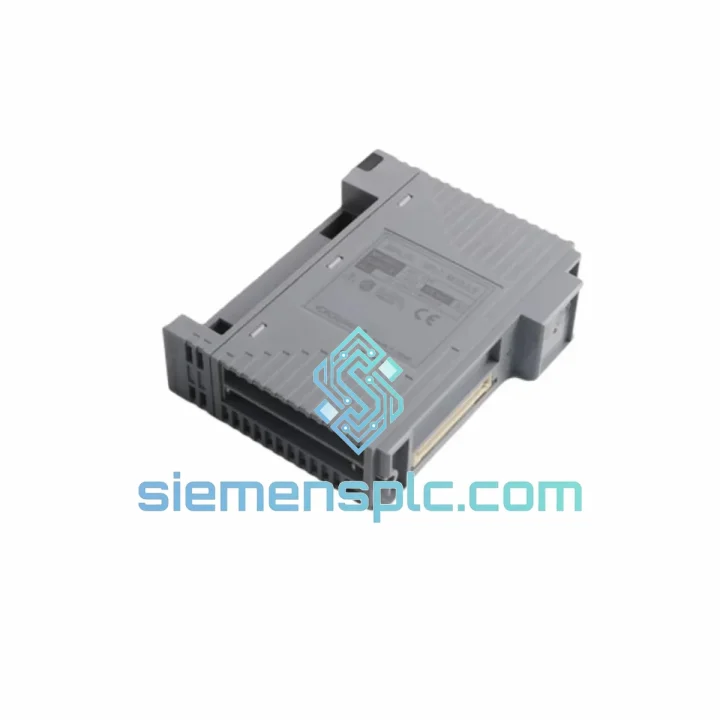
Request verified availability, condition, replacement risk review, packing options and courier lead time for AAI543-S53.
Click Request Quote and the part number is inserted into the inquiry form automatically.
Core fields for model confirmation and RFQ routing. Detailed product narrative remains below.
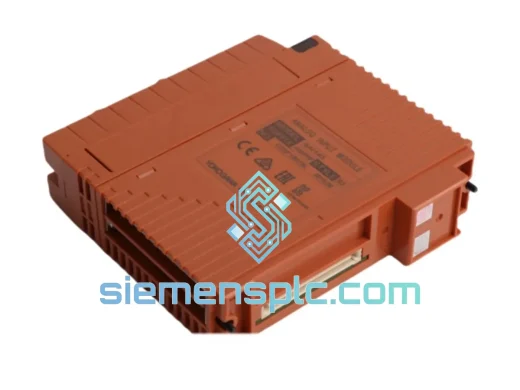
The YOKOGAWA AAI543-S53 S1 is a multi-channel analog current output module engineered for deployment within YOKOGAWA’s CENTUM VP and CENTUM CS 3000 Distributed Control System platforms. Its primary function is to translate digital setpoint values computed by the Field Control Station (FCS) into precision 4–20 mA DC current signals that drive final control elements — control valves, variable-speed drives, electro-pneumatic positioners, and current-to-pressure transducers — across the process field. In continuous-process industries where loop integrity is non-negotiable, the AAI543-S53 S1 occupies a structurally critical position in the control architecture: it is the last digital-to-analog boundary before the physical process.
Within the AAI54x family, the AAI543 designation identifies the multi-channel analog output variant. The suffix S53 specifies the hardware configuration and safety classification applicable to the corresponding FCS node, while S1 denotes the revision level. This suffix combination determines backplane slot compatibility, firmware pairing, and the applicable IEC 61508 functional safety assessment tier. Engineers specifying spare modules must match the full part number — including suffix — to avoid FCS configuration mismatches that can trigger diagnostic alarms or prevent module recognition during online insertion.
The module interfaces with the CENTUM VP I/O node via the high-speed V-net/IP or ESB bus backplane, depending on the FCS generation. Output channel data is refreshed at the FCS scan cycle rate — typically 100 ms or 200 ms — ensuring that setpoint changes computed in the control application are propagated to field devices within one scan period. This deterministic update behavior is fundamental to maintaining loop stability in fast-responding processes such as flow control and pressure regulation.
Real-time Stock & RFQ: [email protected] | WhatsApp: +86 18359268345
| Parameter | Specification |
|---|---|
| Manufacturer | YOKOGAWA Electric Corporation |
| Part Number | AAI543-S53 S1 |
| Module Category | Analog Output Module (AO) |
| Compatible Platform | YOKOGAWA CENTUM VP, CENTUM CS 3000 |
| Output Signal Type | 4–20 mA DC (current output, sourcing) |
| Output Resolution | 16-bit D/A conversion (0.0015% of full scale) |
| Output Accuracy | ±0.1% of full scale at 25°C |
| Load Resistance | 0–750 Ω (at 24 VDC loop supply) |
| Channel Isolation | Optical isolation, channel-to-channel and channel-to-backplane |
| Operating Temperature | 0°C to +60°C |
| Storage Temperature | -20°C to +70°C |
| Relative Humidity | 5% to 95% RH (non-condensing) |
| Power Consumption | Supplied via I/O node backplane (5 VDC internal bus) |
| Backplane Interface | CENTUM VP ESB / V-net backplane bus |
| Module Form Factor | Standard CENTUM plug-in card, single slot |
| Approx. Weight | 600 g |
| Suffix S53 | Hardware/safety configuration variant for FCS node pairing |
| Suffix S1 | Revision level 1 |
| Country of Origin | Japan |
| Warranty | 12 months from date of shipment |
The AAI543-S53 S1 implements a layered hardware architecture that addresses three principal engineering challenges in industrial analog output design: signal fidelity under electrical noise, channel independence under fault conditions, and deterministic data delivery across the backplane.
Optical Isolation Architecture: Each output channel incorporates a dedicated optocoupler stage positioned between the backplane data bus and the D/A converter input. This galvanic barrier — rated to withstand several hundred volts of common-mode transient — prevents ground loop currents and capacitively coupled noise from the field wiring from propagating into the FCS backplane. In heavy industrial environments where variable-speed drives, arc furnaces, and high-current switchgear generate broadband EMI, this isolation stage is not a convenience feature; it is the primary mechanism that preserves signal integrity at the 4–20 mA output.
16-Bit D/A Conversion: The module employs a 16-bit digital-to-analog converter per channel, yielding 65,536 discrete output steps across the 4–20 mA span. At full scale (16 mA span), this corresponds to a step resolution of approximately 0.24 µA — well below the threshold detectable by any field instrument. This resolution ensures that incremental setpoint changes from the FCS control application are faithfully reproduced at the field terminal without quantization-induced limit cycling in tight control loops.
EMC Design Compliance: The module’s PCB layout follows YOKOGAWA’s internal EMC design rules, which include controlled-impedance signal traces, localized decoupling capacitors at each active device, and a multi-layer ground plane structure that minimizes radiated emissions and improves immunity to conducted interference. The module meets IEC 61000-4 series immunity requirements, including ESD (Level 3), radiated RF immunity (Level 3), and fast transient/burst immunity (Level 4) — the latter being particularly relevant in environments with frequent relay switching operations.
Backplane Communication Protocol: Data exchange between the FCS processor and the AAI543-S53 S1 occurs over the CENTUM ESB (Extended Station Bus) or V-net/IP backplane, depending on the FCS generation. The backplane protocol is a deterministic, time-division multiplexed bus that guarantees output register updates within the FCS scan cycle. There is no arbitration latency or collision-based retry mechanism — the output channel registers are written at a fixed time slot within each scan period, ensuring that the analog output tracks the FCS setpoint with a worst-case latency equal to one scan cycle (100 ms or 200 ms, application-dependent).
Open-Circuit and Over-Range Detection: The module’s output driver circuitry monitors the loop current continuously. If the field wiring develops an open circuit — a common failure mode in aging terminal blocks and corroded field junction boxes — the module detects the loss of loop current and generates a hardware diagnostic flag that is propagated to the FCS alarm system. This allows the control room operator to identify the specific failed channel without requiring a field walk-down, reducing mean time to repair (MTTR) in large process plants with hundreds of I/O points.
Every AAI543-S53 S1 unit supplied by siemensplc.com is sourced through verified channels — authorized distributors, OEM-certified surplus inventories, and decommissioned plant assets with traceable maintenance records. Before dispatch, each module undergoes a structured inspection protocol:
Shipments originate from our warehouse in Xiamen, China, with daily dispatch via DHL Express, FedEx International Priority, and UPS Worldwide Expedited. Transit times to major industrial hubs: Southeast Asia 2–3 days, Europe 3–5 days, North America 4–6 days, Middle East 3–4 days. All shipments include a commercial invoice, packing list, and — upon request — a certificate of conformance. Export classification and customs documentation are prepared in compliance with Chinese export regulations and the destination country’s import requirements.
Email: [email protected]
WhatsApp: +86 18359268345
Web: siemensplc.com
Location: Xiamen, China
© 2026 siemensplc.com. All rights reserved.
We check the full part number, brand, series and visible nameplate information before quotation.
Sales confirms stock path, condition option, quantity and realistic lead time for export dispatch.
DHL, FedEx, UPS or buyer courier arrangements can be reviewed with packing requirements.
Similar brand or category products for fast comparison and multi-item RFQ lists.