Yokogawa
RFQ Ready
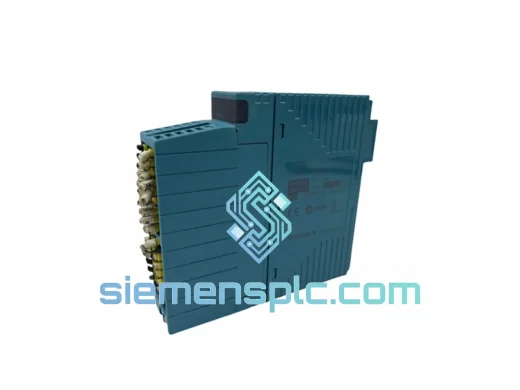
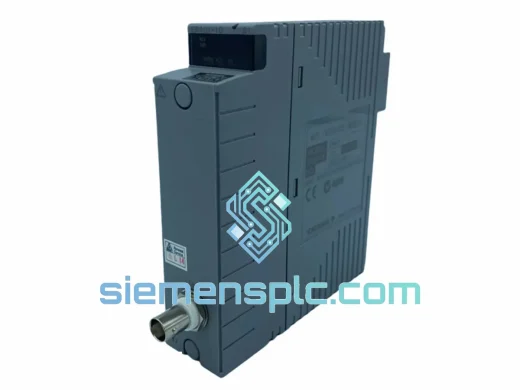
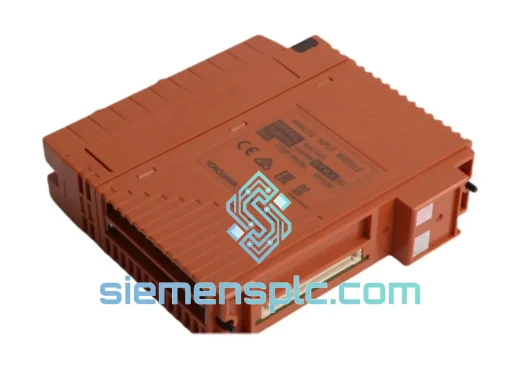
Yokogawa SAI143-H63/PRP S3 DCS Analog Input Module
CENTUM VP
Origin JP
DCS Analog Input Module
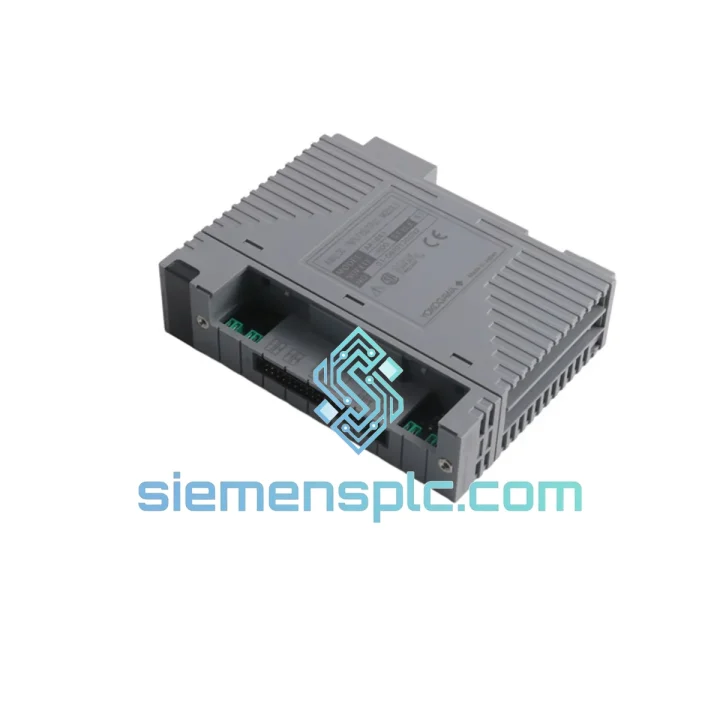
Request verified availability, condition, replacement risk review, packing options and courier lead time for AAI841-H00.
Click Request Quote and the part number is inserted into the inquiry form automatically.
Core fields for model confirmation and RFQ routing. Detailed product narrative remains below.
Within YOKOGAWA’s CENTUM distributed control system, the AAI841-H00 functions as the primary field-signal termination node for 4–20 mA process loops. Its role is not passive aggregation — it is an active digitization stage that converts continuous analog measurements into 16-bit integer values synchronized to the Field Control Unit (FCU) scan cycle. Each of the 16 independent channels performs sigma-delta analog-to-digital conversion at a resolution of 65,536 discrete steps across the calibrated span. For a 4–20 mA loop representing a 0–100 bar pressure range, this yields a per-step resolution of approximately 1.5 mbar — well below the threshold of any industrial pressure transmitter’s inherent measurement uncertainty.
The module connects to the FCU via YOKOGAWA’s Extended Serial Backplane (ESB) bus, a proprietary synchronous communication layer that operates on a fixed arbitration cycle locked to the controller’s deterministic scan period. Unlike fieldbus topologies where multiple nodes contend for shared medium access, the ESB bus assigns each module slot a fixed time slot within the scan frame. The AAI841-H00’s internal scan engine latches all 16 channel values before the FCU’s poll window opens, guaranteeing that the controller always reads a temporally coherent snapshot — a requirement for cascade control loops and model-predictive control (MPC) strategies where inter-channel timing skew introduces systematic bias into the process model.
The module’s HART 5/7 modem is integrated at the hardware level, not implemented as a software overlay. The FSK signal (1200 Hz mark / 2200 Hz space) is superimposed on the DC loop current and decoded by a dedicated modem IC on the analog front-end board. This architecture allows simultaneous 4–20 mA primary variable acquisition and HART secondary variable readback — transmitter temperature, sensor diagnostics, loop integrity flags — without interrupting the primary measurement path. HART frames are passed to the CENTUM VP FCU’s HART multiplexer software task, eliminating the need for external HART multiplexer hardware in most panel configurations.
Real-time Stock & RFQ: [email protected] | WhatsApp: +86 18359268345
| Parameter | Specification |
|---|---|
| Part Number | AAI841-H00 |
| Manufacturer | YOKOGAWA Electric Corporation |
| Module Function | 16-Channel Analog Input (4–20 mA DC) |
| Compatible Platform | CENTUM VP, CENTUM CS 3000 |
| Number of Channels | 16 (individually isolated) |
| Input Signal Type | 4–20 mA DC with superimposed HART signal |
| A/D Resolution | 16-bit per channel (65,536 steps) |
| Input Impedance | ~250 Ω (integrated HART termination resistor) |
| Channel Isolation | Optical (galvanic), channel-to-channel and channel-to-backplane |
| Scan Synchronization | ESB bus arbitration cycle, locked to FCU scan period |
| HART Protocol | HART 5 and HART 7; primary and secondary variable readback |
| Backplane Interface | YOKOGAWA ESB (Extended Serial Backplane) |
| Power Supply | Via FCU backplane (no external 24 VDC required for module logic) |
| Operating Temperature | 0 °C to +55 °C |
| Storage Temperature | −25 °C to +70 °C |
| Relative Humidity | 5% to 95% RH, non-condensing |
| EMC Immunity | IEC 61000-4-2 (ESD), IEC 61000-4-4 (EFT 2 kV), IEC 61000-4-5 (Surge 1 kV L-E) |
| Certifications | CE, UL, cUL; IECEx/ATEX per installation drawing |
| Hot-Swap Support | Yes — online replacement without FCU shutdown (CENTUM VP) |
| Redundancy | Dual-module redundancy via backplane arbitration logic |
| Module Weight | Approx. 320 g |
| Mounting | CENTUM VP / CS 3000 Node Unit (NU) or Remote Node Unit (RNU) slot |
| Warranty | 12 months from shipment date (genuine OEM unit) |
Per-Channel Galvanic Isolation: The AAI841-H00 implements individual optocoupler isolation on each of its 16 input channels — not a shared isolation barrier across a channel bank. Each optocoupler stage provides a galvanic break between the field loop ground and the backplane logic ground, with a rated isolation voltage sufficient to withstand common-mode transients induced by cable runs sharing trays with medium-voltage power conductors. A ground fault on channel 7, for example, cannot propagate to channel 8 or to the ESB bus interface — the fault is contained at the optocoupler boundary, and the FCU’s channel health diagnostic will flag the affected channel without disrupting the remaining 15.
Analog Front-End Partitioning: The PCB layout enforces a hard partition between the analog front-end (AFE) domain and the digital ESB interface domain. The AFE section — input filter network, HART modem IC, sigma-delta ADC — is separated from the digital section by a split ground plane. Power rail decoupling is implemented at each domain boundary with ceramic capacitors selected for low equivalent series resistance (ESR) at the switching frequencies of adjacent power supplies. The module housing, when seated in the Node Unit, forms a partial Faraday enclosure that attenuates radiated emissions from the backplane switching regulators before they reach the AFE input stage.
HART Modem Hardware Architecture: The HART physical layer is implemented with a dedicated modem IC rather than a software-defined FSK decoder running on the module’s microcontroller. This separation means HART frame decoding does not consume microcontroller cycles that would otherwise be allocated to ADC scan management and ESB bus servicing. The modem IC handles Bell 202 FSK demodulation autonomously and presents decoded HART frames to the microcontroller via a serial interface, maintaining HART communication throughput independent of the ADC scan rate.
Redundancy Arbitration and Bumpless Switchover: In a redundant I/O configuration, two AAI841-H00 modules occupy paired slots in the Node Unit. The active module continuously writes its digitized channel data to a shared backplane register set that the standby module reads in real time. When the FCU’s module health monitor detects a fault condition on the active module — via watchdog timeout, parity error on the ESB frame, or self-diagnostic failure — it asserts the switchover signal on the backplane arbitration bus. The standby module assumes the active role within one ESB arbitration cycle. Because the standby module’s channel registers already contain current data, the FCU’s control algorithm receives no stale sample — the switchover is transparent at the application layer.
Every AAI841-H00 unit supplied through siemensplc.com is a genuine YOKOGAWA OEM component sourced through verified industrial supply channels. Pre-shipment inspection covers label integrity, connector pin condition, housing markings, firmware version verification where applicable, and counterfeit-indicator cross-checks against known-genuine reference units. No remanufactured, relabeled, or third-party-compatible substitutes are offered.
Shipments originate from our warehouse in Xiamen, China, with direct access to DHL Express and FedEx International Priority networks. In-stock orders are dispatched within 1–3 business days. Typical transit times: 3–5 business days to Europe and North America; 2–4 business days to Southeast Asia. Bulk and project-based orders can be accommodated with sea freight consolidation or bonded warehouse staging on request.
Each shipment includes a commercial invoice with HS code 8537.10 classification, packing manifest, and a certificate of conformance upon request. All modules are packed in anti-static ESD bags with foam-lined outer cartons rated for international air freight handling. A 12-month warranty from the date of shipment covers manufacturing defects under normal operating conditions.
Email: [email protected]
WhatsApp: +86 18359268345
Web: siemensplc.com
Location: Xiamen, China
© 2026 siemensplc.com. All rights reserved.
We check the full part number, brand, series and visible nameplate information before quotation.
Sales confirms stock path, condition option, quantity and realistic lead time for export dispatch.
DHL, FedEx, UPS or buyer courier arrangements can be reviewed with packing requirements.
Similar brand or category products for fast comparison and multi-item RFQ lists.