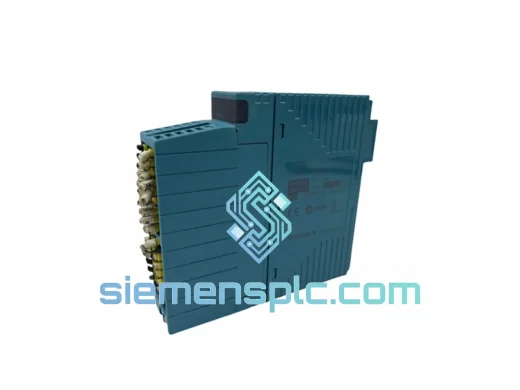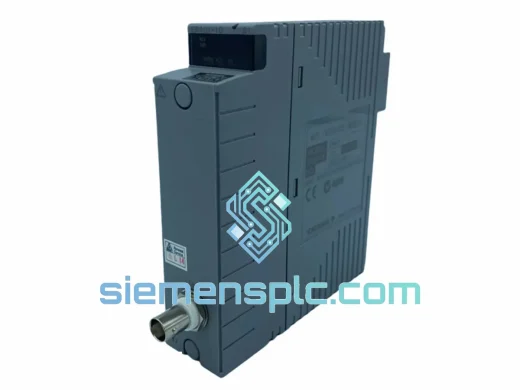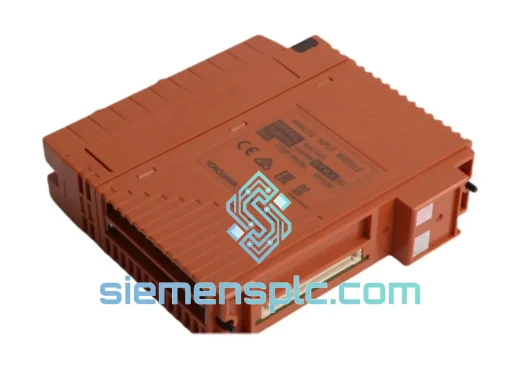
Yokogawa
RFQ Ready
Yokogawa SAI143-H63/PRP S3 DCS Analog Input Module
CENTUM VP
Origin JP
DCS Analog Input Module
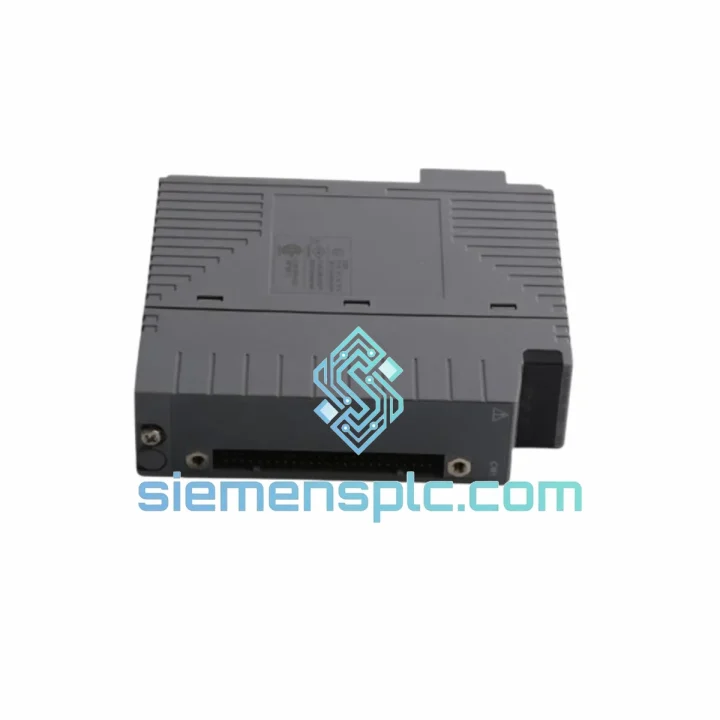
Request verified availability, condition, replacement risk review, packing options and courier lead time for AAR145-S53.
Click Request Quote and the part number is inserted into the inquiry form automatically.
Core fields for model confirmation and RFQ routing. Detailed product narrative remains below.
The AAR145-S53 S1 occupies a well-defined position in YOKOGAWA’s CENTUM VP and CS 3000 I/O architecture: it is the dedicated four-channel analog input module for resistance-based sensors, covering both RTD (Resistance Temperature Detector) and potentiometer (POT) signal types within a single slot. Unlike universal analog input modules that trade measurement resolution for input flexibility, the AAR145-S53 S1 is purpose-built for resistance measurement, allowing its signal conditioning circuitry to be optimized for the low-impedance, low-voltage signals produced by RTD elements and resistive position transducers. In a control loop context, this module sits between the field sensor and the DCS controller, performing analog-to-digital conversion, linearization, and engineering-unit scaling before placing process values on the internal I/O bus for the CPU to consume. Its role is deterministic signal acquisition — the module must deliver consistent, low-latency readings cycle after cycle, because temperature and position data feed PID controllers whose output directly governs final control elements such as control valves and variable-speed drives.
Real-time Stock & RFQ: [email protected] | WhatsApp: +86 18359268345
| Parameter | Specification |
|---|---|
| Model Number | AAR145-S53 S1 |
| Manufacturer | YOKOGAWA Electric Corporation |
| Module Function | RTD / Potentiometer Analog Input |
| Number of Input Channels | 4 (independently configurable per channel) |
| RTD Types Supported | Pt100, Pt200, Pt500, Pt1000, JPt100, Cu10, Ni100, Ni120 |
| RTD Connection Method | 3-wire (standard); 2-wire with lead resistance compensation |
| POT Input Range | 0–100% resistance ratio (0 Ω to full-scale wiper travel) |
| Measurement Accuracy (RTD) | ±0.1% of span at 25 °C ambient |
| Measurement Accuracy (POT) | ±0.2% of span |
| Resolution | 16-bit ADC per channel |
| Scan Cycle | Synchronized with DCS control cycle (configurable: 100 ms / 200 ms / 500 ms) |
| Channel Isolation | Optical isolation, channel-to-channel and channel-to-backplane bus |
| Power Supply | 5 VDC via DCS backplane (I/O nest internal bus) |
| Power Consumption | ≤ 2.5 W typical |
| Communication Interface | YOKOGAWA proprietary I/O bus (CENTUM VP / CS 3000 backplane) |
| Operating Temperature | 0 °C to +55 °C |
| Storage Temperature | −25 °C to +70 °C |
| Relative Humidity | 5% to 95% RH, non-condensing |
| Vibration Resistance | 10–60 Hz, 0.2 mm amplitude (IEC 60068-2-6) |
| EMC Compliance | CE Mark (EN 61326-1); ESD, radiated and conducted immunity per IEC 61000-4 series |
| Suffix -S53 | Hardware/firmware configuration for CENTUM VP compatibility |
| Suffix S1 | Standard build specification |
| Compatible I/O Nests | ANB10D, ANB11D and equivalent YOKOGAWA I/O nest assemblies |
| Compatible DCS Platforms | YOKOGAWA CENTUM VP (all generations), CS 3000 |
| Certifications | CE, UL, cUL |
| Warranty | 12 months from date of shipment |
| Country of Origin | Japan |
The AAR145-S53 S1 implements a dedicated resistance measurement front-end rather than a generic voltage/current input stage. Each of the four channels drives a precision constant-current source through the RTD element; the resulting voltage drop across the sensor is measured differentially by a 16-bit sigma-delta ADC. This excitation-and-measurement architecture eliminates the sensitivity to supply voltage variation that affects simpler resistive divider circuits, and the differential measurement topology rejects common-mode noise induced by long field cable runs — a critical property in industrial environments where cable trays carry both signal and power conductors in close proximity.
The three-wire RTD connection scheme supported by the module allows lead resistance compensation: the module measures the resistance of one lead wire and subtracts twice that value from the total measured resistance, correcting for the temperature-dependent resistance of copper field wiring. This compensation is performed in hardware before the ADC conversion, preserving the full 16-bit dynamic range for the sensor signal rather than consuming resolution on lead resistance offset.
Channel-to-channel isolation is implemented via optocouplers on the analog signal path. Each channel’s measurement circuit floats independently relative to the backplane bus ground, which means a ground fault on one field loop — a common failure mode in aging plant wiring — does not propagate to adjacent channels or corrupt the backplane bus. The isolation barrier is rated to withstand the transient voltages specified in IEC 61000-4-5 (surge immunity), protecting the module from lightning-induced transients on field cables.
The EMC design of the AAR145-S53 S1 addresses both conducted and radiated interference. The module’s PCB layout places the analog front-end in a shielded region separated from the digital logic and bus interface circuitry by a ground plane partition. Ferrite beads and RC filters on the analog inputs attenuate high-frequency interference before it reaches the ADC input stage. The result is a module that maintains its specified accuracy in environments with variable-frequency drive (VFD) noise, radio-frequency interference from wireless devices, and the broadband electromagnetic emissions typical of switchgear rooms.
The suffix -S53 designates a specific firmware and hardware configuration that enables full integration with CENTUM VP’s I/O module management functions, including online module replacement (hot-swap) without process interruption, automatic parameter download from the engineering database on module insertion, and module-level diagnostic reporting to the HIS (Human Interface Station). The S1 build specification confirms the standard production configuration without application-specific hardware modifications.
Every AAR145-S53 S1 unit supplied by siemensplc.com is sourced as genuine YOKOGAWA original equipment — not a third-party reproduction or unlicensed clone. Units are procured through authorized distribution channels and verified against YOKOGAWA’s published part number and firmware version documentation before acceptance into inventory. Each module undergoes a functional power-on test that exercises all four input channels, verifies bus communication with a CENTUM VP-compatible test fixture, and confirms that diagnostic reporting functions operate correctly. Serial numbers and firmware versions are recorded for each unit and provided with the shipment documentation.
Packaging follows ESD-safe handling protocols: modules are placed in anti-static bags, seated in custom-cut conductive foam inserts, and shipped in double-walled corrugated cartons. For international shipments, cartons are sealed with tamper-evident tape and labeled with the HS code for customs clearance. Shipments originate from Xiamen, China, with access to major international freight carriers offering express (3–5 business day) and standard (7–14 business day) delivery options to destinations in Southeast Asia, the Middle East, Europe, and the Americas. DDP (Delivered Duty Paid), DAP, and EXW Incoterms are available to match the buyer’s logistics preference. A 12-month warranty covers manufacturing defects and functional failures under normal operating conditions.
📧 Email: [email protected]
📱 WhatsApp: +86 18359268345
🌐 Web: siemensplc.com
📍 Location: Xiamen, China
© 2026 siemensplc.com. All rights reserved.
We check the full part number, brand, series and visible nameplate information before quotation.
Sales confirms stock path, condition option, quantity and realistic lead time for export dispatch.
DHL, FedEx, UPS or buyer courier arrangements can be reviewed with packing requirements.
Similar brand or category products for fast comparison and multi-item RFQ lists.